

A review of Q2 data for Chinese concept stocks - Returning to 'growth stocks'?

The financial results of leading Chinese concept stocks for Q2 2025 have all been disclosed. Here is a summary of the data for ten leading Chinese concept companies: Tencent Holdings, Alibaba, JD.com, Pinduoduo, Meituan, Baidu, Kuaishou, NetEase, KE Holdings, and Bilibili.
Although not strictly the top 10, these ten companies' total revenue and net profit likely account for 70% to 80% of the entire Chinese concept stock sector, broadly reflecting the overall trends.
[Data Overview]
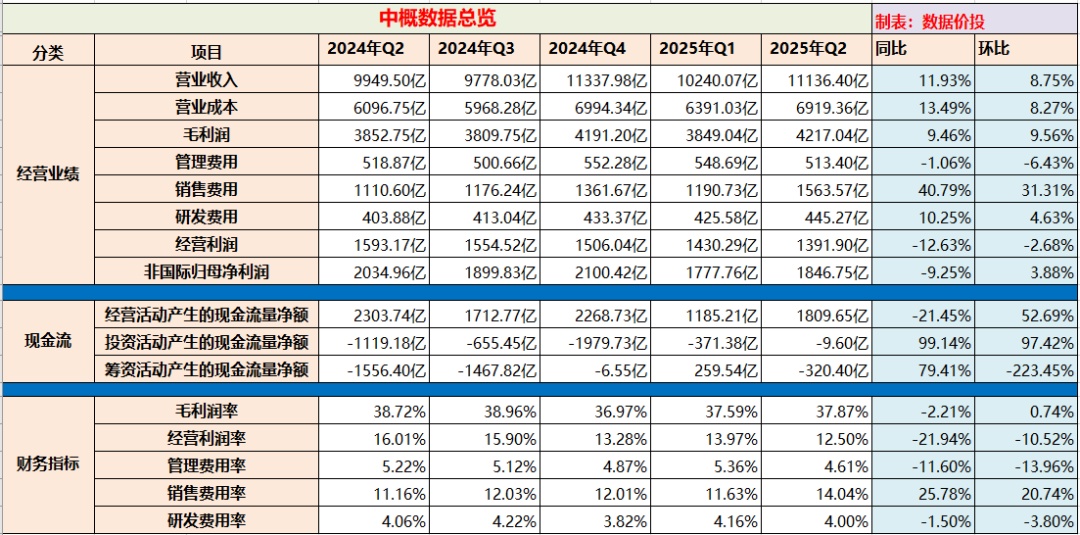
Note: The table shows aggregated data for the ten Chinese concept companies mentioned above.
Over the past two years, by the end of 2024, the label for Chinese internet companies has shifted from high-growth growth stocks to large-scale buybacks (and dividends) as high-dividend value stocks.
Specifically, based on Q4 2024 data, the following characteristics were observed:
1) Revenue maintained relatively high double-digit growth (12.77% in Q4 2024);
2) Thanks to cost-cutting and efficiency improvements, profits began to rise steadily, with growth rates significantly higher than revenue (operating profit growth of 44.13% and non-IFRS net profit growth of 20.53% in Q4 2024);
3) Companies had ample cash reserves, with cash flow remaining strong and growing (operating cash flow growth of 5.03% in Q4 2024);
4) Many implemented historically large-scale buybacks (and dividends) to reward shareholders, effectively becoming high-dividend stocks based on total return rates.
However, this trend began to change in 2025, with signs of a shift back from high-dividend stocks to growth stocks.
Key observations from Q2 2025 data:
1) Revenue growth slowed slightly but remained in double digits (11.93% in Q2 2025);
2) Profits declined significantly (operating profit growth of -12.63% and non-IFRS net profit growth of -12.22% in Q2 2025);
3) Corporate cash flow turned negative (operating cash flow growth of -21.72% in Q2 2025);
4) Buyback efforts were drastically reduced or halted entirely.
During this period, valuations of Chinese concept stocks rose noticeably, driving a significant uptick in share prices.
From a cash flow allocation perspective, it is clear that Chinese concept stocks shifted from a conservative buyback strategy to aggressive investment (AI spending) and even more radical land-grab strategies (food delivery subsidies), altering investor expectations for growth.
Currently, this is still in the investment phase, with two main areas of focus:
1) AI Investments:
Following the emergence of Deepseek earlier this year, investors began reassessing the AI innovation capabilities of Chinese tech firms. Leading Chinese concept companies ramped up AI investments:
For example, Alibaba went all-in on AI, announcing a three-year capital investment plan of 380 billion yuan.
Tencent also announced that its AI capital expenditure for 2025 would account for a low double-digit percentage of revenue, estimated at 80-100 billion yuan.
These massive AI investments may create short-term financial pressure and weigh on profits, but they represent the future direction of productivity advancement, justifying the increased growth expectations.
2) Massive Food Delivery Subsidies (Primarily Meituan, Alibaba, and JD.com):
After Q2 earnings were released, it became clear that all three companies paid a heavy price. JD.com and Meituan saw profits plummet to near zero, while Alibaba fared slightly better but still incurred subsidies of around 15 billion yuan, with expectations of further increases in Q3.
Will this subsidy war follow past patterns—where burning cash expands the market, which then stabilizes post-subsidy?
Wang Puzhong explicitly dismissed this notion in an interview: "Most of it is just a bubble."
Especially for irrational subsidies like those for milk tea, it is hard to believe brand loyalty will persist post-subsidy. These are more like promotional expenses paid by platforms.
Whether this "advertising expense" is worthwhile depends on whether it drives cross-selling in e-commerce. While JD.com and Alibaba spoke optimistically in earnings calls, this has yet to be reflected in performance data and requires further observation.
[Breakdown Data]
Revenue
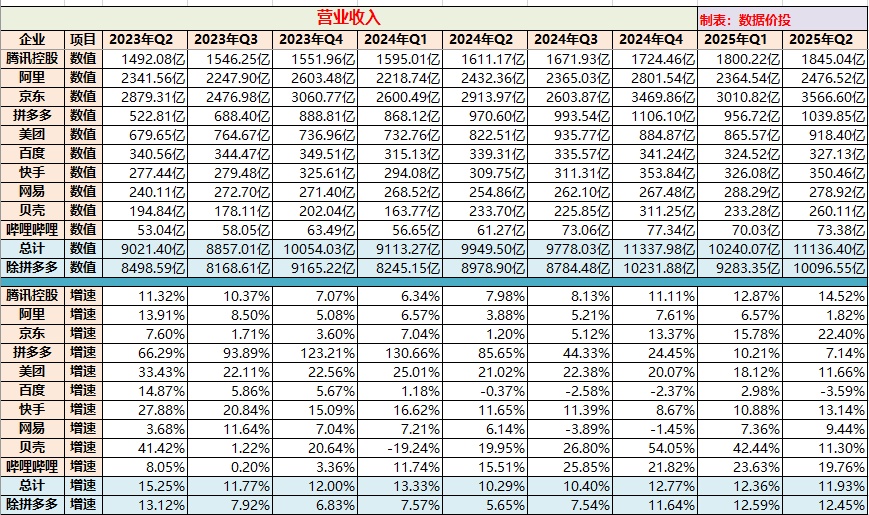
Q2 2025 revenue growth was 11.93%, slightly lower than Q1's 12.36%.
Operating Profit:
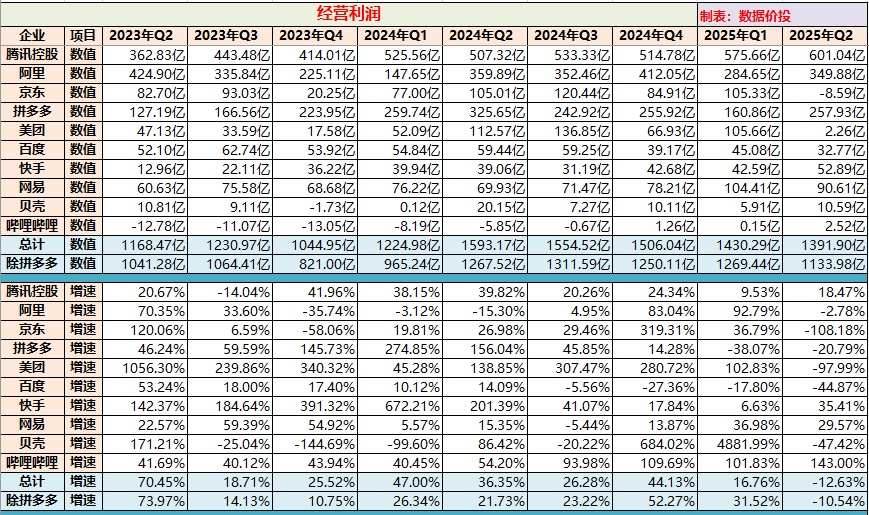
Q2 2025 operating profit growth was -12.63%, turning negative from Q1's 16.76%.
Non-IFRS Net Profit:
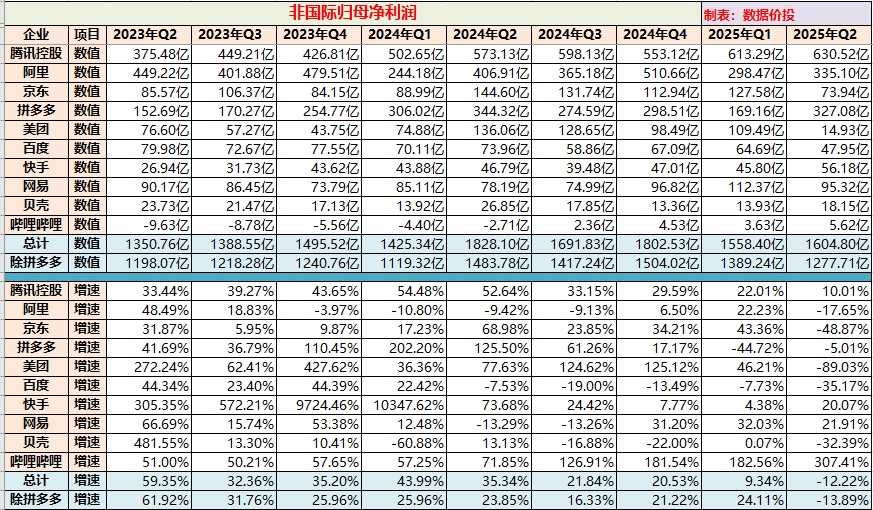
Q2 2025 non-IFRS net profit growth was -12.22%, turning negative from Q1's 9.34%.
Gross Margin:
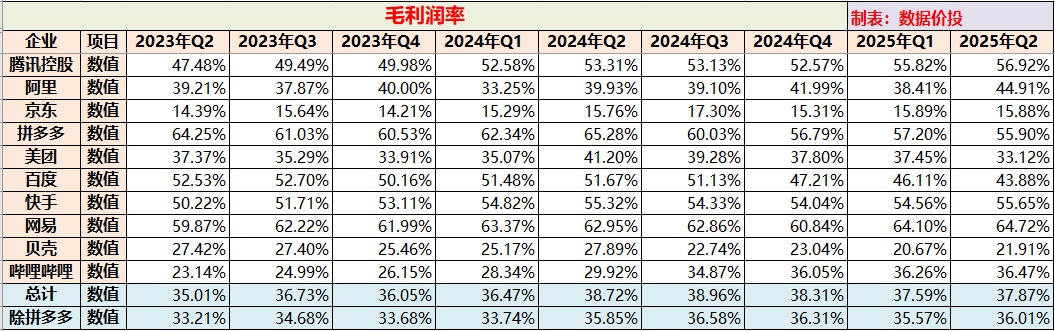
Q2 2025 gross margin was 37.87%, slightly higher than Q1's 37.59%.
Cost & Expense Ratios:
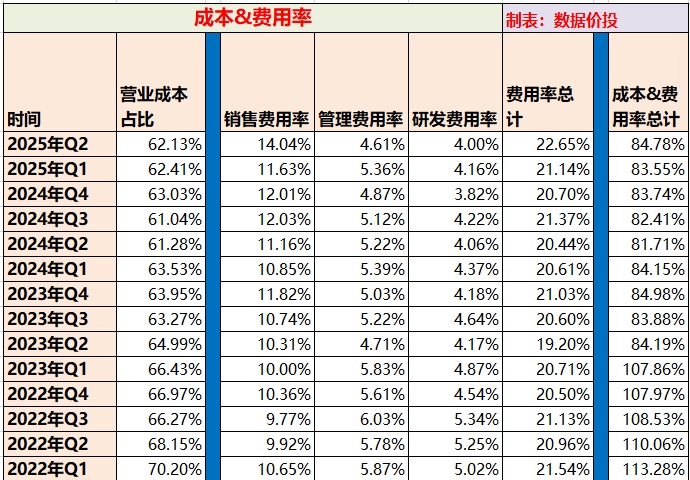
Q2 2025 operating costs decreased slightly from 62.41% to 62.13%, while total expense ratio rose from 21.14% to 22.65%, mainly due to higher sales expenses.
Total cost & expense ratio increased slightly from 83.55% to 84.78%.
Operating Cash Flow:
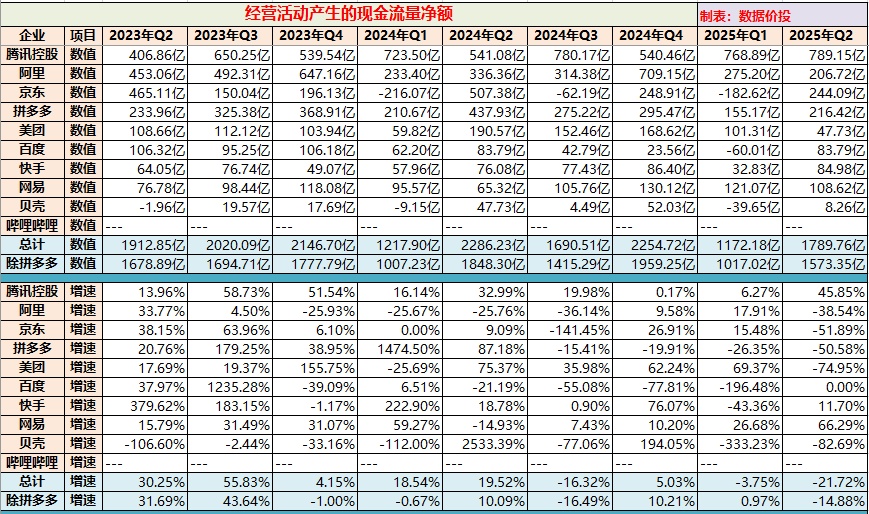
Q2 2025 operating cash flow growth was -21.72%, a further decline from Q1's -3.75%.
Advertising:
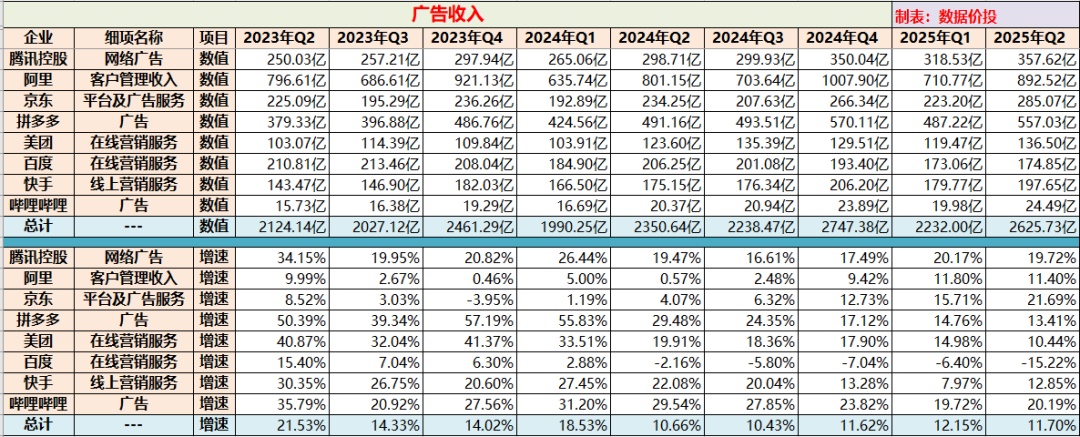
Q2 2025 ad revenue growth was 11.70%, slightly lower than Q1's 12.15%.
E-commerce Commissions:
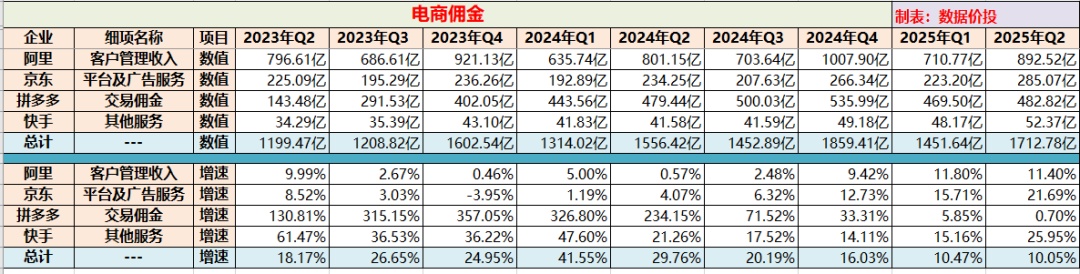
Q2 2025 e-commerce commission growth was 10.05%, slightly lower than Q1's 10.47%.
Gaming:
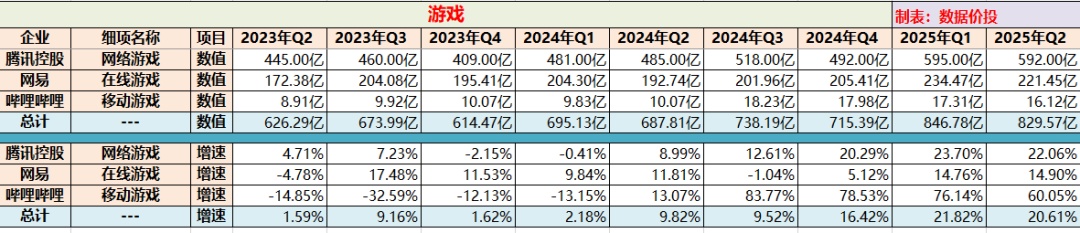
Q2 2025 gaming growth was 20.61%, slightly lower than Q1's 21.82%.
$Invesco Golden Dragon China(PGJ.US) $TENCENT(00700.HK) $BABA-W(09988.HK)
The copyright of this article belongs to the original author/organization.
The views expressed herein are solely those of the author and do not reflect the stance of the platform. The content is intended for investment reference purposes only and shall not be considered as investment advice. Please contact us if you have any questions or suggestions regarding the content services provided by the platform.
