

 Rate Of Return
 Total Assets
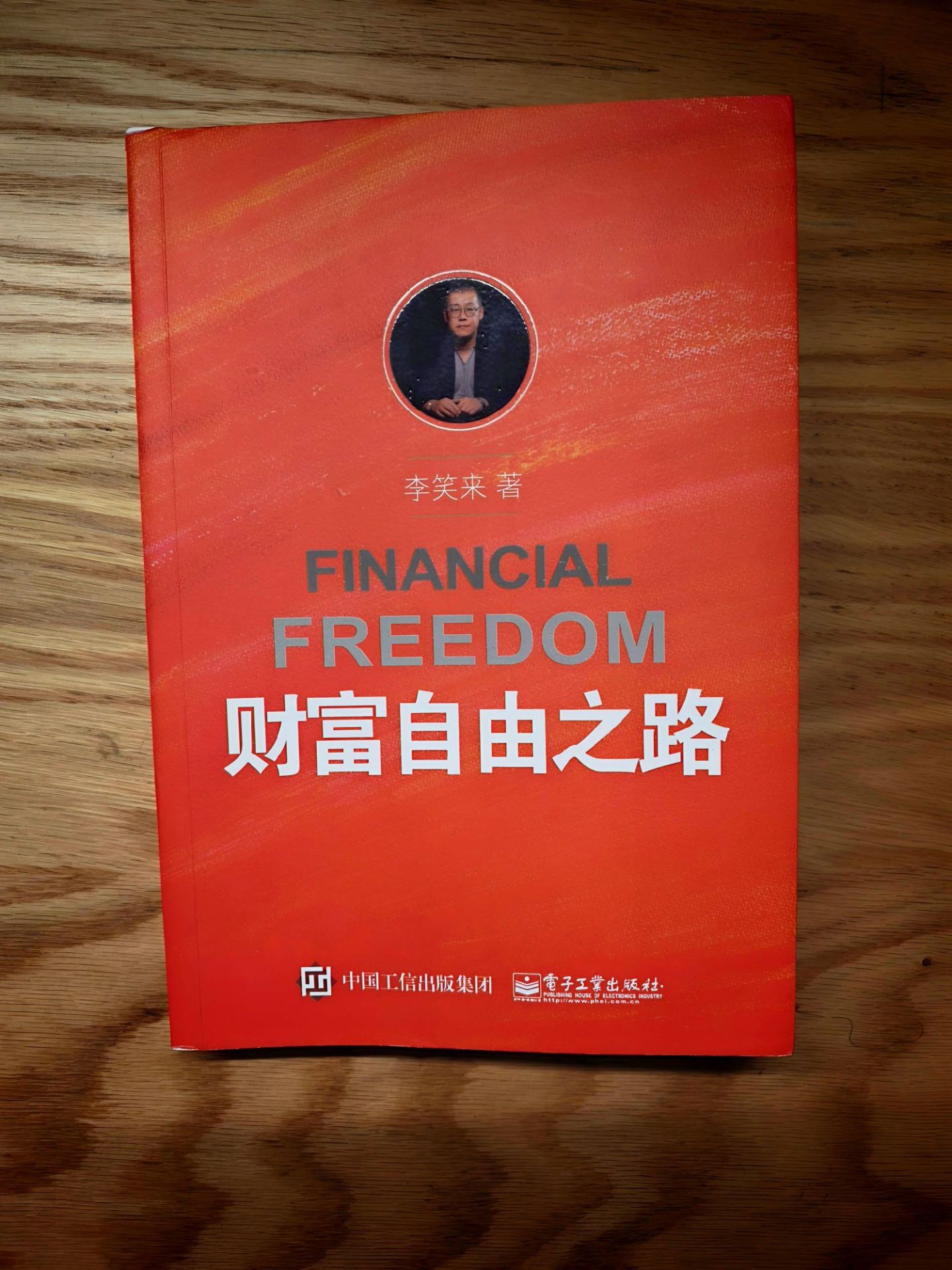
Reflections on "The Road to Financial Freedom": Doing the Right Thing

Li Xiaolai's book "The Road to Financial Freedom" was actually bought a long time ago. At the time, I bought it because of the title, and it had been collecting dust. Recently, during the National Day holiday, I happened to have some free time, and with the lackluster performance of investment targets, I decided to flip through it and ended up gaining a lot.
1. Why is "doing the right thing" far more important than "doing things right"?
I had heard this phrase from Mr. Duan before. He mainly used it to talk about how to select investment targets to predict their long-term trends. This time, I saw it again in the book, where the author used it to estimate the probability of success in actions, explaining it in more detail.
The author mentioned, "If a principle is objectively correct, if it held true in the past and still holds true now, then barring any surprises, it will continue to hold true in the future." By firmly believing in this theory, he predicts the future, takes further action, and continuously evolves his thinking and abilities, thereby positioning himself ahead of time.
He also mentioned that once you are "independent and correct," the value can be immense. But achieving this is difficult because it requires maintaining composure amid the world's positive and negative feedback, staying impartial and calm. Precisely because it's hard to achieve, the value isn't something anyone can attain casually.
Looking even further, developing an understanding of what is right, what is wrong, and what is important forms values. These values constantly influence how one conducts themselves and ultimately determine destiny. This applies similarly to individuals and companies.
2. How to develop the ability to recognize "doing the right thing"?
Reflecting on the mindset formed during student days and the workplace, the belief was that studying hard and memorizing standard answers would lead to success, and work could make you rich. But upon closer examination, following the crowd without critical thinking isn't quite right. What's more important in learning is cultivating critical thinking, analytical research methods, and a foundational understanding and passion for the field. Work, in reality, is just trading time for money, not a path to wealth.
So the author suggests strengthening self-cultivation and metacognitive abilities, somewhat akin to first principles. First, the concepts and relationships of things must be clear and correct to build sound judgment and analytical skills. Conversely, if concepts and relationships are based on incorrect information, it leads to flawed understanding and misguided actions.
3. Some Reflections
Our world consists of both a material layer and a social layer. Just as the material world is built on physical laws, correctness, compound interest, and patience might be the long-term stable laws of the social layer. As long as actions and choices align with these laws, one can ride the trend and achieve more with less effort.
But the prerequisite is discovering, understanding, and firmly believing in these laws. Reading books alone isn't enough—it only provides knowledge, not comprehension. True mastery requires a foundation of extensive cognition and practice. While it's good to stay informed about trends, ultimately, one must sift through the noise and analyze things with metacognition. Summarize successes and correct mistakes to improve gradually.
Finally, from an investment perspective, beyond focusing on asset investments, the author mentions another type of investment worth attention: investing in ourselves. Whether it's cognition, skills, health, or social relationships, improving these areas can be immensely helpful in many aspects of life.
The copyright of this article belongs to the original author/organization.
The views expressed herein are solely those of the author and do not reflect the stance of the platform. The content is intended for investment reference purposes only and shall not be considered as investment advice. Please contact us if you have any questions or suggestions regarding the content services provided by the platform.
