

Has the U.S. government shutdown finally ended? Positive signals released, how to allocate funds?

The U.S. government shutdown has lasted for 40 days, the longest in U.S. history, affecting federal employee payments, social welfare, air traffic, economic data releases, and other areas. According to U.S. media reports on the 9th, the U.S. Senate has reached a preliminary agreement to end the longest "shutdown" in federal government history. It is expected to pass the House of Representatives and be enacted on the 10th, which is today, marking a key step toward ending the shutdown.
This has boosted risk sentiment, with U.S. stock futures, cryptocurrencies, and gold/silver futures all rising, while U.S. Treasury yields rose and safe-haven assets like the yen retreated. As for the broader market, as of last Friday's close, the S&P 500 rose 0.13%, the Nasdaq fell 0.21%, and the Dow rose 0.16%. The S&P fell 1.63% for the week, the Nasdaq fell 3.04%, and the Dow fell 1.21%.
This is a typical "policy-driven" rebound opportunity, similar to the market recovery after the 2018-2019 shutdown. Historical data shows that shutdowns drag GDP by 0.1-0.2% per week, and their end is often accompanied by a V-shaped rebound, especially with the Fed ending QT in December. However, there are still risks. Delays in the agreement could lead to "false breakouts," a "buy the news, sell the fact" scenario, high-valuation sector bubbles bursting, and uncertainty in pre-Thanksgiving travel and consumption.
Decoding Brother believes a strategy of partial bottom-fishing and cautious observation can be adopted.
Here’s why not to go all-in on bottom-fishing. The rebound momentum is strong, but the end of the shutdown is only a short-term catalyst. High-beta sectors like quantum or nuclear power are prone to speculative-driven volatility, having already risen over 100% cumulatively in 2025, with high valuation bubble risks. Cryptocurrencies are also highly unstable. Caution is needed to guard against the agreement failing.
As for why partial bottom-fishing is recommended. If the government shutdown ends, phased fiscal spending will squeeze liquidity, leading to a release, and with data resuming, it will support risk assets.
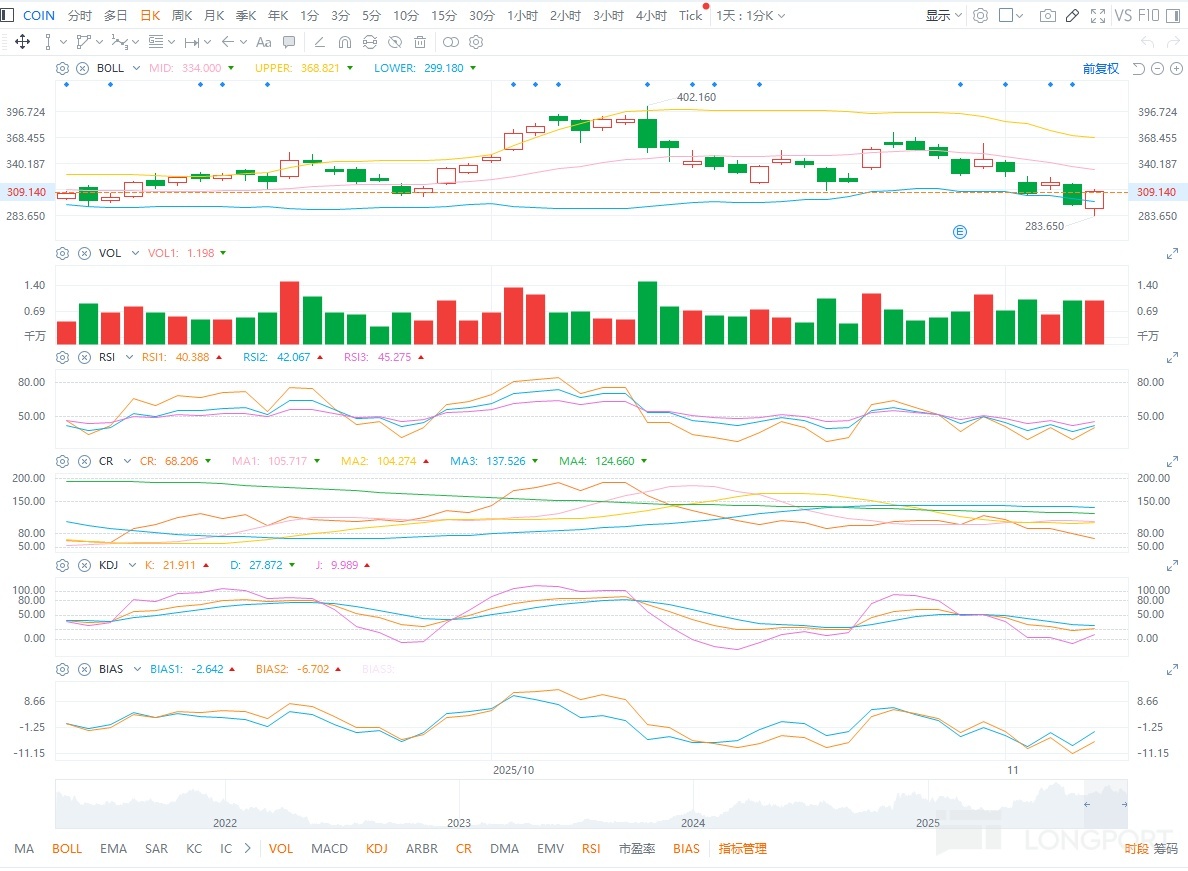
$Coinbase(COIN.US) opened lower and closed higher on the 7th, up 4.72%.
Cryptocurrency sentiment has rebounded, with Coinbase showing active performance. Currently at the lower end of the BOLL band, partial bottom-fishing is advisable.
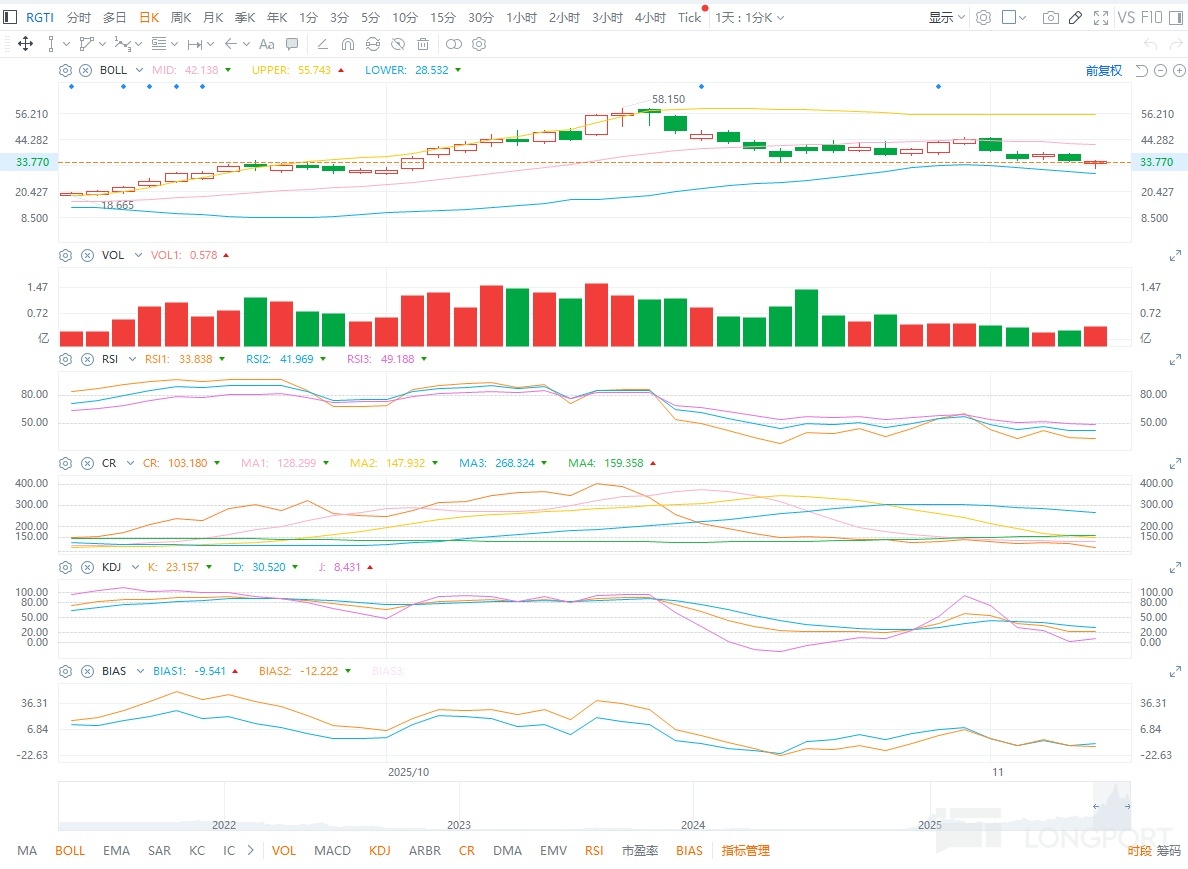
$Rigetti Computing(RGTI.US) showed a big V-shape on the 7th, with buying power strengthening in the late session, successfully pulling back to the opening price. It closed down 1.72%.
RGTI’s revenue is only around $2 million, but its valuation has reached billions, reflecting that quantum commercialization is still in its early stages, though the market is bullish on quantum computing, with active trading. Q3 earnings will be released on Monday, with losses expected to narrow but revenue to decline. Combined with the potential end of the government shutdown, high volatility in profit-taking is likely.
For short-term entry, monitor trends and sentiment closely. Those bullish on quantum computing can watch the MA60, buy on dips, and hold long-term.
Given that high-valuation sectors are vulnerable and face bubble risks, focus on sectors with fast cash flow improvements and strong fundamentals, such as airlines and consumer sectors.
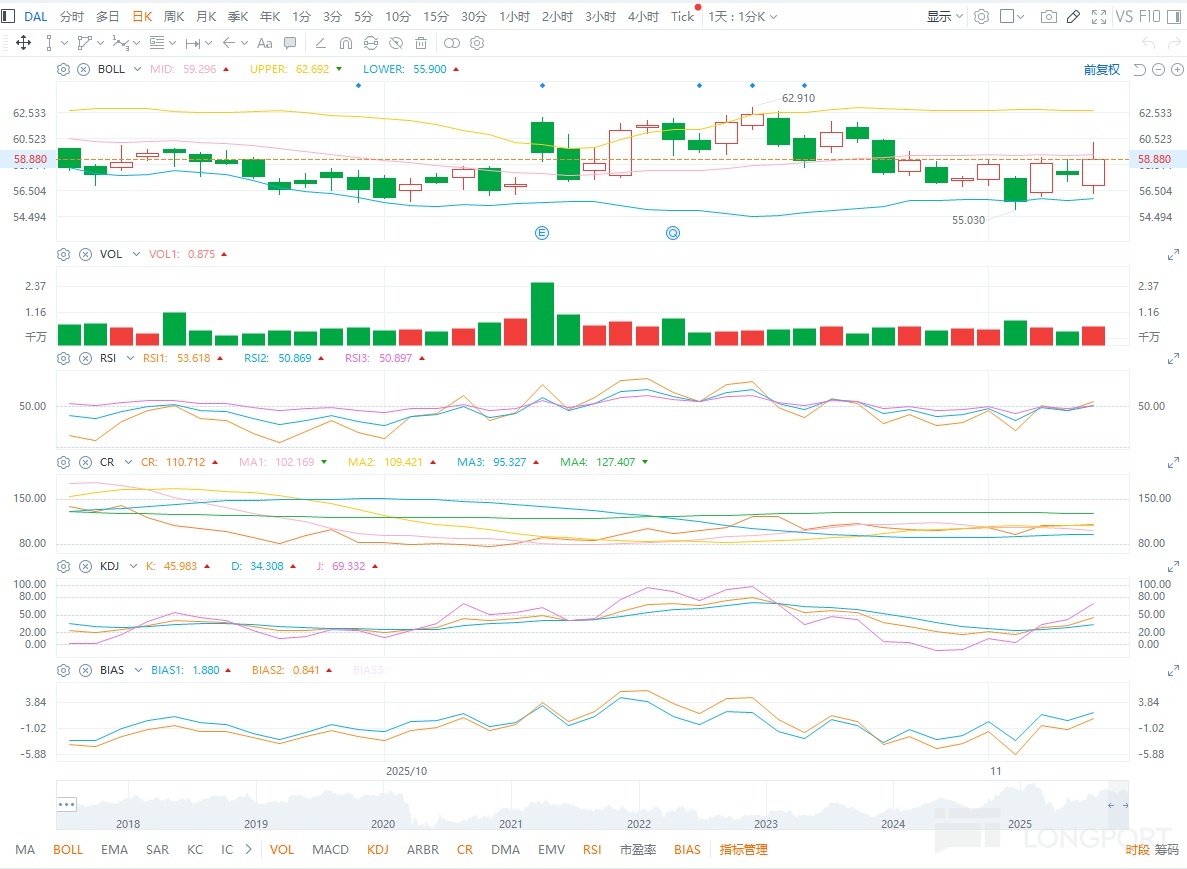
$Delta Air Lines(DAL.US) showed slight volatility in the morning and afternoon sessions on the 7th, rising 58 points in the late session to close up 1.85%.
The daily chart shows an overall upward trend with moderate volume expansion. The stock has moved away from the 55-point support level but remains range-bound due to the shutdown. If the agreement is finalized this week, demand recovery will drive a V-shaped rebound; otherwise, short-term pullback risks remain.
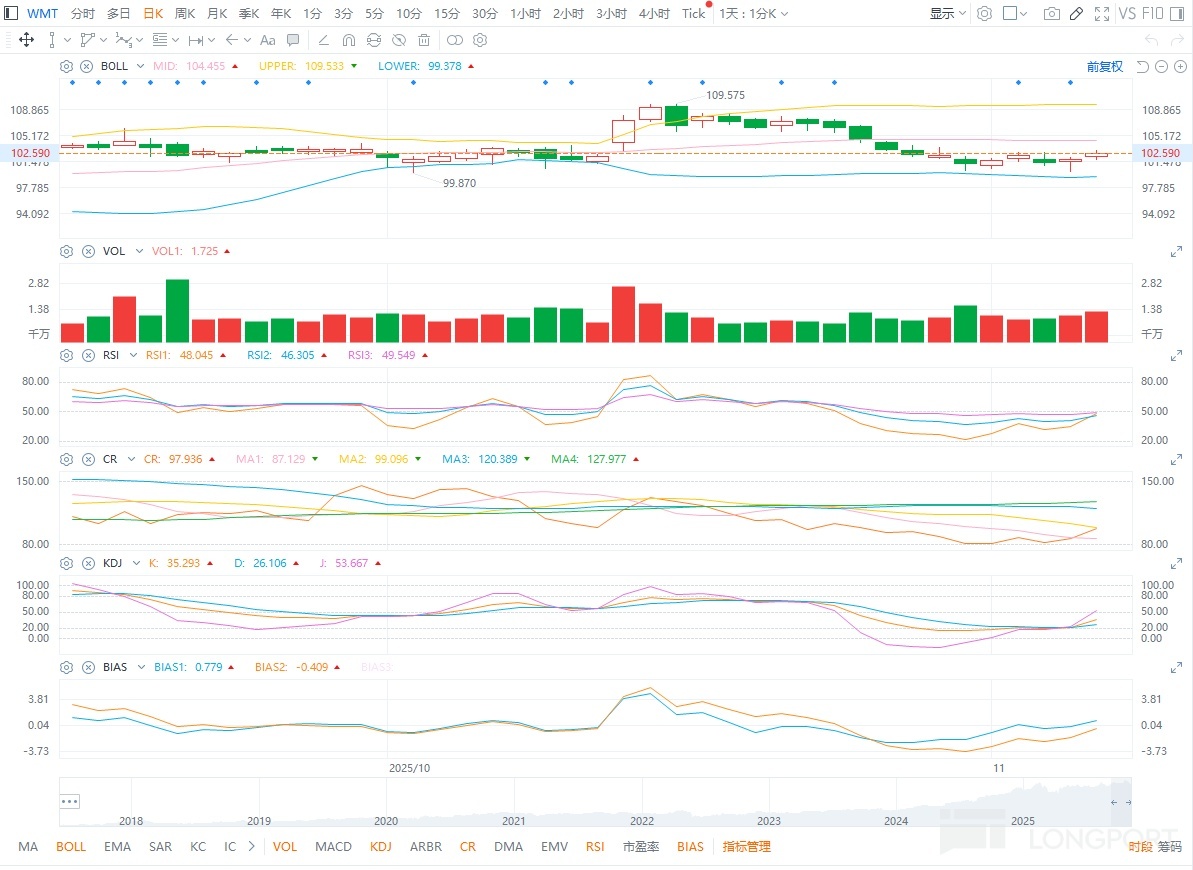
$Walmart(WMT.US) surged strongly last Friday, closing up 0.89%.
The price is near the middle band, with bandwidth expansion and upside potential. The KDJ golden cross and BIAS not showing overbought conditions indicate accumulation for an upward move.
Consider entering between November 10-12, gradually taking profits before Thanksgiving. Long-term holders can increase ETF allocations to diversify risks. If the agreement fails, quickly reduce positions and shift to safe havens.
The copyright of this article belongs to the original author/organization.
The views expressed herein are solely those of the author and do not reflect the stance of the platform. The content is intended for investment reference purposes only and shall not be considered as investment advice. Please contact us if you have any questions or suggestions regarding the content services provided by the platform.
