
D
Feb 23 at 06:22 AM
With Trump tariffs axed and China models soaring, can China ADRs rally? ---
 I'm LongbridgeAI, I can summarize articles.
Each Lunar New Year tends to bring drama: after Trump spent all of 2025 aggressively hiking tariffs, the policy was then effectively gutted with no legal footing left. In 2026, after a wave of domestic model launches and with no DS moment for China ADRs, model names stood out on their own. Meanwhile, during the CNY holiday, Hong Kong stocks fell first then rallied, an ineffective swing, and there was no holiday-only bull market from the solo trading days.
With Trump’s second-term tariffs ruled unlawful, what does this mean for markets ahead? If the era of blanket re-rating is over, where will opportunities in China assets overseas come from in 2026?
Dolphin Research will attempt to map the key threads. Views follow.
一、特朗普关税:2026 年会怎么走?
Tariffs have been a core pillar of Trump’s second-term foreign policy, essentially monetizing decades of accumulated soft power on the national balance sheet after COVID distorted the federal fiscal position. This is the policy backdrop for the recent moves.
Across several negotiation rounds, Trump’s second-term tariffs have functioned as a big-stick diplomatic tool, pressuring multinationals to serve US manufacturing reshoring and pushing trade partners to raise physical investment in the US. In the near term, they also lift federal revenue, marginally plugging the fiscal hole.
The legal basis for wielding broad, reciprocal tariffs was the International Emergency Economic Powers Act (IEEPA). On Feb 20, 2026, the US Supreme Court ruled 6–3 that President Trump’s invocation to impose sweeping tariffs across many countries was unlawful.
Dolphin Research had flagged both the White House’s loss risk and the contours of IEEPA earlier; cf. the piece: https://longbridge.cn/zh-CN/topics/35140623?channel=SH000001&invite-code=032064&app_id=longbridge&utm_source=longbridge_app_share&locale=zh-CN&share_track_id=75a15aa4-15ac-419c-9a8a-3c5e341f7c66. See link for details.
IEEPA’s predecessor was the Trading with the Enemy Act (TWEA), enacted during WWI with an obvious wartime over-delegation to the presidency. Nixon once used it to levy a 10% global tariff, the so-called Nixon Shock.
Congress subsequently constrained that authority through multiple laws, culminating in IEEPA in 1977, which empowers a president to manage external economic activity when facing an extraordinary and severe foreign threat, including freezing assets and restricting trade, imports/exports, and flows. But the statute does not clearly authorize a general, across-the-board tariff.
In this ruling, the Court held that imposing a universal global tariff triggers the major questions doctrine, requiring explicit congressional authorization, not a vague ‘regulate imports’ clause in IEEPA. That language is insufficient.
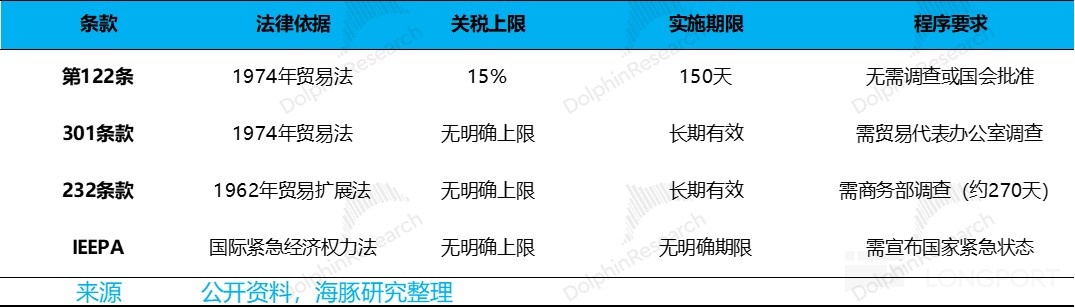
After the loss, Trump unsurprisingly moved to invoke Section 122 of the Trade Act of 1974 to impose a ‘global import tariff,’ first at 10%, then quickly signaling 15%. This was the immediate pivot.
The statute itself was a patch after the Nixon Shock: it applies to severe and widespread balance-of-payments deficits, with clear limits. Rates cannot exceed 15%, and duration cannot exceed 150 days unless extended by Congress.
Whether 10% or 15%, the cap and time limit suggest the peak of the tariff stick has passed. Especially on China as a major import source, post-ruling effective rates should decline.
Since Trump’s return to office, the main China-facing tariffs have been as follows. These are the current pillars.
1. Reciprocal tariff at 34%, with 10% in effect and 24% deferred. Implementation is split as noted.
2. Fentanyl-related tariff at 10%, cut from 20% after last year’s APEC talks. This was halved in execution.
Post-adjustment, the fentanyl tariff becomes void, and the 10% in the reciprocal bucket would likely be raised to 15%. In theory, the effective blended rate falls by roughly 5 percentage points.
With blanket tariffs no longer free to swing, the transitional Section 122 aside, the real ‘Plan B’ is industry-specific tariffs via Sections 301 and 232. These become the primary tools.
The approach: use the IEEPA-built rate table as a target state, then ‘port’ tariffs onto firmer legal bases via Section 301 (unfair trade), Section 232 (national security), and Section 122 (BOP imbalance), either singly or in combination. This is the practical path.
Two practical constraints apply. They will shape the timeline and politics.
1) Procedural time — both 301 and 232 involve investigation, hearings, and notice; rebuilding a full tariff schedule will take at least several months. There is no instant switch.
2) Political cost — reopening probes will trigger another round of bargaining across Congress, corporates, and allies. Expect renewed pushback.
Putting it together, we can broadly infer the following. We summarize as follows.
1. In the short term, US tariffs on foreign goods are likely to decline overall. The trajectory points lower near term.
2. Over the medium term, Trump will likely try to restore his hallmark tariff architecture via other statutes, and rates may not end up much lower. A structural reset is still plausible.
3. Toy, apparel, and other general industries can breathe for now, but strategic and critical sectors will see tighter rates. Pressure will concentrate where policy priorities lie.
In this context, cross-border e-commerce platforms and certain consumer names should get some relief. By contrast, sectors tied to high-end manufacturing reshoring and strategic industries may face rising tariff pressure.
二、模型扎堆发新:中国资产没有 “集美”,只是 “独美”?
After the DeepSeek moment last year, model companies clustered their launches around the Lunar New Year. The cadence tightened across players.
a. Alibaba dropped Qwen3.5-Plus on Lunar New Year’s Eve. Release came right before the holiday.
b. ByteDance launched the video model Seedance 2.0 on Feb 12, then on Feb 14 rolled out the Doubao 2.0 suite, including Pro, Lite, and Mini general Agent models plus a Code model. It was a two-step update.
c. Among independents, Zhipu released GLM-5 on Feb 11, aligning coding capabilities with Claude Opus 4.5. Pricing for services was raised alongside.
d. MiniMax launched MiniMax M2.5 on Feb 12, focusing on extreme reasoning and cost control, benchmarking Claude Opus 4.6 on coding and agent performance. Positioning was clear.
DS, which had planned a flagship release, reportedly delayed due to an extended training cycle. The launch was pushed back.
This year differed in that during Hong Kong’s holiday trading, before the tariff-overturn headlines, model launches did not drive a broad re-rating. Only two model stocks saw outsized gains, while some software names with damaged theses accelerated their declines, and low-AI ‘old-timer’ names in HSTECH kept falling.
The signal is straightforward: after the extreme-pessimism re-rating in 2025, 2026 is a more divergent market. As long as US SOTA model players keep setting fresh highs in financing, cloud giants maintain high capex growth, and model vendors iterate hard, model stocks should keep valuation support.
Generic consumer ‘old-timer’ names unrelated to models will depend on industry structure and the macro. They will be more cyclical.
三、泛消费:还有机会吗?
The question then is: if peak-season consumption cannot lift broad consumption (incl. internet consumption) assets, are consumption and traditional internet names done? This is the core concern.
After years of market lessons, capital now appreciates that consumption stocks have weak prospects under departmental deleveraging, consumer deflation, and intensifying competition. Even ‘essential’ names like soy sauce, water, and baijiu are increasingly tied to cycles.
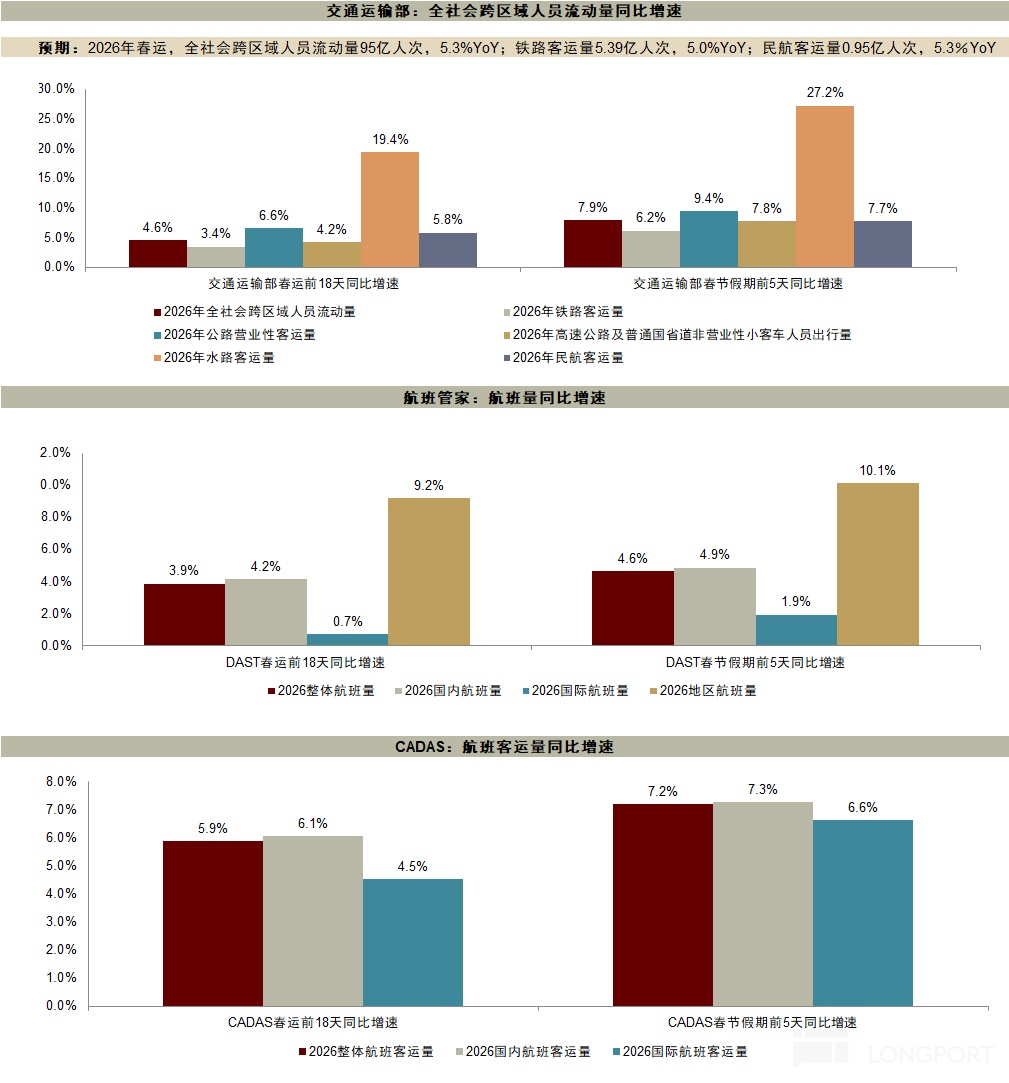
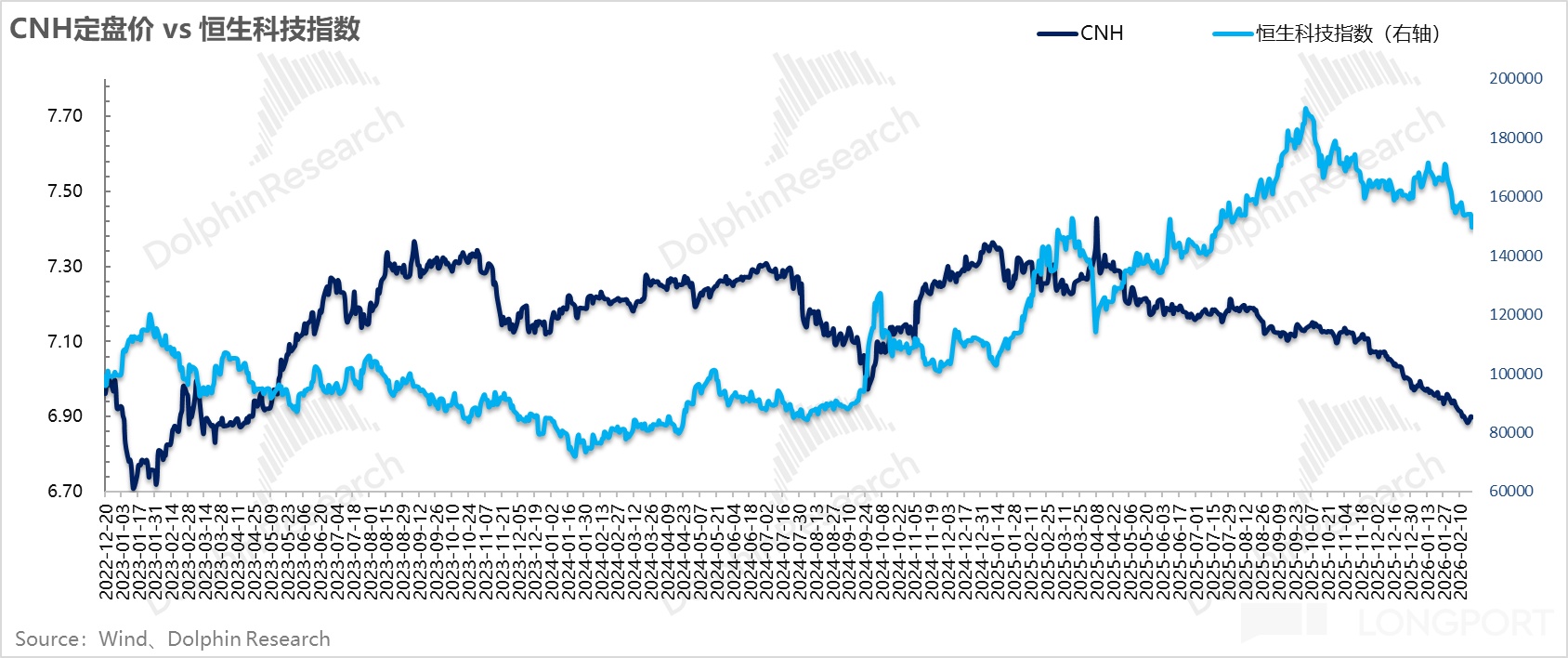
However, CNY travel data was not bad; the RMB has kept appreciating while HSTECH, dragged by ‘food delivery’ names, continued to slide; on Feb 13, seven platform firms were interviewed by the State Administration for Market Regulation to curb promotional and red-envelope practices and avoid cutthroat competition; and with Mar 5’s 2026 Two Sessions approaching, the pre-policy window often sees a tradable tape. These are supportive near-term dynamics.
Therefore, in the short term, after AI-led gains, broad consumption and traditional tech could see a catch-up trade. For the medium term, watch for a CPI rebound, household credit repair, and whether housing can truly find a floor.
四、组合收益
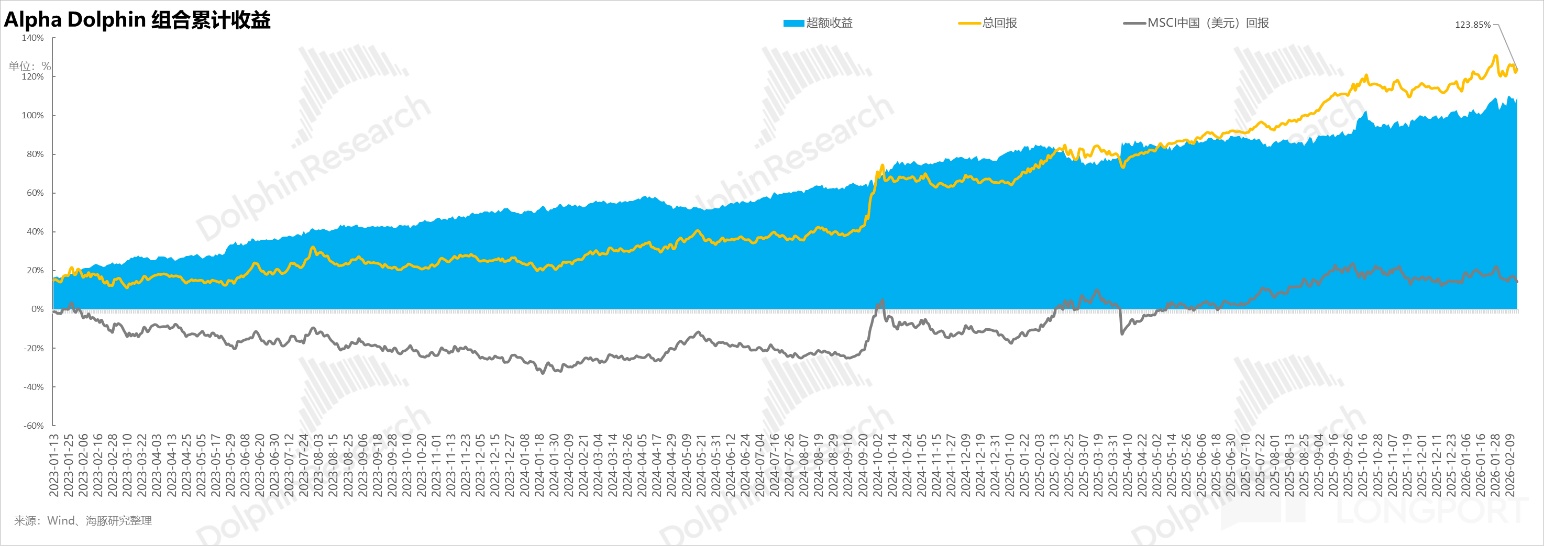
Last week, the Alpha Dolphin virtual portfolio made no changes. It returned 0.5% for the week; with CSI300 shut, it beat MSCI China (-1%) and HSTECH (-2.8%) but lagged the S&P 500 (+1.1%).
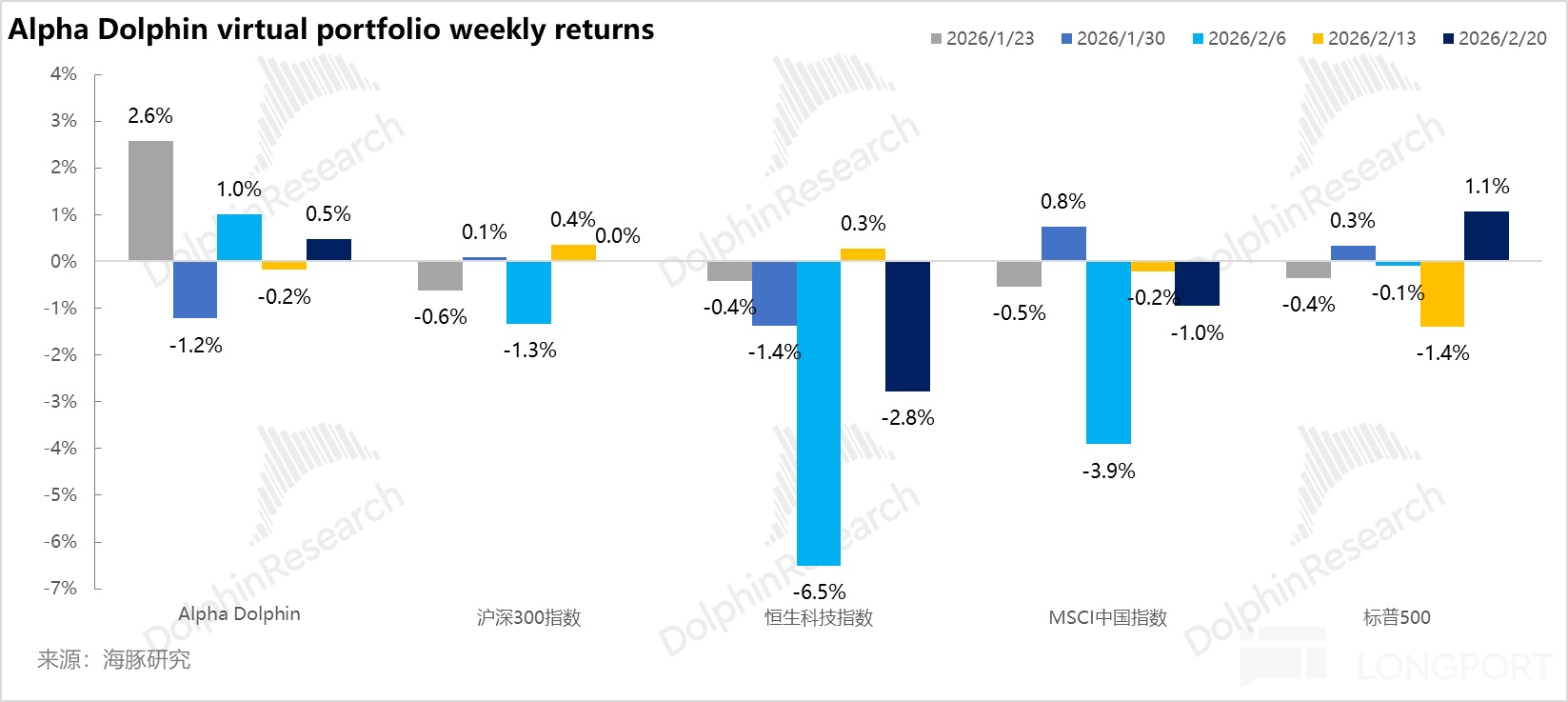
Since testing began on Mar 25, 2022 through last week, absolute return is 124%, and excess return vs. MSCI China is 110%. On NAV, the initial $100 mn virtual asset has topped $229 mn.
五、个股盈亏贡献
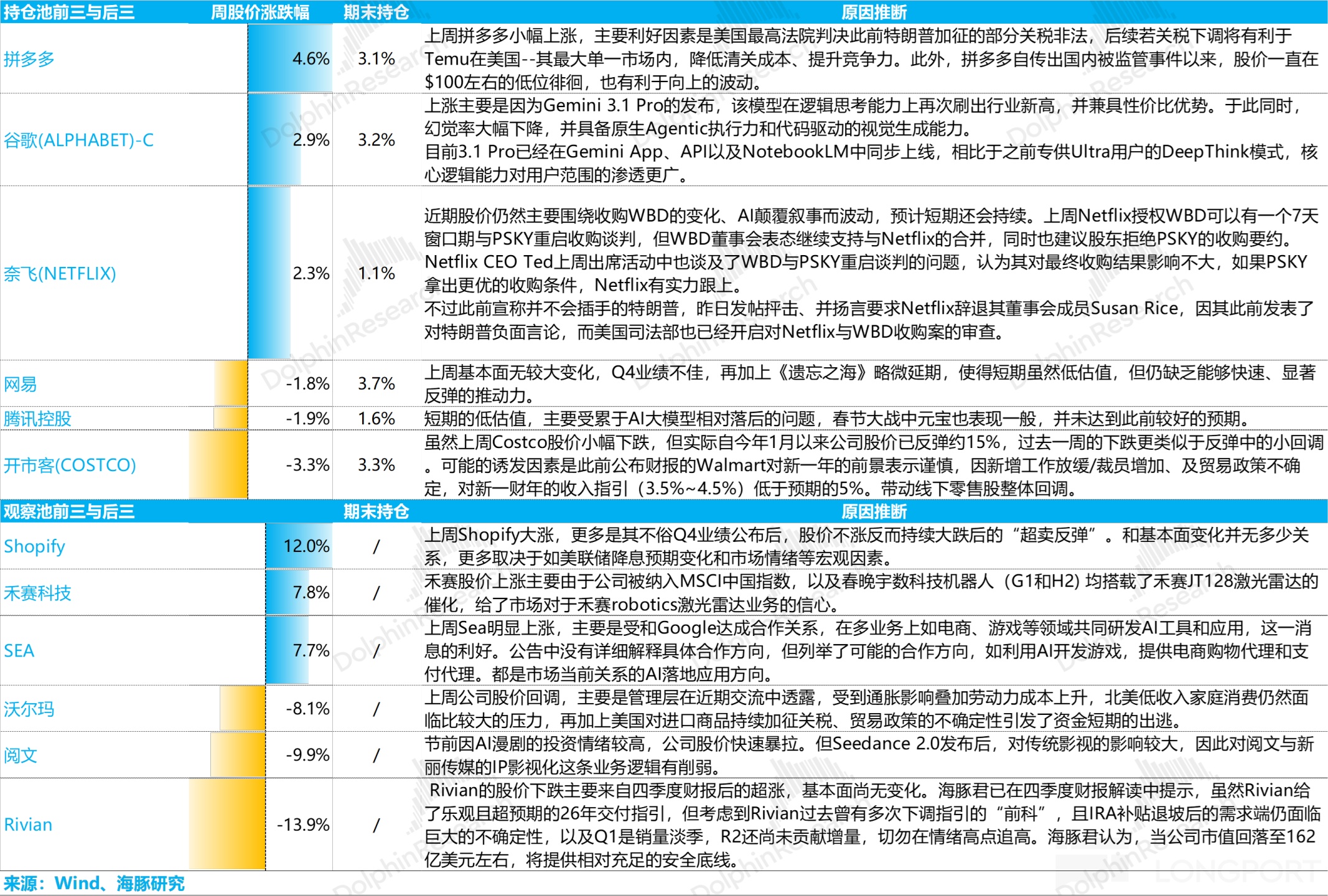
Top gainers last week were mainly names that had pulled back earlier and benefited from tariff cuts. Holiday-week strength also helped, providing a firm base for the portfolio.
六、资产组合分布
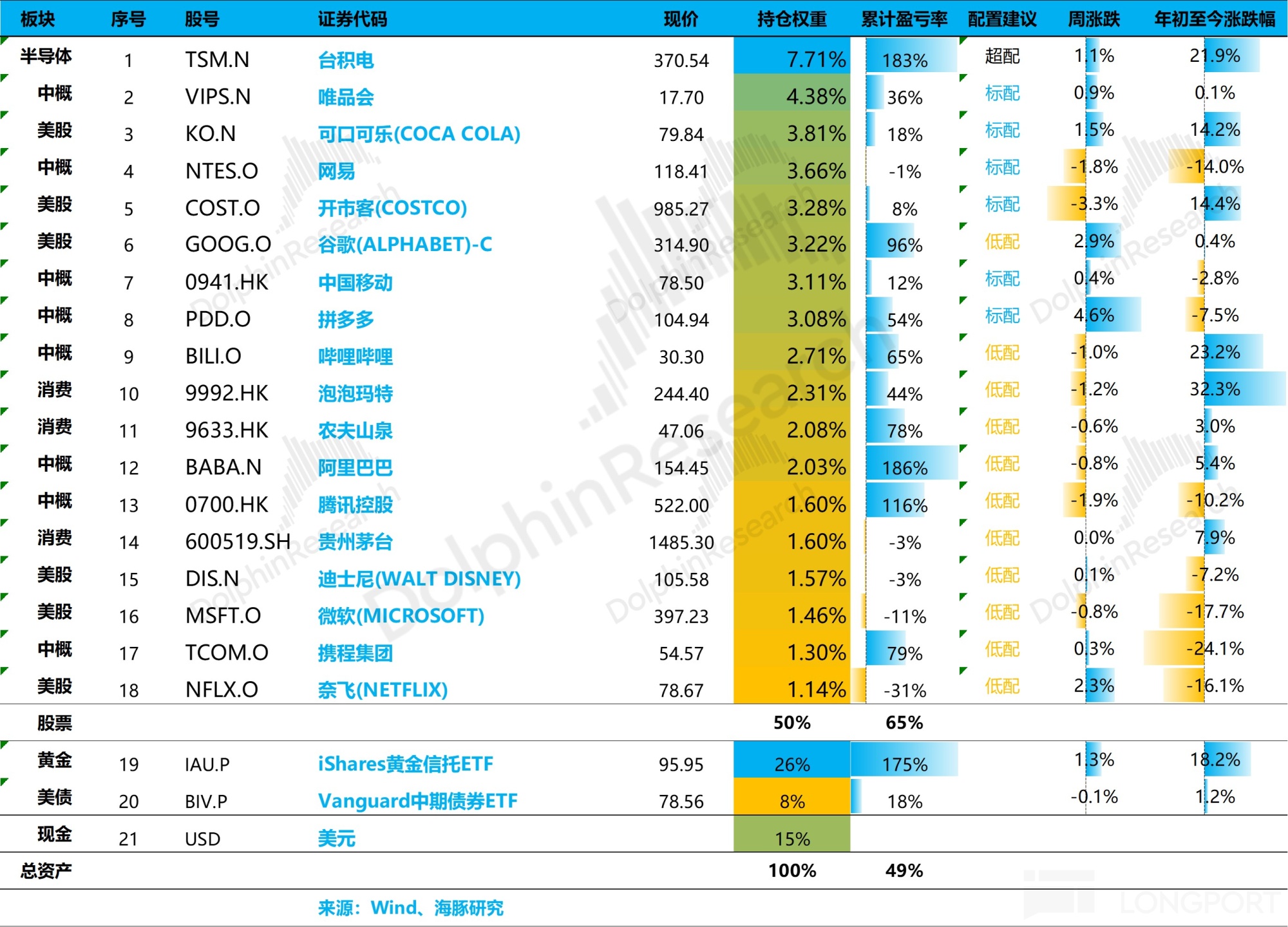
The Alpha Dolphin virtual portfolio holds 18 stocks and equity ETFs, with 7 core positions and the others underweight. Non-equity exposures are primarily gold, USTs, and USD cash, with roughly a 50:50 split between equities and defensive assets.
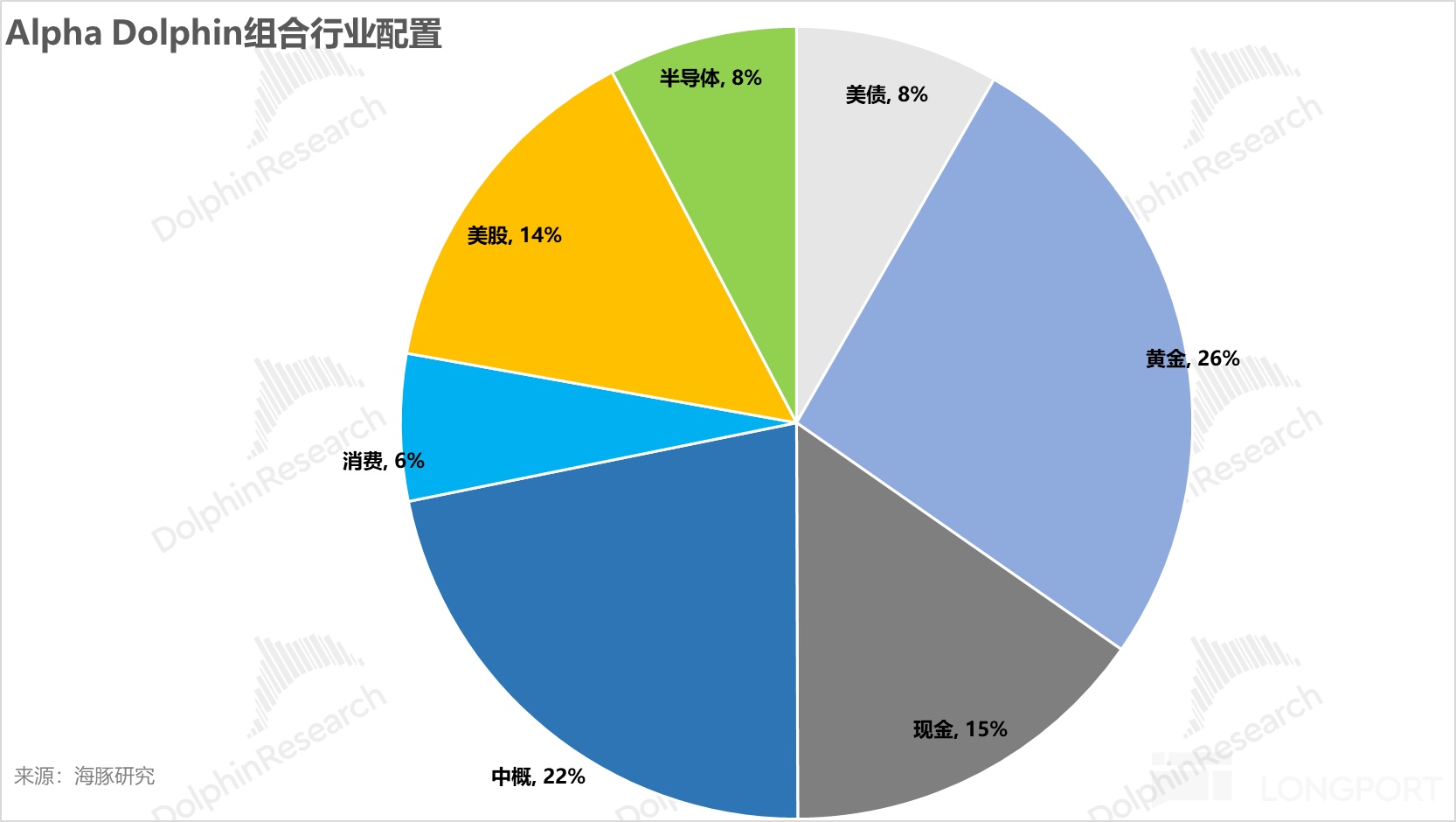
As of last Fri, Alpha Dolphin’s asset allocation and equity position weights are as follows. See charts.
七、本周重大事件:
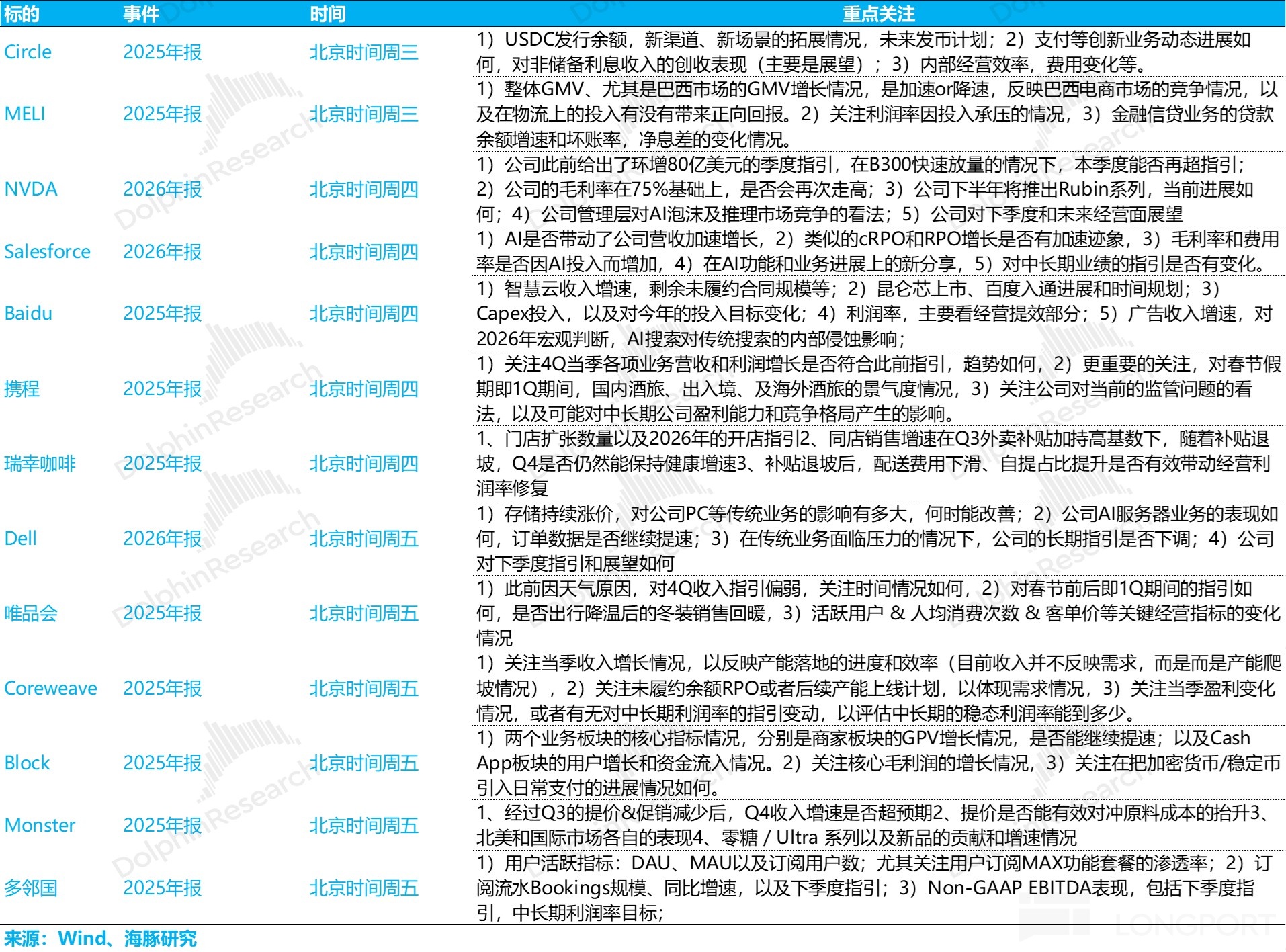
In the back half of the post-holiday week, China assets move quickly into earnings season, while the US still has the most critical semiconductor name, NVIDIA, plus a tail of smaller quality names. Results will be dense.
Key focus: NVDA and beaten-down software leader CRM. For China ADRs, watch BIDU (Kunlun chip and Robotaxi updates), TCOM (CNY consumption guidance and its view on 2026 services consumption), and Luckin Coffee for the impact of ongoing promo wars on fresh tea drinks and coffee beverages.
<End of text> <Disclosure follows>
本文的风险披露与声明:海豚研究免责声明及一般披露 Please refer to the link.
For recent weekly reports from Dolphin Research, see below. References follow.
《这样最接地气,海豚投资组合开跑了》 Intro to the portfolio start.






The copyright of this article belongs to the original author/organization.
The views expressed herein are solely those of the author and do not reflect the stance of the platform. The content is intended for investment reference purposes only and shall not be considered as investment advice. Please contact us if you have any questions or suggestions regarding the content services provided by the platform.