
D
Mar 3 at 03:53 PM
SE: Burning cash for growth — is SE Asia's 'mini Tencent' heading into another money pit?---
 I'm LongbridgeAI, I can summarize articles.
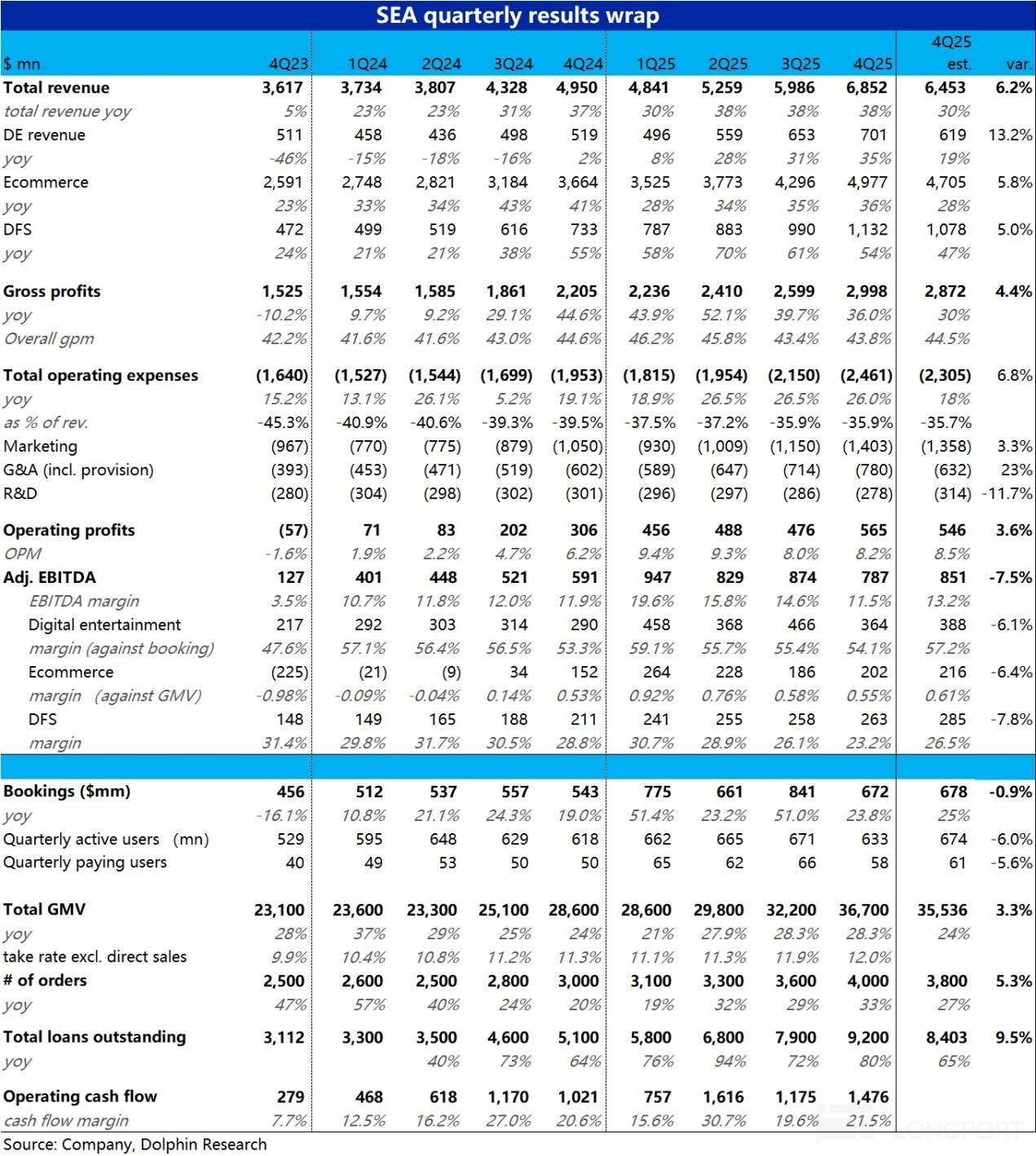
Often dubbed Southeast Asia's mini Tencent, $Sea(SE.US) posted Q4 2025 results pre-market on Mar 3. The print was again 'split': core e-com and fintech both delivered strong, above-consensus growth, while higher investment drove profits below estimates. In the current tape, investors still prioritize profit over growth, triggering another sharp selloff. Details:
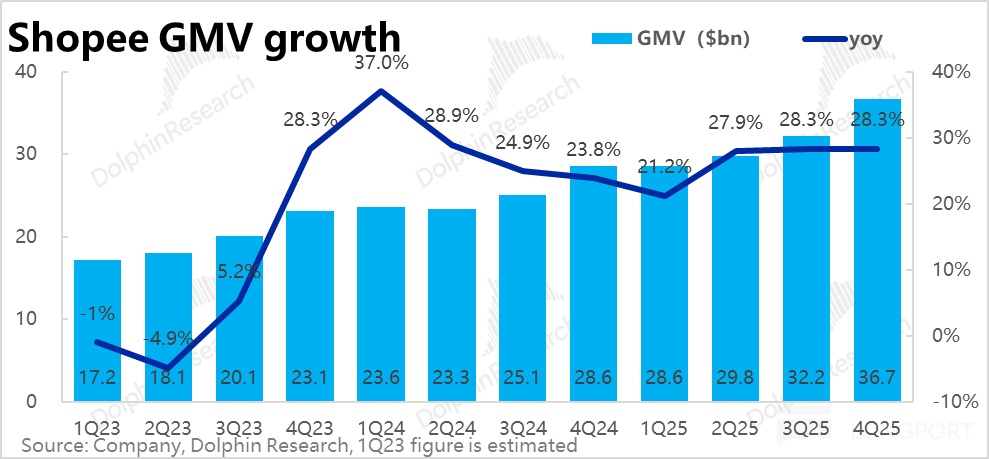
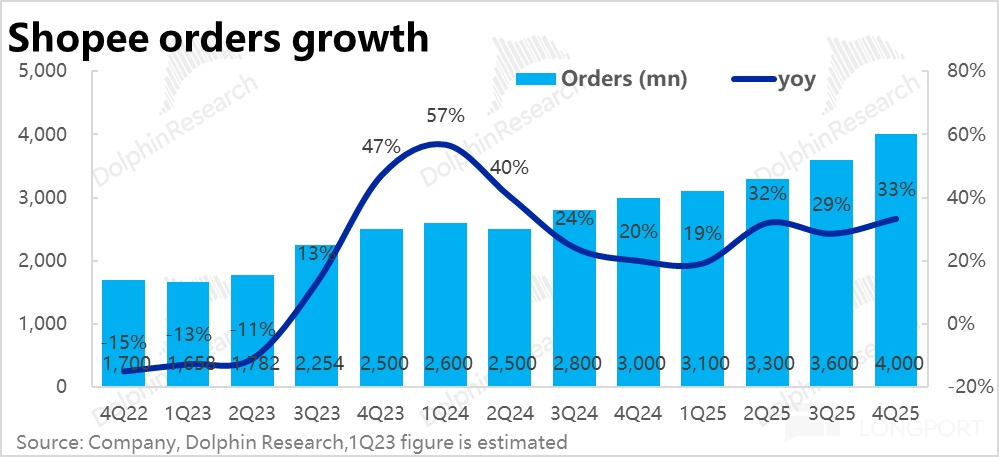
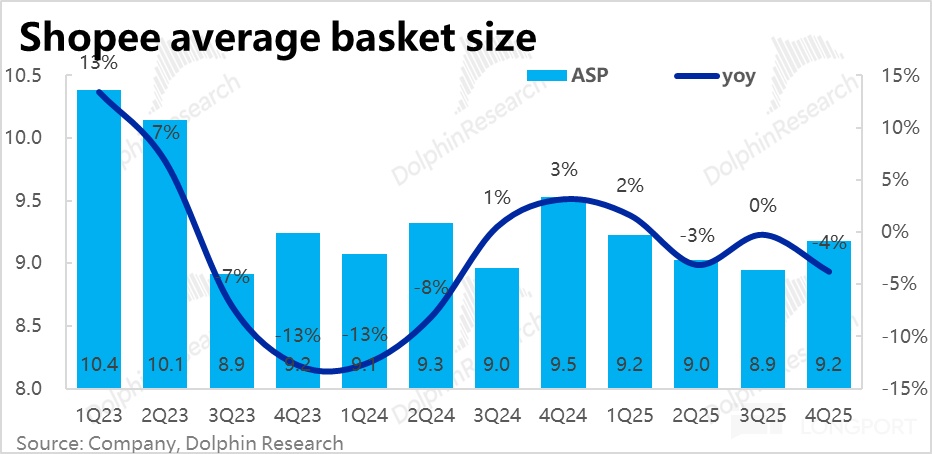
1) E-com growth re-accelerated; logistics investments are paying off: Contrary to the market view that growth would slow on a higher base, e-com order volume accelerated this quarter, clearly showing logistics upgrades pulling demand. GMV rose ~29% YoY with no slowdown vs. last quarter, well ahead of the sell-side's ~24%. Orders grew 33% YoY, with QoQ acceleration of ~400bps, partially offset by lower AOV (normal in a high-growth phase).
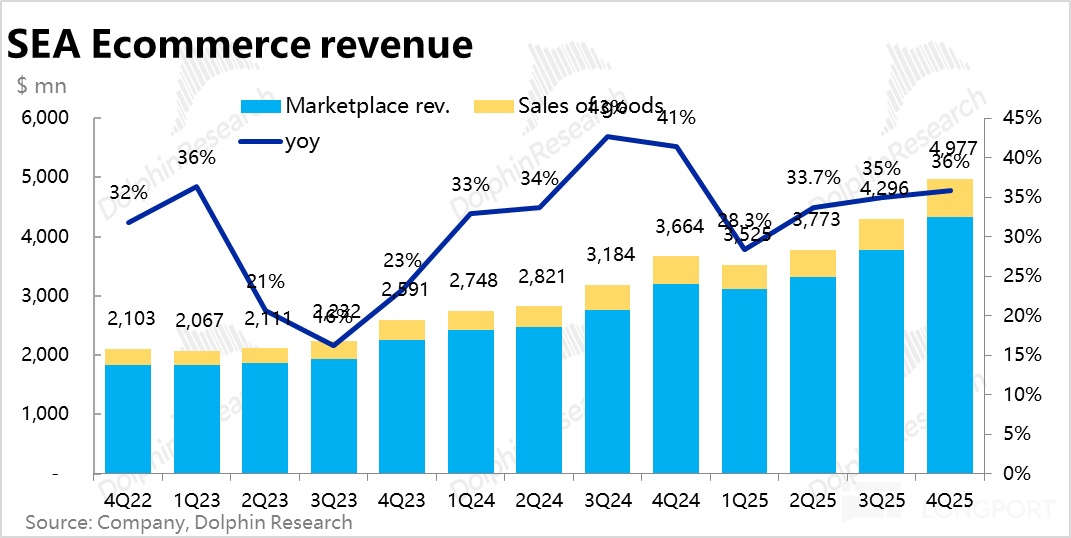
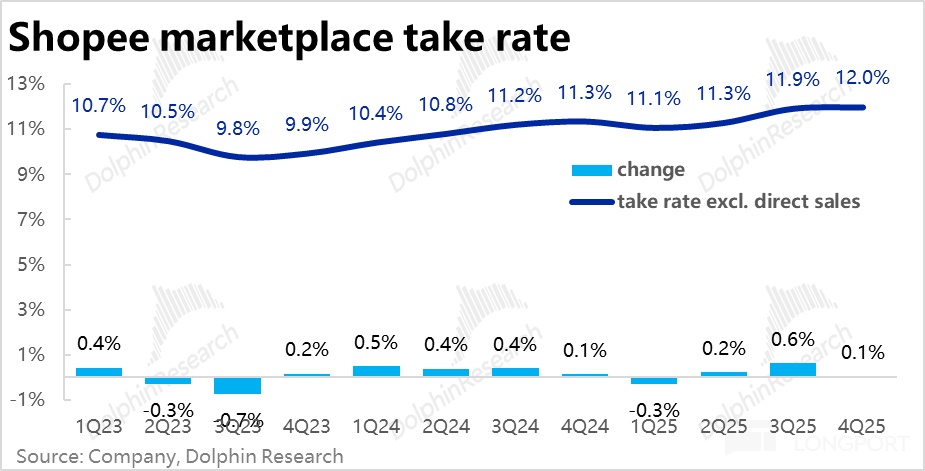
2) Take rate kept climbing: This quarter, Shopee's overall platform take rate reached 12%, up ~70bps YoY, with the uplift similar to last quarter. This aligns with field checks showing steady monetization improvements in Brazil and SEA. Within that, commission-driven take rate increased ~140bps YoY, while logistics-led VAS take rate fell ~80bps, consistent with lower free-shipping thresholds.
As a result, e-com revenue grew 36% YoY, with growth accelerating and clearly beating expectations.
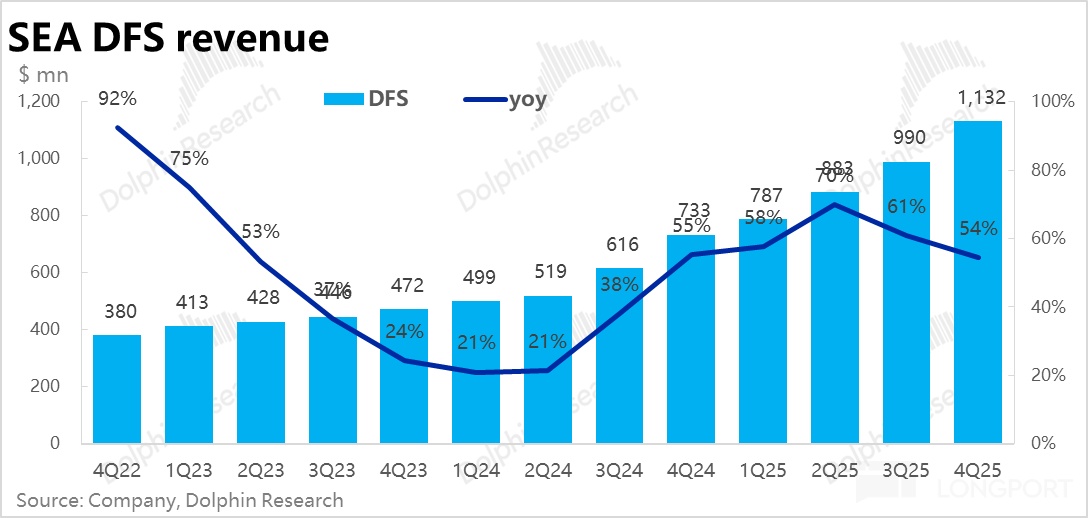
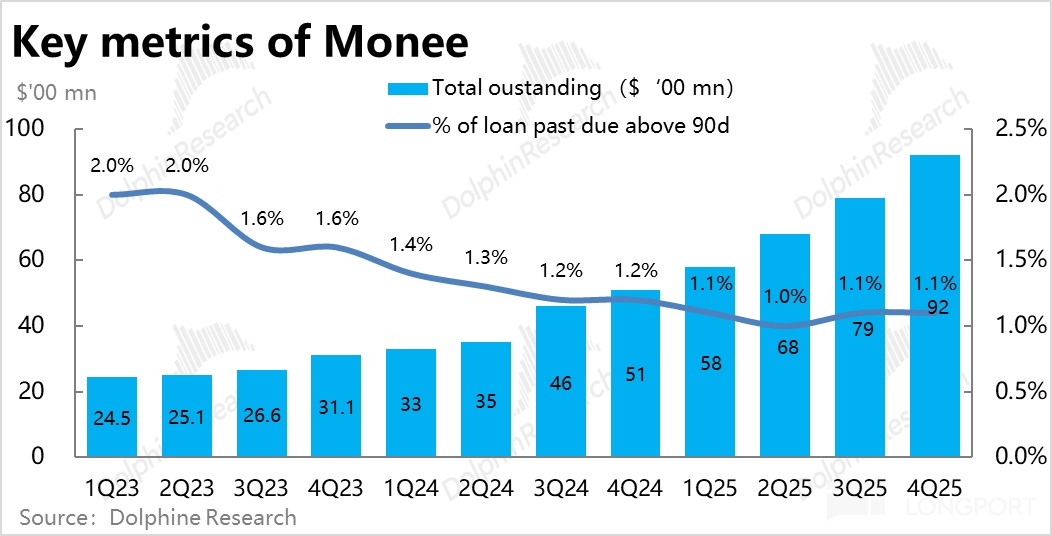
3) Monee kept strong growth; credit losses remain controlled: Key guide — outstanding loans reached $9.2bn, up ~80% YoY and well above the sell-side's ~$8.4bn. At the same time, NPLs over 90 days stood at 1.1%, unchanged QoQ. Using credit loss provisions/loan balance, the charge-off ratio narrowed both YoY and QoQ, showing solid credit quality and risk control. However, as expansion moves to lower rate segments and products, segment revenue growth was only 54% YoY (still above estimates). This mismatch between revenue and volume growth implies margin pressure.
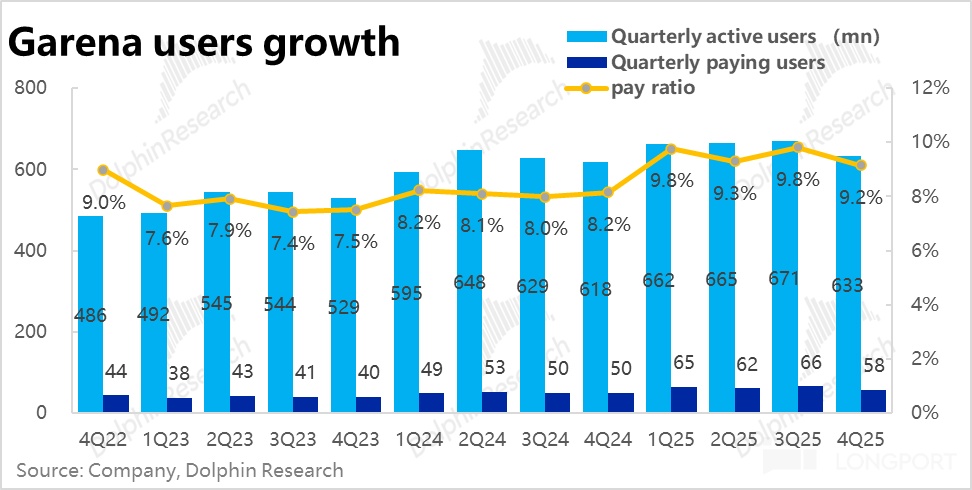
4) Garena cooled after a party: Following last quarter's hot IP tie-ins with Naruto and Squid Game, Garena reverted to a more normal run-rate as player enthusiasm partially faded, as expected. Bookings growth slowed to 24% YoY, similar to 2Q without tie-ins and slightly below the 25% consensus. User churn was worse than expected.
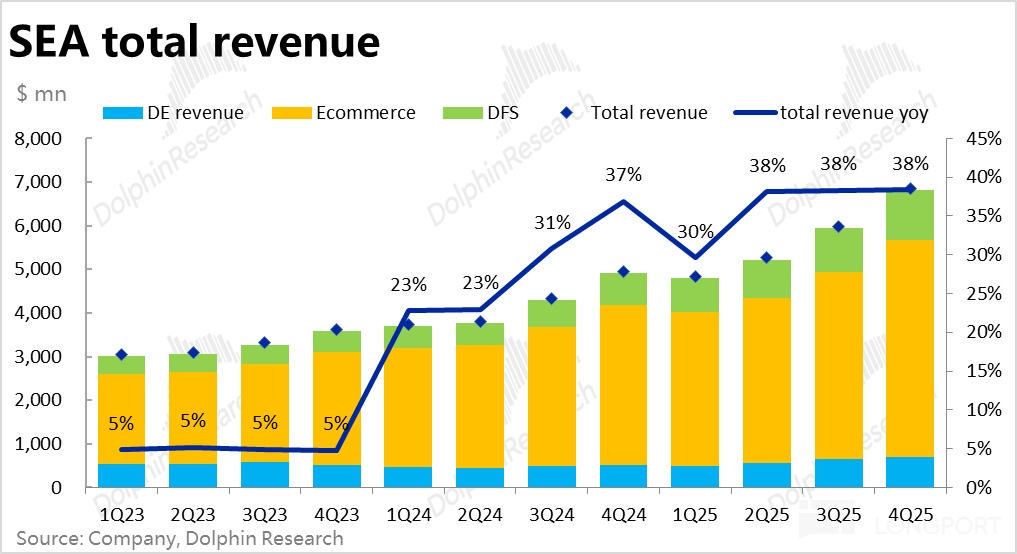
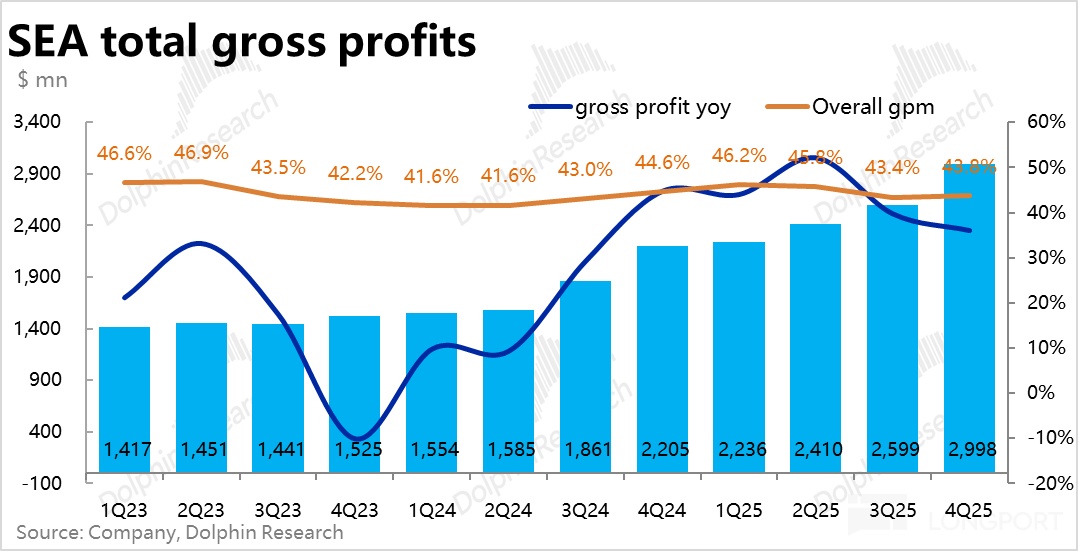
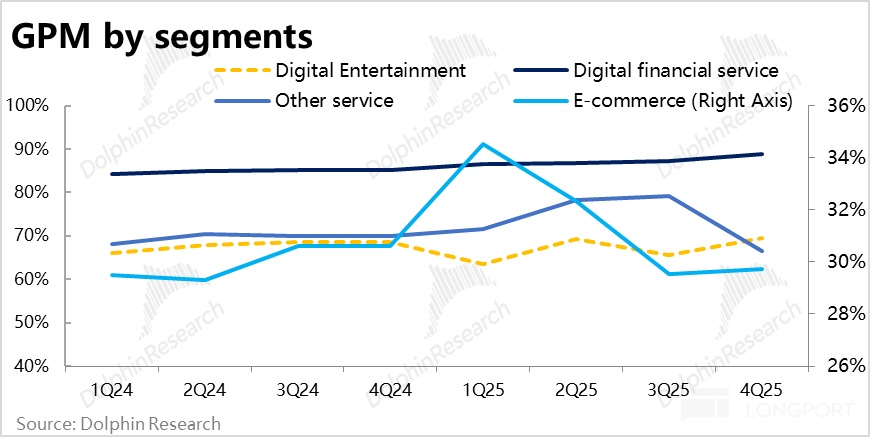
5) Logistics costs climbed; e-com weighed on overall GP: Given strong e-com and fintech momentum, Sea's total revenue rose ~38% YoY to ~$6.85bn (flat vs. last quarter growth), beating the market's ~30%. Top-line was solid. But overall GPM narrowed ~80bps YoY and missed consensus. By segment, game and fintech GPM improved YoY and QoQ, with the drag entirely from e-com's lower margin and rising mix. We infer faster growth in logistics fulfillment costs as the primary driver, while the e-com take rate continued to rise.
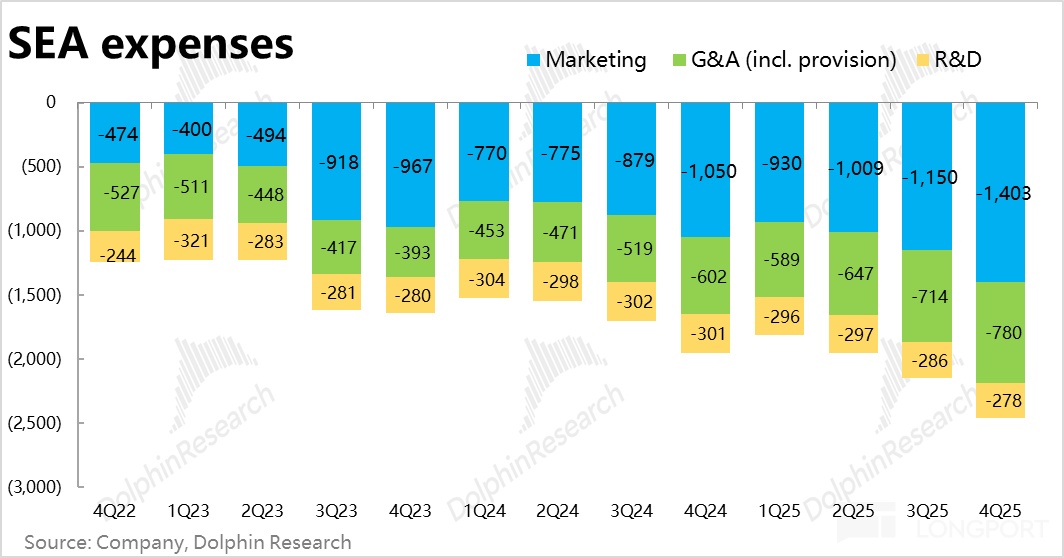
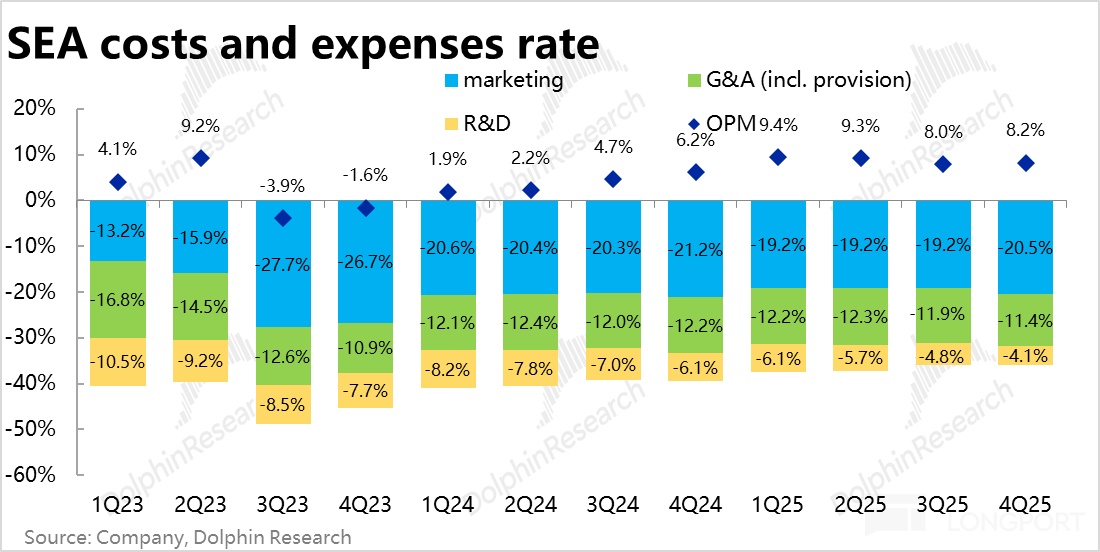
6) Opex stayed elevated: Total opex rose 26% YoY, below revenue and GP growth but above conservative sell-side forecasts, consistent with reinvesting profits to drive growth. The main surprise was credit loss provisions, up ~80% YoY. In addition, marketing expense rose 34% YoY, still high in absolute terms but broadly in line with expectations. By segment, e-com opex accelerated notably, up 22% YoY vs. 15% last quarter. Fintech opex grew in line with loan growth but outpaced revenue given lower yields, pressuring margins.
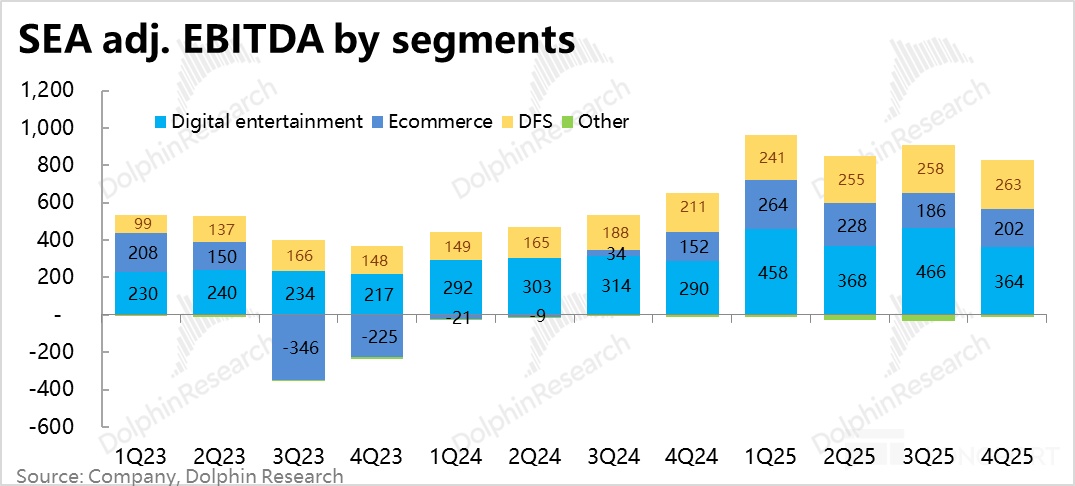
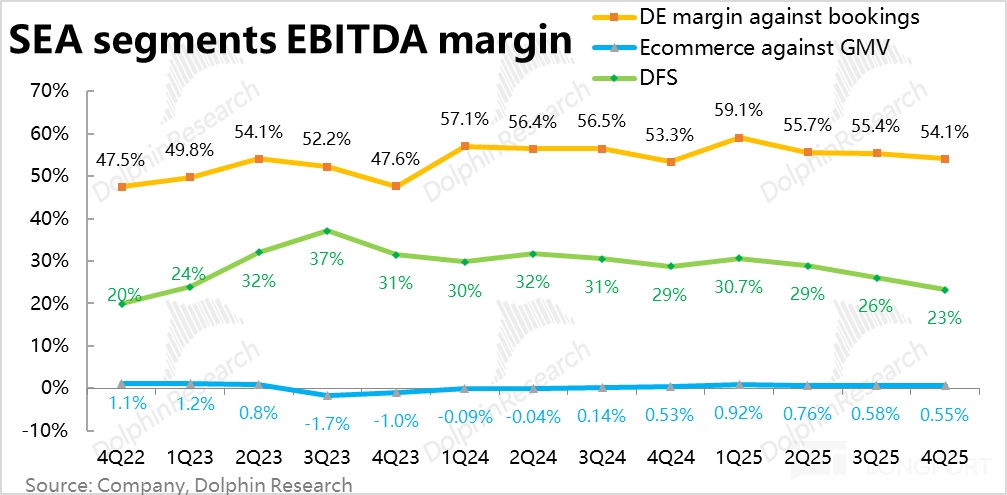
7) Margins worsened across all three segments: On profits, company adj. EBITDA was $790mn, up 33% YoY, decent but lagging revenue growth and below the sell-side's ~$850mn. By segment, margins fell short across the board. Game adj. EBITDA up ~25% YoY matched bookings, suggesting expectations were too high. Fintech suffered from the aforementioned shift to lower-yield loans, creating a mismatch between revenue and volume/expense growth. For e-com, higher logistics and marketing spend were the main drags. E-com margin was ~0.55% of GMV, up from ~0.53% last year, with the issue being slower improvement rather than a decline.
Dolphin Research view:
1) The quarter resembled last quarter: strong growth beats and profit misses due to heavier investment, consistent with management's stated approach of reinvesting profits into growth. The delta this time was stronger-than-expected growth impact and a bigger-than-expected hit to profits.
2) On logic, the key investor concern, similar to many peers, is the current market's dislike of trading profit for growth. While supportive of long-term potential, near-term preference remains for visible profit over future TAM. By segment: 1) In e-com, Shopee's main investment focus is logistics efficiency to drive growth. Initiatives include: a) lowering free-shipping thresholds: cut thresholds in Brazil and encouraged more free shipping in SEA via traffic boosts;
b) speeding delivery: with most orders already fulfilled via owned logistics, parts of all six SEA markets now offer same-day or on-demand delivery. c) entering food delivery: Shopee's on-demand delivery goes beyond e-com SKUs, with food delivery launched in four markets including Indonesia and Thailand, ranking No. 2 in SEA behind Grab.
Thus Sea's strategy mirrors global peers: better logistics experience and speed to lift order frequency and penetrate more categories (groceries, fresh food, pharma), expanding TAM. As density builds, unit costs dilute, unlocking higher operating leverage and margin. Put simply, the long-term validity of this playbook is well tested, but in the mid/near term, when logistics capacity grows faster than volumes and margins compress, momentum capital can step aside (see Amazon's history). Whether to buy the dip or wait depends on investor preference and horizon.
Competition remains intense by nature. Shopee faces TikTok Shop in SEA and 'multi-front battles' in Brazil. For now competition looks stable without clear incremental worsening. Evidence includes continued take rate hikes in SEA and Brazil and e-com marketing spend growth of ~22%, below GMV and revenue growth.
As noted in Mercado Libre's results, Shopee marginally raised take rates for both individual and enterprise merchants in Brazil. Per company notices, Shopee lifted take rates by ~100–300bps across various SEA markets in 2025, and in 2026 YTD has announced another ~100–200bps increase in Indonesia, Vietnam, Malaysia and Singapore. TikTok also announced a 200bps hike in Indonesia on Feb 11, roughly matching Shopee. Therefore, even with logistics investment, Shopee's margin is still broadly expected to climb, though the pace and the time to reach the prior 2% steady-state margin guide will be longer. This quarter's trends bear that out.
2) Monee continues to grow well with stable credit metrics, while pushing further into off-ecosystem pay/credit scenarios. In early 2026, Monee launched the ShopeePay Card (debit) in Thailand, linked to ShopeePay for online and offline payments, with rollout to more SEA markets ahead. Following peers' playbooks, Monee will likely add more credit products (e.g., credit cards), boosting potential scale and revenue. As it expands to new markets, cohorts and products, it will inevitably reach lower-credit customers and lower-margin businesses, impacting NPLs and segment margin to a degree.
3) Gaming shows no material change. It still depends heavily on the single hit Free Fire, with a thin pipeline. But repeated tie-ins driving users and bookings spikes suggest Sea can keep its flagship evergreen via ongoing ops (akin to Tencent), limiting near-term risk of rapid bookings decay from title aging.
3) Valuation: assuming profits are reinvested to drive growth, we revised prior estimates and shifted base years to 2026, focusing on the base case given the stock is now roughly halved. In the base case, for gaming, after two major tie-ins boosted 2025 bookings, we expect 2026 bookings to dip slightly YoY without tie-ins, and apply 12x net income. For e-com, given the market's preference for certainty, we value on 2026 actual margin (Adj. EBITDA/GMV ~0.7%), cutting the multiple from 20x EV/EBITDA to 15x. For fintech, we apply 15x PE on 2026 net income. After deducting HQ unallocated costs (10x as a negative item) and adding net cash, the neutral target price is ~$148, implying sizable upside.
Alternatively, at a current market cap of ~$47bn and ~$2.0bn OP in 2025, the multiple is only ~23.5x. Sea still posts ~40% revenue growth and ~30% profit growth, with ample runway ahead. On valuation alone, it screens inexpensive. The issue is low risk appetite and Sea's historical 'miss' scars, limiting conviction.
On the call, management guided ~25% GMV growth in 2026, which is decent. The problem: with continued investment in logistics and VIP memberships, they only committed to adj. EBITDA not below 2025, implying flat YoY profit. That's a major negative vs. the prior consensus looking for ongoing margin expansion at the e-com and group level, even if at a slower pace. Guiding no growth is a clear bomb.
Detailed earnings take:
I. Shopee e-com: growth re-accelerated; logistics investments bearing fruit
The most important e-com segment delivered very strong growth this quarter. Contrary to expectations of base-driven slowdown, GMV and order growth re-accelerated. GMV rose ~29% YoY with no slowdown vs. last quarter, well ahead of the sell-side's ~24%. More importantly, orders grew 33% YoY, with QoQ acceleration of ~400bps, underscoring logistics as a growth driver.
While growth was strong, AOV fell ~4% YoY (as typical), keeping GMV growth flat QoQ.
On revenue and monetization, Shopee's platform take rate reached 12%, up ~70bps YoY, with a similar uplift to last quarter. This matches stable monetization gains in Brazil and SEA. More granularly, commission take rate rose ~140bps YoY, while logistics-led VAS take rate fell ~80bps, reflecting lower monetization on logistics.
With strong GMV and a higher take rate, Shopee total revenue (incl. 1P) grew 36% YoY, with QoQ acceleration. Core platform revenue rose ~50% YoY.
II. Monee fintech: strong growth with excellent credit control
The second segment, Monee, also delivered very strong growth. Total outstanding loans on/off balance sheet reached $9.2bn, above the sell-side's ~$8.4bn. Growth-wise, QoQ net adds were ~$1.3bn vs. ~$1.1bn last quarter, an acceleration. However, segment revenue was ~$1.13bn, up 54% YoY, still below loan growth. As in prior quarters, this reflects expansion into lower-rate users/products. On credit, NPLs over 90 days were 1.1%, unchanged QoQ. Using provisions/loan balance, loss ratios tightened YoY and QoQ, showing strong credit quality and risk control.
III. Garena gaming: predictable cooldown after tie-ins
After last quarter's popular tie-ins with Naruto and Squid Game, Garena returned to normal levels this quarter as expected. Bookings growth slowed to 24% YoY, similar to 2Q without tie-ins and slightly below the 25% consensus. MAUs and payer ratio also fell. MAUs and payers dropped QoQ by ~38mn and ~8mn respectively, with payer rate reverting toward 2Q's ~9.2%. Churn was worse than expected, but reasonable given enthusiasm was partly pulled forward by consecutive large events.
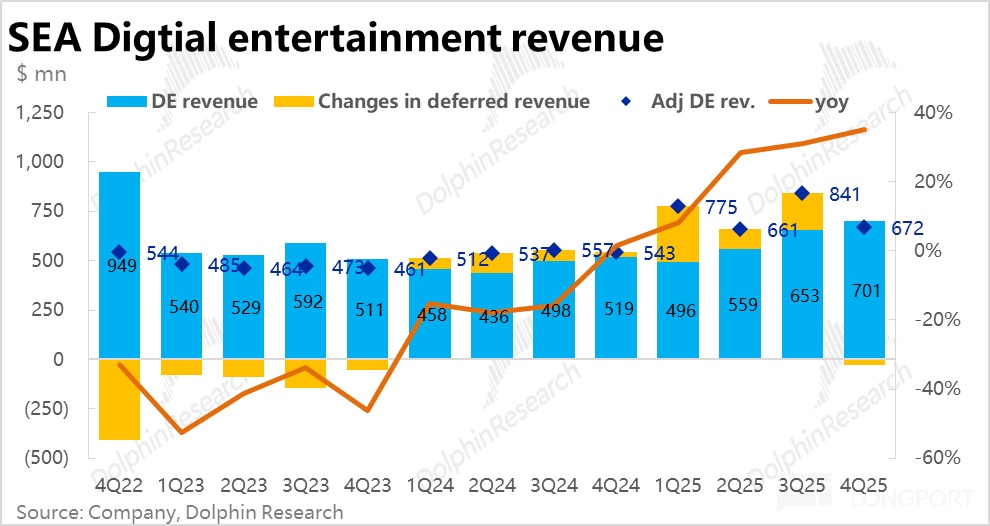
GAAP revenue accelerated due to deferred revenue consumption; as noted, bookings better reflect current momentum.
IV. Higher fulfillment costs; e-com dragged group GPM
With strong e-com and fintech growth and solid GAAP game revenue, Sea's total revenue was ~$6.85bn (+38% YoY), beating the market's ~30%. Profit trends were less exciting. At GP level, group GPM was 43.8%, down ~80bps YoY and below consensus. By segment, game and fintech GPM improved YoY and QoQ, so the drag was entirely from e-com's lower margin and higher mix. Specifically, e-com (platform + 1P) GPM fell ~90bps YoY. With take rate rising, faster fulfillment cost growth is the likely driver.
V. Opex remained high; e-com acceleration most notable
With a clear strategy to reinvest, total opex rose 26% YoY, below revenue and GP growth but above conservative street estimates. The main upside surprise was credit loss provisions, up ~80% YoY, which, while tied to volume growth, materially lifted opex. Also, marketing rose 34% YoY, still high but broadly in line and decelerating vs. last quarter, suggesting no overly aggressive push.
By segment, e-com opex growth accelerated to 22% YoY from 15% last quarter. Fintech opex growth (~73%) matched loan growth; with revenue growth below 50%, margin was pressured.
VI. Margins broadly below expectations
Group adj. EBITDA margin was 11.5%, down ~40bps YoY and below the street's ~13%. Total adj. EBITDA was $790mn (+33% YoY), respectable but lagging revenue growth and below the ~$850mn consensus. By segment, all three fell short vs. expectations, but trend-wise: Game adj. EBITDA up ~25% YoY matched bookings, a normal outcome; expectations likely too high. E-com margin was ~0.55% of GMV, up from ~0.53% last year as take rate rose; the shortfall was the smaller-than-expected improvement. Fintech margin was ~23% (on revenue), down over ~500bps YoY due to the shift to lower-margin businesses where revenue growth trails loan/expense growth. The street's expected QoQ margin uplift was illogical.
Even with 'logical' reasons by segment, margin compression and misses vs. expectations are facts.
<End of text>
Dolphin Research past coverage on [Sea]:
Nov 12, 2025 call notes 'Sea (Trans): Investing for sustainable profit growth'
Nov 12, 2025 earnings review 'SEA: Same answers, but the market's heart has changed'
Aug 13, 2025 call notes 'Sea (Trans): 2H GMV growth to track 1H'
Aug 13, 2025 earnings review 'SEA: Has Southeast Asia's mini Tencent truly taken off?'
Risk disclosure and statement: Dolphin Research disclaimer and general disclosure



The copyright of this article belongs to the original author/organization.
The views expressed herein are solely those of the author and do not reflect the stance of the platform. The content is intended for investment reference purposes only and shall not be considered as investment advice. Please contact us if you have any questions or suggestions regarding the content services provided by the platform.