
D
Mar 4 at 05:36 AM
ATAT: Hotel fandom, retail cash-out — how long can the 'boutique-chic' darling keep winning?---
 I'm LongbridgeAI, I can summarize articles.
Previous Part analyzed how Atour differentiated itself in the mid-to-upscale segment, winning on service in its hotel biz and building a fast-scaling 'second growth curve' in retail anchored by hotel traffic. At this point, how should we think about Atour’s growth, and its investment value? We continue the discussion: $Atour(ATAT.US)
1) Core biz: What is the growth outlook for Atour’s hotel segment?
Atour primarily expands via franchising. With the royalty take-rate unchanged, hotel revenue growth decomposes into RevPAR and footprint expansion. RevPAR is cyclical and tied to sector demand, so we focus on Atour’s own scale growth.Before sizing the footprint, we first assess Atour’s competitiveness in mid-to-upscale hotels on two dimensions.
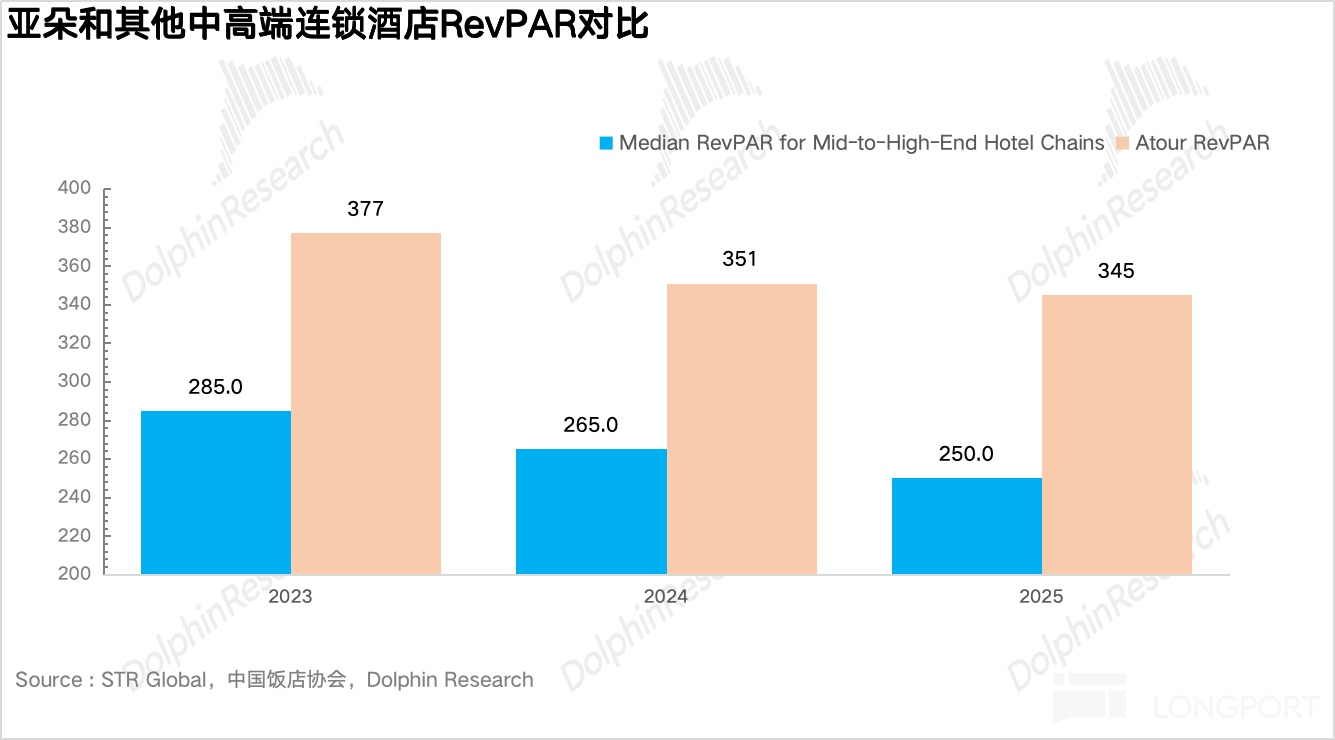
a) Single-hotel revenue: As shown below, from 2023 to 2025, despite industry-wide RevPAR softness, Atour’s RevPAR decline is 8.5%, better than the segment’s ~12% drop, validating Dolphin Research’s view in 'Atour: How the Hotel Industry’s ‘Haidilao’ Was Forged?' that Atour’s experience-first playbook drives brand stickiness in down cycles.
b) From a franchisee’s lens: Comparing single-store models across mainstream mid-to-upscale brands, versus Huazhu’s All Seasons, Atour requires higher upfront capex and staffing per room, but premium ADR from brand equity plus higher-margin retail and lower CAC (deeply integrated hotel & retail membership driving the highest share of member revenue) push Atour’s EBITDA margin to a top-tier level, shortening payback. Only All Seasons’ prime sites in core locations match Atour’s payback profile.Combining a & b, Atour is clearly in the first tier of the mid-to-upscale track on resilience in downturns and on profitability and payback.
Based on the above, we estimate Atour’s store expansion potential via two approaches. As of 3Q25, Atour has 1,948 hotels, including 187 ‘Light’ and 1,761 under the main brand and above (Atour S, Atour X, Sàhé). As these target different users and use distinct expansion logic and store models, we discuss them separately.
Main brand and above:
The main brand is mature, with clear trade-area selection and franchisee qualification standards. Since hotel openings essentially compete for prime trade-area properties, we use hotels per trade area to estimate the upper bound by city tier.Using survey inputs, we benchmark Tier-1 trade areas at 3 Atour hotels, and assume Tier-1.5/Tier-2/Tier-3 & below can host 2.5/2/0.5 respectively (Tier-3 & below are dominated by small trade areas, and Atour’s trade-area criteria are strict, so capacity drops materially).Meituan indicates ~150/400/450/2,000 trade areas for Tier-1/1.5/2/3 & below. This implies a mid-term ceiling of ~3,350 Atour hotels excluding ‘Light’, or ~90% upside vs. current.
From another angle, China Hospitality Assoc. shows ~4.2 mn rooms in mid-to-upscale by 2025. Atour (ex-Light) has ~188k rooms, a 4.5% share. Referencing Frost & Sullivan’s forecast and assuming 6% CAGR for mid-to-upscale rooms in 2025–2030, with Atour’s share rising from 4.5% to 6% (avg. +30 bps p.a., slower than the past 5-year +50 bps p.a.), we derive ~3,152 hotels, cross-validating the first method.
Atour Light:
Background: Atour launched ‘Light’ in 2016 for younger guests, but focused on the main brand, so only 74 stores opened over six years.In 2023, Atour upgraded Light to v3.0, targeting mid-scale young business travelers, aiming to make it a ‘second 1,000-store brand’ complementary to the main brand. By 25Q3, Light is near 200 stores and is Atour’s core push into mid-scale.
Dolphin Research’s comparison shows that versus the main brand, Light preserves core experience elements such as sleep comfort (mattress, bedding, pillows), bath amenities, and service DNA, while trimming room size and value-added services. The brand tone remains consistent.Unlike Huazhu’s All Seasons vs. Hanting, which have distinct brand positions in mid-scale vs. economy, Atour Light and the main brand are product-line splits under the same brand gene serving different segments, with aligned brand tone and value proposition.
This approach brings clear benefits. Leveraging main-brand brand power enables rapid entry into mid-scale, sharply reducing brand-building cost while avoiding dilution of brand tone.On the other hand, as Light’s product stickiness matures, in 3–5 years customers can upgrade to the main brand as spending power rises, enabling natural segment migration.
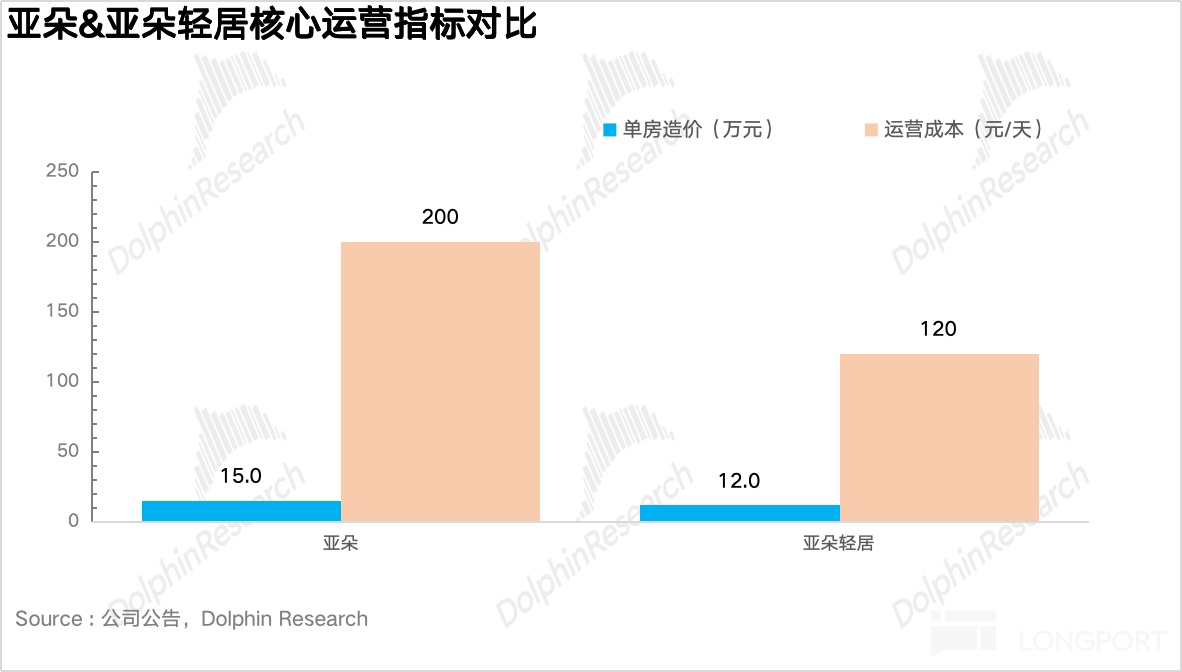
From Light’s competitiveness for franchisees: versus All Seasons, Light requires 20%–30% less total upfront investment. Its smaller area thresholds, lower retrofit complexity, and modular fit-outs further lower entry barriers, benefiting owners with small or irregular properties.However, at the single-store level, Light’s brand power is weaker. In suboptimal locations and lower-tier markets, it lacks the ADR premium of the main brand, while unit opex per room is slightly above All Seasons, lengthening payback. In today’s rational investment climate, Light’s appeal to new franchisees is limited, and over 50% of new Light projects come from repeat Atour franchisees.
Therefore, until Light’s store economics improve notably, it lacks a clear advantage vs. its main mid-scale competitor All Seasons and serves more as a complement to the main brand, attracting investors whose properties fall short of main-brand standards.From an opening pace perspective, Atour is currently supporting Light strongly and the base is small, so Dolphin Research expects high near-term signing velocity. But meeting the plan of adding 800–1,000 Light stores in 2025–2030 (200 per year, 50%+ of Atour’s additions) will be challenging.
2) Where is the ceiling for retail?
Atour’s retail follows a classic hero-product model. Growth will expand from pillows & quilts into deep-sleep mattresses, mattress covers, sleepwear and full-scenario sleep products to cultivate more heroes. Since pillows and quilts account for 80%+ of GMV today, we estimate their headroom.For Atour Planet’s No.1 hero — pillows — Dolphin Research offers two estimation approaches.
a) Member penetration: Most Atour Planet retail GMV comes from converting Atour members. We can estimate member GMV as members × conversion × ASP, then extrapolate to total GMV using the member-share ratio.Atour’s 2024 report shows 89 mn members contributing 63% of orders. With 3.8 mn deep-sleep pillows sold full-year, members contributed ~2.4 mn, implying a 2.7% member conversion (including first purchase and repeat buys).Assuming product iteration and brand strength lift mid-term conversion to 5%, and members rise to 150–180 mn (50%–60% of Huazhu’s program), that implies 7.5–9.0 mn pillows.At an Avg. ASP of RMB 320 (70% PRO series, 30% basic), extrapolating by member share yields RMB 3.7–4.4 bn GMV mid-term for pillows, nearly doubling from ~RMB 2 bn today.
b) Market share:
The China Sleep Health Products White Paper estimates the 2025 memory-pillow market at ~RMB 16 bn, with Atour Planet’s share at ~12%.Frost & Sullivan projects a 13% CAGR over the next five years, implying ~RMB 26 bn by 2029.Competition-wise, after Atour’s 2023–2024 surge in deep-sleep memory pillows, traditional home-textile leaders are elevating memory pillows from a peripheral accessory to a strategic hero, aiming to take share from Atour Planet.
Dolphin Research’s review of leading home-textile entrants shows these incumbents own supply-chain advantages Atour lacks; end-to-end control from fabric R&D to delivery lowers production cost by 15%–20% vs. Atour’s pure ODM model, boosting value-for-money.They have also ramped online marketing and IP tie-ups since 2025 to attract younger consumers. As a result, third-party data show Atour’s share gains in pillows slowed meaningfully starting 2025.
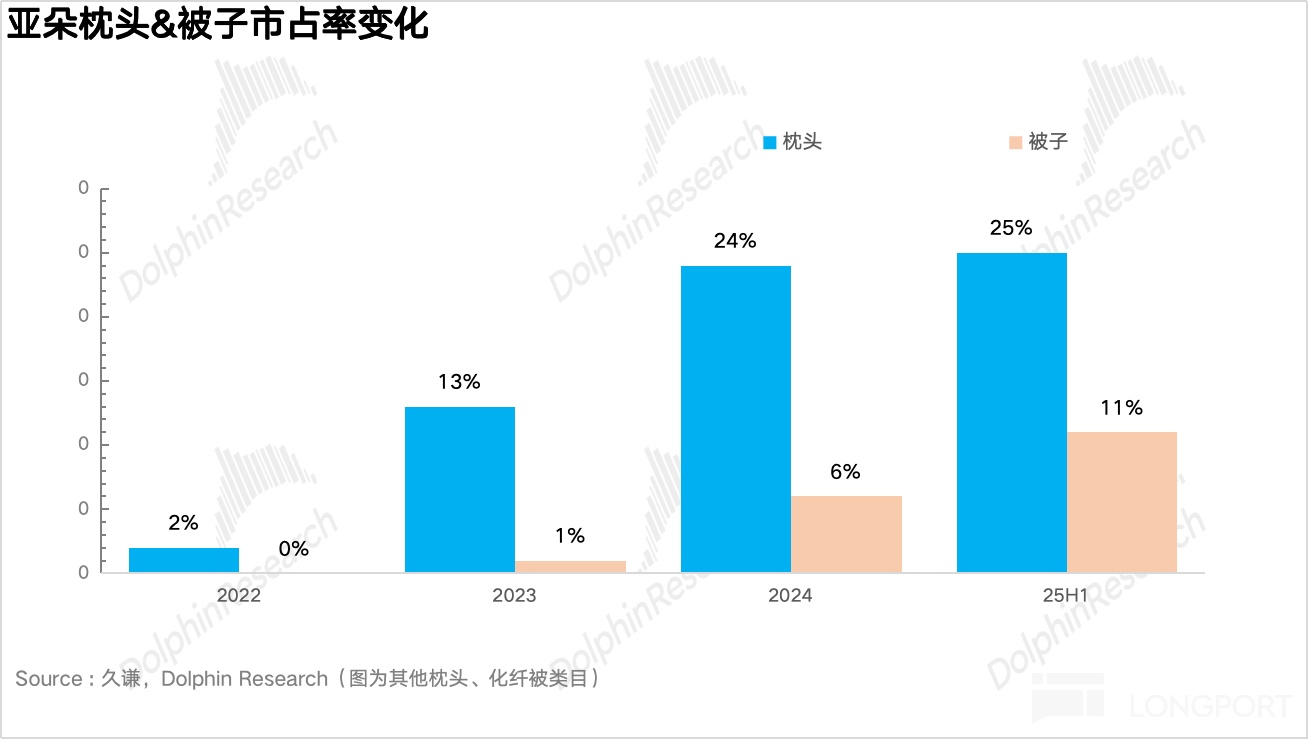
Given this, while Atour defined the ‘deep-sleep pillow’ standard and holds first-mover mindshare, intensifying competition from home-textile giants suggests moderation. Dolphin Research assumes Atour Planet’s share rises modestly to 15% by 2029 (+100 bps p.a.), implying ~RMB 3.9 bn GMV.Triangulating a & b, Atour’s pillow GMV above RMB 4 bn mid-term looks achievable, but breaking RMB 5 bn — let alone becoming a RMB 10 bn hero — will be difficult.
After the flagship deep-sleep pillow, we assess Atour Planet’s No.2 hero — the temperature-control quilt.
While the pillow addresses sleep-quality pain points from body-temperature shifts and uneven pressure distribution, the temp-control quilt’s two advantages — steady temperature and a no-removal cover — target pain points of frequent seasonal replacements and cumbersome washing.Prior to Atour’s 2023 launch, market SKUs existed for either temp-control or no-removal covers. Atour combined these features to solve the traditional trade-off between temperature regulation and easy cleaning.
Thus, from a product-innovation standpoint, the quilt is less disruptive than the pillow and is better viewed as a relatively differentiated product.For go-to-market, Atour replicated the pillow’s winning logic: hotels as the core traffic entry and natural trial venue to lower purchase friction, plus online KOL seeding to close the loop between offline trial and online conversion, driving community diffusion and user conversion.
Results show that, riding the mindshare of ‘Atour = good sleep’ built by the pillow, the temp-control quilt quickly scaled brand momentum, more than doubling for two consecutive years, and reached RMB 1 bn GMV in 2025, becoming the No.2 retail category.
Lastly, using the pillow methodology, Dolphin Research estimates quilts could contribute close to RMB 5 bn GMV mid-term, overtaking pillows as the top hero (quilt ASP is higher). The detailed calculations are shown below.
Sources: Euromonitor, Frost & Sullivan, Dolphin Research estimates
Overall, based on the pillow and quilt roadmaps, as Atour expands into mattresses, covers, sleepwear and full-scenario sleep, users may upgrade from single-product purchases to a full bedroom-sleep solution. Dolphin Research expects 2–3 hero SKUs at RMB 1 bn+ GMV each, with mid-term retail GMV topping RMB 10 bn.
3) How to view Atour’s investment value?
Before valuation, we outline earnings based on the above growth room for the two segments.
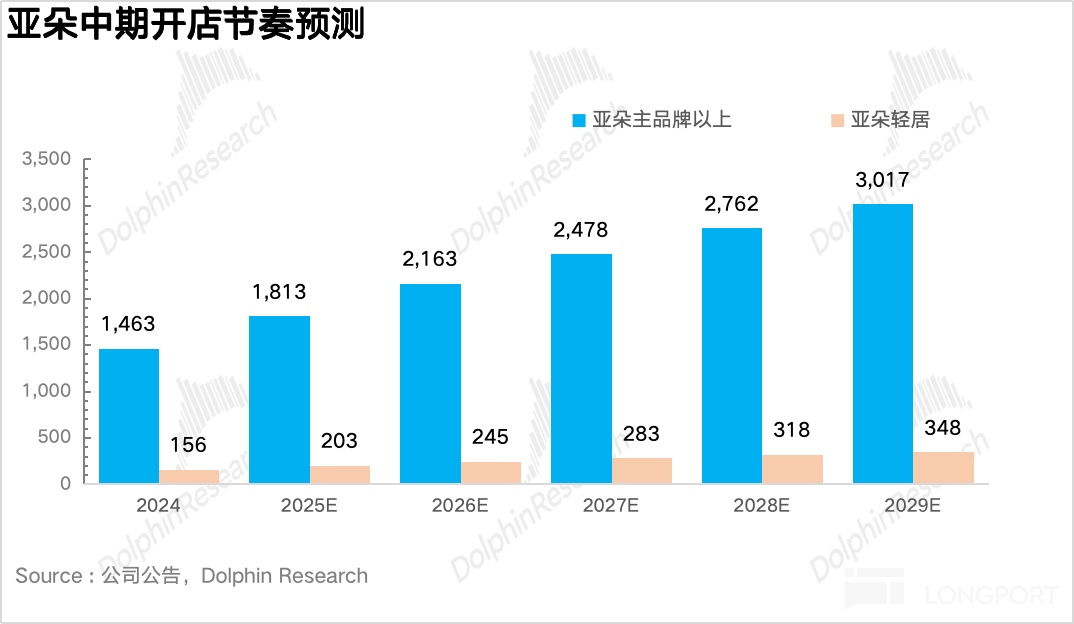
Hotel biz: over the past two years, many independent hotels have shuttered, freeing prime properties in core trade areas and transport hubs. This creates an opportunity for Huazhu, Atour, BTG, etc., to acquire prime assets at low cost and accelerate share gains.Dolphin Research expects the consolidation tailwind to persist near term, so assumes faster expansion for 2026–2027 to cement Atour’s mid-to-upscale lead. Mid-term, once stores exceed 2,500, and referencing Huazhu, Atour slows new openings from 2028 to optimize the base and lift unit efficiency. See the forecast below.
Another key variable is RevPAR, since franchise royalties are taken on actual hotel revenue.
Breaking it down, Atour’s overall OCC (Avg. occupancy) is ~78%, and ~83% for mature stores (2+ years). That is near the top-tier 80%–85%, so upside is limited. Dolphin Research assumes a modest rise to 80% as new stores ramp and Light’s brand power improves.For ADR, management reiterated at investor day that mixing up mid-to-upscale products remains the core strategy for the next 3–5 years. New openings in 2025–2028 under the main brand and above will rise from ~80% to 95%+, so ADR should be the main RevPAR driver, rising from RMB 446/day to RMB 482/day.
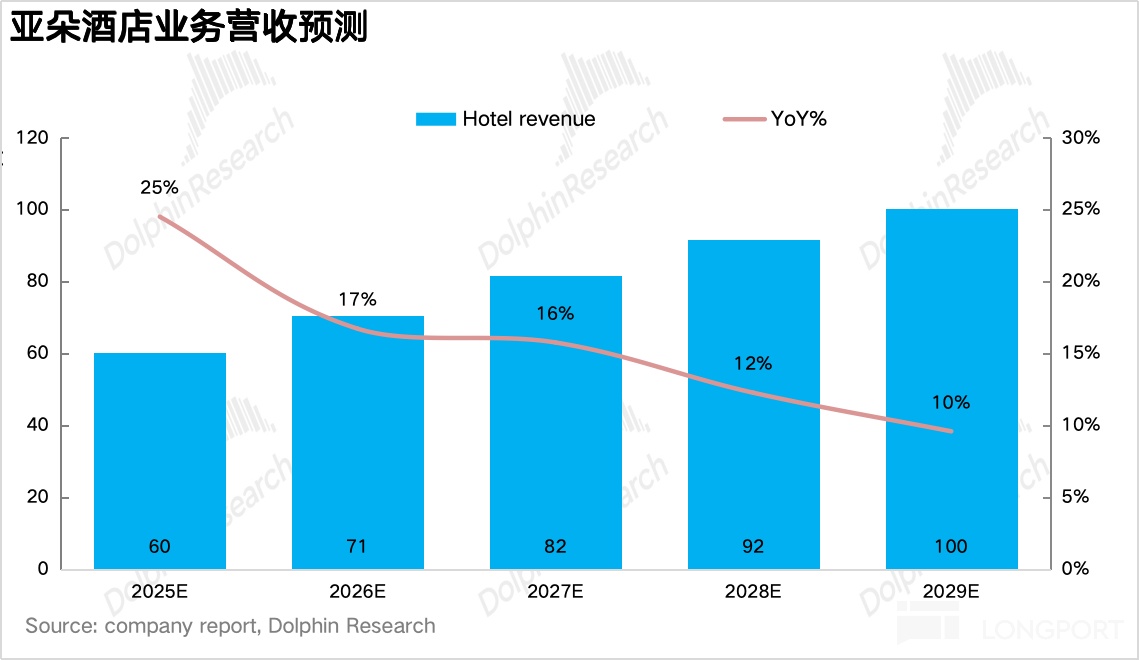
On these assumptions, Dolphin Research forecasts hotel revenue CAGR at 13.5% for 2025–2029.
Retail biz by category:
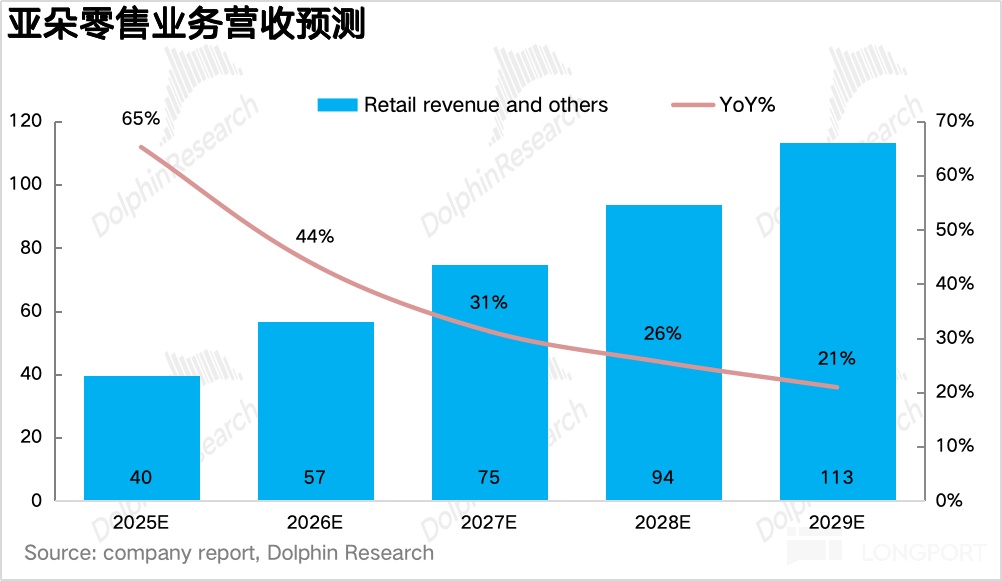
For deep-sleep pillows, after two years of breakout and with home-textile leaders now competing head-on, Dolphin Research assumes decelerating growth, with GMV rising from RMB 2.3 bn in 2025 to RMB 4.1 bn by 2029 (16% CAGR).For temp-control quilts, as large-ticket bed products with higher tech barriers and consumer-education costs, competition is still limited, so Dolphin Research assumes sustained high growth near term, with GMV rising from RMB 1.1 bn in 2025 to RMB 3.2 bn by 2029 (31% CAGR).Beyond these two, Dolphin Research assumes one more bed-product category exceeding RMB 1 bn GMV mid-term. Retail revenue CAGR is estimated at 20% for 2025–2029.
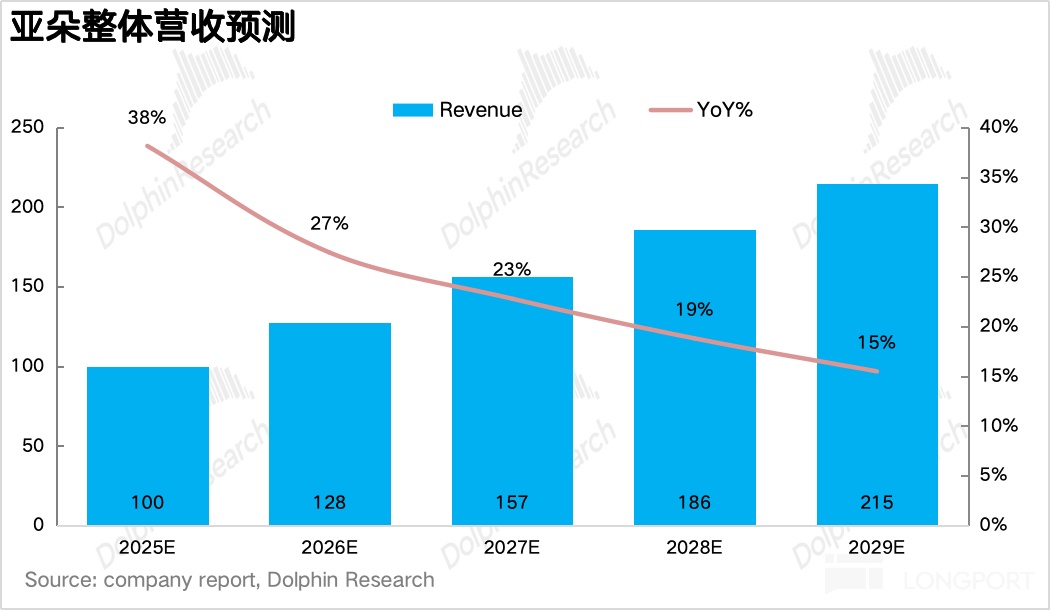
Combining both segments, total revenue is projected to rise from RMB 10.3 bn to RMB 19.0 bn, a 17% CAGR.
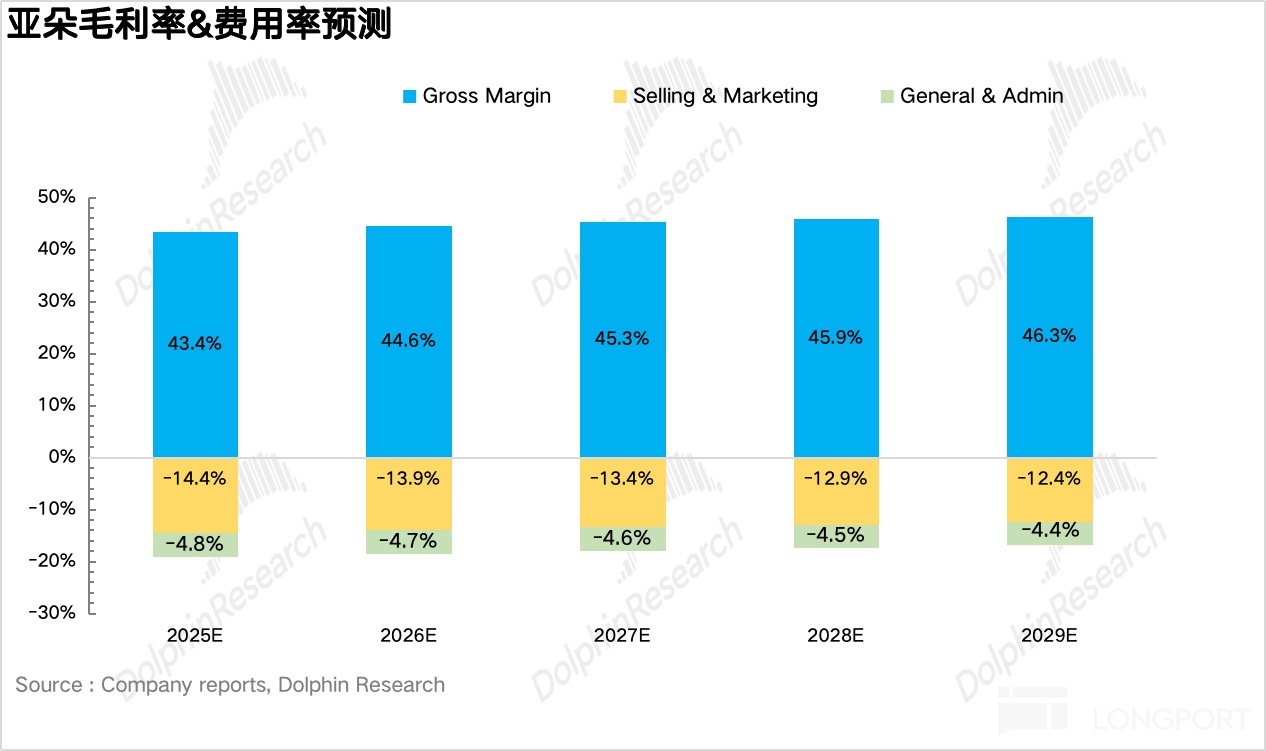
Gross margin: benchmarking Huazhu, as the asset-light franchise mix rises and costs/ops efficiency improve, hotel GPM should rise from 36.4% to 38.4%. With scale effects and product mix upgrades, retail GPM should rise from 53.4% to 55.4%, lifting group GPM from 43.5% to 46.3%.
On opex: with retail scaling from 0 to 1 in the past two years, Atour invested heavily in marketing (celebrity endorsements, live-streaming, online traffic buys) to reinforce Atour Planet’s brand. Dolphin Research assumes sales-expense ratio declines from 14.4% to 12.4% on scale benefits as brand power improves. G&A remains broadly stable, with details shown below.
Ultimately, based on these assumptions, net profit rises from RMB 1.86 bn in 2025 to RMB 4.12 bn in 2029, a 22% CAGR.
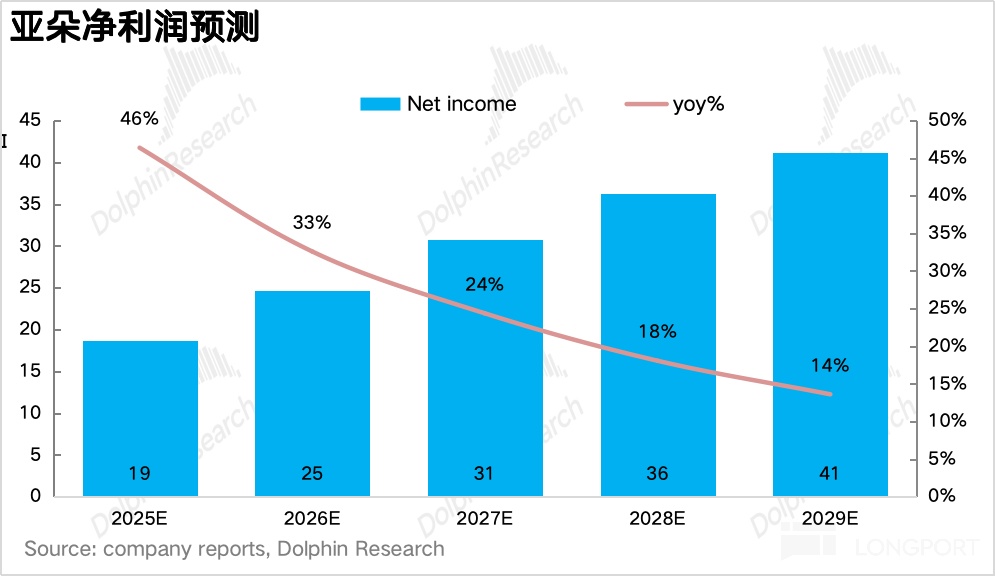
For valuation: given different biz models, we value hotel and retail separately.
Hotel: 2026 revenue is RMB 7.1 bn. Survey-based estimates imply ~32% EBITDA margin (about 200 bps below Huazhu), or RMB 2.3 bn EBITDA.Huazhu’s 2026 EV/EBITDA is ~12x in Dolphin Research’s model. Given Atour’s 2025–2029 hotel CAGR at 13.5% vs. Huazhu’s mid-single-digit, we apply a growth premium at 15x EV/EBITDA, implying RMB 34.5 bn for the hotel segment.
Retail: with 70%+ growth in 2025, we value at mature-stage net income using peer PE.Assuming retail enters steady growth post-2029, with 20% profit growth in 2029 on RMB 11.3 bn revenue and 8% net margin (RMB 0.9 bn net income), applying 15x PE (12–15x for mature home-textile leaders, adding some premium for hotel+retail synergies) and discounting back to 2026 at WACC=10.6% yields ~RMB 9.0 bn PE value.
Total equity value is ~RMB 43.5 bn (~USD 6.3 bn), ~17% upside vs. current.
On DCF, with WACC=10.6% and terminal growth at 3%, the neutral-case DCF is also ~USD 6.3 bn, ~16% upside, broadly validating the relative valuation.
4) Summary: A ‘small but beautiful’ dual-engine name
Across both parts, Atour’s growth path differs from traditional chains that scale predominantly through footprint. It pursues a hotel + retail dual engine — not by 'burning cash' for scale, but by first building stickiness via mid-to-upscale experience, then scaling efficiently through franchising, and finally converting hotel scene traffic into retail value via deeply integrated memberships, creating a virtuous cycle distinct from pure hotel or pure home-textile chains.
However, the true inflection will come when hotel expansion hits a ceiling, single-product retail meets home-textile giants head-on, and traffic dividends peak. Whether Atour can reduce reliance on new-store expansion + single-product hits and instead drive steady organic growth via deeper member-value mining and cross-biz synergies will be the real test of long-term vitality and differentiation.
The crux is shifting consumer behavior from a one-off stay or a single pillow purchase to recognizing Atour’s sleep experience and repeat-buying across the full product line.And shifting company growth from exogenous new-store + single-product dividends to endogenous membership value + dual-biz synergies. Only then can Atour avoid substitution amid franchise competition and intensifying home-textile rivalry and truly realize long-term dual-engine value.
<End>
Related reading:
‘Atour: How the Hotel Industry’s ‘Haidilao’ Was Forged?’
Risk disclosure & statement:Dolphin Research Disclaimer & General Disclosure






The copyright of this article belongs to the original author/organization.
The views expressed herein are solely those of the author and do not reflect the stance of the platform. The content is intended for investment reference purposes only and shall not be considered as investment advice. Please contact us if you have any questions or suggestions regarding the content services provided by the platform.