

 Traded Value
 Rate Of Return
Review of early February and March 2026

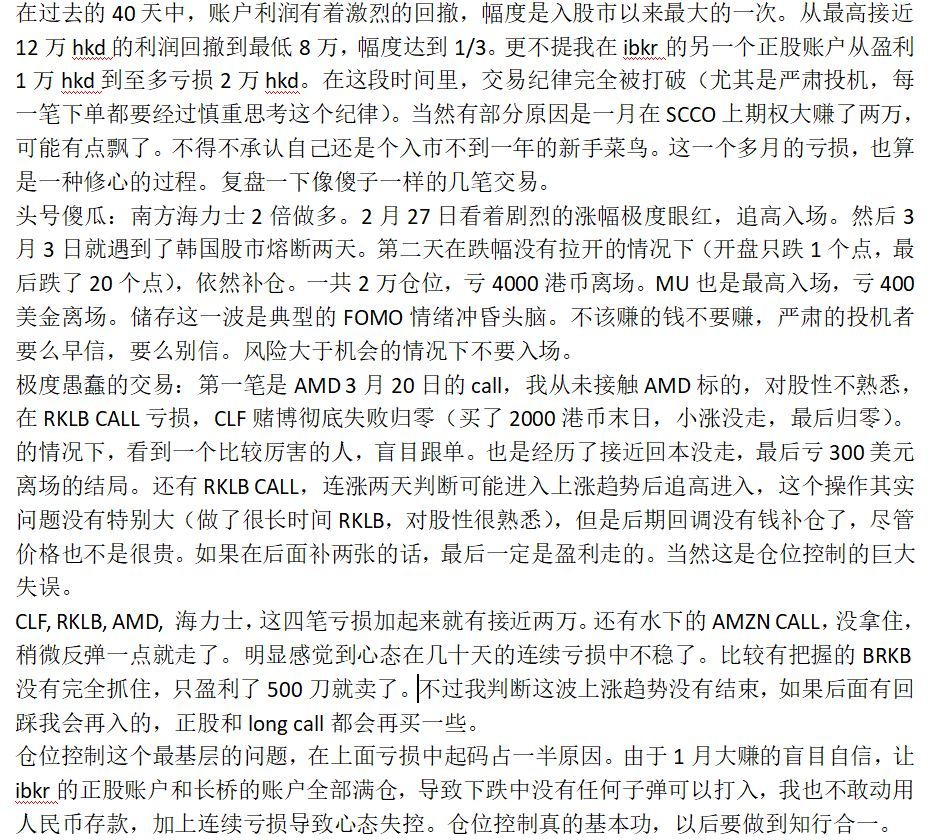
$AMD(AMD.US) $XL2CSOPHYNIX(07709.HK) The text written in Word cannot be copied to Longbridge, not sure what's going on, taking a screenshot. (It's working again now.)
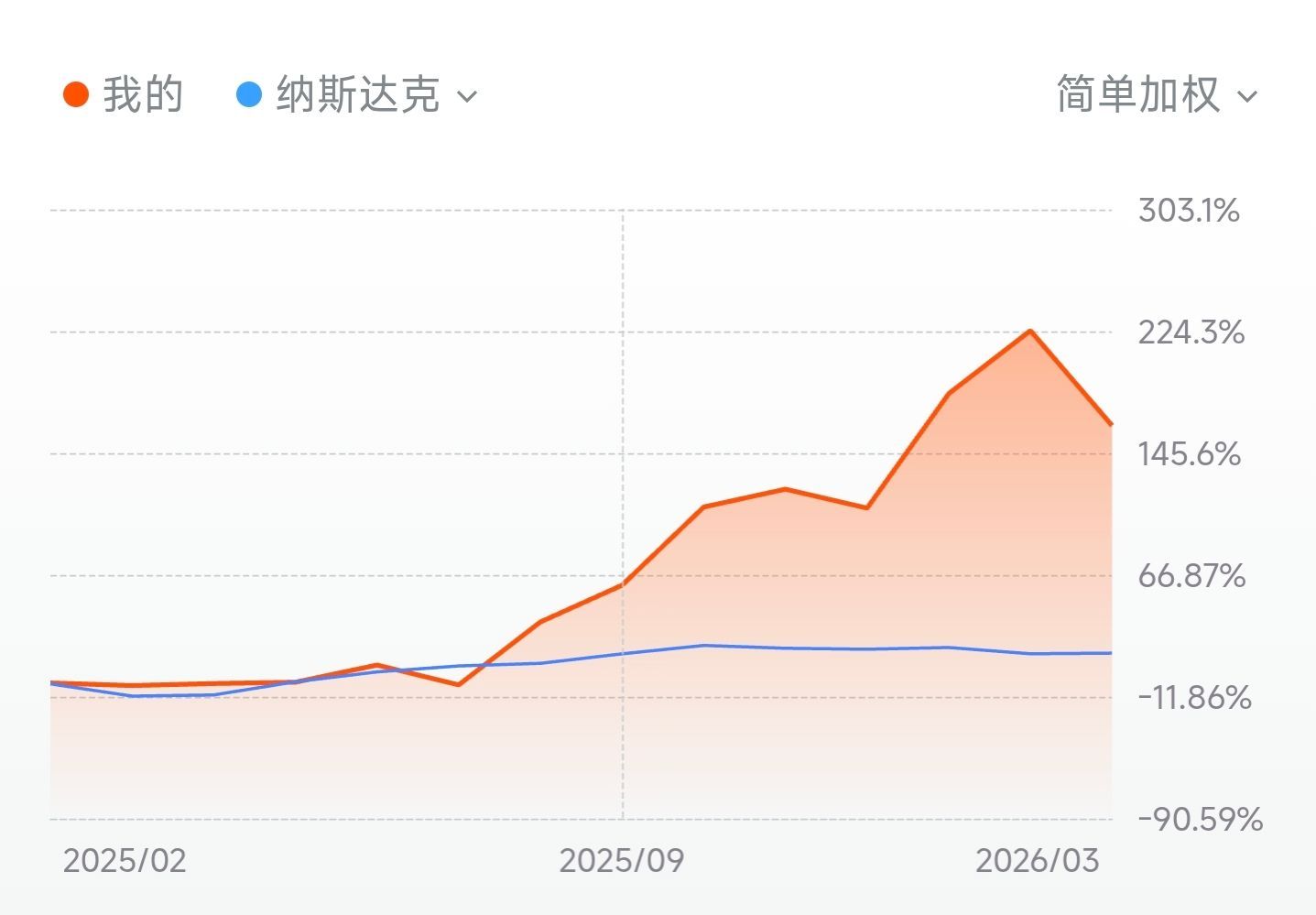
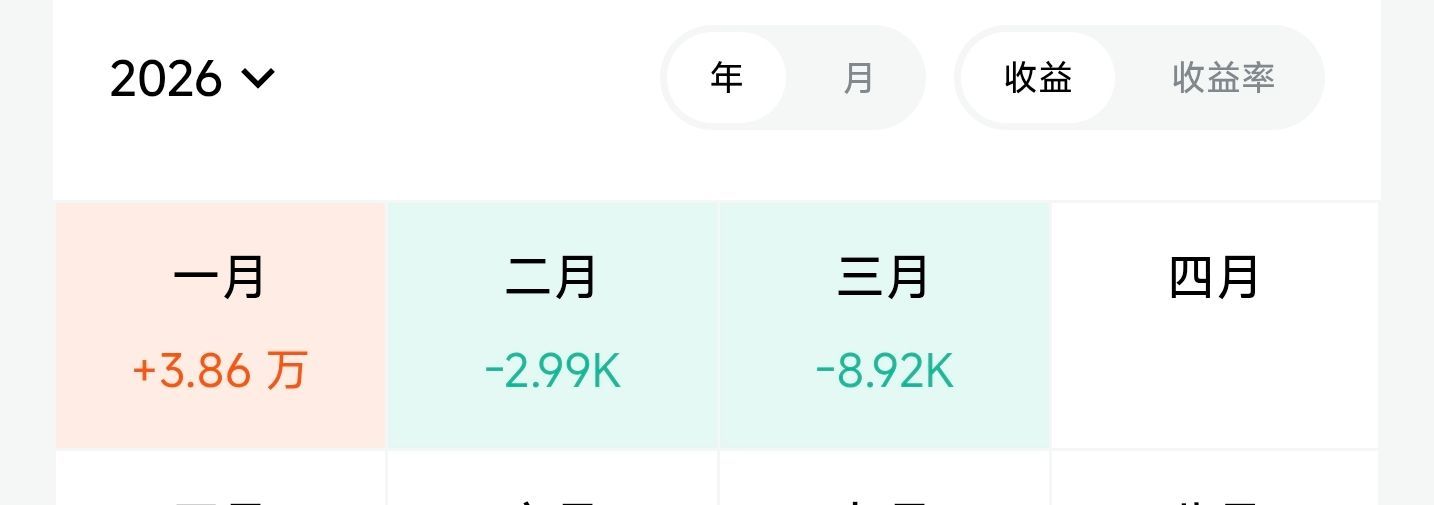
Over the past 40 days, the account profit has experienced a sharp drawdown, the largest in magnitude since entering the stock market. From a peak of nearly 120,000 HKD in profit, it drew down to a low of 80,000, a magnitude of one-third. Not to mention my other stock account at IBKR went from a 10,000 HKD profit to a maximum loss of 20,000 HKD. During this period, trading discipline was completely broken (especially the discipline of serious speculation, where every order should be carefully considered). Of course, part of the reason was making a big 20,000 HKD profit on SCCO options in January, which might have led to overconfidence. I have to admit I'm still a rookie with less than a year in the market. The losses over this past month or so can be considered a process of mental cultivation. Let's review a few trades that were as foolish as a fool.
Number one fool: Samsung 2x Long ETF. On February 27th, seeing the dramatic surge, I was extremely envious and chased the high to enter. Then on March 3rd, I encountered the South Korean stock market circuit breaker for two days. The next day, even though the drop hadn't widened (opened down only 1%, ended down 20%), I still averaged down. With a total position of 20,000, I exited with a 4,000 HKD loss. MU was also entered at the peak, exited with a 400 USD loss. This storage wave was a classic case of FOMO clouding judgment. Don't try to make money you shouldn't; a serious speculator either believes early or doesn't believe at all. Don't enter when the risk outweighs the opportunity.
Extremely stupid trades: The first was the AMD March 20th call. I had never touched the AMD ticker, was unfamiliar with its stock behavior, in the context of RKLB CALL losses and CLF gambling completely failing to zero out (bought 2,000 HKD worth of expiring options, didn't exit on a small rise, ended up zero), I saw someone who seemed quite skilled and blindly followed. Also experienced being near break-even and not exiting, ending up leaving with a 300 USD loss. And the RKLB CALL, after two consecutive up days, judged it might be entering an uptrend and chased the high to enter. This operation wasn't particularly problematic (have been trading RKLB for a long time, very familiar with its behavior), but later during the pullback, I had no money to average down, even though the price wasn't very expensive. If I had bought two more contracts later, I definitely would have exited with a profit. Of course, this was a huge mistake in position sizing.
CLF, RKLB, AMD, Samsung, these four losses add up to nearly 20,000. There's also the underwater AMZN CALL, didn't hold on, exited after a slight bounce. Clearly felt that my mentality was unstable after dozens of days of consecutive losses. Didn't fully capture the more confident BRKB, only made 500 USD profit and sold. But I judge this uptrend isn't over; if there's a pullback later, I'll re-enter, will buy some more shares and long calls.
The most fundamental issue of position sizing accounts for at least half the reason for the above losses. Due to the blind confidence from the big win in January, I went fully invested in both the IBKR stock account and the Longbridge account, leaving no bullets to deploy during the decline. I also didn't dare to use RMB deposits, and the consecutive losses led to a loss of mental control. Position sizing is truly a basic skill; in the future, I must achieve unity of knowledge and action.
The copyright of this article belongs to the original author/organization.
The views expressed herein are solely those of the author and do not reflect the stance of the platform. The content is intended for investment reference purposes only and shall not be considered as investment advice. Please contact us if you have any questions or suggestions regarding the content services provided by the platform.
