
D
Mar 19 at 04:10 PM
Horizon Robotics’ NVDA-Alt. Bid: Is It at Risk?---
 I'm LongbridgeAI, I can summarize articles.
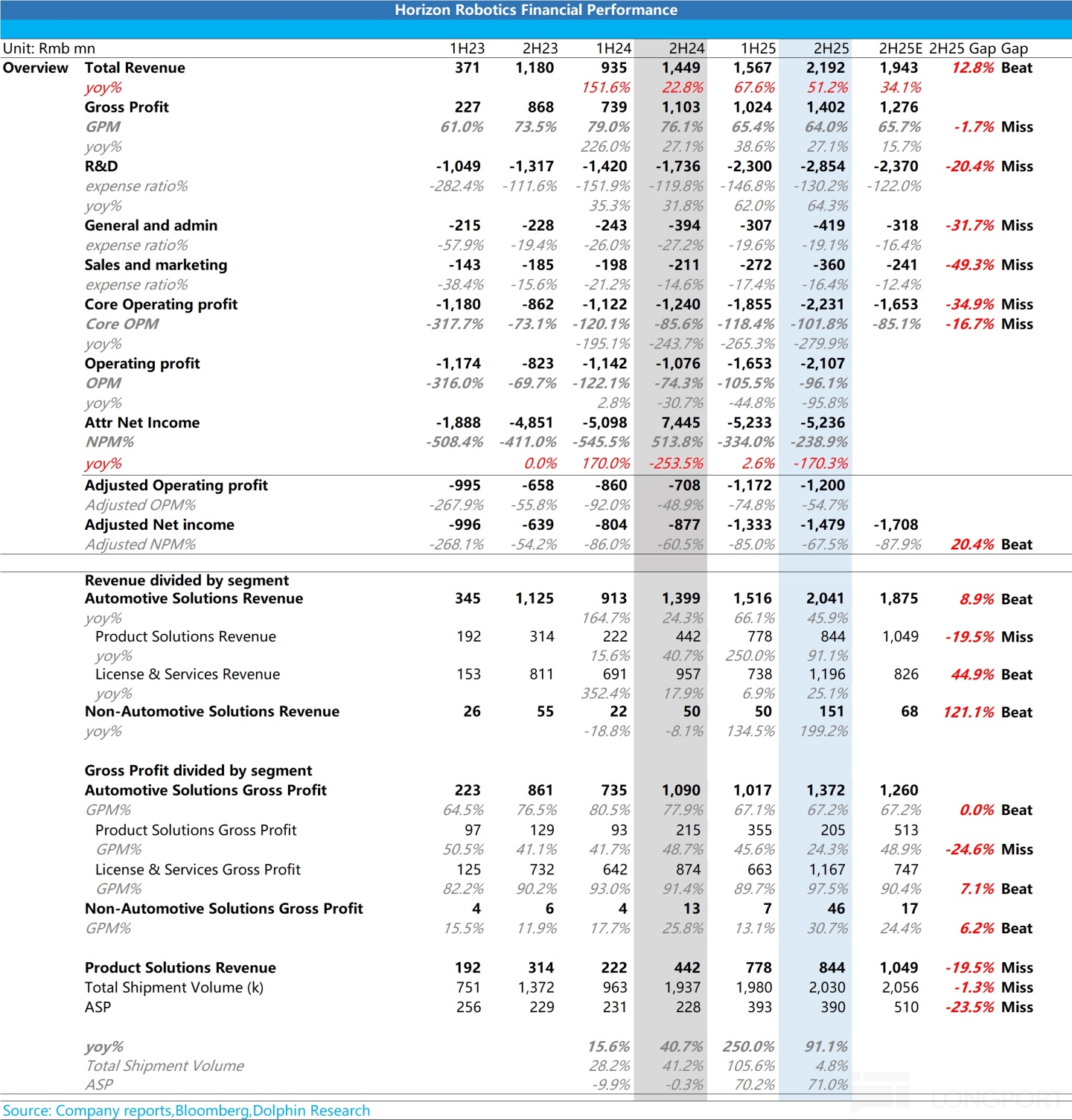
$HORIZONROBOT-W(09660.HK) released its 2H25 results after the HK close on Mar 19, 2026 (Beijing time). Results missed expectations; details below:
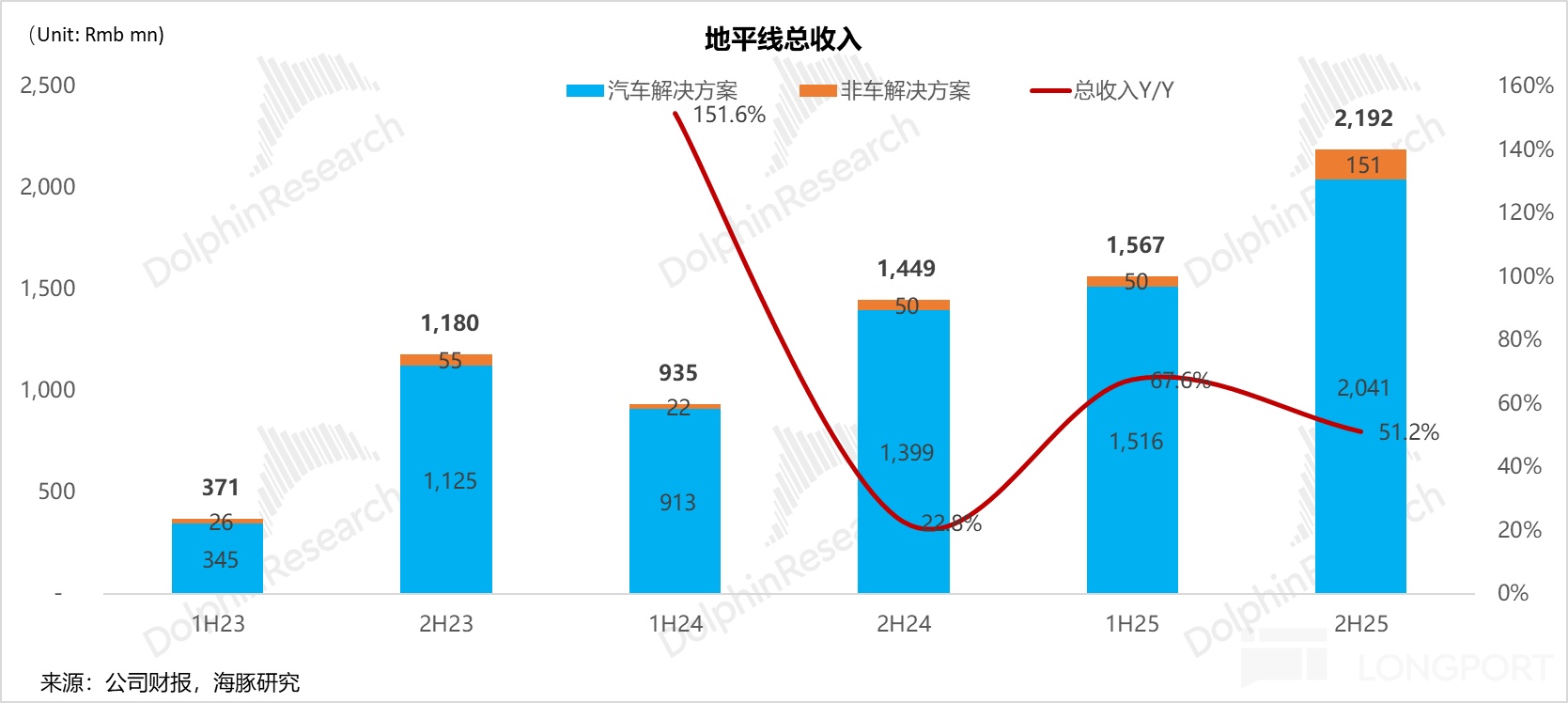
1) Top line beat, but core chip revenue undershot: Total revenue was RMB 2.19 bn in 2H25 (+51.2% YoY), beating the Street’s RMB 1.94 bn.
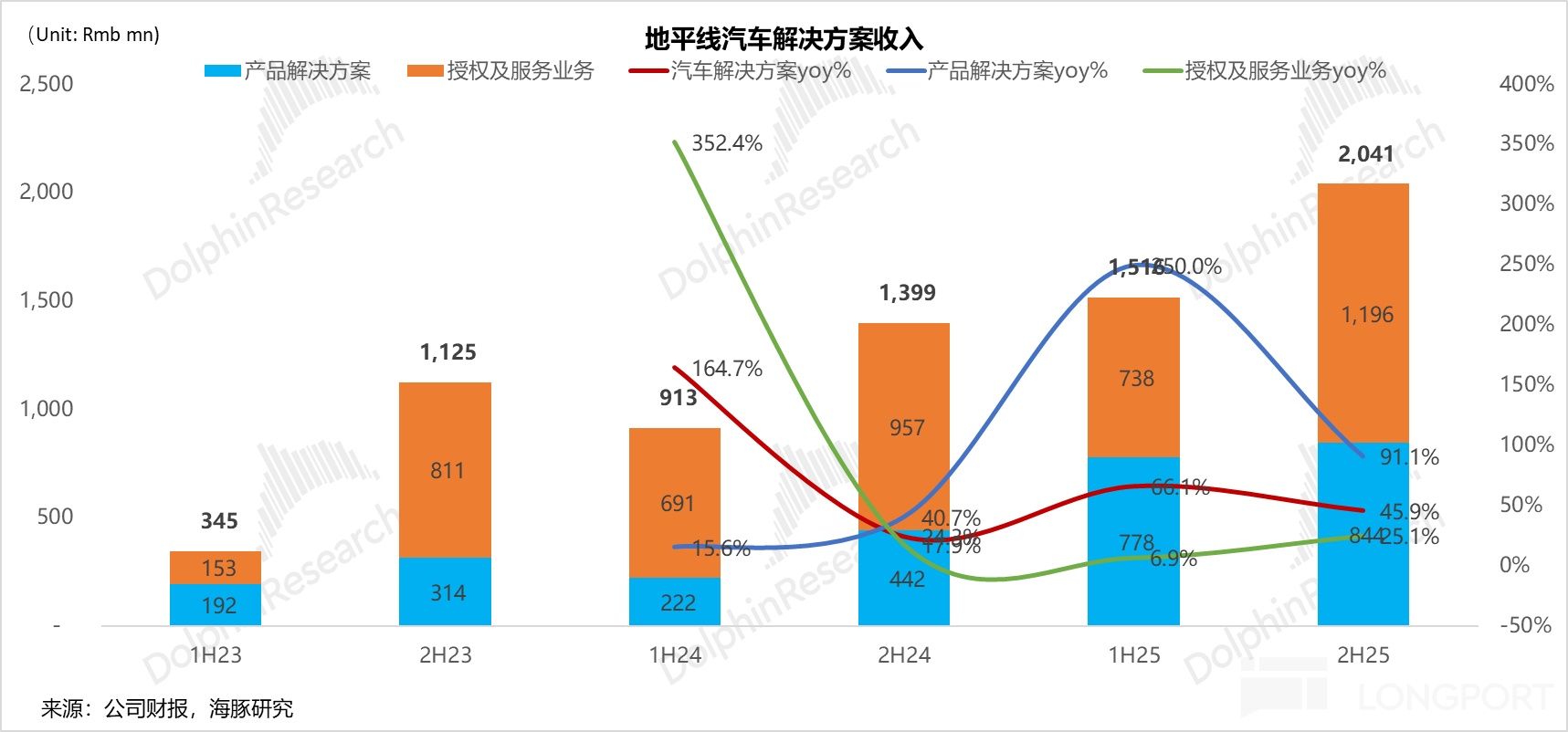
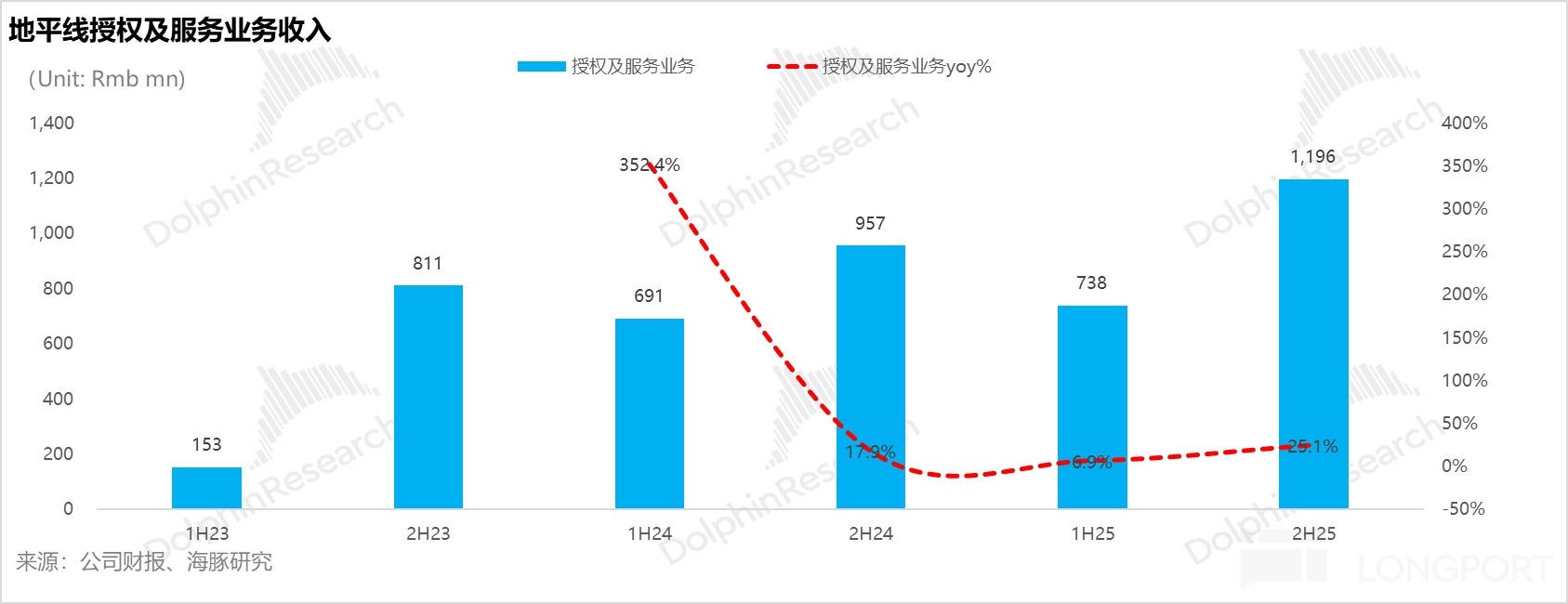
The upside did not come from chip hardware but from licensing and services (RMB 1.17 bn vs. RMB 750 mn est.). Beyond the legacy contribution from Cool Core Cheng (VW JV), Horizon added a top-tier Japan Tier-1 customer (likely Denso), which entered its top 5 customers in 2025.
2) Setback to the ‘volume + mix/ASP up’ thesis for core chips; premiumization slowed: Product solutions (core chip hardware) delivered RMB 840 mn in 2H25, well below the RMB 1.05 bn expected. The anticipated ramp of mid/high-end chips and rising ASPs failed to materialize.
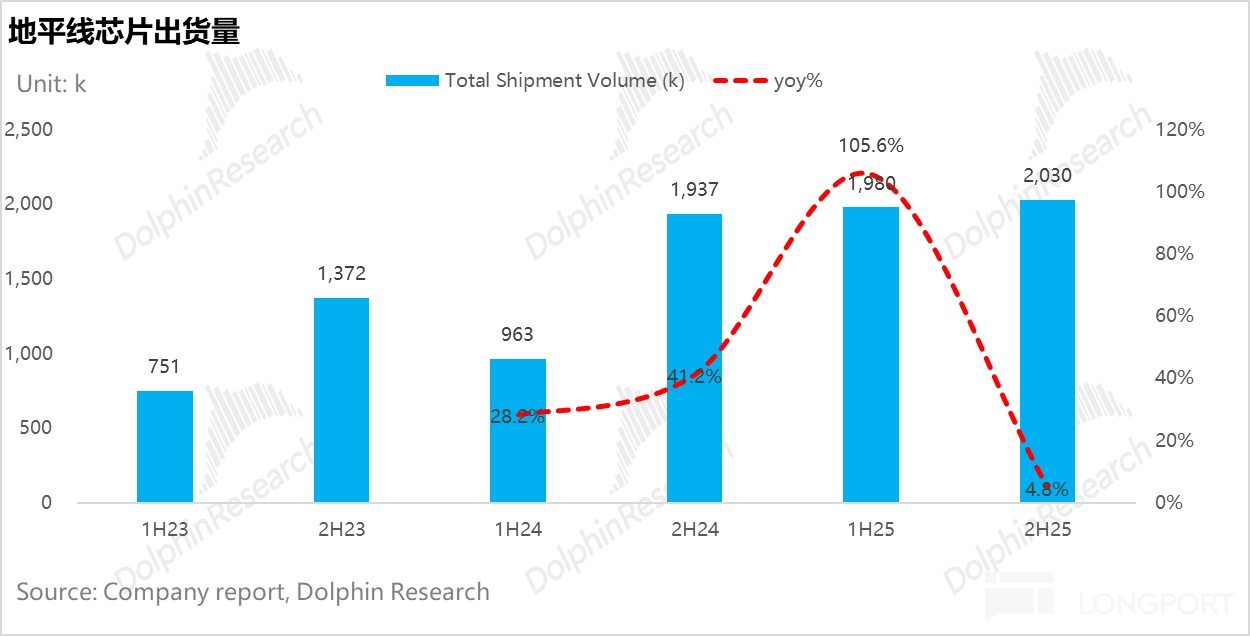
Shipments edged up: 2H25 shipments were 2.03 mn units (+5% YoY). This was slightly below the 2.06 mn expected.
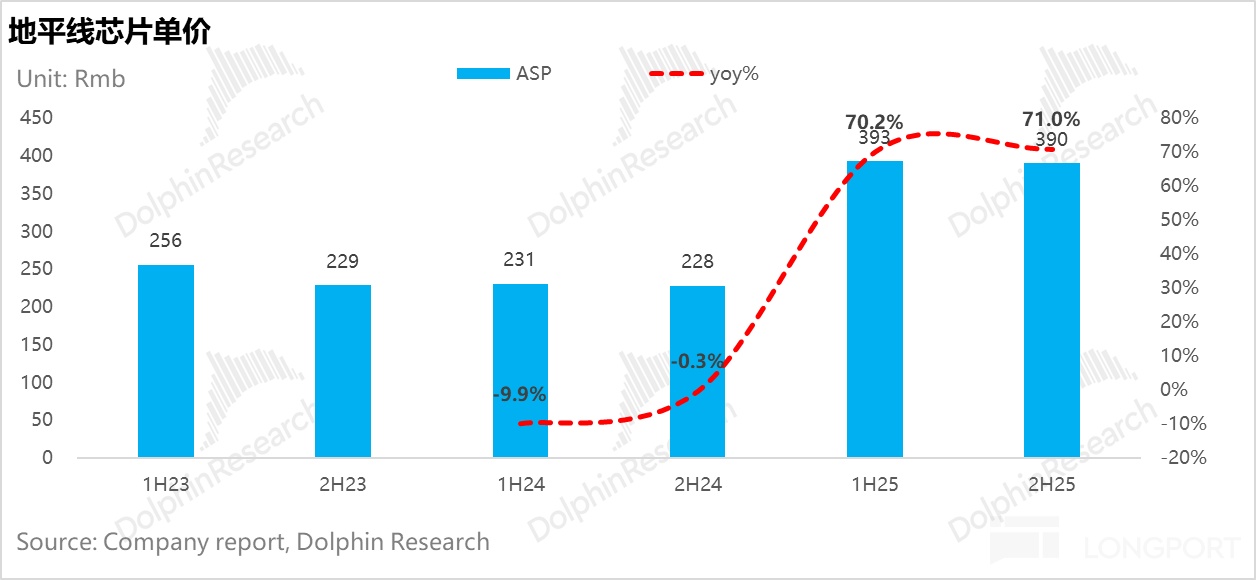
ASP stalled: Chip ASP was ~RMB 390 in 2H25, flat vs. 1H25. It missed the RMB 510 expected by a wide margin.
Dolphin Research sees two main reasons for the ASP miss:
a. Mix downgrades: High-end AD chips (>80 TOPS) shipments fell to 830k in 2H25 from 990k in 1H25, with mix down to 40% from 50%. This reflected a lack of meaningful ramp for J6P and weaker-than-expected J6M volumes at key customers such as BYD, Geely, and Li Auto.
b. Promotional price cuts: To respond to competition, the company reduced prices on legacy chip SKUs in 2H. This was a tactical move to defend share.
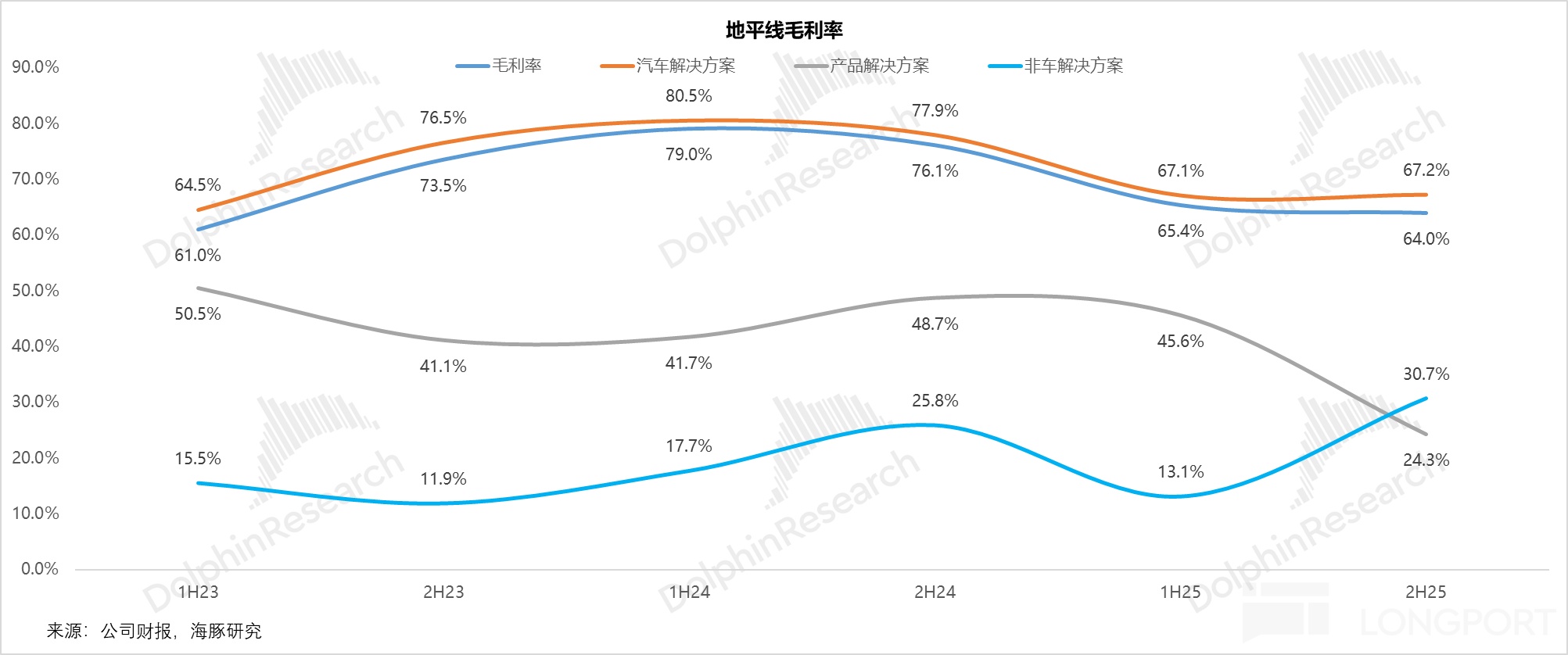
3) GPM fell sharply: strategic ‘system-level delivery’ and intensifying competition: 2H25 blended GPM was 64%, down 140bps HoH and below the 65.7% expected. While high-margin licensing (97.5% GPM) grew as a share, product solutions GPM plunged to 24.3% from 45.6% in 1H25, dragging the total.
a. ‘System-level delivery’ depressed reported margins: To accelerate HSD mass production, Horizon offered system-level delivery to certain customers, bundling domain controllers and other hardware. For third-party hardware, it applied only a token markup over cost, trading margin for time and market access.
b. Even ex this impact, pricing pressure is evident: Excluding system-level delivery, core AD chip GPM still fell ~600bps HoH to 39.6% (FY25: 42.5%). With a slow mid/high-end ramp, price competition from local peers such as Black Sesame, and OEM in-house chips, Horizon had to trade price for volume.
4) Heavy R&D persisted; OP loss widened: 2H25 R&D was RMB 2.85 bn (up RMB 550 mn HoH), far above the RMB 2.37 bn expected. Spend was mainly for HSD large-model cloud training and tape-out of the next-gen premium chip.
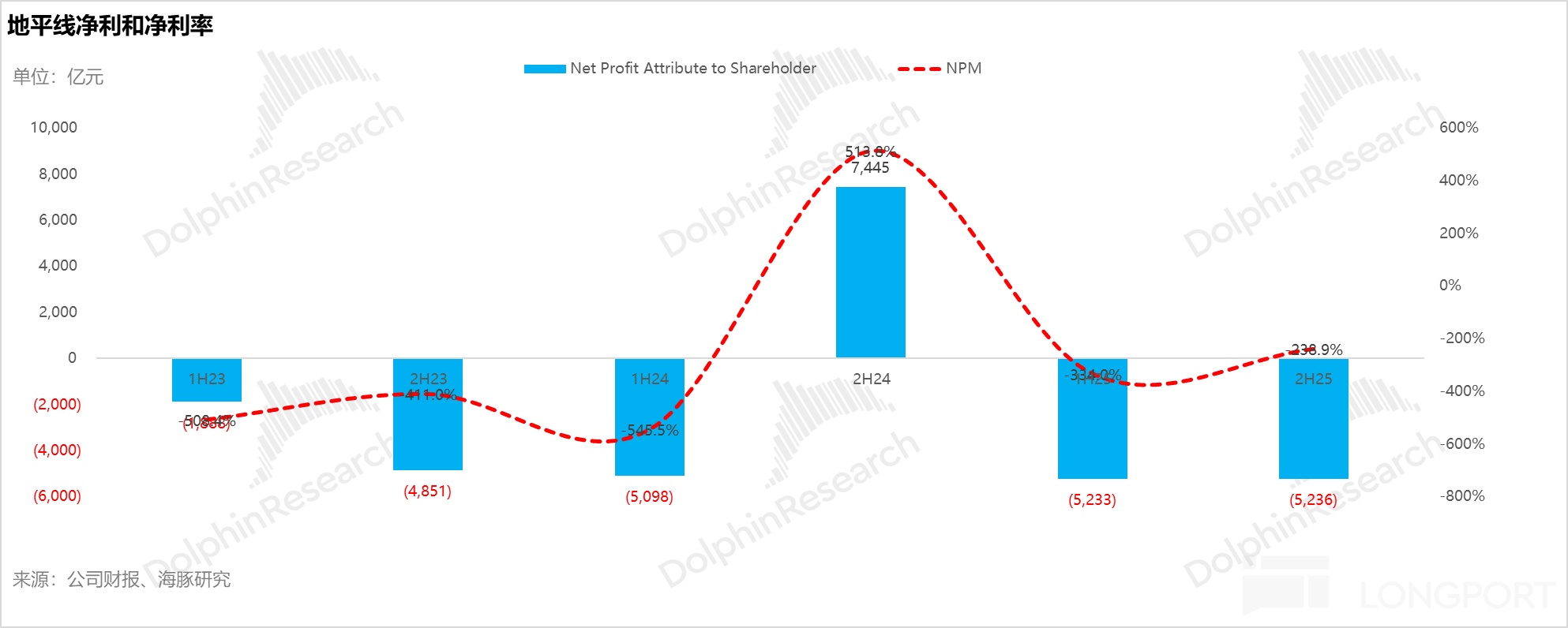
Under the double hit of high R&D and lower margins, core OP (GP minus core opex) recorded a loss of RMB 2.2 bn (vs. a RMB 1.65 bn loss expected). Adj. NP was -RMB 1.48 bn, widening by RMB 150 mn HoH.
Dolphin Research view:
Overall, this was a lean set of results. Headline growth leaned heavily on licensing, whose sustainability is less certain, while the hardware chip business lost momentum.
The market’s key thesis of continued mid/high-end chip ramp driving both volume and ASP did not play out this quarter. Mid/high-end volumes declined HoH, and coupled with price cuts, chip ASP growth stalled, signaling a slower-than-expected product mix upgrade.
Falling margins, surging R&D, and widening losses will test investors’ patience given the rich valuation. The positive is a strong cash position (~RMB 20.2 bn), which buys time for the premiumization push.
The market’s focus has shifted to 2026, especially the J6P ramp (560 TOPS). Whether this high-end AD chip can secure enough share will determine if Horizon digests its valuation or de-rates. Management sounded confident on 2026 at the results briefing.
i) Revenue: auto revenue growth to accelerate to 60% in 2026 (vs. 54% in 2025), driven by both volumes and ASP.
a. Shipments: 2026 shipments are guided to rise ~35% to 5.4 mn units (slightly trimmed from the prior 5.5 mn). The mix implies ‘low-end contraction, mid/high-end breakout.’
Low-end ADAS (J6B/J2/J3): to fall below 2 mn units.
Mid-end ADAS (J6E/M): to exceed 3 mn units, with BYD and Geely each contributing ~1 mn units. Horizon also expects to be integrated into BYD’s ‘Tianshen Eye B’ AD system in 2026.
High-end HSD: 300k–400k units, with demand led by Chery Fengyun, iCAR, and V27 models.
b. ASP: a very high bar embedded
Back-solving from guidance (auto revenue +60%, shipments +35%, licensing flat), product solutions revenue would need to surge 132% YoY to RMB 3.76 bn. The implied core chip ASP would need to jump 73.4% YoY to ~RMB 694.
Management attributes this to a richer mid/high-end mix (from 45% in 2025 to 65%+ in 2026). The lynchpin is the ramp of the high-compute, high-value J6P (chip ASP at $500, nearly 10x the 2025 Avg. ASP of $56).
They argue 2025 was the first year of AD adoption, but most OEMs only began equipping highway NOA and above in late 2H or Q4. Hence, real volume is expected to come in 2026.
The ASP target implies HSD mix will need to skew heavily to the J6P solution.
For HSD (guided ~400k units in 2026), design wins are progressing well (20 mass-production awards), covering China’s highest-volume OEMs (including BYD). Horizon is in active talks with leading OEMs on HSD, with strong traction, and expects a record number of HSD awards in 2026.
There are three HSD delivery options:
J6P solution: total ASP $700 ($500 J6P chip + $200 software), targeting ~RMB 150k cars.
Dual J6M solution: total ASP $400 ($200 chip + $200 software), targeting ~RMB 120k–130k cars.
Single J6M solution: pricing under negotiation, targeting ~RMB 100k cars.
Management previously guided that over half of HSD volumes would be ‘HSD + J6P’ (mainly nine Chery models), with the balance from J6M. However, based on the implied 73.4% ASP uplift, J6P would need to account for nearly all HSD shipments to achieve the accelerated ASP trajectory, implying heavy execution pressure on J6P’s ramp.
ii) Gross margin: guided to stay above 60%.
Despite competition and memory cost headwinds, management expects to keep GPM above 60% while growing revenue at a ~60% CAGR in the coming years. This relies on the following:
a. Return to high-margin model: Domain-controller delivery is a transitional measure at HSD ramp start. In 2026, hardware will be handed back to Tier-1s, refocusing on the core high-margin ‘SoC + software licensing’ model (near-100% margin).
b. Hedging supply chain swings: Memory costs were locked in by end-2025, insulating margins from price volatility. Management does not expect further memory price swings to impact margins this year.
c. ‘Architectural innovation’ over ‘price wars’: A cabin-driving converged solution is coming, unifying memory to save several thousand RMB per car (including harness, thermal, PCB, etc.). The aim is to lower OEM costs via technology, not cut SoC prices.
Therefore, Horizon remains a scarce local ‘import substitution’ play in AD chips (software + hardware). With J6P, there is a credible path to becoming an ‘NVDA alternative.’
But current pricing already bakes in a lot: even on management’s aggressive guidance (Dolphin Research estimates 2026 revenue near RMB 5.9 bn), Horizon’s 2026E P/S is still ~16x.
This is in the 10–20x band for domestic AI chip names in breakout mode (mid-teens), but above NVDA at ~13–14x. Horizon’s growth visibility and moat do not yet warrant a premium.
Moreover, in the ‘value-for-money’ band of high-end AD chips, Horizon will face close combat from Momenta’s in-house chip + algorithm solution in 2H26.
Hence, until the ‘embodied AI/robotics’ second curve truly kicks in and J6P shows up at scale in reported numbers, upside for excess returns looks limited.
On asset quality, Dolphin Research sees a safer entry at a HK$70–80 bn mkt cap (about HK$4.8–5.5/sh). This corresponds to a more conservative 2026 revenue of ~RMB 5.3 bn and a P/S of 12–13x, offering a better margin of safety.
Financials and charts:
Dolphin Research deep dives on Horizon:
‘Challenging NVDA: Is the ‘Horizon alternative’ story overheating?’







The copyright of this article belongs to the original author/organization.
The views expressed herein are solely those of the author and do not reflect the stance of the platform. The content is intended for investment reference purposes only and shall not be considered as investment advice. Please contact us if you have any questions or suggestions regarding the content services provided by the platform.