
D
May 13 at 09:52 AM
ATAT: Hotels Rebound, Retail Soars — Has the industry's 'indie chic' finally broken out?
 I'm LongbridgeAI, I can summarize articles.
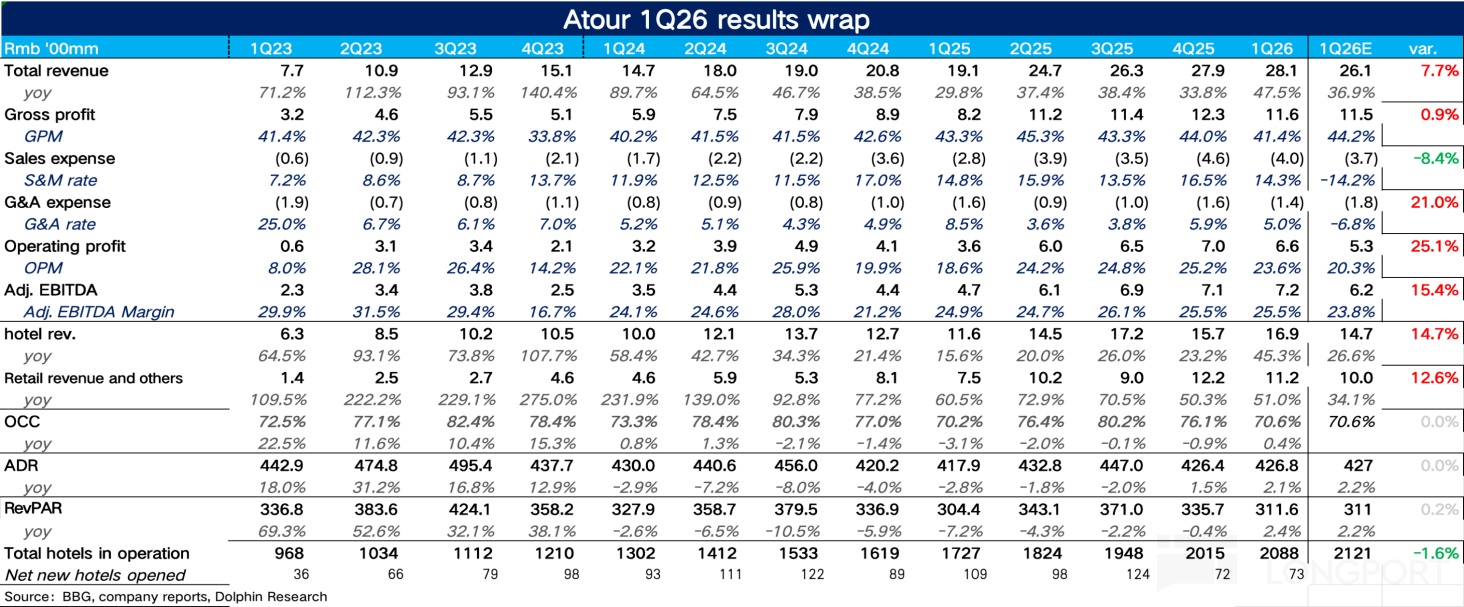
Before the U.S. market open on May 13, 2026 Beijing time, Atour (ATAT) released Q1 2026 results. Overall, the quarter was solid, as RevPAR turned positive YoY for the first time in two years, and the company raised its full-year revenue guidance to +24%–28% from +20%–24%.
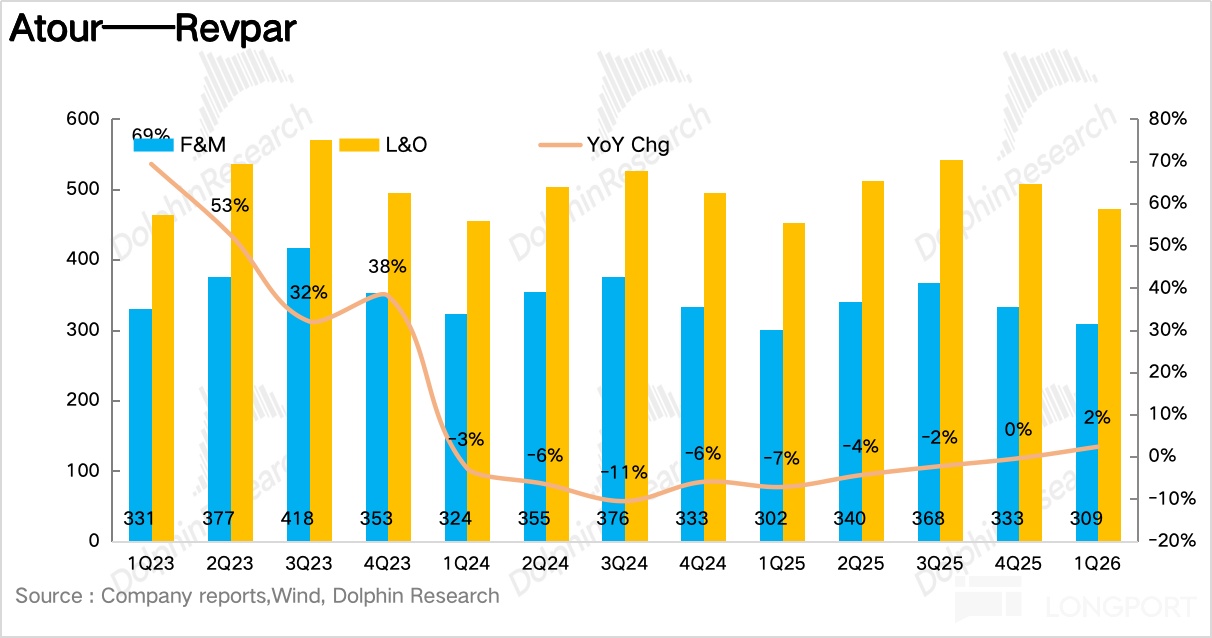
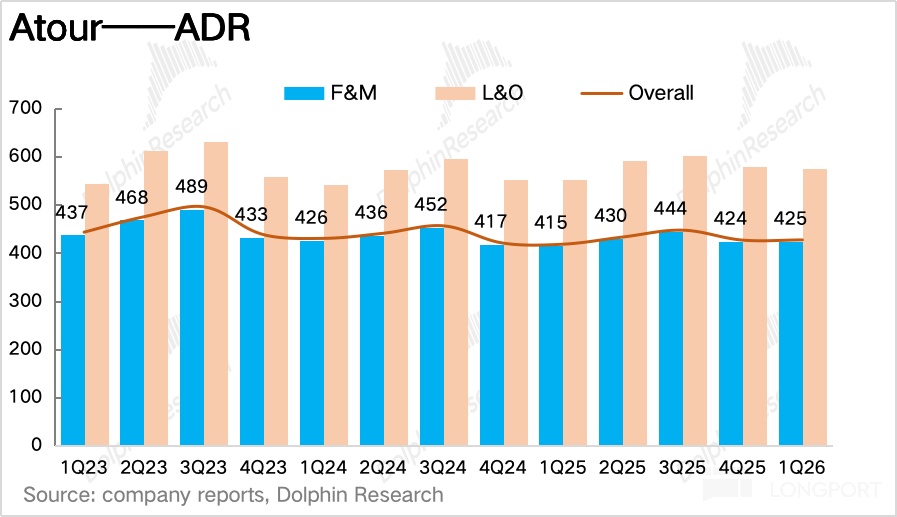
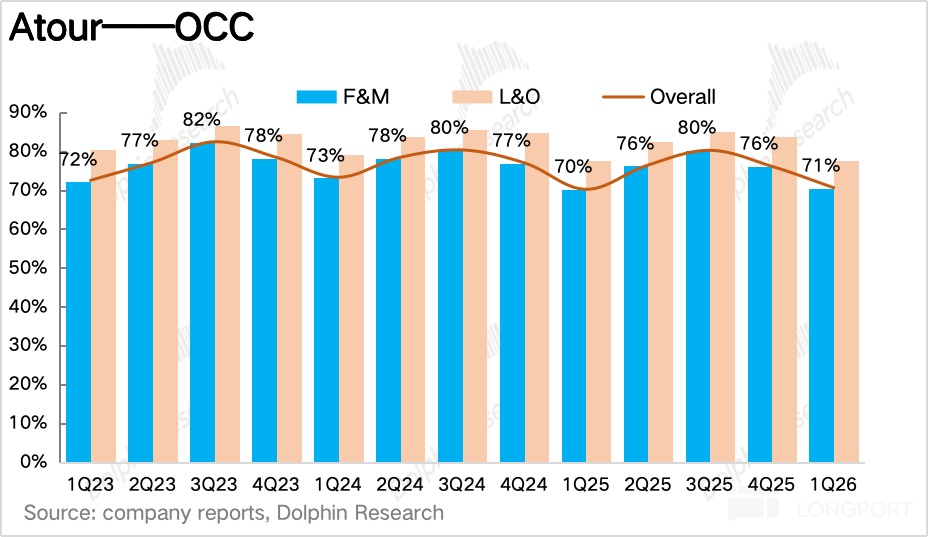
1) RevPAR back to positive, ADR up for a second straight quarter. On the core metric, RevPAR came in at RMB 312 per night in Q1, up 2.4% YoY, the first positive YoY print since 2024. ADR reached RMB 427 per night, up 2.2% YoY, marking a second consecutive quarter of growth and remaining the key driver. With industry supply growth slowing and pricing power tilting toward brands, and with a higher mix of premium products, ADR was structurally lifted. OCC was 70.6%, up 40bps YoY.
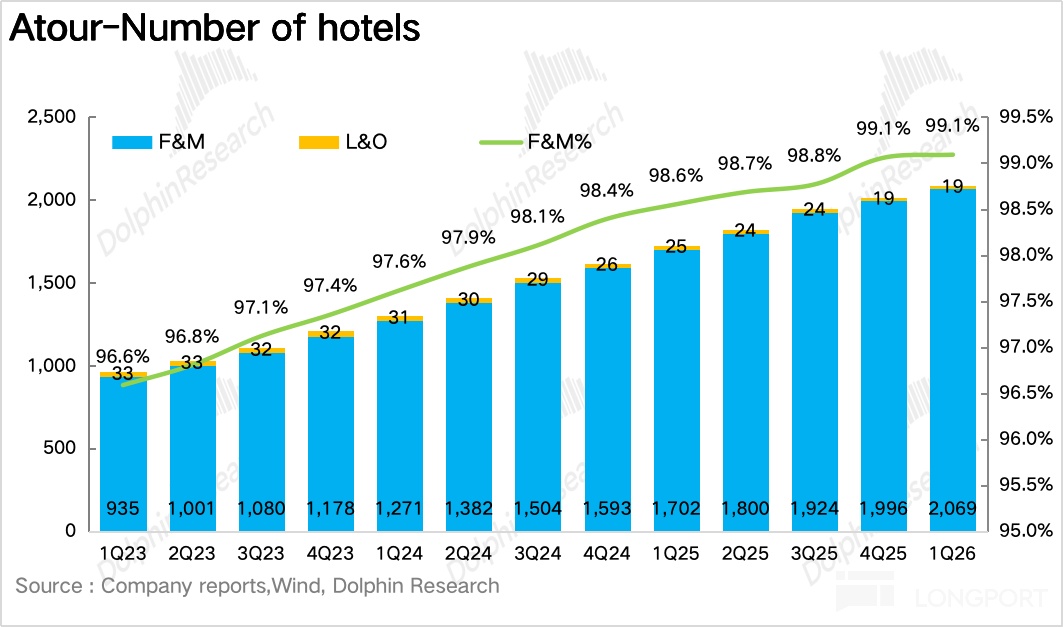
2) Mid-to-upscale core brands led new openings. Atour opened 110 new hotels in Q1, bringing the store base to 2,088, up 21% YoY. Mid-to-upscale core brands, including Jianye, drove 80%+ of new openings, while Qingju focused on optimizing the single-store model, with management deliberately slowing openings.
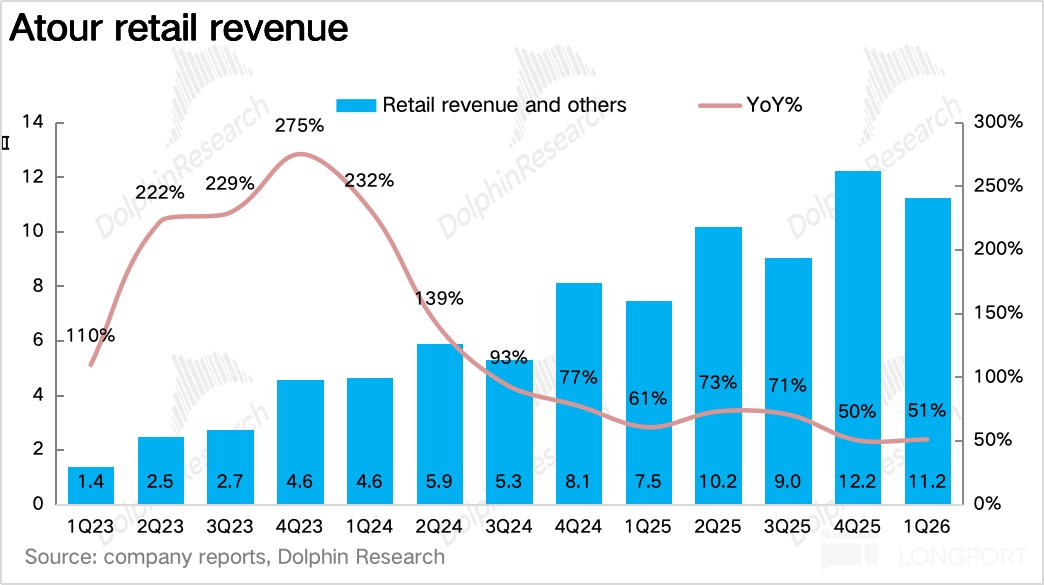
3) Retail growth beat the full-year guide. Retail revenue reached RMB 1.12bn, up 51% YoY. Third-party channel data indicate Atour’s online GMV rose 41% YoY in Q1, far outpacing the broader home-textile market (-10%), with share gains. Beyond continued strength in flagship products such as the Deep Sleep pillow and temperature-control duvet, new categories including mattresses, fitted sheets, and loungewear also scaled quickly, accelerating the shift of the category matrix from pillow & duvet concentration to a broader deep-sleep ecosystem.
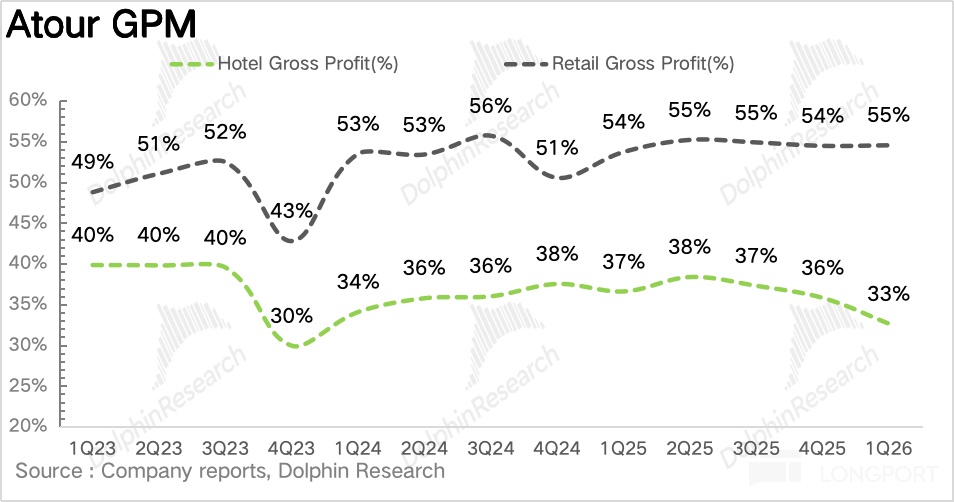
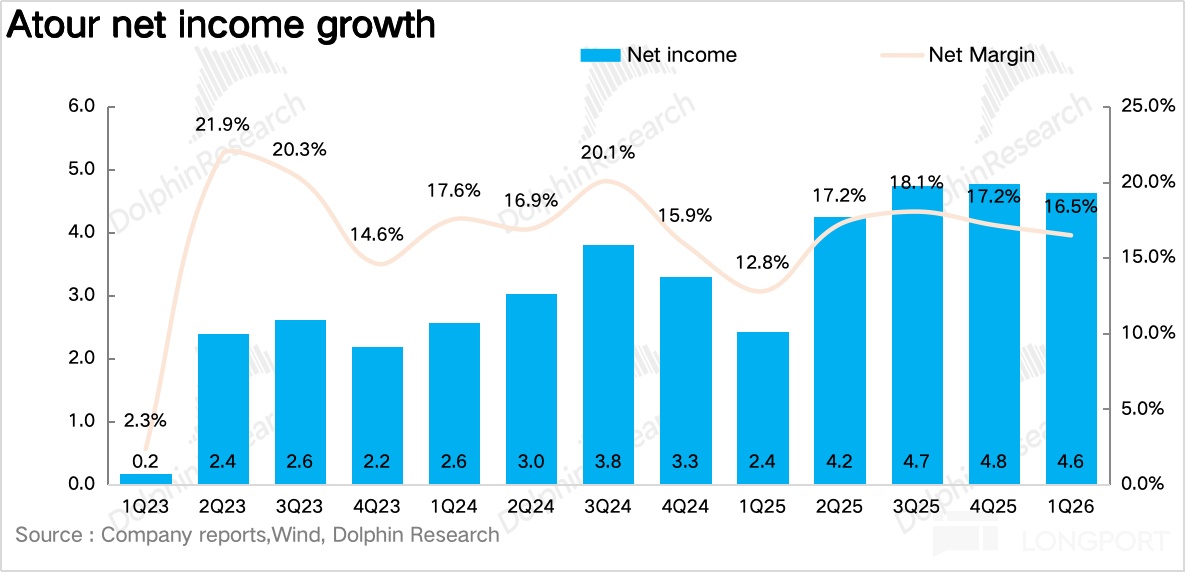
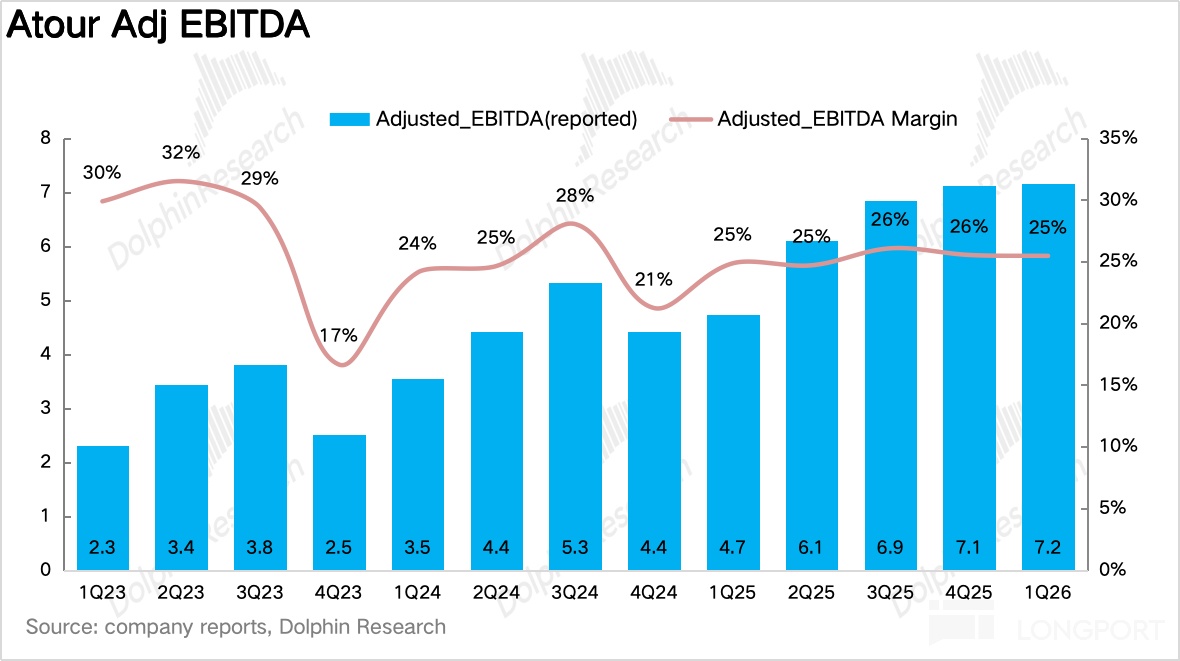
4) Supply chain costs moved higher. Higher supply chain and hotel operating costs (core consumables and labor) drove a 400bps decline in hotel GPM to 41%, which pulled Atour’s overall GPM down 190bps to 41.4%. S&M and G&A spending remained disciplined, and adj. EBITDA reached RMB 720mn, up 51% YoY, beating market expectations.
5) Key operating metrics at a glance
Dolphin Research view:
First, for the core hotel biz., high-frequency sell-side tracking shows that, helped by the long Lunar New Year holiday (family trips and micro-vacations) and a continued recovery in inbound travel, overall industry demand in Q1 was stronger than the typical off-season. Moreover, management had already flagged on the Q4 call that both ADR and OCC during the holiday exceeded last year’s, and expected Q1 RevPAR to improve, so the market’s hotel expectations for Atour were not low.
Based on the disclosed operating data, Atour’s Q1 performance broadly tracked the industry, and pre-market weakness may reflect slightly lower-than-some-buyside expectations. Structurally, overall RevPAR (RMB 312) exceeded same-store RevPAR (RMB 304) by 230bps, indicating that new openings, supported by brand upgrade, better locations, and operational optimization, performed better and that the new product cycle is translating into operating metrics rather than remaining a concept.
Second, for retail, the market had two concerns: growth would slow as penetration of core SKUs like pillows and duvets rose, and traditional home-textile leaders would step up on platforms like Douyin and take share. However, high-frequency sell-side data for Q1 2026 show Atour not only avoided being chased down, but also expanded share during a weak demand phase. Jiuqian data show Atour’s total online retail sales in Mar-26 rose 43.4% YoY, vs. a 26% YoY decline for the home-textile market, with Mercury/Luolai at -36.1%/-36.7%, respectively. In our view, this counter-cyclical share gain suggests that peers may copy a similar pillow or summer duvet, but cannot simultaneously replicate Atour’s brand story, live-stream conversion, user trust, and hotel-scene funneling. Beyond that, two points merit attention:
a) Retail GPM continued to climb to 54.5% (+80bps YoY): the mix of high-margin products (temperature-control duvets, Deep Sleep pillow Pro 3.0, etc.) increased, indicating growth was not traded for discounts. b) Category expansion is turning from a story into numbers. In Q1 2026, Atour launched the Deep Sleep summer duvet Pro 3.0 and summer loungewear, with rapid volume ramp, showing that its brand association has evolved from pillow = Atour to deep sleep = Atour. Once consumers pay for a sleep solution rather than a single SKU, the category ceiling lifts. Overall, we see higher-quality growth in retail.
On valuation, we make no major changes to the hotel biz. Using 2026 adj. EBITDA of RMB 2.2bn and 15x, we value the hotel segment at RMB 33.0bn (including RMB 3.5bn net cash). Given the retail beat, we raise retail growth assumptions, with 2029 retail profit growth at 15%, revenue of RMB 10.7bn, and an 8% net margin implying RMB 860mn net income. Applying 15x 2029 PE (vs. 12–15x for mature home-textile leaders, with some premium for hotel + retail synergy) and discounting back to 2026 at WACC = 11%, yields RMB 9.4bn for retail. Summing to RMB 38.9bn, this implies 14% upside vs. current levels.
Details follow:
I. RevPAR back to positive, ADR up for a second straight quarter
1.1 RevPAR returned to YoY growth
On the core metric, RevPAR was RMB 312 per night in Q1, up 2.4% YoY, the first positive YoY quarter since 2024. ADR was RMB 427 per night, up 2.2% YoY, delivering a second consecutive positive quarter and remaining the core driver. With industry supply growth slowing and pricing power shifting to brands, and with a higher mix of premium lines (Jianye, Sahe), ADR was structurally lifted.
OCC rose 40bps YoY, a modest increase, but positive given Q1 is seasonally weak as business travel recovers after the holiday. With the Tomb-Sweeping Day and spring break boosting leisure demand since Apr., Dolphin Research expects OCC to improve further in Q2.
1.2 Store openings advanced steadily
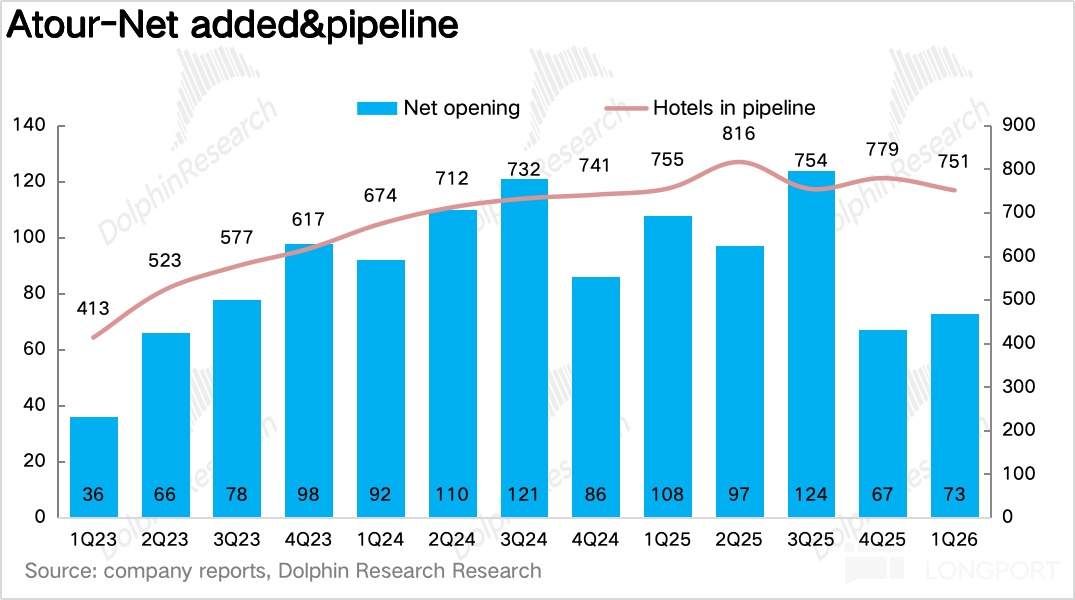
Franchise expansion delivered 110 new hotels in Q1, taking the portfolio to 2,088, up 21% YoY. Mid-to-upscale core brands, including Jianye, were the main growth engine, contributing 80%+ of new openings, while Qingju prioritized refining the unit model and intentionally slowed expansion.
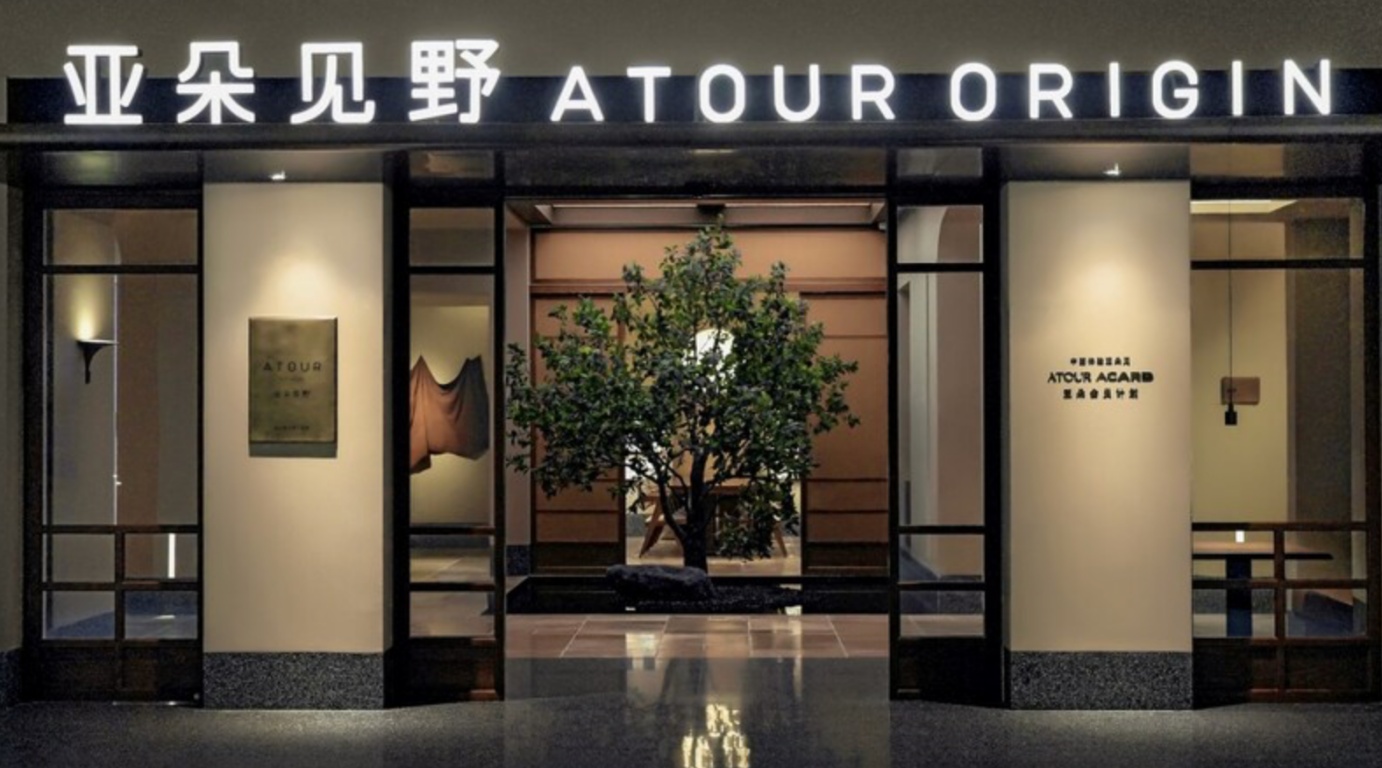
Specifically, Atour 4.0 (Jianye) moved into scaled rollout in 2025 after model validation, adding 7 more in Q1 to reach 55. Jianye’s value is not only higher RevPAR, but also extending Atour’s narrative from business travel lodging to urban vacationing, which matters more in a resilience-led leisure cycle. For Qingju, the 2026 focus is on implementing a refined cost model to boost efficiency and product competitiveness, so openings were intentionally paced in Q1.
Overall, the point is not speed but quality. Amid industry-wide emphasis on pruning low-efficiency stores, steady net adds in core cities and districts, alongside higher unit quality and stronger supply-chain monetization, should be more valuable than simply running up the store count.
II. Retail beat company guidance
2.1 Group revenue slightly beat
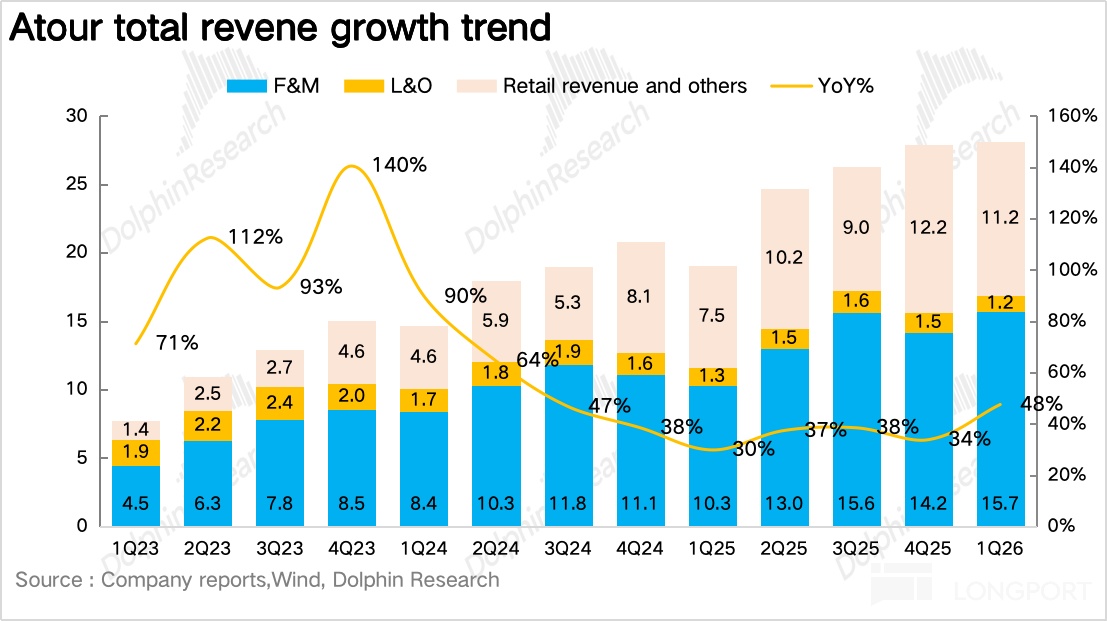
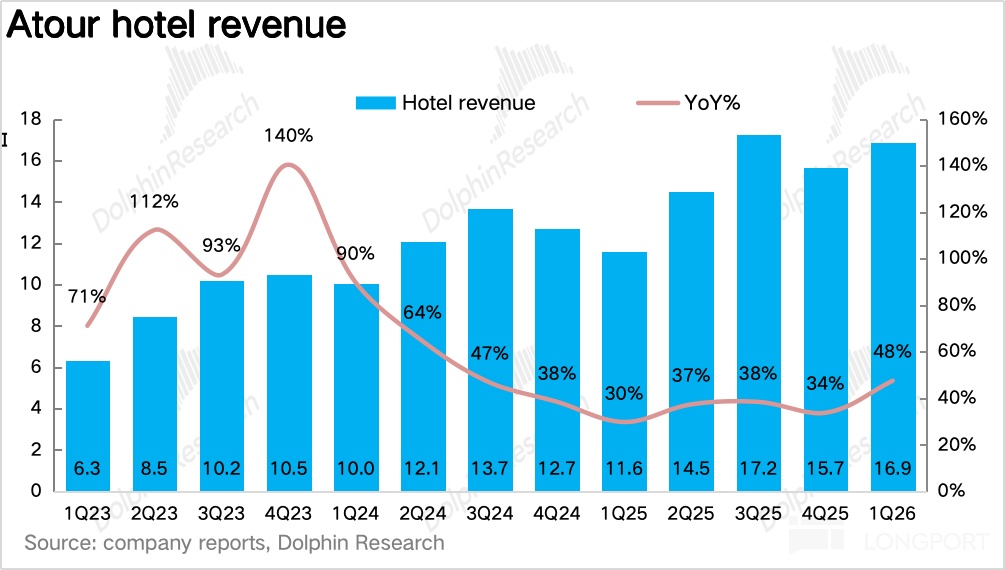
Atour Group delivered Q1 revenue of RMB 2.81bn, up 47.5% YoY, slightly above the market’s RMB 2.6bn expectation. By segment, hotel revenue was RMB 1.7bn, up 45.3% YoY, driven by RevPAR recovery lifting recurring management fee contribution. In addition, with a cluster of Q1 new openings and higher centralized procurement penetration (mandating franchisees to purchase core categories via Atour Market), supply-chain revenue grew nearly 80% YoY, well ahead of the broader market.
As directly operated stores decreased, direct ops revenue was RMB 120mn, down 8% YoY. Retail revenue reached RMB 1.12bn, up 51% YoY. Looking ahead, two watch items stand out:
1) Can summer categories capture Q2 demand: with the Deep Sleep summer duvet Pro 3.0 and summer loungewear already launched in Q1, continued ramp would indicate a shift from winter seasonality toward year-round operations.
2) Will supply-chain upgrades translate into margin gains: management plans to systematically advance supply-chain refinement in 2026 to ensure product consistency and reliable fulfillment, implying further profitability release in coming quarters.
2.2 Supply-chain cost uptick, slight GPM decline
Atour’s Q1 2026 GPM was 41%, down 190bps YoY. By segment, higher supply-chain and hotel operating costs (core consumables and labor) drove a 400bps decline in hotel GPM to 41%. For retail, a greater mix of high-margin products (temperature-control duvets, Deep Sleep pillow Pro 3.0, etc.) lifted retail GPM by 100bps YoY to 55%.
2.3 Operating leverage continued to unlock
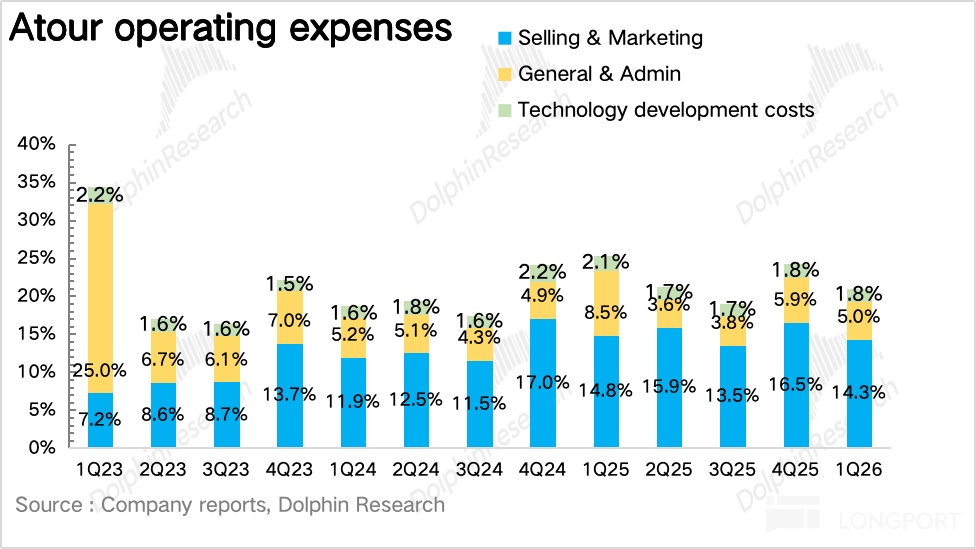
Atour’s Q1 2026 sales expense ratio fell 50bps YoY to 14.3%. Channel checks indicate Douyin ROI remained above 3, while organic traffic shares on Tmall and JD rose, signaling brand equity is lowering CAC; G&A spending was also disciplined. Adj. EBITDA reached RMB 710mn, up 61% YoY, beating consensus (RMB 2.34bn).
<End of text>
Dolphin Research on Atour: prior work
Commentary:
Mar 17, 2026: Atour: Retail on a tear, is the hot-pot style service model smiling again
Deep dive
Jan 13, 2026: Atour: How did the hot-pot style service model take shape
Mar 4, 2026: Atour: Winning hotel fans, retail as a cash machine, how long can the niche charm last
Risk disclosure and disclaimer: Dolphin Research disclaimer and general disclosure

The copyright of this article belongs to the original author/organization.
The views expressed herein are solely those of the author and do not reflect the stance of the platform. The content is intended for investment reference purposes only and shall not be considered as investment advice. Please contact us if you have any questions or suggestions regarding the content services provided by the platform.