

 Rate Of Return
 Total Assets
Two market indicators are giving contradictory conclusions?
Recently, the S&P 500 hit new highs again. If you only look at the index, it's easy to conclude: US stocks are strong, the trend is fine.
The problem is, the market's true state often isn't in the index, but in its internal structure and sentiment indicators.
· The market is showing an interesting signal: prices are strong, sentiment is hot, but breadth is weakening.
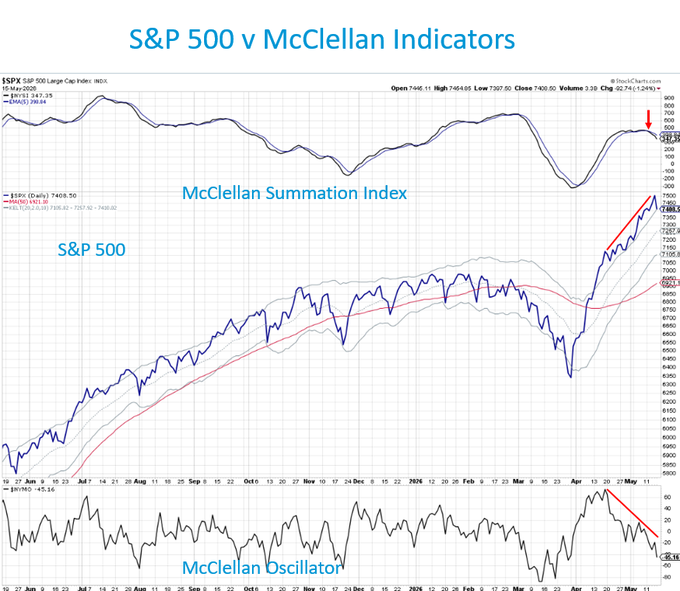
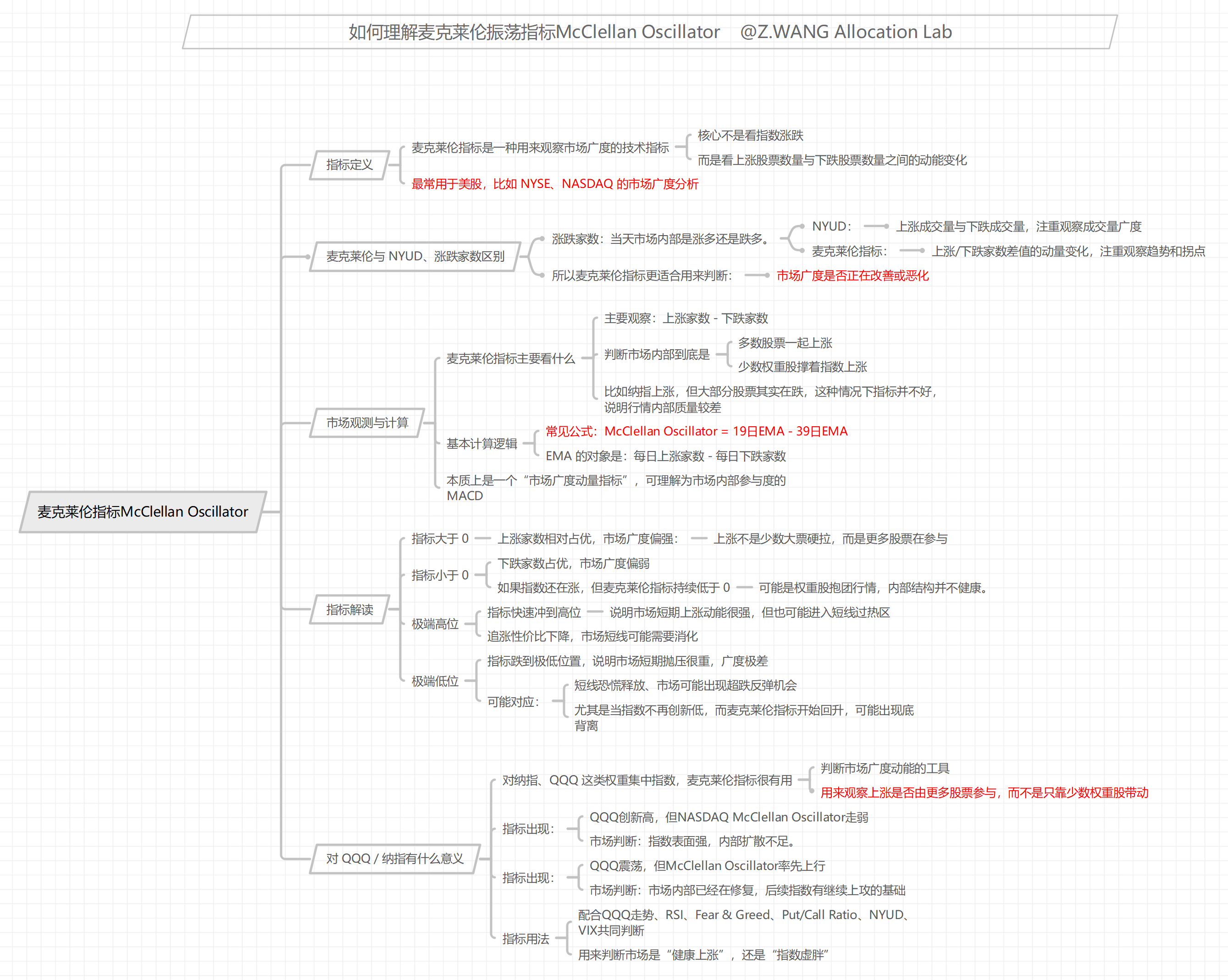
① McClellan Oscillator
This indicator looks at market breadth. Simply put, it asks "how many stocks are rising together?"
According to the data, the S&P 500 continues to rise, even approaching new highs, but the McClellan Oscillator and the McClellan Summation Index are retreating.
This indicates a problem: the index is still rising, but the number of stocks participating in the advance may be decreasing.
· This is a classic case of "strong index, weak breadth."
In other words, the market appears strong on the surface, but the rally may be increasingly reliant on a few heavyweight stocks, rather than being driven by the majority of stocks.
This is especially important for weight-concentrated indices like the S&P 500 and Nasdaq 100:
Because as long as a few large-cap tech stocks are strong enough, the index can look great, but the internal market may not be truly healthy.
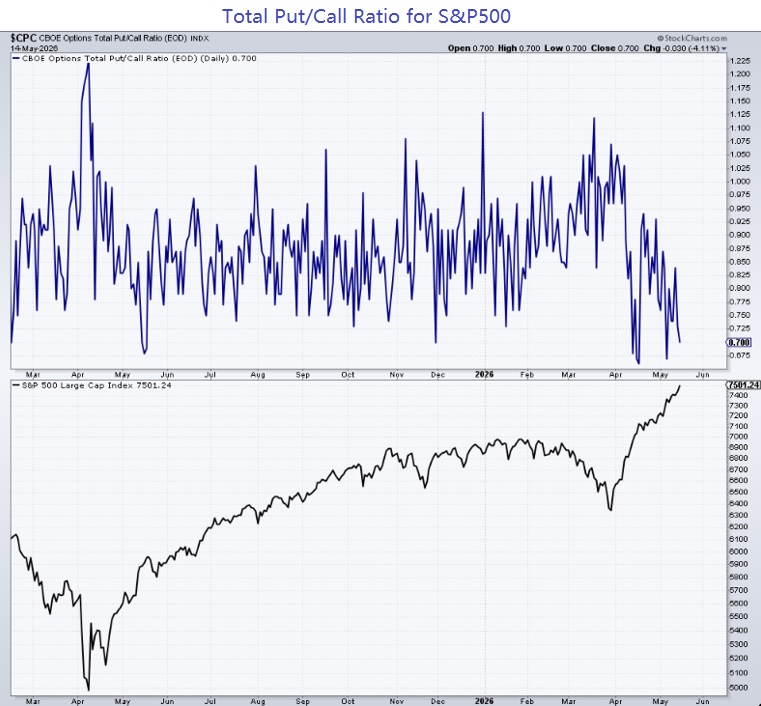
② Total Put/Call Ratio
This indicator looks at options market sentiment.
A higher PCR indicates more market fear; a lower one indicates more people buying calls to chase the rally, meaning more market optimism.
When the market fell in April, the Put/Call Ratio was once at a relatively high level, indicating heavy defensive sentiment among investors at that time.
But as the S&P 500 rebounded quickly, the PCR has declined significantly and has now returned to a low area.
This shows that market sentiment has changed: fear has receded, optimism is heating up, and investors are shifting from "fear of falling" to "fear of missing out."
③ Are these two signals contradictory?
Superficially contradictory, they essentially point to the same conclusion—the risk-reward ratio of the current market is declining.
· McClellan Oscillator signal: The internal quality of the rally is declining.
· Put/Call Ratio signal: Investors' chase-the-rally sentiment is heating up.
· Combined view: The market is becoming more optimistic, but the number of stocks actually participating in the rally is not increasing in sync.
This is not a typical bearish signal, nor does it mean US stocks are about to peak immediately.
The index can absolutely continue to rise, especially when heavyweight stocks remain strong. But it reminds us that the market is gradually entering a "sentiment-driven rally."
The former is healthier because many stocks are rebounding together; the latter is more fragile because the rally is increasingly dependent on sentiment and a few leaders.
For trading, the significance of this set of signals is: now is not the right position to chase the rally.
If you already hold index ETFs like SPY, QQQ, you can continue to respect the trend, but raise your risk awareness;
If you are in cash, in a phase where the index has risen consecutively, sentiment has clearly heated up, but breadth has started to diverge, chasing highs with heavy positions doesn't offer good value.
Watch for two changes next:
· If the S&P 500 continues to make new highs, can the McClellan Oscillator strengthen again?
· If the Put/Call Ratio continues to decline, will it enter a more extreme optimism zone?
If the three things—index rising, sentiment hot, breadth weak—continue to appear simultaneously, the probability of a short-term pullback or consolidation will increase significantly. The US stock trend remains strong, but the quality of the rally is declining, and the margin for error in chasing the rally is getting lower.
The copyright of this article belongs to the original author/organization.
The views expressed herein are solely those of the author and do not reflect the stance of the platform. The content is intended for investment reference purposes only and shall not be considered as investment advice. Please contact us if you have any questions or suggestions regarding the content services provided by the platform.
