

 SpaceX Option
There's a big problem with the South Korean stock market.
The KOSPI rose 122% at its peak this year. Since then, it has plummeted -27% in the past 25 days and is still up +60% year-to-date.
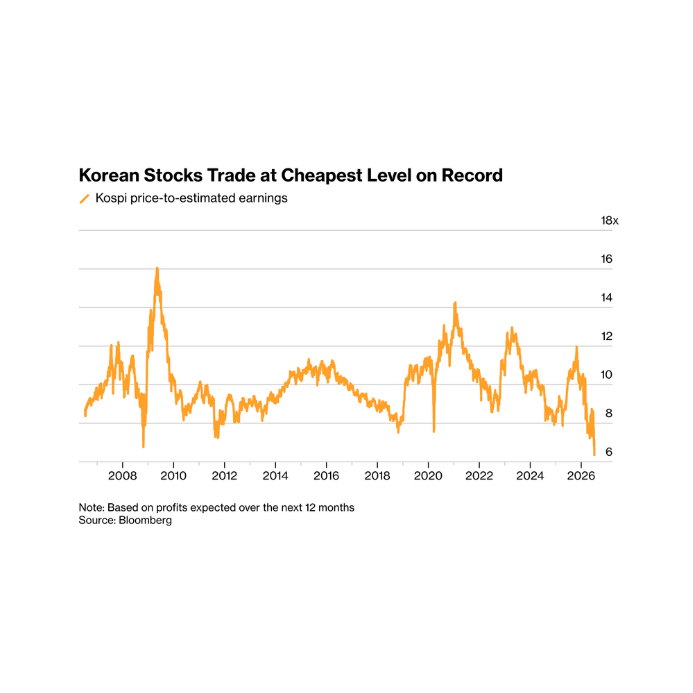
Even after that rally, the Kospi's P/E ratio remains below 6.4 times forward earnings, the lowest level on record, even lower than during the 2008 financial crisis.
Earnings are growing faster than the stock price.
Forward earnings expectations have risen 170% this year, the largest increase since 2006, driven mainly by Samsung and SK Hynix, as AI demand has sent memory chip prices soaring.
Analyst rating upgrades have continued for 17 consecutive months, the longest streak in over nine years.
But such a low P/E ratio means investors don't believe these profits are sustainable. The memory chip industry has always been a boom-and-bust business.
Today, the Kospi plunged -8%, wiping out 460 trillion won and triggering the 7th circuit breaker of the year.
Triggering seven circuit breakers in a year is a serious problem.
Samsung and SK Hynix alone account for more than half of the entire index, and with leveraged ETFs, they drive 70% of South Korea's trading volume.
When these two companies fluctuate, the entire market follows with violent swings, in both directions.
That's why the Kospi can rise 122%, then fall 27% and trigger 7 circuit breakers, all in the same year.
It's safe to say that the cheapest market in history is also the most fragile.

The copyright of this article belongs to the original author/organization.
The views expressed herein are solely those of the author and do not reflect the stance of the platform. The content is intended for investment reference purposes only and shall not be considered as investment advice. Please contact us if you have any questions or suggestions regarding the content services provided by the platform.
