

From "Youke Shu" to "You Duo Yun": The Computing Power Drama Behind Xingyun Technology's Rebirth from the Ashes

In 2026, AI has brought too many miracles and shocks to the market. Among them, Xingyun Technology in the computing power market deserves a gold medal.
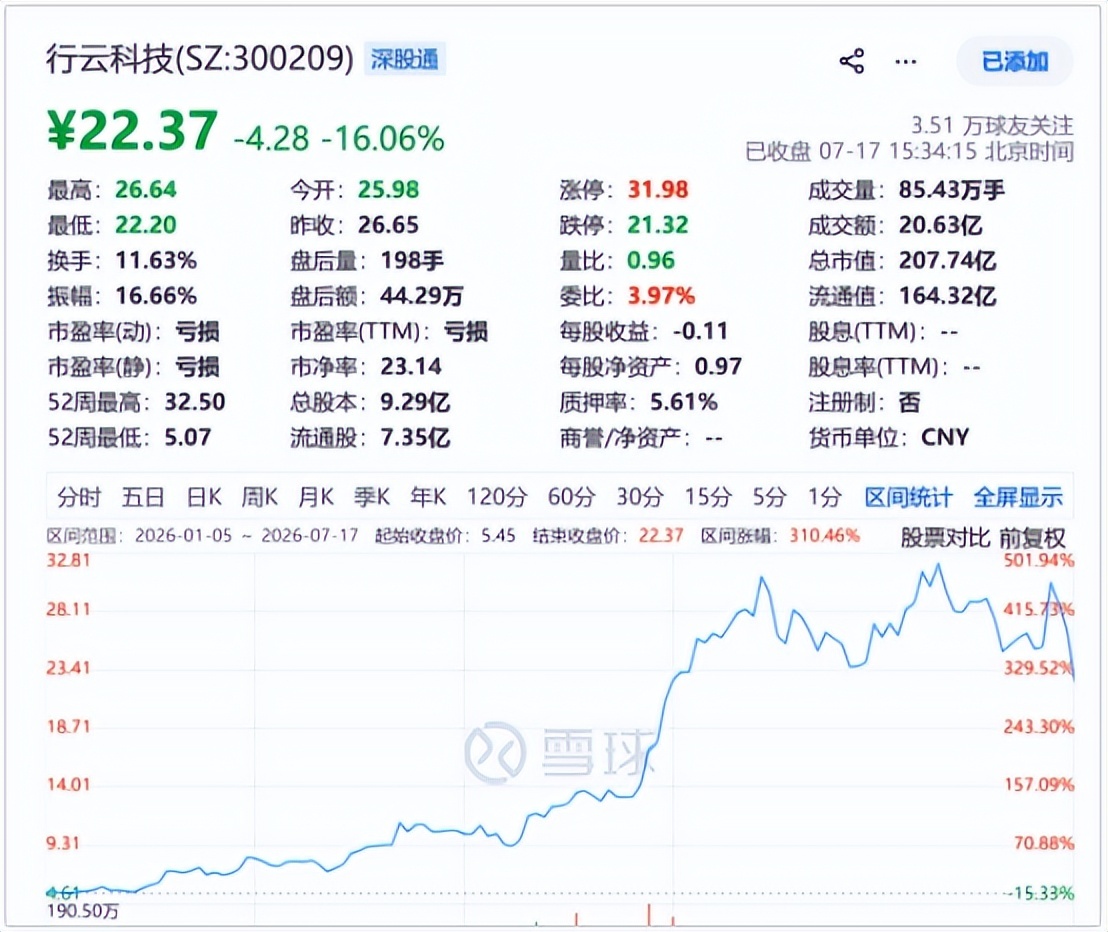
Xingyun Technology, formerly known as Youkesu, was once one of the "Four Young Masters of Huanchengcheng" in Shenzhen's cross-border e-commerce sector. It was severely hit during the Amazon account ban wave in 2021, suffering losses for four consecutive years, becoming insolvent, and was forced into bankruptcy reorganization at the end of 2024.
Just over a year later, it delivered a semi-annual report forecast that caught the market's attention under its new name, Xingyun Technology: revenue of 260 million to 300 million yuan, a year-on-year increase of more than five times; net profit attributable to shareholders of 10 million to 15 million yuan, with a year-on-year growth of nearly seven times at the highest.
Since the old name has been changed, the core driver of growth is certainly not the newly active cross-border e-commerce business, but a completely new direction—computing power leasing. In the first half of the year, the sales of its 67 computing power servers directly contributed about 65 million yuan in gross profit. The company's on-hand computing power order scale has exceeded 10 billion yuan, and its stock price rose by more than 400% at one point during the year.
However, with half of 2026 gone, the reputation of computing power leasing itself in the capital market has begun to become complex. Although large models and AI applications are still telling stories, CoreWeave across the ocean went public bleeding under huge debt, with short sellers bluntly stating that this business "returns only single digits." News earlier from Meta about renting out idle computing power has made the entire track nervous.
Is Xingyun Technology a crossover dark horse seizing industrial opportunities, or just another adventurer dancing in the capital bubble? Answering this question does not depend on a long-short judgment of a single company, but on the understanding of computing power leasing.
I. Is the underlying color of Xingyun Technology really computing power?
Does computing power count as technology? What about computing power leasing? This question surely would have set the market ablaze with debate. Objectively speaking, to understand Xingyun Technology, one cannot just look at how many orders it signed or what relationship it has with technology in the public imagination, but rather what chips it holds to secure these orders.
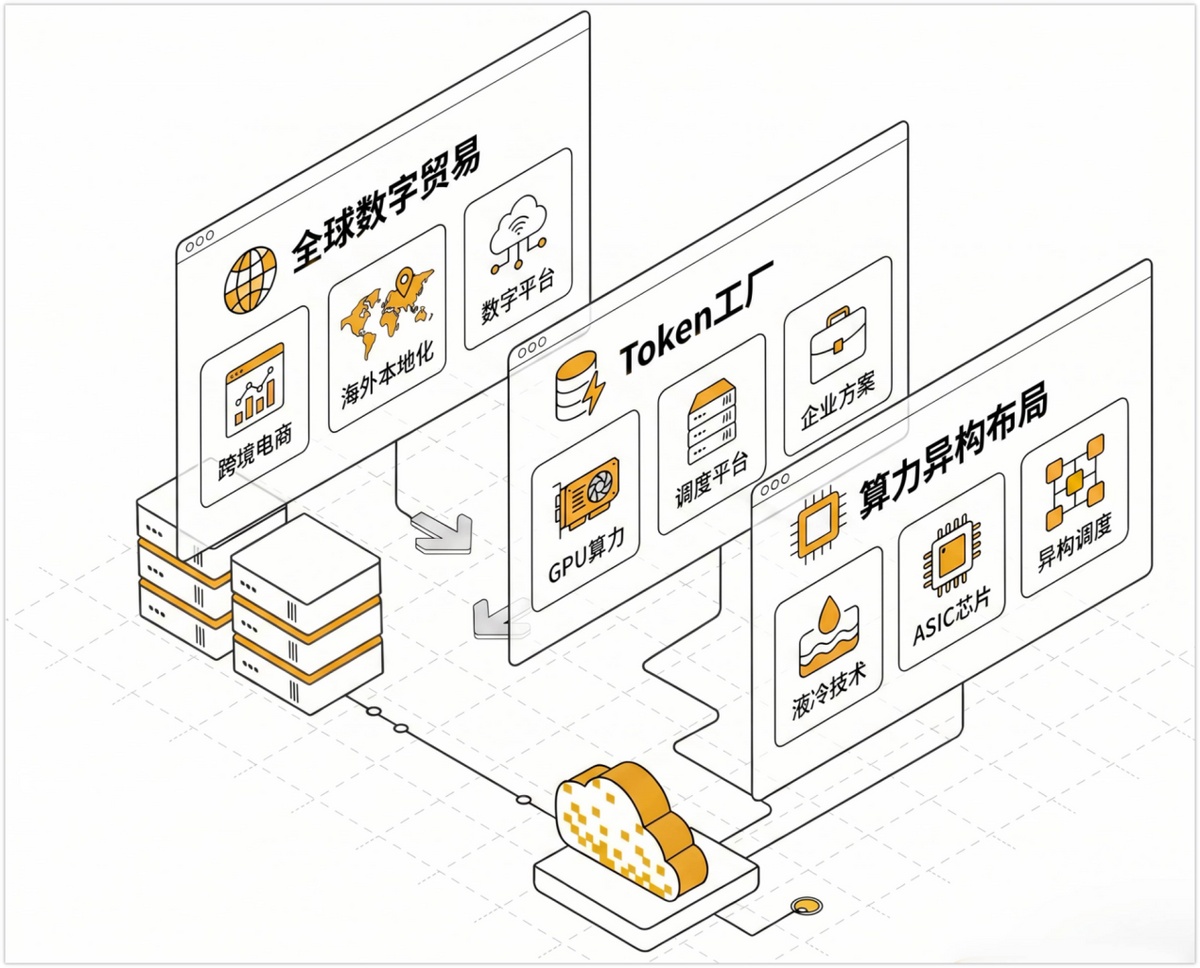
Wang Wei, the new actual controller of Xingyun Technology, is also the founder of Xingyun Group. Xingyun Group is a low-profile giant in China's cross-border e-commerce field, having deeply cultivated the global digital supply chain for years, accumulating deep resource networks in overseas warehousing and distribution, cross-border compliance, international logistics, and brand distribution. Xingyun Technology's entry into the computing power track is not an arbitrary crossover, but a transfer of capabilities.
The global procurement, cross-border transportation, customs clearance, overseas deployment, and operation and maintenance of computing power servers overlap significantly with the underlying supply chain of cross-border e-commerce. GPUs operate in a unified global market with tight supply, long delivery cycles, and complex cross-border logistics—essentially similar to the game logic of cross-border e-commerce players organizing scarce goods from around the world, clearing customs, and establishing local distribution back then.
When high-end GPUs become global hard currency, the ability to stably acquire cards, deliver efficiently, and clear customs compliantly itself constitutes a scarce resource.
Recent developments at Polibeli provide an overseas footnote to this logic. This Nasdaq-listed enterprise, viewed by the market as Xingyun Technology's overseas sibling company, is advancing cooperation on Southeast Asian computing power infrastructure with Amazon Web Services, planning to evaluate the construction of a large-scale AI computing center of up to approximately 100MW in Thailand, with potential service targets including top AI enterprises like Anthropic.
Polibeli's background also inherits Xingyun Group's global resource layout. If these overseas clues can eventually close the loop, the 10-billion-yuan computing power orders signed by Xingyun Technology domestically are not isolated events, but supported within a larger industrial network.
From an organizational perspective, Xingyun Technology recently introduced Tang Bo as Chief Scientist. The team founded by Tang Bo has long researched large model inference infrastructure, reducing inference costs through collaborative optimization of video memory, network, and computing resources in long-text inference scenarios.
Evidently, Xingyun Technology attempts to add technical optimization value beyond pure hardware leasing, rather than positioning itself as a mere "computing power sublessor." This has surprised the market somewhat—
If a company merely borrows money to buy GPUs and subleases them—funding costs rely on financing, hardware procurement relies on supplier relationships, and pricing power depends entirely on market supply and demand—then its role is essentially closer to a financial intermediary than a tech company. The sustainability of its business model highly depends on two variables: whether the window of tight supply and demand is long enough, and whether the capabilities accumulated within that window are deep enough.
Xingyun Technology's practice may indicate that although supply-demand dividends are important, the company's resource endowment, skill endowment, and industrial cognition also have room to play a role. The key lies in whether the company is willing to invest in reconstructing the acquisition methods and cost efficiency of computing power assets.
Nevertheless, even so, the computing power leasing market facing Xingyun Technology is still turbulent, a problem debated across the global market.
II. Computing Power Leasing is Experiencing a Rare "Long-Short Showdown"
Setting aside Xingyun Technology's individual case to look at the entire track, one finds that computing power leasing is in a critical period where industrial consensus has not yet converged. Both bulls and bears have sufficient arguments, but each sees different sides of the same coin.
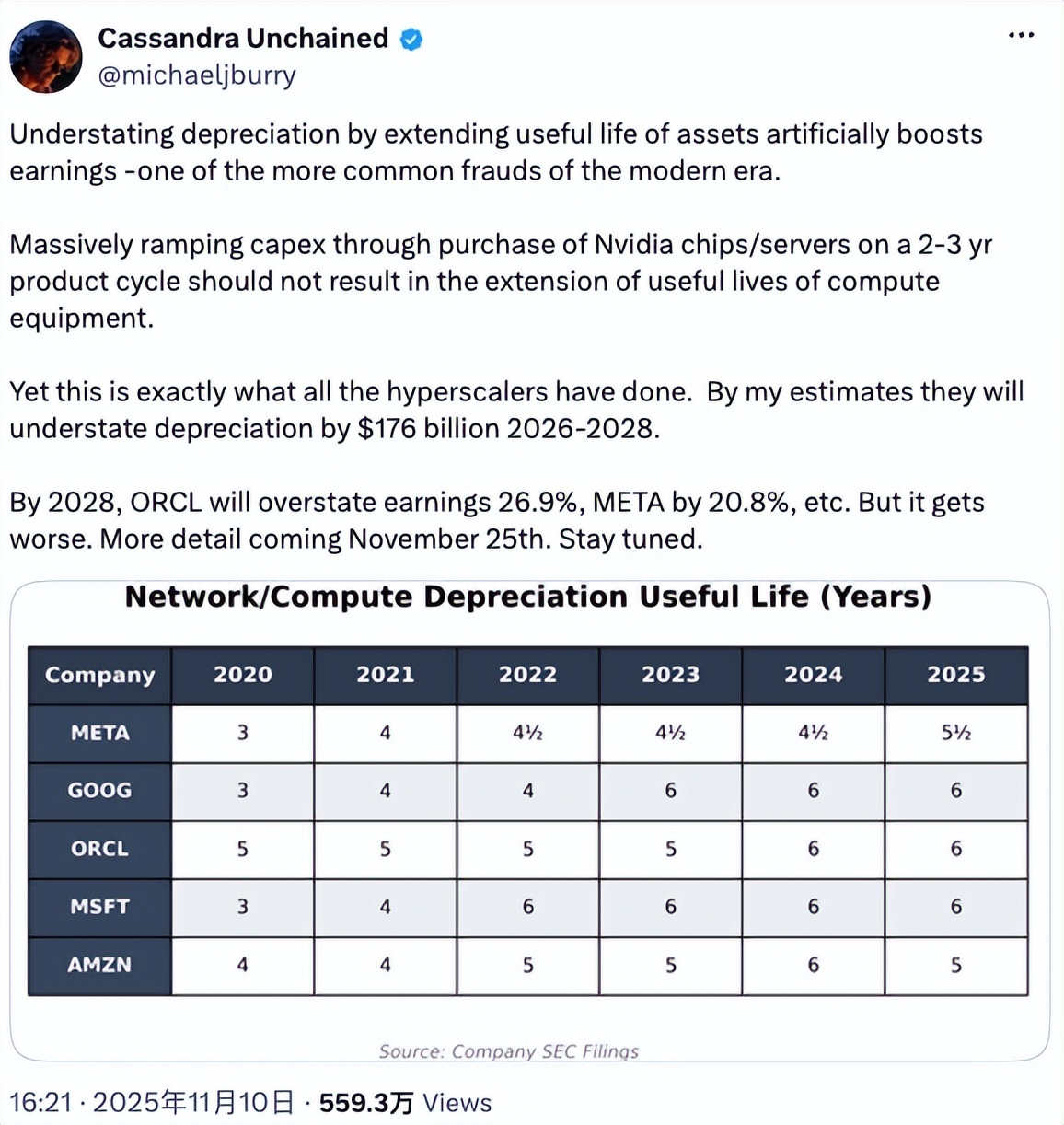
Market skepticism towards computing power leasing mainly focuses on three levels.
The first level is the solidity of the business model. GPU depreciation speed is extremely fast; for instance, Nvidia's iteration cycle has compressed from two years to one year. Once new architectures go into mass production, the market price of previous-generation chips may drop significantly in a short time. Using borrowed money to buy rapidly depreciating assets and maintaining profits through rent spreads works fine during economic upswings, but once supply and demand reverse or interest rates rise, the entire model exposes the fragility of high leverage.
The second level is customer concentration and potential competitive risks. Major customers of computing power leasing are often cloud giants and top AI companies—these customers not only have strong bargaining power, but crucially, they are also massively expanding their own computing power infrastructure. Once their own computing power experiences 阶段性 redundancy, they may not only stop external leasing purchases but even release idle computing power back to the market, turning from customers into competitors.
Meta's recent rumored moves are precisely the concretization of this risk. When major customers both buy your services and build their own capacity, and might 随时 become your rivals, this relational structure is essentially asymmetric.
The third level is systemic risk accompanied by financialization. Some aggressive players overseas have highly financialized computing power assets, issuing long-term bonds backed by GPUs, obtaining investment-grade ratings, and selling them to pension funds and insurance companies.
Overseas short sellers believe that in Q1 2026, the total liabilities of 个别 star companies skyrocketed from less than $20 billion a year ago to over $50 billion. Interest expenses continue to erode profits, and profitability has yet to be achieved. Historical price data samples for GPUs are extremely short; collateral valuation models built on historical data may crumble under real market pressure.
Compared to the storms overseas, the steady development pace of China's domestic AI industry chain is relatively more reassuring. Looking at the entire AI infrastructure industry chain, real demand remains robust. AI inference token consumption continued to climb in the first half of 2026, and the scale demand for training clusters has not shown signs of slowing down, while the cycle for cloud giants to self-build capacity usually takes several years. Within the time gap between supply and demand, computing power leasing plays a very important buffering role.
More importantly, differentiation is occurring within the computing power leasing market itself.
Pure "borrowing money to buy cards and lease them out" is a low-barrier channel business with the weakest pricing power and largest risk exposure. But other companies are evolving in two different directions:
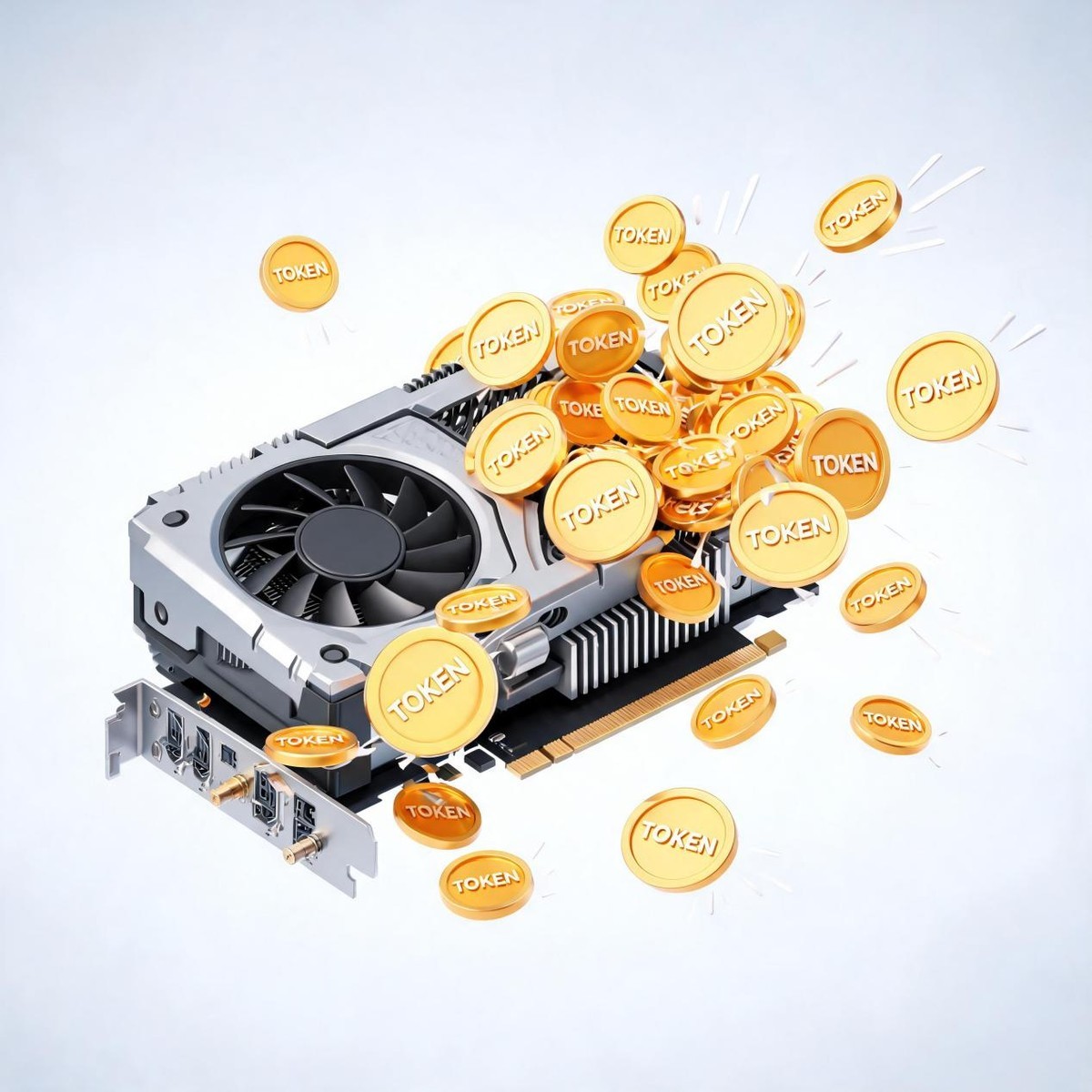
One is integrating upstream supply chains and financing capabilities, building scale barriers with lower funding costs and faster delivery cycles; the other is extending downstream technical optimization and operation/maintenance services, using system capabilities such as inference engine tuning, KV Cache management, and multi-tenant scheduling to improve the effective output per unit of computing power, making every GPU earn more money—the Token factory can be considered a mode evolved from this, although their operational logic is already quite different.
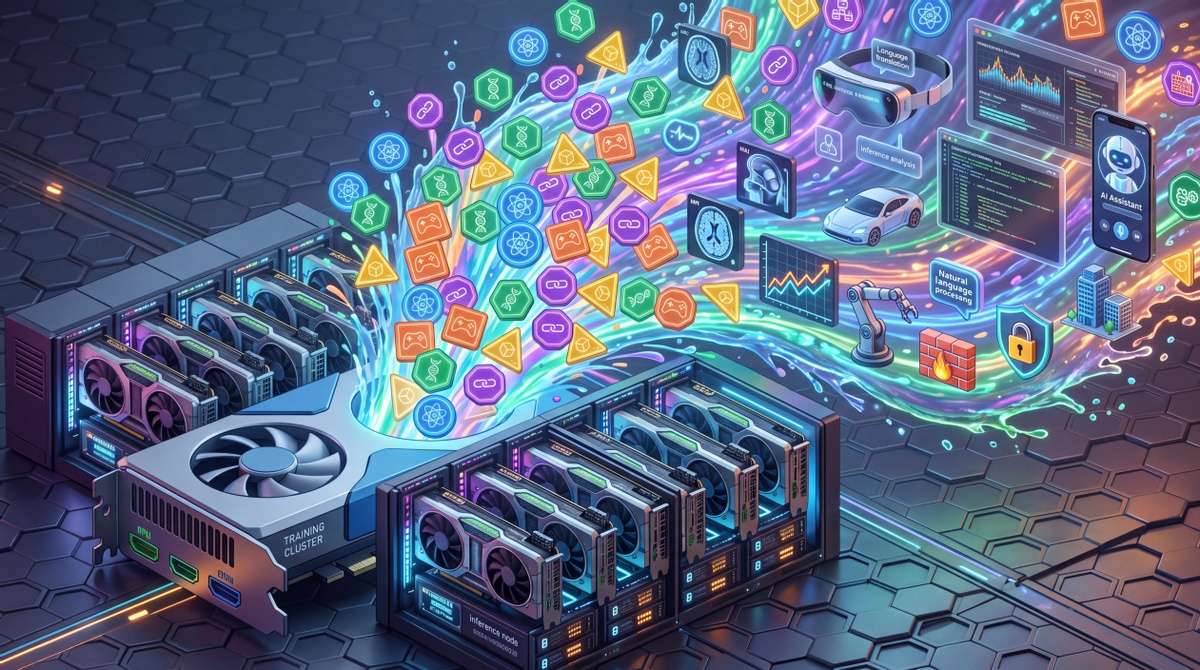
The commercial returns and risk characteristics of these paths are completely different. Using a single noun to 统称 them is like scoring a hotel group that owns properties and operates meticulously alongside a sublessor doing Airbnb short-term rentals on the same dimension; the result is naturally unfair.
Xingyun Technology leans more towards the first path in the current computing power track: using cross-border supply chain capabilities and industrial resource networks to lower card acquisition costs and delivery cycles, supplemented by initial support from a technical team. Whether this path can ultimately succeed depends on the delivery quality of the 10-billion-yuan orders, customer payment cycles, and the sustainability of subsequent new orders.
III. Whoever is Closer to Real Value Creation Represents the Endgame of Computing Power
Any emerging industry goes through a cruel process of eliminating the false and retaining the true as it moves from bubble to maturity. The computing power leasing track is currently in an interesting transition phase—scale competition driven by financing and efficiency competition driven by technology coexist, but the market has not yet formed a consensus standard for judging "who is truly creating long-term value." From an industry chain perspective, the essence of computing power leasing is an intermediate form of AI infrastructure moving from vertical integration to layered specialization. In the early stages, cloud giants handled the entire chain from chip procurement and data center construction to computing power services. As demand scale expanded rapidly and hardware supply fluctuated, independent vendors specializing in organizing GPU resources and providing flexible leasing services began to intervene, filling the gap between long-cycle fixed asset investment and short-cycle computing power demand. At this stage, the core value of such companies lies in resource organization and flexible delivery, relying on supply chain capabilities and capital operations. But those familiar with the industry's operations certainly know this cannot be the endgame. As the computing power market develops to a more mature stage, pure organizational and delivery capabilities will gradually be dissipated by standardized and scaled competition. The focus of core competitiveness will inevitably shift to another dimension: technical efficiency. Whoever can run higher effective computing power output with the same hardware, whoever can reduce unit token costs through system optimization, and whoever can establish differentiation in operation stability and service diversity will be the ones to survive the cycle.
The copyright of this article belongs to the original author/organization.
The views expressed herein are solely those of the author and do not reflect the stance of the platform. The content is intended for investment reference purposes only and shall not be considered as investment advice. Please contact us if you have any questions or suggestions regarding the content services provided by the platform.
