

ATFX Review: The US Federal Reserve's 2022-2023 Rate Hike Cycle and the Performance of the US Dollar Index

ATFX: The Federal Reserve's mandate is to maintain price stability and maximum employment. When these two indicators show significant changes, the Fed will take corresponding action. Statistical data shows that the US labor market remains relatively stable, with the unemployment rate hovering around the 5% full employment line for a long time, showing little volatility. In contrast, inflation data has been volatile; influenced by international geopolitical issues and domestic economic policies, US inflation rates have frequently experienced sharp rises and falls. Consequently, the Fed's monetary policy is often adjusted in response to changes in inflation data.
Figure 1: US CPI Year-over-Year Trend - ATFX
In June 2022, the US CPI year-over-year rate surged to 9.1%, just one step away from the 10% threshold, plunging the US into the abyss of hyperinflation. Two years prior, in May 2020, the US CPI year-over-year rate was only 0.1%; a slight misstep could have led to deflation. Within two years, the US macroeconomy shifted from freezing lows to widespread euphoria, driven by pandemic shocks and "revenge spending." One of the Fed's core tasks is to control inflation and maintain price stability. The sharp short-term fluctuations in CPI data pose a significant test to the Fed's wisdom in policy adjustment.
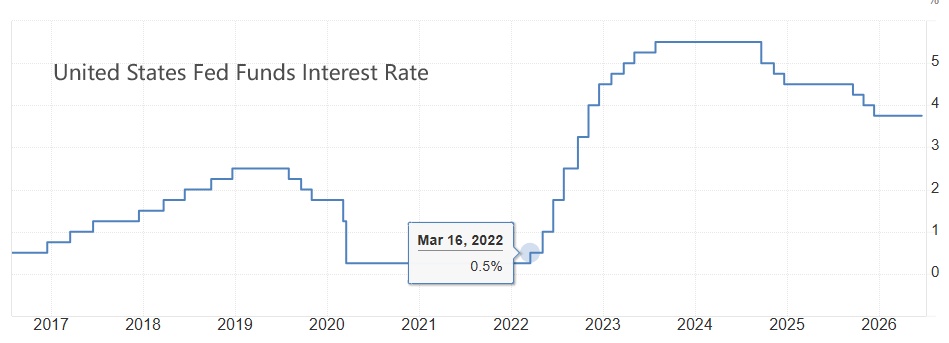
Figure 2: Federal Reserve Interest Rate Curve - ATFX
During 2022-2023, Jerome Powell chaired the Federal Reserve, but he was widely criticized post-facto for being "significantly behind" and "owing an apology to the American people." The Fed did not begin its first rate hike until March 2022, raising the benchmark rate to just 0.5%, which was hardly restrictive. At that time, the US CPI year-over-year rate was 8.5%, far exceeding the 2% mild inflation standard. Powell then argued that after a period of low inflation, it was appropriate to allow some overshooting. However, an 8.5% inflation rate was clearly "too much." In fact, as early as March 2021, the US CPI year-over-year rate had already risen above 2%, reaching 2.6%. Economists and corporate executives had already warned the Fed about the inflation crisis and called for preemptive rate hikes. The Fed at the time ignored market sentiment, stubbornly keeping interest rates unchanged, thereby missing the optimal window for controlling inflation.
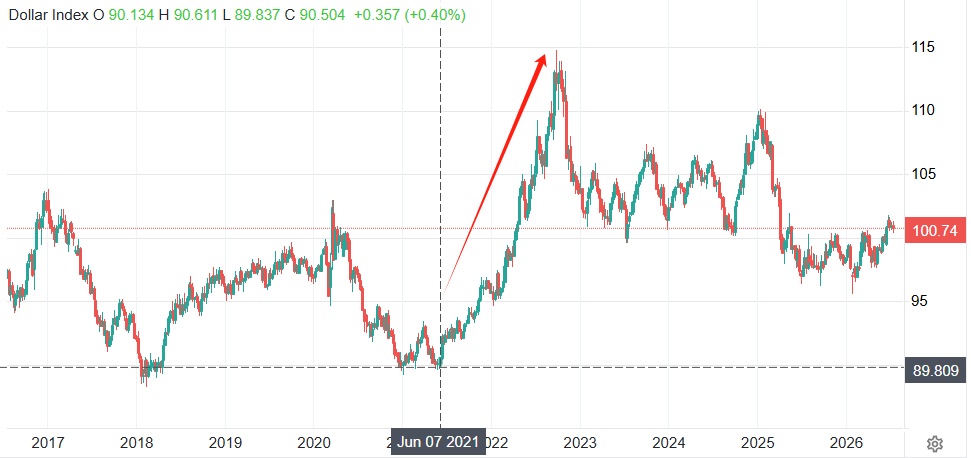
Figure 3: US Dollar Index Trend - ATFX
The movement of the US Dollar Index largely followed the performance of inflation data rather than the timing of the Fed's rate adjustments. In June 2021, the US CPI year-over-year rate was 5.4%, just surpassing the mainstream market's overshooting warning line of 5%, triggering an upward trend in the dollar index. By October 2022, the index peaked at 114.78 points, representing a 27.7% increase from 89.83 points in June 2021. At that time, US CPI data showed signs of cooling, and the Fed had already raised rates five times, bringing the rate to 3.25%, which was clearly restrictive.
ATFX Summary: US inflation hit bottom and rebounded first in May 2020, followed by the rise of the US Dollar Index starting in June 2021, and finally the Fed's first rate hike in March 2022. This transmission chain tells us: inflation precedes market trends, and market trends precede monetary policy adjustments. If you want to capture the main phase of US Dollar Index fluctuations, relying solely on the signal of the Fed's first rate hike is far from enough. You must also analyze US macroeconomic trends in advance based on CPI data, unemployment data, and other indicators.
ATFX Risk Warning, Disclaimer, Special Statement: Markets involve risks, and investment requires caution. The above content represents only the personal views of the analyst and does not constitute any trading advice. Please do not treat this report as the sole reference. Analyst views may change over different periods, and updates will not be notified separately.
The copyright of this article belongs to the original author/organization.
The views expressed herein are solely those of the author and do not reflect the stance of the platform. The content is intended for investment reference purposes only and shall not be considered as investment advice. Please contact us if you have any questions or suggestions regarding the content services provided by the platform.
