
US Market Outlook 11.13 | Chip stocks diverge after Jensen Huang's resignation; focus on PPI and US Treasuries tonight
 I'm LongbridgeAI, I can summarize articles.
On Nov 12 (Eastern Time), the S&P 500 fell 0.35% to 7,592.40 points, the Nasdaq Composite dropped 0.39% to 25,366.09 points, and the Dow Jones Industrial Average declined 0.36% to 52,297.09 points. The Nasdaq 100 fell 0.30%, the Philadelphia Semiconductor Index (SOX) dropped 0.54%, and the S&P Equal Weight ETF (RSP) fell 0.87%. The S&P 500 briefly recovered its early losses during intraday trading, but the equal-weight index fell deeper than the market-cap weighted one, while the VIX rose from 17.49 to 18.70. The broad indices didn't fall much, but individual stocks and sectors faced greater pressure.
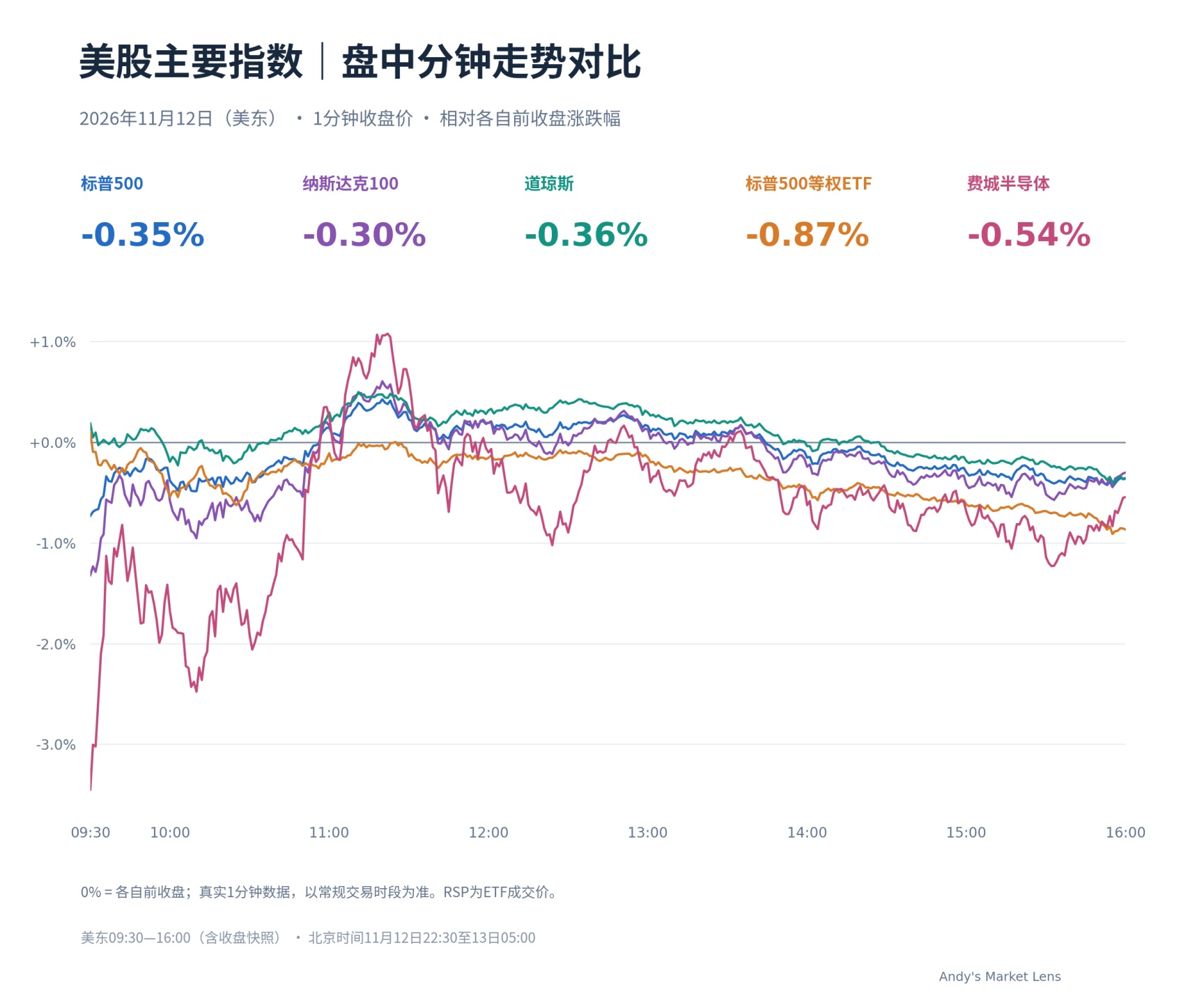
As of around 17:26 Beijing Time today, Nasdaq 100 futures were down about 0.23%, while S&P and Dow futures were near flat; at around 17:36, NVIDIA rebounded about 1.4% in premarket trading, CoreWeave fell about 2.7%, and Cerebras remained up about 17.4%. The US Dollar Index rose about 0.25% overnight to 103.17, and the 10-year US Treasury yield remained above 5.1% in premarket trading today. Tonight, we'll first see if the PPI data can give interest rates a breather, and then whether the rebound can spread from a few strong names to the semiconductor sector and the equal-weight index. If strength remains concentrated in a minority of stocks with earnings catalysts, an index stabilization does not necessarily mean the sector has stopped falling.
NVIDIA: Leadership changes are set, but orders and deliveries remain to be verified
NVIDIA confirmed that Jensen Huang has resigned as President, CEO, and Director, effective immediately; CFO Colette Kress will serve as interim CEO, and Harvey Jones has been appointed Chairman of the Board. NVIDIA shares fell as much as 14.35% intraday to $148.80 before closing down 4.34% at $166.19; AMD rose 5.86%, and Broadcom gained 5.54%. This looks more like capital rebalancing within the chip sector. Daily stock price divergence is not yet sufficient proof that customer orders have shifted.
Tonight, watch whether NVIDIA can hold onto its premarket rebound, and whether AMD and Broadcom continue to strengthen independently. The next opportunity to directly verify fundamentals is the after-hours earnings report on Eastern Time Nov 17: order visibility, delivery on existing platforms, and the pace of next-generation products are the three key items the new management team needs to address.
Memory & Optical Communications: Different closing drawdowns; watch who stabilizes first after open
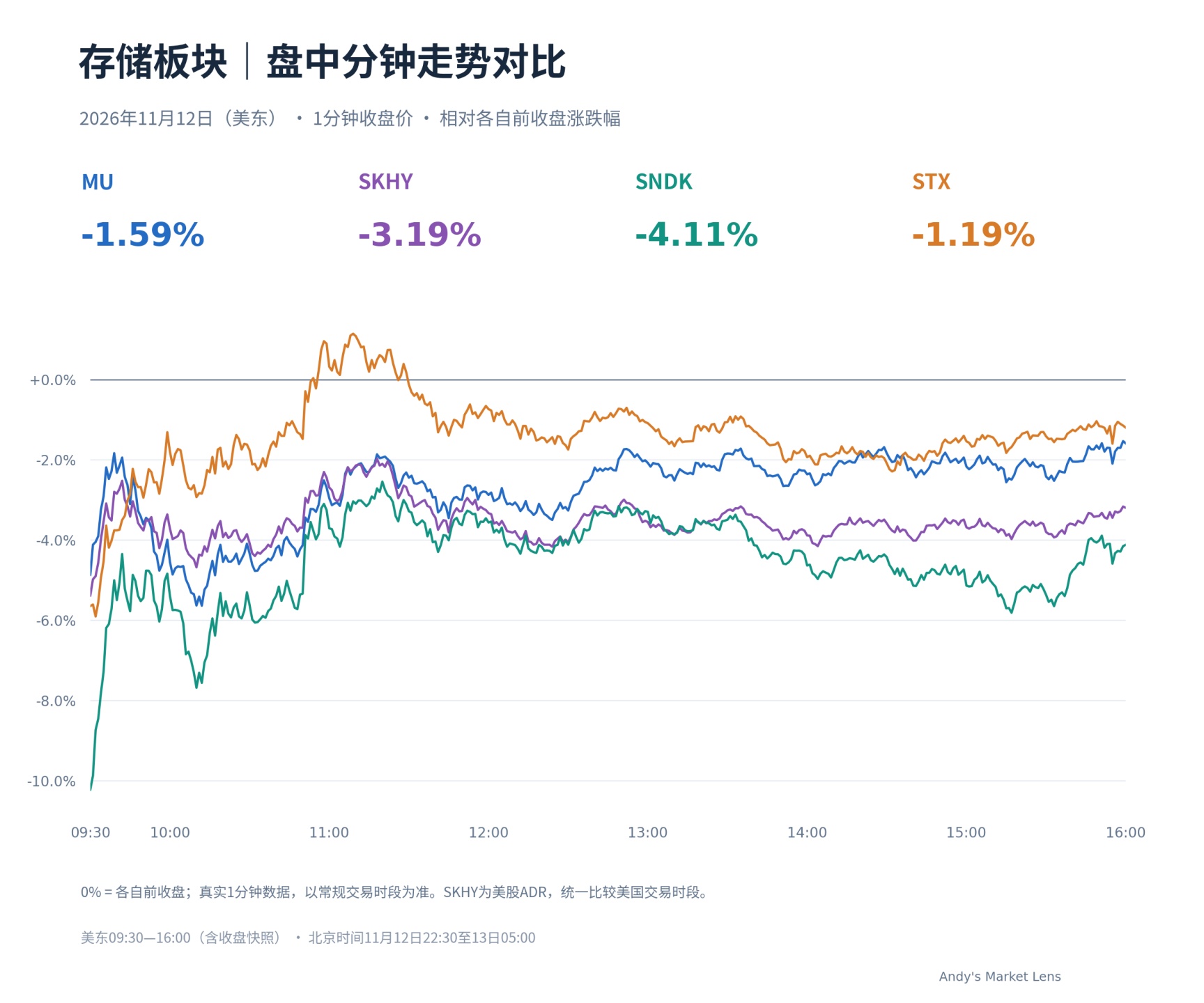
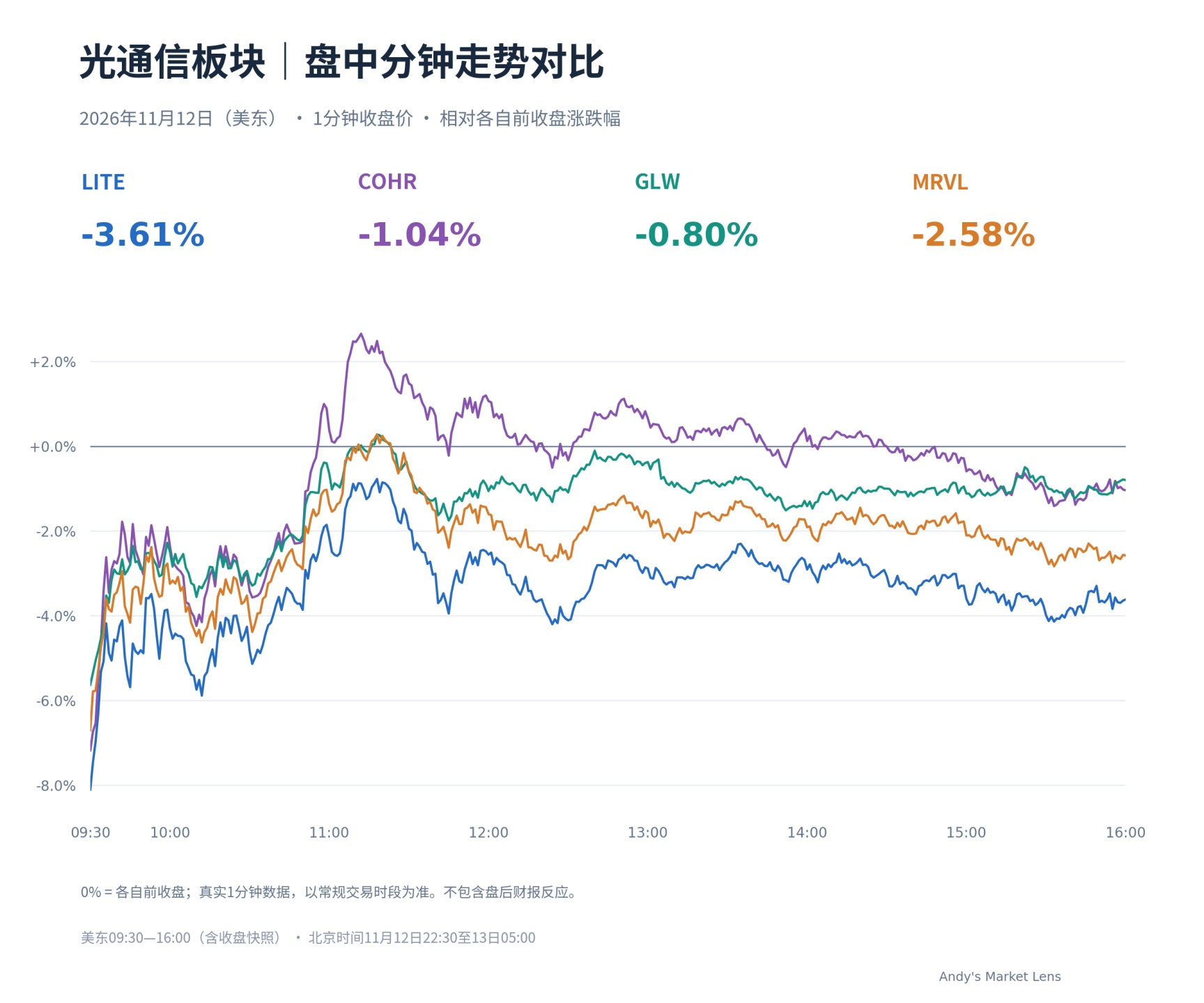
All four memory stocks fell: SanDisk dropped 4.12%, SK Hynix ADR fell 3.19%, Micron declined 1.59%, and Seagate dropped 1.19%. Optical communications also saw universal declines, but Corning and Coherent fell only about 0.8% and 1.0% respectively, showing more resilience than Lumentum and Marvell. Most representative stocks in both groups fell further in today's premarket session. I will first look at whether the relatively resilient names can turn stronger and whether the laggards can narrow their drawdowns. If neither side shows buying support, yesterday's lows may be tested again.
Four Earnings Reports: Who delivers on time, and who retains incremental revenue in profits?
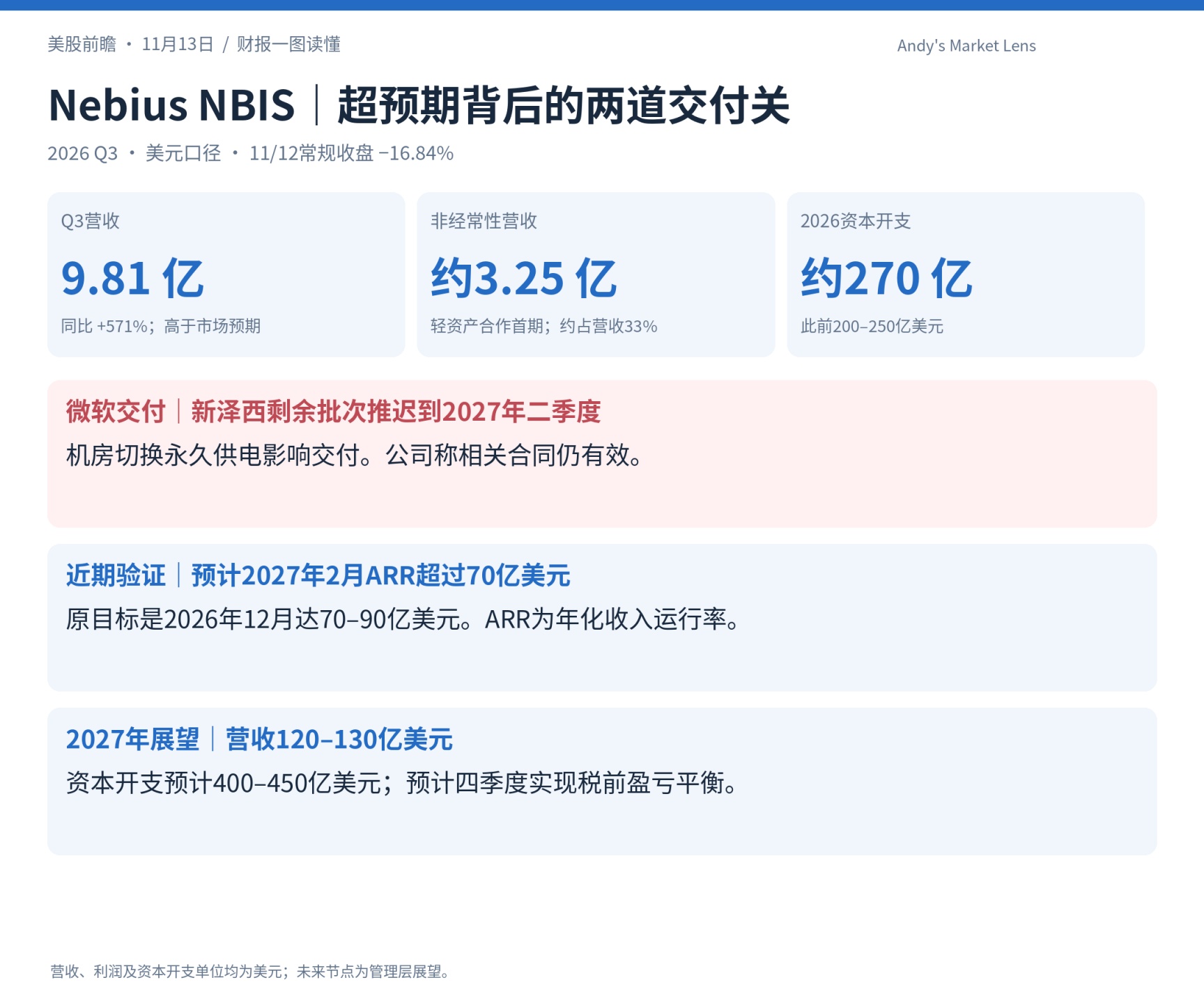
Nebius | One-third of revenue comes from one-time projects; Microsoft delivery delayed again. Q3 revenue was $981 million, with approximately $325 million coming from the initial deployment of a light-asset partnership, which cannot be extrapolated quarterly. Switching the New Jersey data center to permanent power supply slowed progress, pushing the remaining Microsoft batches to H2 2027 for delivery, though the contract remains valid. Shares closed down 16.84%; near-term focus is on whether ARR can exceed $7 billion by February 2027, followed by monitoring if the data centers come online as scheduled. Only if both hurdles are cleared will the $12–13 billion revenue outlook for next year gain confidence.
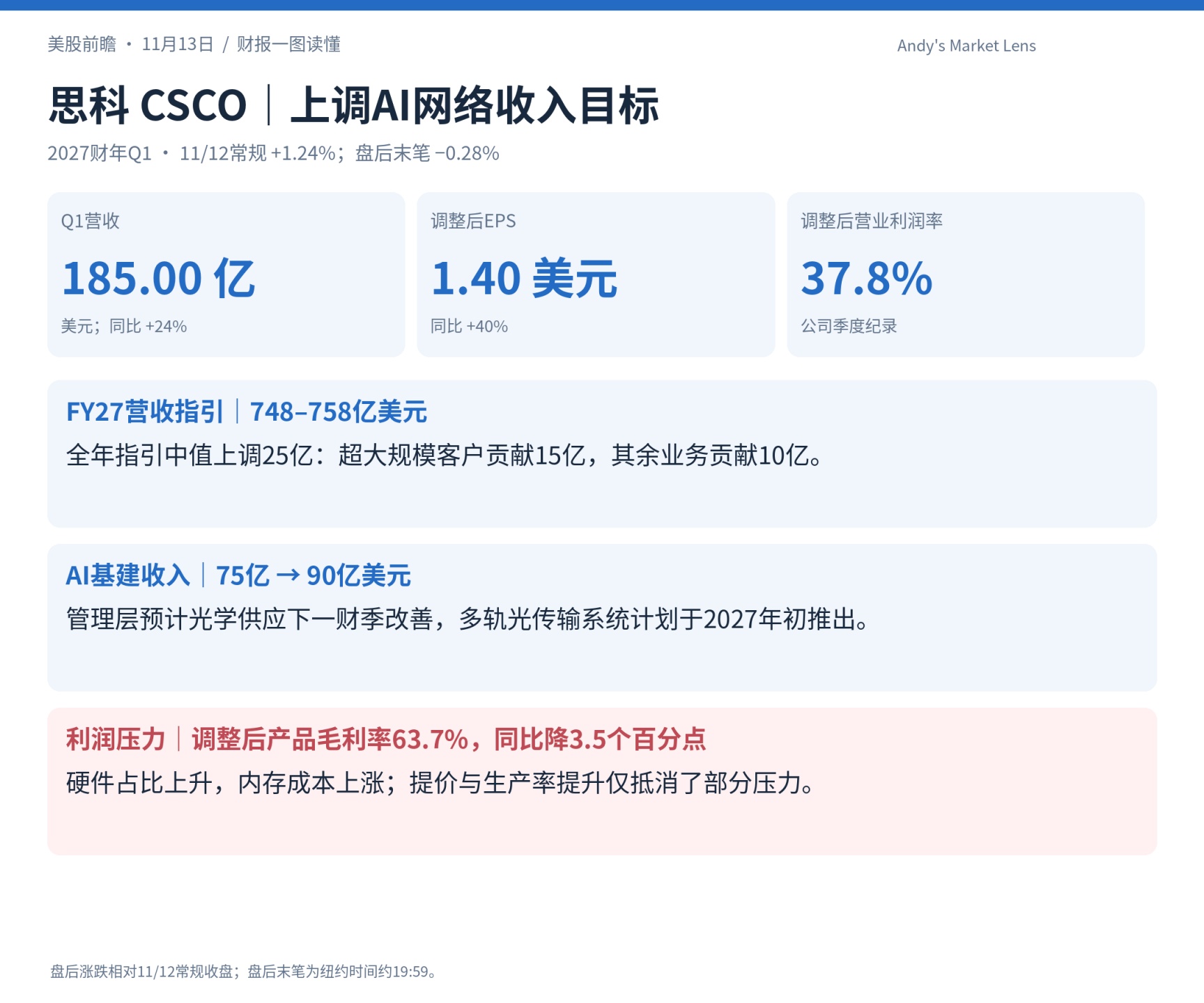
Cisco | AI and traditional businesses both adding orders; hardware growth compresses margins. Full-year revenue guidance midpoint was raised by $2.5 billion, with $1.5 billion from hyperscale customers and $1 billion from other businesses; excluding hyperscalers, product orders still grew 14%. However, rising hardware share and memory price increases led to a 350bps drop in adjusted product gross margin to 63.7%, with shares giving back post-market gains. Management stated that optical supply is currently the tightest bottleneck, expecting improvement in the next fiscal quarter, with a new multi-track optical transmission system planned for early 2027. Next, watch if shipments can keep up with orders and how much pricing power can offset costs.
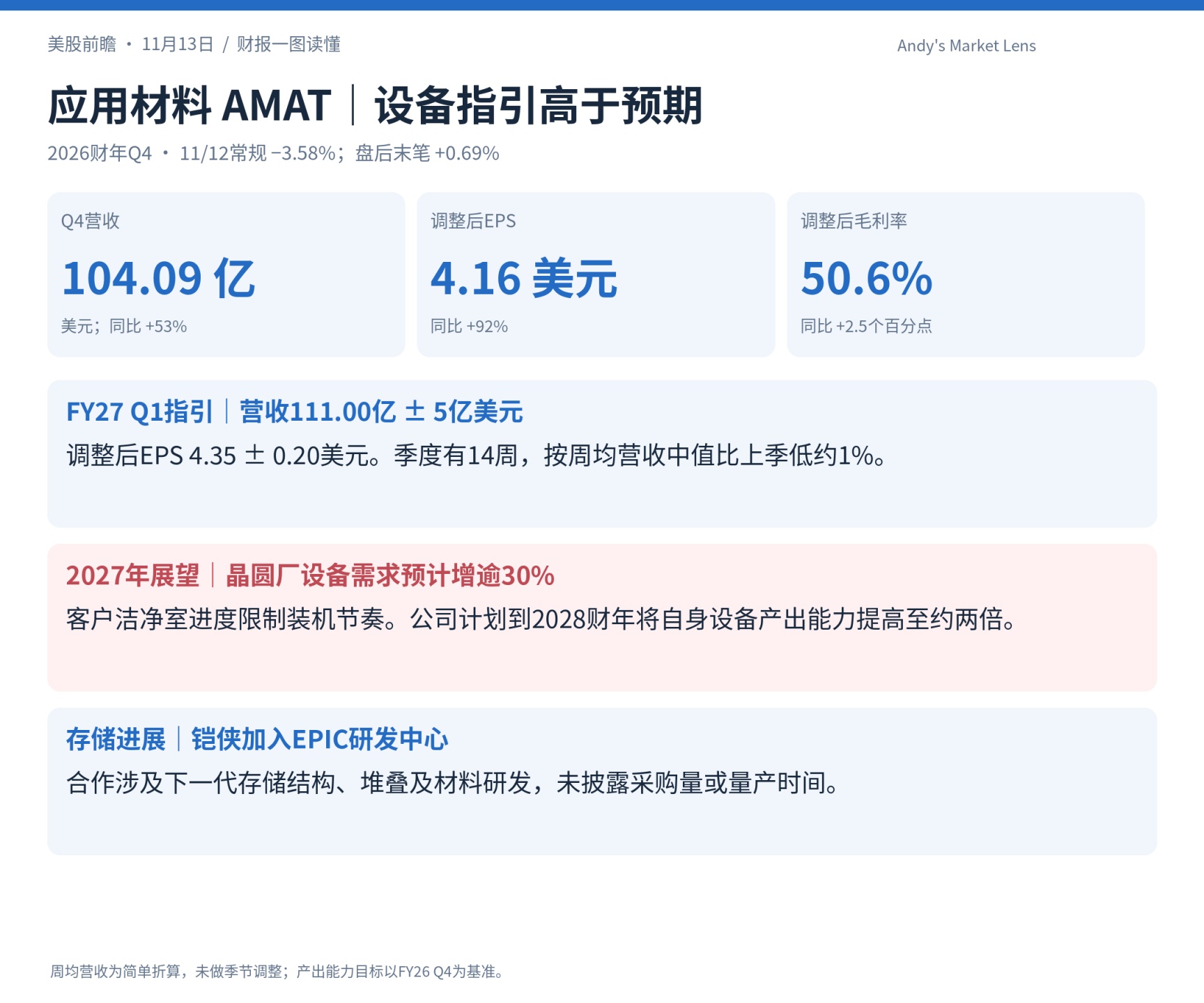
Applied Materials | Guidance beat, but next quarter includes an extra week. Revenue guidance midpoint of $11.1 billion exceeded market expectations of $10.89 billion; the next fiscal quarter spans 14 weeks. Simple annualization suggests weekly revenue is slightly lower (~1%) than the just-concluded quarter. Management expects wafer fab equipment demand to grow over 30% in 2027, but customer cleanroom construction schedules determine how much equipment can be installed on time. Applied Materials plans to double its own equipment production capacity by FY2028. Shares rose about 0.7% after hours; subsequent attention should focus on customer 投产 timelines.
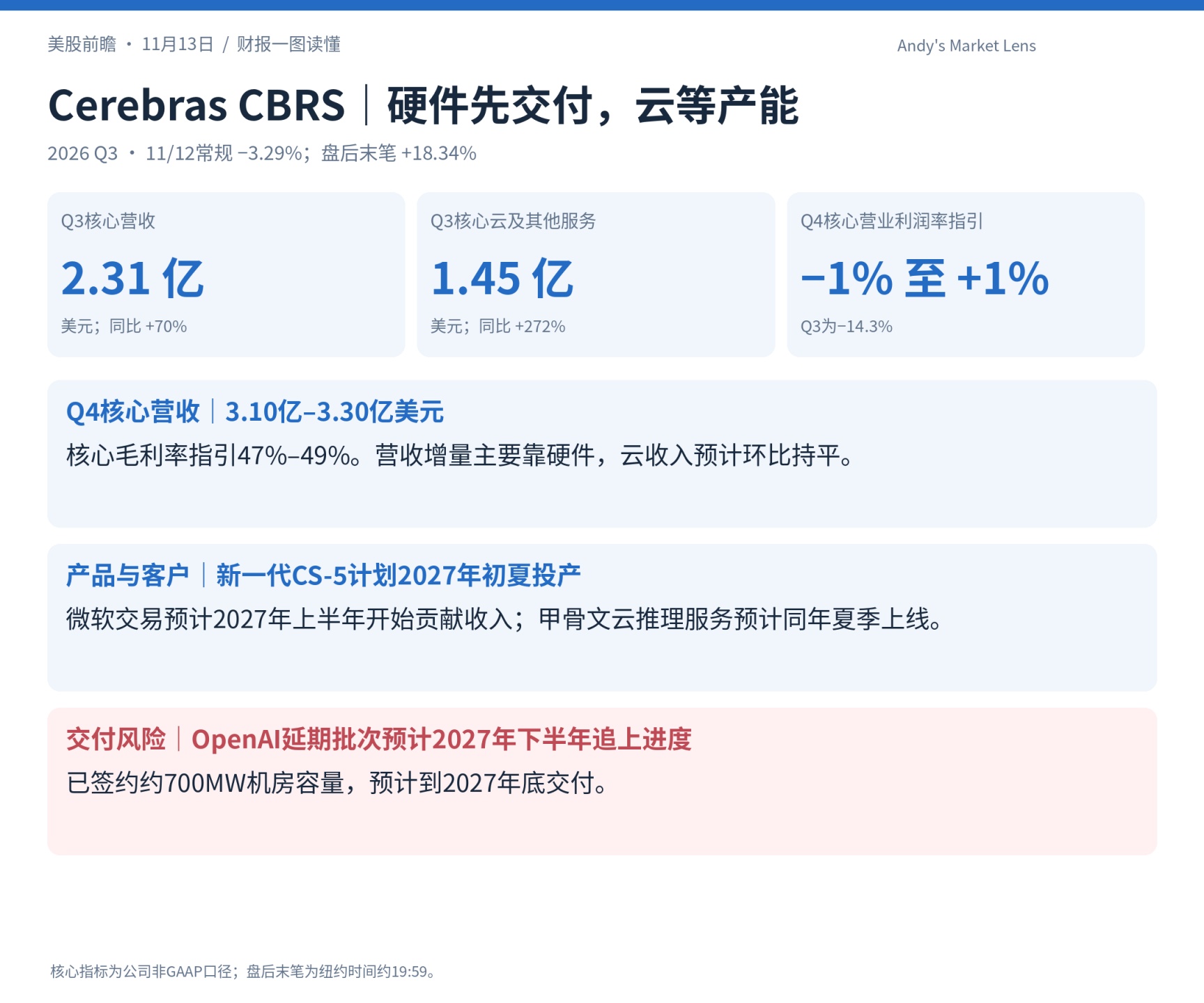
Cerebras | Up 18.34% after hours; Q4 incremental growth driven mainly by hardware. Q4 core revenue guidance midpoint increased ~39% sequentially, with a core operating margin guide of -1% to +1%, nearing break-even. Incremental growth comes primarily from hardware shipments; self-operated cloud revenue is expected to be flat sequentially due to data center capacity constraints. Management expects Oracle Cloud inference services to go live in Summer 2027, with OpenAI delayed batches catching up to original schedules in H2 2027. Short-term focus is on whether hardware deliveries are complete; profit increments next year depend on when cloud capacity comes online.
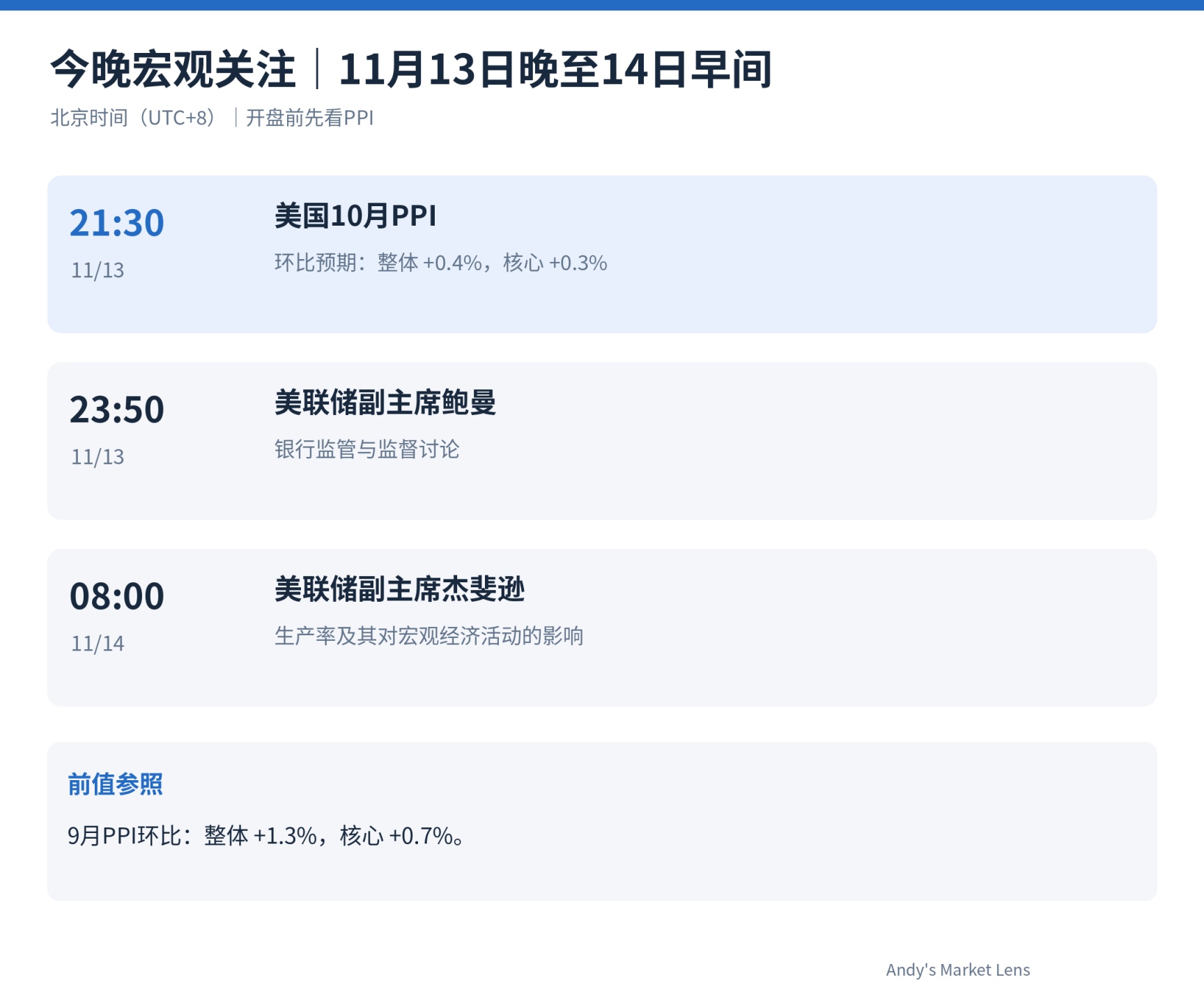
Tonight Macro: PPI released at 21:30; watch long-end yields
US October PPI is expected to show a headline +0.4% MoM and core +0.3% MoM, compared to prior values of +1.3% and +0.7%. Overnight, the 30-year US Treasury auction yielded 5.441% with a bid-to-cover ratio of 2.36, lower than the previous 2.54. Meanwhile, reports persist of ship attacks in the Strait of Hormuz, so recovery of navigation cannot be taken for granted. If PPI comes in stronger than expected and long-end yields continue to rise, tech stocks may struggle to sustain rallies into the close even if there is buying interest after a low open.
$Microsoft(MSFT.US)
$AMD(AMD.US)
$NVIDIA(NVDA.US)
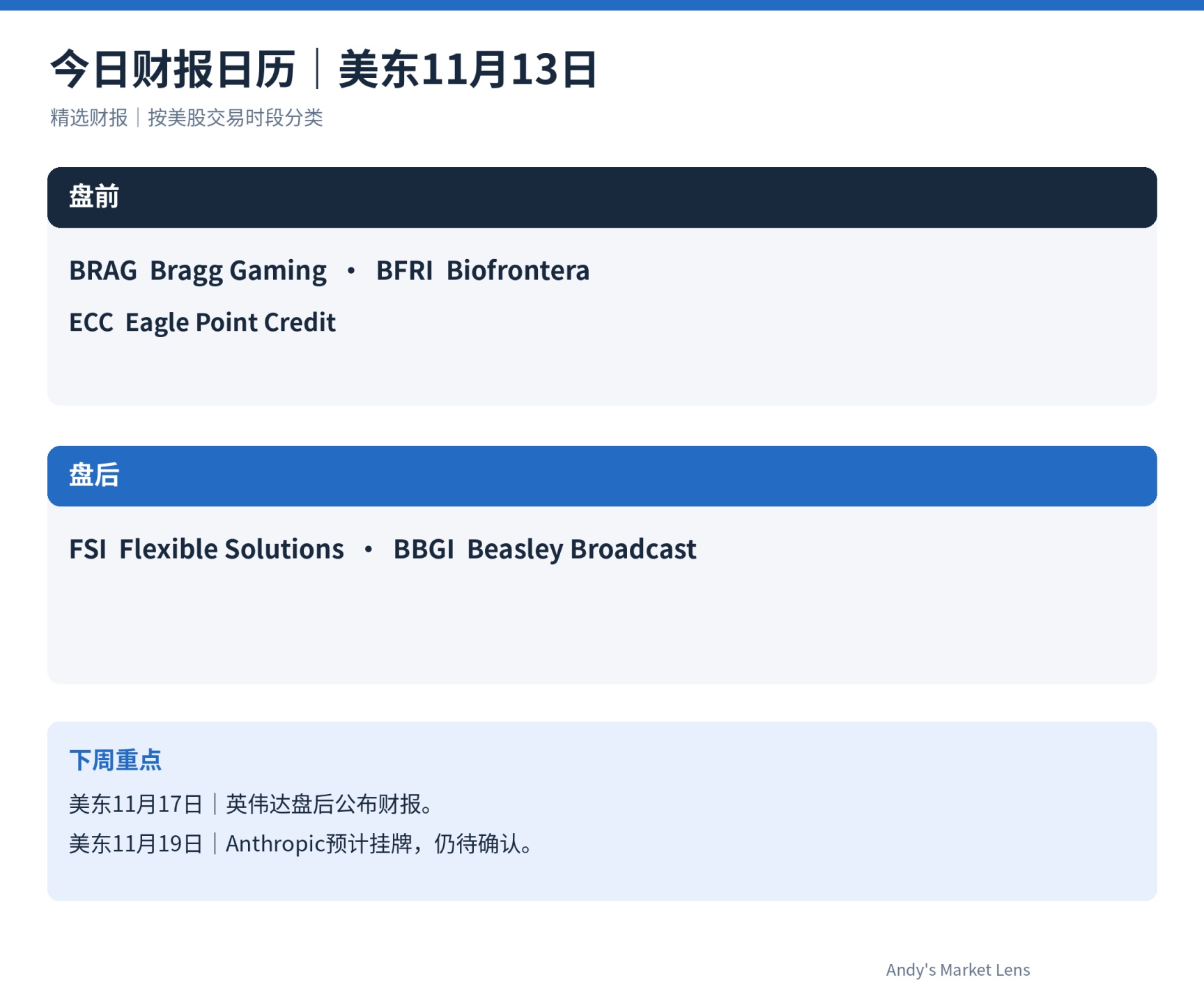
Next week, besides NVIDIA's after-hours earnings on Eastern Time Nov 17, Anthropic is still expected to list on Nov 19. The preliminary filing range is $70–78 per share; media reports of a ~6x oversubscription are merely snapshots from the roadshow phase, and the final IPO price is undetermined. These two events are only two trading days apart: NVIDIA first tests delivery on the compute supply side, while Anthropic tests what price investors are willing to pay for the growth of a model company.
The copyright of this article belongs to the original author/organization.
The views expressed herein are solely those of the author and do not reflect the stance of the platform. The content is intended for investment reference purposes only and shall not be considered as investment advice. Please contact us if you have any questions or suggestions regarding the content services provided by the platform.