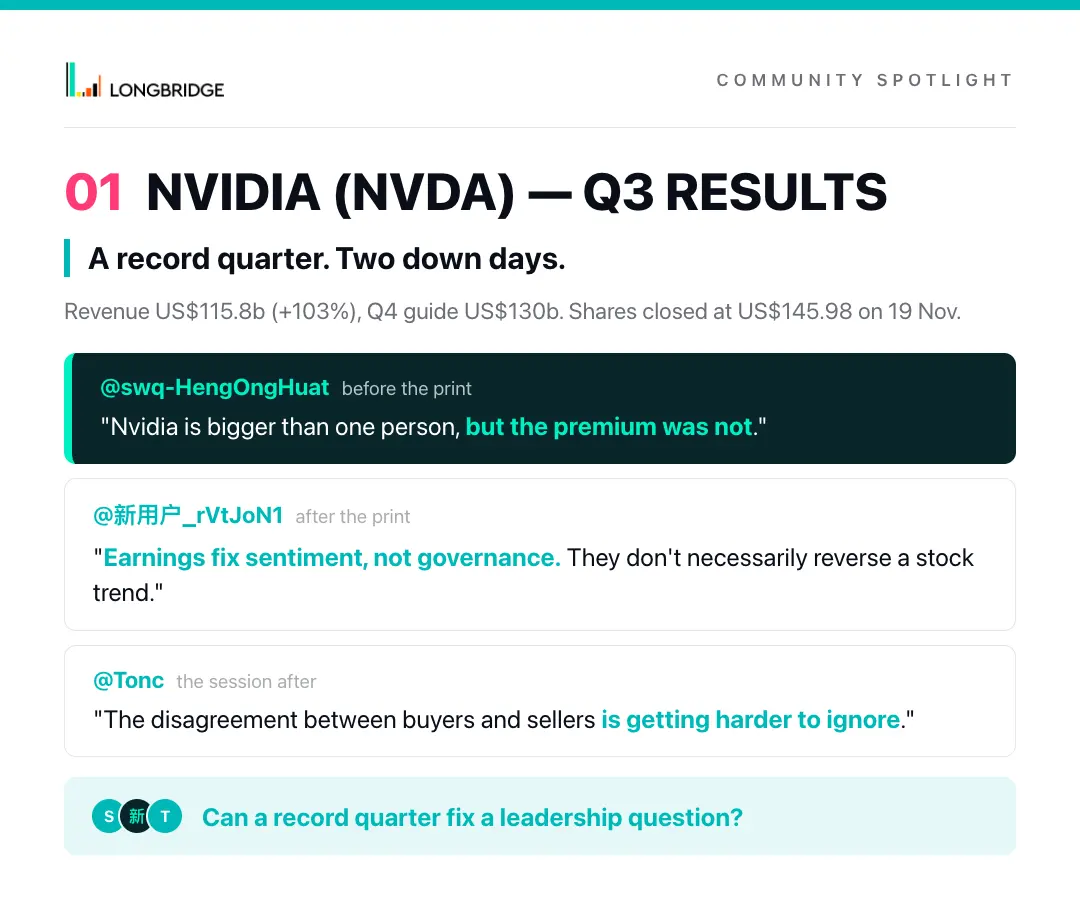
It’s really shaky for Nvidia right now. But I think if the stock is low enough, it will be good to start accumulating some for the long term future
P





It’s really shaky for Nvidia right now. But I think if the stock is low enough, it will be good to start accumulating some for the long term future
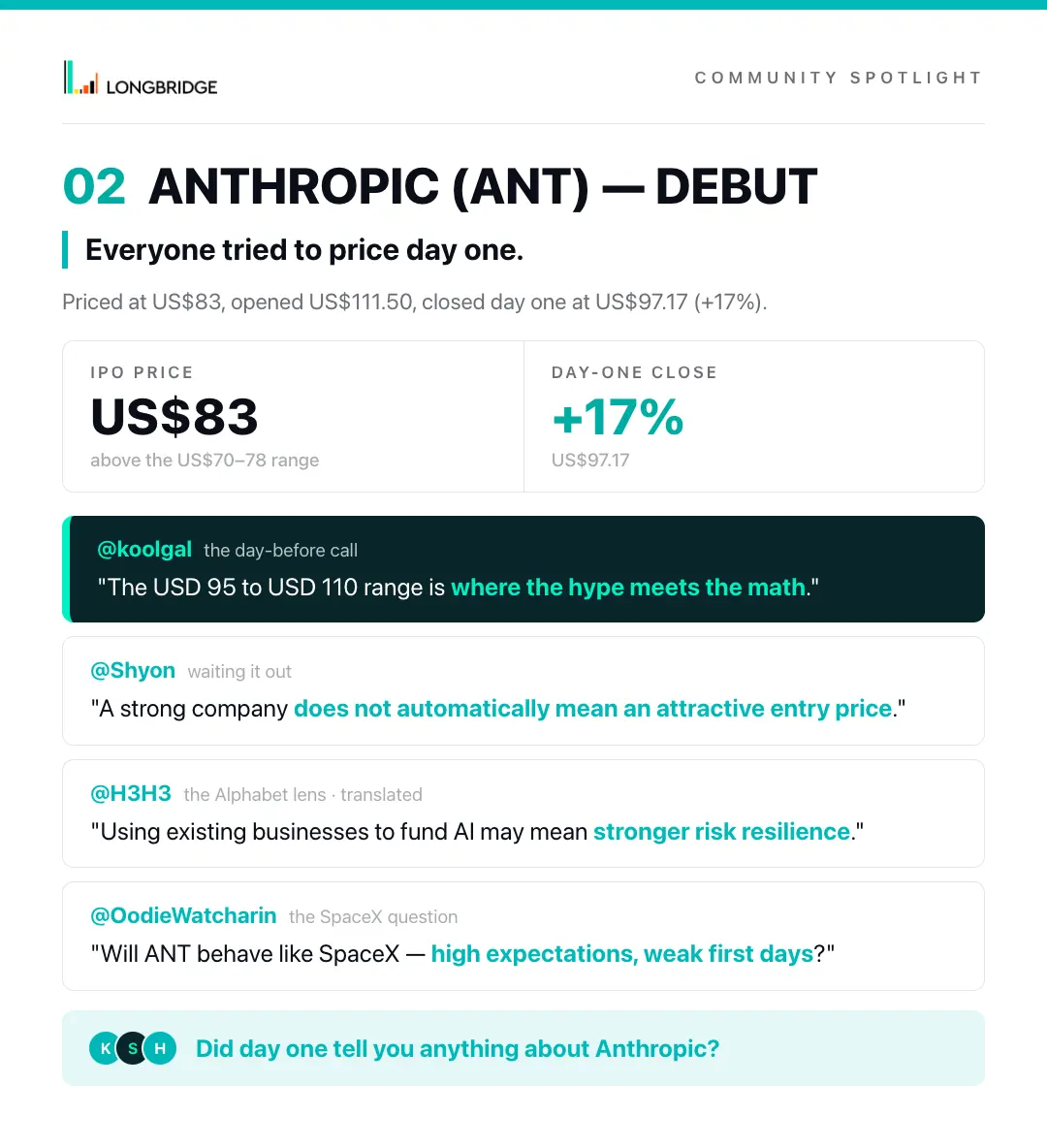
Strong adoption of Claude, swift revenue expansion, and institutional demand might support a robust first-day performance. Yet elevated valuation and market volatility could moderate gains while investors weigh long-term profitability. It will close below $80
Jensen Huang’s abrupt departure on 12 November, with CFO Colette Kress taking over as interim CEO just before earnings on 17 November, naturally prompts immediate multiple compression and volatility. Until new leadership demonstrates execution, retail dip-buying involves high risk, turning the stock from a passive long-term hold into a pure volatility trade.
Great sharing! I especially liked: "Growth isn't just about growing wealth. It's also growing as a person."
I agree with your rule to never buy a stock purely on analyst recommendations, as sentiment often drives these targets over fundamentals. If analysts downgrade a stock you hold (like Nvidia currently), do you sell or stick to your rule?
You also mentioned you'd rather miss an opportunity than overpay. What if you find a great stock, but its valuation never meets your price target? For example, local banks like DBS have run up so much that even pullbacks leave them over intrinsic value. What would you do?
The stock market has shown a strong recovery for technology stocks over recent days, and several AI shares remain notably higher than earlier—particularly yesterday’s performance in the U.S. market.
The US midterm elections led to a Democratic sweep of Congress, and the Dow had its biggest jump in 44 years. High power needs for AI data centers hurt some chip stocks. Also, the Israel-Iran conflict caused an oil crisis, making US inflation worse and increasing stock swings.
The Dow's rise is a clear sign that we shouldn't ignore the effect on everyday people. Big tech stocks like Apple, Microsoft, Google, and Amazon rose while others fell sharply. After a rough quarter, we need to watch which companies do well next. I'm tempted to buy more Nvidia and Palantir while prices are low, but we need to be careful about when to buy in after the last few months of losses.
Strong profitability and competitive advantage.
Established Singapore banking franchise.
Significant wealth-management business.
Attractive recurring dividend income.
Strong capital position.
It is an excellent bank, yet its current valuation warrants caution. I would separate owning a high-quality business from purchasing it at an attractive price.
With Apple trading near $344.63 ahead of its earnings report, the stock carries elevated valuations (P/E above 39) and standard pre-earnings consolidation, so a narrow range is likely while investors remain cautious.
Balanced Sentiment: Although recent momentum has been solid, uncertainty about upcoming macro factors and the release tends to limit sharp single-session moves, keeping price action within a flat band.
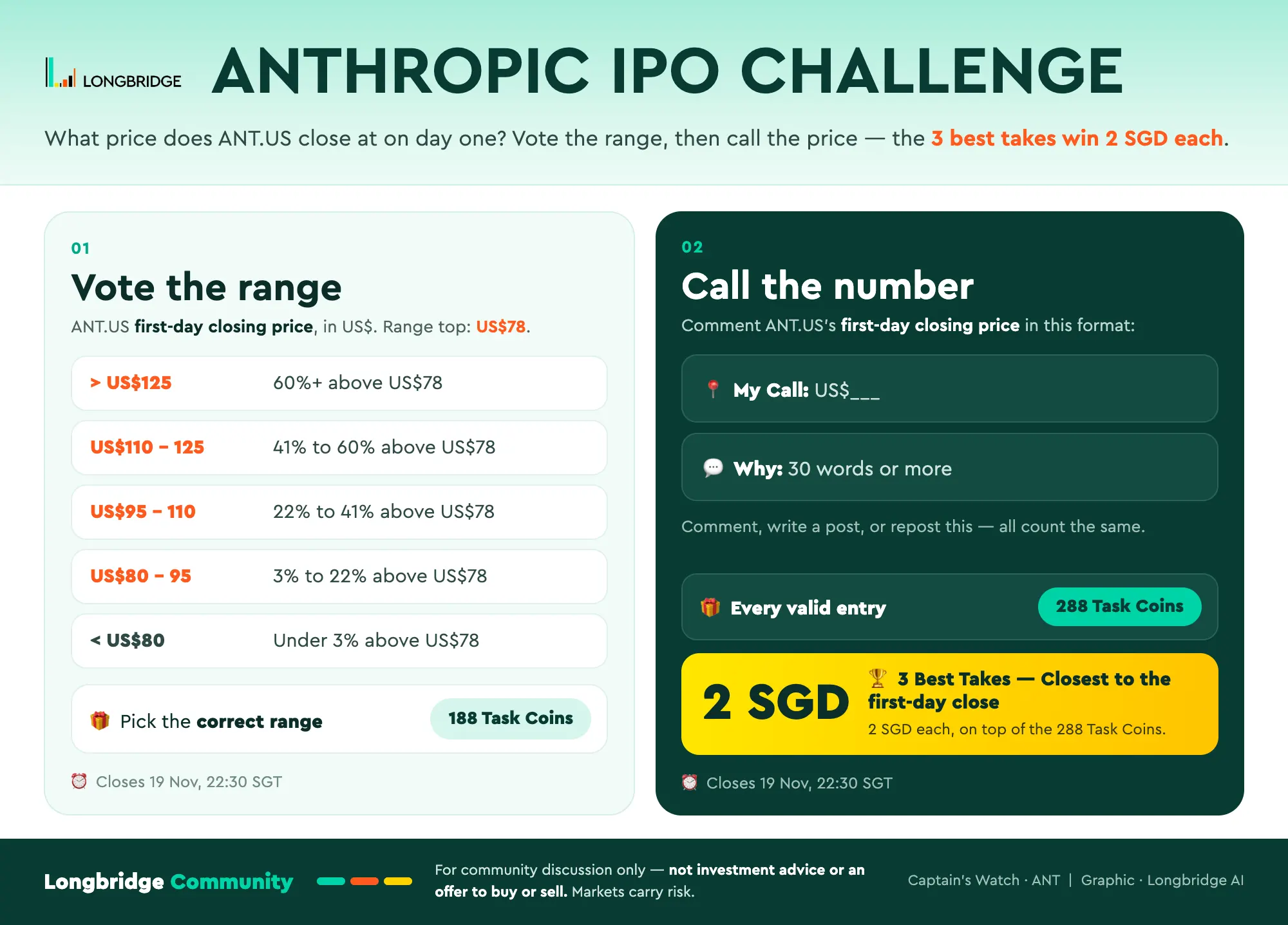
Apple reports Q4 FY2026 after the US close tonight — the first earnings call under new CEO John Ternus. It ended last week as the world's most valuable company again, and the average analyst target now sits below the share price. Call Tuesday's close, back it up, and the 3 best takes win 2 SGD each.
For this week’s high-volatility earnings trades, the emphasis should be on liquid, options-active stocks with strong earnings catalysts—such as NVIDIA (NVDA), Microsoft (MSFT), Alphabet (GOOGL), Amazon (AMZN), or Meta (META)—based on their confirmed reporting dates. The challenge lies not in choosing the most volatile name, but in judging whether expectations are already reflected, how guidance might shape future growth, and whether implied volatility raises the cost.
A disciplined strategy involves setting a maximum loss in advance, limiting leverage, and possibly waiting for the earnings reaction instead of trading right before the announcement. Leveraged ETFs can be especially harsh when an earnings-driven gap moves against the position.
🎯 My Pick: GOOGL (Alphabet)
I chose Alphabet not only for Google Cloud’s strong growth but also for the possible gap between market expectations and actual performance.
Consensus anticipates Google Cloud revenue near $29.15B, almost doubling year-on-year. The more critical figure is the projected 33.5% operating margin.
If Alphabet achieves stronger cloud profitability while showing that its TPU infrastructure and AI investments yield meaningful returns, sentiment might shift quickly.
What would cause me to reconsider? Weak cloud margins, slower growth, or another aggressive capital expenditure rise without clear evidence of returns.
I view Micron’s rebound as encouraging, yet I am unsure whether the recent decline has finished. Jensen Huang’s remarks on the memory surplus offer reassurance, particularly as AI demand sustains interest in DRAM and HBM. Strong long-term potential does not rule out further corrections in chip stocks driven by high valuations and profit-taking. I expect memory firms to deliver solid results and guidance this week.
For now, I favour patience over chasing the bounce. I stay bullish on the long-term AI memory narrative, but I need price stability and improved sentiment before increasing exposure. My strategy is to build positions gradually during meaningful pullbacks while keeping leverage modest.
Micron bounced Friday as Jensen Huang played down fears of a memory glut, with the Fed and Big Tech earnings ahead. At home, REITs held their gains. Let's dig in 👇💬 Memory makers report this week. Is ...
They just unveiled the supercar, and the excitement is genuine. Whenever Tesla releases something striking like this, it renews discussion about the brand and its direction beyond electric vehicles—such as autonomy, energy, and robotics. Sentiment ahead of earnings appears fairly positive
Yet a striking product reveal does not guarantee strong figures. Monitor deliveries, margins, and management’s outlook, since the stock may shift sharply after results. This is a useful point for clients interested in US tech names, but we should keep the tone balanced and encourage them to review their overall portfolio and risk tolerance rather than follow the hype
Kevin Warsh's dovish comments on AI reduced the likelihood of an October rate hike to under 15%. This shift, along with falling Treasury yields, sparked a capital rotation into small caps and specific sectors like consumer discretionary, easing pressure on megacap stocks.