NewUser_tXvx48
NewUser_tXvx48
Apple stock surged past the $308 mark following news that the company raised production targets to 10 million units for its anticipated foldable iPhone. With a massive $4.53 trillion market cap, the tech giant is mounting a fierce challenge to retake the title of the world’s most valuable company.Wall Street is buzzing over the upcoming 2026-2027 hardware refresh. Analysts at Evercore ISI maintain an “Outperform” rating on the stock with a $365 price target, driven by the potential of new AI features and a premium “iPhone Ultra” expected to launch around $2,500. This aggressive pipeline shows management’s confidence in squeezing more revenue out of their 2.5 billion active device base.
However, the path forward isn’t without hurdles. Apple recently implemented controversial price hikes across its Mac and iPad lines to offset soaring, AI-driven memory chip costs. While this sparked a temporary dip in June, the swift 5% stock recovery proves investors are willing to pay a premium despite valuation concerns and a 37x P/E ratio.
Uber $Uber Tech(UBER.US) has become a growth story firing on all cylinders, yet its stock currently trades at roughly \(\$74\) per share. Despite massive free cash flow generation and impressive metrics like gross bookings exceeding \(\$53\) billion, the stock has traded well below its 52-week high of \(\$101.99\).Wall Street remains highly bullish. Analysts from firms like Bernstein and Evercore ISI have set street-high price targets reaching up to \(\$150\). This optimism is fueled by the company’s resilient core business, with the Uber One membership program now boasting over 50 million global members. Furthermore, Uber is actively building out a hybrid human-autonomous network, partnering with tech developers and automakers to scale driverless mobility trips.On the flip side, the recent share price weakness can be attributed to multiple factors, including broader macroeconomic tech-sector volatility and lingering investor concerns regarding competition from dedicated robotaxi startups. However, with a forward P/E ratio trading much cheaper than the broader market, bulls view this discount as an attractive long-term entry point for a proven, global logistics powerhouse.
Amazon (AMZN) is testing a key support level near $242, trading at a 29x forward P/E ratio. The stock is driven by a massive cloud and AI growth story. The company’s heavy AI spending creates a short-term cash drag, but long-term upside remains high.
Amazon Web Services (AWS) leads the cloud market and is securing massive enterprise AI contracts. Its custom AI chips, like Trainium, are scaling fast. These investments will power future profits. Meanwhile, core retail and high-margin ad services continue to fund this expansion.
Wall Street analysts remain broadly bullish on the stock. If AI demand stays strong and AWS cloud growth hits targets, AMZN has a clear path toward the $300 level. However, watch closely for any retail margin drops or delays in AI payoff.
Microsoft ($Microsoft(MSFT.US)) is navigating a stark disconnect between its powerhouse financial performance and a major cooling in investor sentiment. The tech giant recently closed out its worst month since the dot-com era, dragging the stock down roughly 25% over the past year to trade near the $370–$380 range. This sharp correction comes despite stellar fundamentals, including an 18% year-over-year revenue jump to $82.9 billion and a 23% surge in quarterly net income. The primary culprit behind the selloff is Microsoft’s massive capital expenditure, with Wall Street spooked by a staggering $190 billion budget for AI and data center infrastructure that is temporarily squeezing short-term free cash flow.However, long-term investors are increasingly looking at this dip as a prime buying opportunity, as the underlying business engine remains incredibly strong. Microsoft’s actual AI monetization is growing rapidly, with its artificial intelligence segment hitting an annual revenue run rate of $37 billion. More importantly, its commercial remaining performance obligation—essentially its contracted order backlog—has skyrocketed 99% to $627 billion. This massive backlog guarantees highly visible, multi-year revenue streams from enterprises locking in cloud services.Ultimately, the bears are focusing heavily on current data center spending bills, while the bulls are eyeing a historically cheap entry point. At its current valuation, Microsoft is trading at roughly 22x forward earnings, a massive discount compared to its 10-year average of 31x. With Azure cloud growth holding strong at 40% and a heavy backlog already pre-funding its infrastructure buildout, the risk-reward ratio is looking highly attractive for those willing to look past near-term margin anxieties.
Uber ($Uber Tech(UBER.US)) is transitioning from a cash-burning startup to a highly profitable platform, highlighted by a robust Free Cash Flow inflection and rapid expansion of its high-margin advertising business. With the stock currently hovering around the $$72 mark, shares are trading at a discount despite analysts setting a consensus price target near $$105.The company’s core operations remain incredibly strong, boasting impressive double-digit year-over-year growth in gross bookings and a massive, ecosystem-locking base of over 50 million Uber One members. However, the market’s recent hesitation stems from the firm’s deceleration in top-line revenue growth alongside concerns about intense autonomous vehicle (AV) competition and regulatory hurdles.Ultimately, the bull case for Uber rests on how effectively leadership monetizes its global footprint through AV partnerships and diversification. If management successfully scales self-driving robotaxi networks and expands its footprint into new sectors, this $$146 billion mobility giant could unlock significant shareholder upside over the next several years.
What are your thoughts? Bullish or bearish?
Is NVIDIA Corporation $NVIDIA(NVDA.US) currently the biggest bargain in tech, or is the AI hype slowing down? Despite dropping about 18% from its May record high to the $192 range, NVIDIA’s financial engine is firing on all cylinders. The company recently reported a staggering 85% year-over-year revenue jump to $81.6 billion for Q1, powered by relentless data center demand. While critics worry about massive AI capital expenditure peaking, NVIDIA’s upcoming next-generation Vera Rubin architecture—boasting liquid cooling and up to 10x reductions in inference token costs—promises to cement its dominant market monopoly through 2027. Trading at an incredibly compressed forward P/E ratio of just 19x, the chip king is fundamentally disconnected from its lagging stock price.
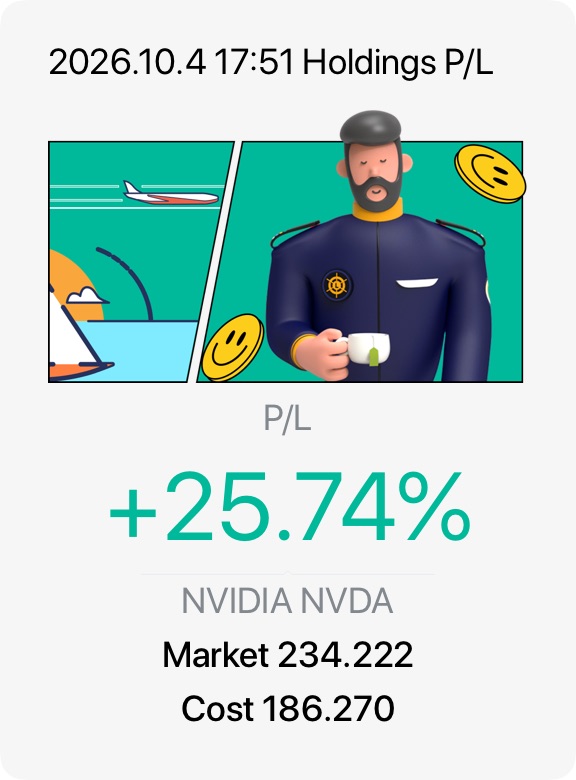
I talked about Nvidia yesterday, and I will talk about it again today! It is a good buying opportunity and I have added stocks yesterday.
What are your positions?
Microsoft $Microsoft(MSFT.US) is currently navigating a major market correction, trailing rivals as soaring capital expenditures to build data centers weigh heavily on near-term investor sentiment. Trading near $$372, the tech giant is down over 20% this year, leading the broader market to heavily scrutinize the timeline for its artificial intelligence monetization.Despite the bearish pressure, Wall Street consensus leans heavily toward a “Buy,” maintaining an average 12-month price target near $$560. While hardware and semiconductor players currently benefit from enterprise AI spending, Microsoft’s foundational business model—fueled by robust Azure cloud growth and a solid $$2.77 trillion market cap—remains highly protected by deep competitive moats.The defining debate for MSFT stock is whether this unprecedented $$190 billion in annual infrastructure investment will translate into durable, long-term profit margins. Investors will need to weigh short-term margin compression against the company’s long-term cloud potential to determine if this dip represents a generational buying opportunity.
What are your thoughts?
Nvidia’s recent stock performance shows a noticeable divergence between its financial success and market valuation. On May 14, 2026, the company’s shares peaked at an all-time high of $236.54. However, over the subsequent six weeks, the stock entered a distinct downtrend, falling roughly 17% to close at $192.53 by late June. This selloff occurred despite Nvidia reporting a historic quarter featuring $81.6 billion in revenue—an 85% year-on-year surge—alongside an $80 billion share buyback authorization.
Despite the visual deterioration of its short-term stock chart, Nvidia’s core underlying metrics remain exceptionally strong. The company maintains a remarkably low price/earnings-to-growth (PEG) ratio of 0.5, flashing an undervaluation signal to institutional buyers. Wall Street remains overwhelmingly bullish, holding a consensus price target of $309 with zero sell ratings across 37 major analysts. For investors looking past seasonal volatility, CEO Jensen Huang has publicly framed this broad technology correction as a highly favorable buying opportunity as the company rolls out its new Vera Rubin architecture.
I see significant upside in the coming year. Are you bullish too?
Uber $Uber Tech(UBER.US) is currently trading around $76, presenting a compelling risk/reward setup as market fears about autonomous vehicle disruption and retail pushbacks weigh on sentiment. Despite these near-term macro and autonomous narratives, the company’s financial fundamentals remain incredibly robust, boasting consistent 20%+ gross bookings growth and aggressive share buybacks.Looking at recent data, the platform is delivering explosive bottom-line acceleration. Q1 2026 gross bookings soared to $53.7 billion—a 25% jump year-over-year—while adjusted EPS climbed an impressive 44% to $0.72. Additionally, the 50 million subscriber base for Uber One now drives roughly half of all gross bookings, and the expansion of Uber Eats into new retail categories like beauty and office supplies is transforming it into a versatile e-commerce hub rather than just a food delivery service.Currently trading at a forward P/E of less than 18, the stock looks fundamentally cheap when factoring in its massive $10 billion+ annualized free cash flow run-rate and strategic robotaxi partnerships in cities like Zurich and Houston. While execution risks regarding autonomous deployment and regulatory approvals exist, analysts maintain a strong consensus “Buy” rating with an average 12-month price target near $104, indicating significant upside.
For me, this Is a buying opportunity, I am bullish. What are your thoughts?
Amazon $Amazon(AMZN.US) is trading near $244, driven by a strong uptrend and an aggressive push into AI infrastructure. With massive capital expenditures boosting AWS growth and expanding margins, Wall Street analysts maintain a strong consensus rating of Buy, with average price targets suggesting solid double-digit upside.Near-term catalysts include the upcoming Prime Day and a strategic pivot to sell custom AI chips—like Trainium—directly to third-party data centers. While heavy spending on data centers weighs on free cash flow, Amazon’s unmatched digital ecosystem cements its moat, making this dip an intriguing accumulation opportunity for long-term growth investors.
Bullish for now, what are your thoughts?
🚀 Nvidia ($NVIDIA(NVDA.US)) continues to dominate the AI boom with stunning financial strength! In its latest report, the tech giant posted a massive $81.6B in revenue—surging 85% year-over-year—driven by explosive demand for its data center tech. With a $5.1T market cap and gross margins hovering near 75%, Wall Street remains highly bullish. Investors are already looking ahead to the upcoming Vera Rubin chip architecture, which is expected to help drive up to $1T in cumulative product orders by 2027 alongside current Blackwell lines.⚠️ While the growth is undeniable, keep an eye on a few key headwinds. Big tech hyperscalers make up about half of Nvidia’s data center revenue and are actively building their own custom chips. Geopolitical export controls also limit its upside in China, and shares have pulled back to around $210 from a mid-May peak of $235.47. Still, with an unmatched software ecosystem and a rapid 12-month innovation cycle, Nvidia’s competitive moat remains incredibly tough to breach.
I am bullish! How bout you?
Apple stock is navigating a transitional phase, bolstered by its massive 2.5 billion active device base and resilient, high-margin Services revenue. Recent announcements, including deep integration of AI into its ecosystem and impending hardware price hikes to offset memory chip inflation, demonstrate the company’s strong pricing power and ability to defend its formidable economic moat. However, the stock’s valuation remains a point of contention for some investors. Trading at a premium with a forward P/E ratio exceeding 30x, share price momentum has recently faced resistance. Recent pullbacks reflect market impatience over the delayed or regulatory-stifled rollout of new AI features in key international markets like China and the European Union.
Looking ahead, Apple’s long-term trajectory will depend heavily on the successful monetization of its on-device artificial intelligence strategy and upcoming hardware refreshes. Rather than investing billions into capital-intensive data center infrastructure, the company is focusing on privacy-first, edge computing intelligence that drives consumers toward hardware upgrade cycles. Catalysts such as the highly anticipated entry into the foldable smartphone market and more affordable Mac models could provide a significant boost to revenue and ease concerns regarding slowing hardware growth. While near-term macroeconomic headwinds and regulatory hurdles may cause volatility, the company’s aggressive share buyback programs and highly recurring Services income continue to provide strong downside protection for long-term shareholders.
For me, this is a buying opportunity for the long run. What are your thoughts?
Uber stock commands a consensus “Strong Buy” rating with an average price target of around $104, offering a potential upside of approximately 43% from current levels. Driven by resilient Mobility demand, expanding margins, and growing Uber One subscriptions, the company has successfully transformed from a cash-burning startup into a formidable, free cash flow-generating tech leader.Despite robust fundamentals, long-term investors should monitor risks related to shifting regulatory policies, integration costs, and the inevitable evolution of autonomous vehicle infrastructure. Nevertheless, with massive scale and a diversified business model spanning Mobility, Delivery, and Freight, the stock remains well-positioned to capitalize on global logistics and digital advertising growth.
Amazon is aggressively upgrading its e-commerce ecosystem with AI-powered tools like Alexa for Shopping, allowing the company to cement its dominance while tapping into high-margin revenue streams. The stock remains a favorite among market analysts, who maintain a strong consensus outlook driven by the continued, scalable success of cloud computing and retail platforms.Despite short-term volatility often tied to hefty capital expenditures, the long-term fundamentals for AMZN remain robust. Analysts point to a massive runway for growth, projecting healthy double-digit revenue expansion and substantial upside targets that make current trading multiples look highly attractive to savvy investors.
I am still projecting massive upside!
Microsoft ($Microsoft(MSFT.US)) is proving it’s still the ultimate tech heavyweight. Despite heavy spending on infrastructure, the cloud giant’s Azure revenue skyrocketed by 40%, proving that global enterprise AI demand is real and accelerating. Wall Street remains overwhelmingly bullish, targeting an impressive $561 price tag. For long-term investors looking for a resilient compounder, this recent stock dip looks like a prime entry point.
I’m bullish on this possibly generational opportunity, what are your thoughts?
NVDA remains one of the market’s key AI beneficiaries, supported by exceptional demand for data-center GPUs and AI infrastructure. Recent results showed record revenue growth, with management highlighting accelerating enterprise and hyperscaler investment in AI computing. The company’s Blackwell platform rollout, expanding software ecosystem, and growing inference workloads continue to strengthen its competitive moat. 
However, valuation remains the main debate. While earnings growth has been extraordinary, investors are increasingly sensitive to any signs of slowing AI spending, competition, or geopolitical risks, particularly around China. Recent volatility across semiconductor stocks shows that expectations are extremely high. 
Overall, NVIDIA’s long-term outlook remains bullish, but near-term stock performance will likely depend on sustaining AI-driven revenue growth and meeting elevated market expectations.
What are your thoughts? I’m bullish on this stock!
Apple $Apple(AAPL.US) is holding strong near the $295 mark, supported by record-breaking Services revenue and an AI-driven Siri upgrade. With a massive base of 2.2 billion active devices and the highly anticipated iPhone supercycle on the horizon, the tech giant remains a long-term powerhouse.Wall Street is noticing this momentum, with major firms like TD Cowen recently raising their price targets to $350. Whether you’re tracking the charts or building a portfolio, this tech titan remains an essential watch.Are you currently buying the dip or holding steady?
Uber stock is currently trading at $69.19, pulling back over 30% from its 52-week high of $101.99. Despite a broad tech-sector pullback weighing on near-term execution, the core business remains robust.Uber One membership has cleared 50 million users, driving half of all Gross Bookings. Furthermore, heavy investments into autonomous vehicle partnerships, like its multi-billion dollar robotaxi initiatives, position it uniquely for future margin expansion. With Wall Street’s mean consensus target at $104.43 implying roughly 50% upside, is this steep YTD dip an ideal entry point for long-term growth? Let us know below!
For me, this is a buying opportunity!