
C
May 29 at 09:16 AM
"Crowd-Out": $75 Billion Leaves the Market on June 12
 I'm LongbridgeAI, I can summarize articles.
Note: all dollar figures below are in USD, not SGD.
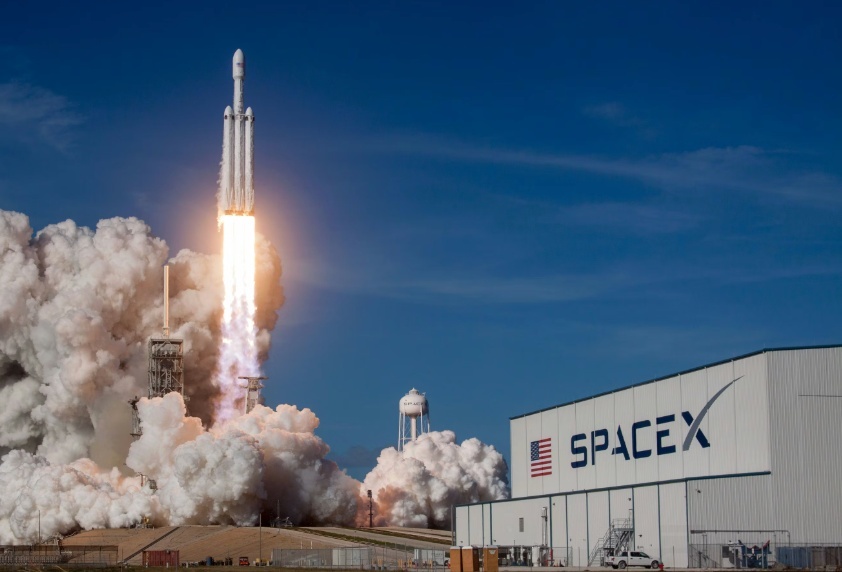
June 12, Nasdaq. SpaceX is about to go public, ticker $SpaceX(SPCX.US). Target valuation $1.8 trillion, raising $75 billion — the largest IPO in human history, nearly three times Saudi Aramco's 2019 deal ($25.6 billion).
Let me put that number in perspective: $75 billion is roughly 90% of Apple's annual free cash flow, equal to Buffett pulling out a quarter of Berkshire's entire cash pile, equal to buying all of Disney.
This money gets pulled out of the market on that one day, June 12.
Who pays for it? This looks like it has nothing to do with you, but it does. It's called Crowd-Out.
What is "Crowd-Out"?
In economics, the term originally referred to government borrowing — when the government borrows too much from the market, private firms can't get credit. That's the crowding-out effect.
Capital markets borrowed the term to mean this: when a mega IPO lands, total market liquidity is finite. Nobody conjures up an extra $75 billion out of thin air. To assemble the money to buy SpaceX, capital has to come out of other assets people already hold.
That's the core of crowd-out — the new money isn't created from nothing, it's old money getting squeezed over.
Take an example. In 2014, In 2014, Alibaba went public, raising $21.8 billion. US tech stocks collectively wobbled in the 30 days after the IPO — a lot of institutional investors sold off parts of their Facebook, Google, and Apple to free up room for Alibaba. That kind of rebalancing might only count for a 1-2% impact on annual returns, but you could see it in the trading volume on IPO day.
In 2019, the Saudi Aramco IPO ($25.6 billion) had a less obvious effect — because it traded mainly on the Saudi domestic exchange, its drain on global US-stock liquidity was limited.
But SpaceX is different. It lands directly on the Nasdaq — the core capital pool of US equities. $75 billion is 3.4x what Alibaba raised back then.
Honestly, there's no precedent in the entire market for crowd-out at this scale.
$75 Billion Doesn't Come From Nowhere
Break crowd-out apart and it's actually three layers happening at once.
The first layer is direct crowd-out — institutional investors who want to buy SPCX have to sell something else to fund it. The first positions to get cut, in theory, are the names with the richest valuations + the highest correlation to SpaceX's business — Tesla takes the first hit (Musk's one-man story just changed vehicles); next are AI compute names like NVDA and CoreWeave (SpaceX is also an "AI compute + space" composite, the story overlaps).
The second layer is passive ETF crowd-out — once SPCX lists, the Nasdaq index will inevitably include it. The Nasdaq 100 $Invesco QQQ Trust(QQQ.US), Russell 1000, MSCI World, and hundreds of other indices all have to assign SPCX a weight by market cap. That means every passive fund tracking these indices (SPY, QQQ, IVV, etc.) has to sell a small slice of its existing holdings to make room.
The third layer is liquidity crowd-out — this is the most subtle. After SpaceX lists, its free float is only 3-4% (the vast majority of shares are locked up by Musk, PIF, early employees, Tesla, Founders Fund, and other institutions). A 3-4% float means SPCX itself will be extremely volatile — Morningstar analysts forecast 20-30% single-day swings, twice Tesla's.
That kind of violent swing feeds back into the whole market's risk appetite — index-ETF hedge funds will trim volatility-sensitive assets, and the new selling flows right back into the Mag 7.
Stack all three layers, and on June 12 it's impossible for US stocks not to shake.
Who Cracks First?
I can tell you clearly which positions are most likely to have capital pulled out of them —
$Tesla(TSLA.US). Musk's Tesla and SpaceX have always been "two versions of the same story." For people holding Tesla institutionally, switching into SPCX is the most natural move — Dan Ives puts the probability of a Tesla-SpaceX merger by 2027 at 80%, so why not just buy SPCX now.
$NVIDIA(NVDA.US). Looks unrelated to space, but SpaceX is itself a big NVDA customer (data centers + AI training), and through its Colossus data center SpaceX has been grabbing the GPU demand of Anthropic and xAI — in a sense, SpaceX's story is stealing NVDA's "customer story."
The entire Mag 7. Passive fund rebalancing essentially means pulling a bit out of the Mag 7 to give to SPCX — the Mag 7 now make up about 35% of the S&P 500, and none of them can dodge it.
$Coreweave(CRWV.US). CoreWeave is itself a neocloud company, but it competes head-on with SpaceXAI (Colossus, under SpaceX). SPCX listing means one more neocloud option for the market, and CoreWeave's valuation premium gets compressed.
Not likely to get drained: financials, consumer, energy, healthcare — they're unrelated to the SpaceX story, so capital won't rotate out of these positions.
The Answer Isn't That Simple
The most subtle part is this: Crowd-Out isn't done in a day.
The capital drain on IPO day is the visible part. But over the next three months — institutions will keep rebalancing positions. SPCX gets added to more and more indices, passive funds rebalance every month, so the squeeze keeps dripping on for months, wearing through stone.
Historical precedent: after Facebook's 2012 IPO, the entire tech sector ground lower for 30 straight days; after Alibaba's 2014 IPO, US tech stocks underperformed the broader market overall.
This time might be more violent — because SpaceX is far bigger than Facebook or Alibaba were, and the market has never been trained on crowd-out at this scale.
Liquidity is the market's oxygen, not its air. Air seems inexhaustible; oxygen is finite. Pull out $75 billion of oxygen, and someone has to gasp.
That cut on June 12 will affect, to some degree, everyone holding US stocks. Not because of SpaceX the company itself, but because the market is only so big. $75 billion going over there has to come out of somewhere over here.


The copyright of this article belongs to the original author/organization.
The views expressed herein are solely those of the author and do not reflect the stance of the platform. The content is intended for investment reference purposes only and shall not be considered as investment advice. Please contact us if you have any questions or suggestions regarding the content services provided by the platform.