

Tax hike exceeds expectations, here's my take on the outlook for the sector

Last night's session saw a continuous rise, but $Robinhood(HOOD.US) dropped 4% in pre-market, recovering within 5 minutes after opening. I never intended to bet on tariffs, so I set a sell order at 44 (slightly above my cost basis) for half of my position and used 10% of the cash from selling FBL to buy some $2x Long VIX Futures ETF(UVIX.US) .
Trump's move was indeed unexpected. In the end, the gains from UVIX offset the losses from HOOD, and I netted a 3-point profit from $Pro Ultr GLD(UGL.US) .
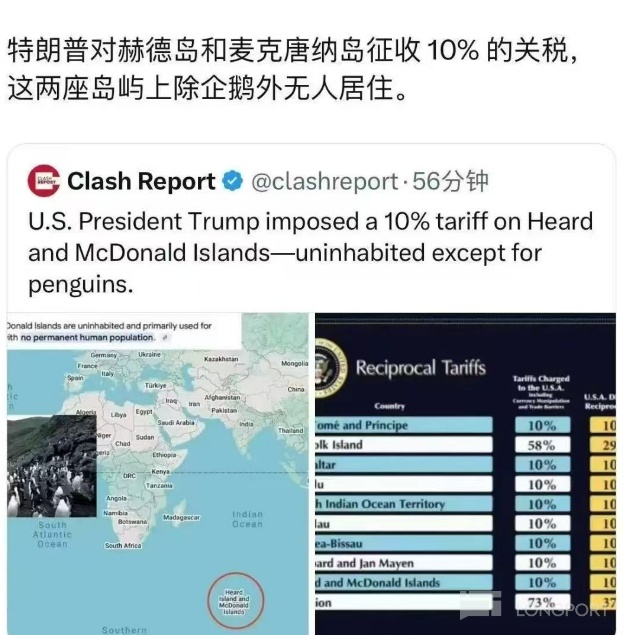
As of writing, the Nasdaq is down 3.32% from yesterday's close, significantly deviating from its moving average. From a deviation perspective, a short-term rebound might be imminent. My current position is light, and I don’t plan to make any moves for now. HOOD's earnings are on April 30th—I’ll hold for support.
Now, let’s talk about my outlook on the market sectors.
Tech Sector
The tech industry’s global supply chain is highly interconnected. The U.S. tariff hike directly impacts supply chain stability. For example, a 34% tariff increase on some tech products exported from China to the U.S. puts companies in a dilemma: absorb the cost and compress profit margins, or pass it on to consumers and risk losing market share to competitors. After Trump announced the tariffs on April 2nd, the after-hours market reacted sharply: Apple dropped 7.5%, while Tesla and Nvidia fell 5% and 4.4%, respectively.
Auto Sector
The U.S. plan to impose a 25% tariff on imported cars and parts is a heavy blow to the global auto industry. Most automakers rely on imported components, so higher costs will squeeze profits and likely lead to price hikes, further dampening sales. Wedbush analyst Dan Ives called this move "an existential threat to the auto industry," estimating it could add $5,000–$10,000 to the cost of an average car and over $100 billion annually in additional industry expenses.
Financial Sector
Tariffs amplify economic uncertainty and inflationary pressures, creating ripple effects in finance. Slower growth reduces credit demand, pressuring bank profits, while heightened volatility lowers risk appetite, hurting brokerage and asset management. On March 4th, the S&P 500 financial sector fell 3.54%, with giants like JPMorgan, Visa, and Mastercard seeing significant declines.
Industrial Sector
Industrials face rising material costs and weaker export competitiveness due to tariffs, hitting U.S.-dependent firms hardest. On March 4th, the S&P 500 industrial sector fell 1.96%, reflecting investor concerns.
Precious Metals Sector
Tariff fears drove safe-haven demand, lifting gold to a record $3,177/oz on April 2nd. Zijin Mining rose 1.9%, and Shandong Gold gained 1.7%, highlighting gold’s hedge appeal.
Consumer Sector
Import-reliant consumer firms face cost pressures, but domestic-focused sectors like tourism and liquor outperformed. China Tourism Group rose 2.8%, BTG Hotels gained 2.5%, and Shede Spirits surged 8% intraday, with Kweichow Moutai up 2%.
Market Wrap
The market remains in a bottoming process. As I’ve said, tariffs are a short-to-medium-term headwind; long-term valuation matters more. Trump’s speech likely ended the bull run—when we bottom depends on the Fed.
The copyright of this article belongs to the original author/organization.
The views expressed herein are solely those of the author and do not reflect the stance of the platform. The content is intended for investment reference purposes only and shall not be considered as investment advice. Please contact us if you have any questions or suggestions regarding the content services provided by the platform.
