

[IPO Analysis] CloudMinds launches its offering, is it worth subscribing?

The last time I shared about Hong Kong IPO subscriptions with everyone was about $HAITIAN FLAV(03288.HK), and recently, companies like $ZHOU LIU FU(06168.HK), $SAINT BELLA GP(02508.HK) are probably already well-known in the market. So, today I’d like to introduce a new IPO candidate—$Unisound (09678)$.
After reviewing its prospectus, I’d say it’s not the kind of company that makes you want to go all-in at first glance. The business direction is promising, but it’s still in an early stage, with slow monetization and a valuation that isn’t cheap. My personal stance is neutral to conservative—simply put, I’m not optimistic about its short-term breakout potential, and the mid-to-long-term outlook still requires further observation.
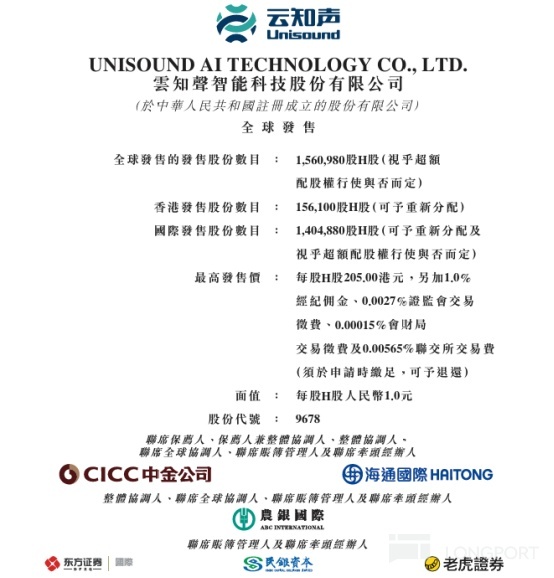
Unisound’s technical background is solid, and it’s not a newcomer in the AI field. Its main focus is "full-stack AI," meaning it handles everything from the underlying computing platforms and algorithm models to upper-layer applications—all in-house, without relying on others. Moreover, it’s not just a company that talks about models conceptually; it’s more of a "practical" player that quietly works on applying AI to real-world scenarios. What it does isn’t overly complicated—simply put, it makes machines understand human speech and respond accordingly. It sounds like "speech recognition + comprehension," but it goes deeper. For example, doctors can dictate while diagnosing, and the system automatically generates medical records; or, in subway stations, you can buy tickets using voice commands without tapping screens.
I think the two directions it’s chosen are quite smart.
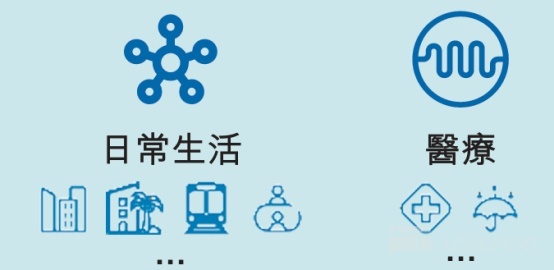
In healthcare, honestly, it’s one of the toughest yet most valuable scenarios for AI. But Unisound has already managed to apply AI to standardized processes like medical record entry and insurance audits, saving doctors time and reducing hospital errors. Although it doesn’t yet collaborate with a huge number of hospitals, 166 have already adopted its system, and it seems to be expanding.
As for everyday scenarios like voice-activated ticket purchases and smart home control, they might not sound "high-end," but they’re quick to implement and customers are willing to pay. Plus, its current clients include traditional home appliance brands like Midea, Gree, and Xiaomi, suggesting its product stability and delivery capabilities are decent.
But honestly, having the right scenarios isn’t enough—the key is whether it can connect technology with business. On this front, I’m skeptical about its commercialization pace.
The financial data also reflects this:
- Revenue grew steadily from 600 million in 2022 to 940 million in 2024;
- Gross margin improved, indicating customers are willing to pay for its technology;
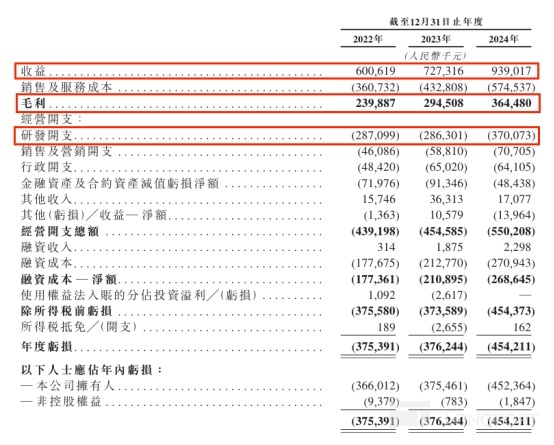
- But losses are still widening, with a 454 million loss in 2024 and cumulative losses exceeding 1.2 billion over three years;
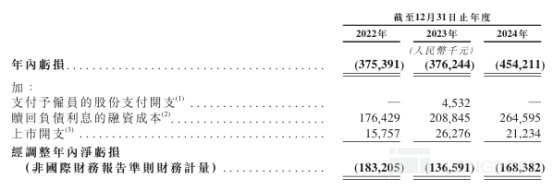
- Although the adjusted loss ratio dropped from 30% to around 18%, a turning point toward profitability remains elusive.
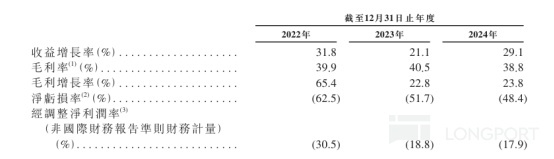
Moreover, its R&D expenses are very high—3.7 billion in 2024, accounting for nearly 40% of revenue. As a technology-driven company, I don’t oppose high R&D spending, but the problem is: the large-model path is extremely capital-intensive right now, and for a company of Unisound’s current size, this isn’t easy.
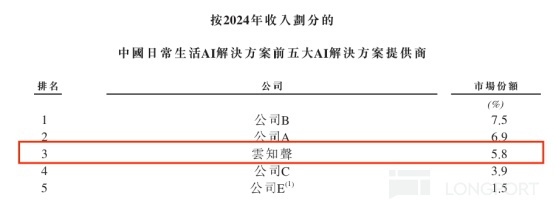
Add to that its current 5.8% market share in China’s AI solutions sector, where competition is fierce and the market is still fragmented without clear barriers. So, trying to "buy a moat" at this stage is difficult.
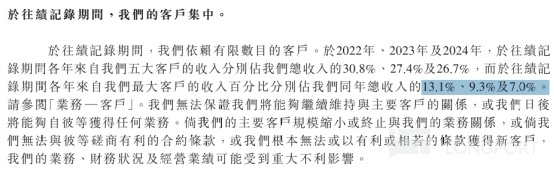
On the customer structure front, I see a minor advantage. There’s no "one big client supporting the whole company" issue—the largest client’s revenue share dropped from 13.1% to 7%, indicating a more diversified client base, which is a plus for stability. But conversely, it also means it hasn’t yet secured a "cornerstone" project or client, so future growth still needs a breakthrough.
The IPO price range is set at HKD 165–205. Personally, I think if the final pricing lands in the lower-to-mid range, say around HKD 165 and no higher than HKD 180, it’d be reasonable, leaving some safety margin. If it’s priced near the upper limit, there might be short-term downside risks.
In summary, if you have faith in AI and are willing to hold for a year or two to see transformation results, this company is worth considering—maybe even a subscription with a small position. But if you’re looking for quick IPO gains and short-term arbitrage, this one might not be the best fit.
TL;DR: AI is a great story, but turning it into a good business takes time. Unisound is worth watching, but it’s not yet at the "blind subscription" stage.
$Alphabet - C(GOOG.US) $AMD(AMD.US) $NVIDIA(NVDA.US) $Tesla(TSLA.US) $Alibaba(BABA.US) $POP MART(09992.HK) $XIAOMI-W(01810.HK) $Circle(CRCL.US)
The copyright of this article belongs to the original author/organization.
The views expressed herein are solely those of the author and do not reflect the stance of the platform. The content is intended for investment reference purposes only and shall not be considered as investment advice. Please contact us if you have any questions or suggestions regarding the content services provided by the platform.
