

The stock surges before the good news is realized and falls after it is realized. Who doesn't understand this script?

Last week, the news of the official passage of the "Big and Beautiful Act" is believed to be well-known by everyone. Many online comments suggest this is a significant positive for U.S. stocks, with some even claiming—are U.S. stocks about to take off?

But what I want to say is: In fact, from the moment this bill was first proposed, U.S. stocks had already surged significantly. So the key question now isn’t "whether it’s positive," but whether this rally will continue or has it already peaked?
Today’s article shares my views, divided into three parts:
- Why have U.S. stocks risen so sharply recently?
- How significant are the current market risks?
- What should ordinary investors do at this juncture?
Why the recent surge in U.S. stocks? In one word: too much money.
This rally is fundamentally driven by liquidity.
Think of the market as a pool, with stock prices as the water level. As long as there’s a continuous inflow of "water"—money—the level will naturally rise.
What is the "Big and Beautiful Act"? In short: Over the next decade, the U.S. government plans to spend $3 trillion. Part of it will go to infrastructure like roads and bridges; part to support domestic manufacturing, such as semiconductors; and part to direct tax cuts, injecting liquidity to ease financial pressure on businesses and households.
This is the U.S. government explicitly saying, "We’re printing money, and we’re spending it."
How does the market react? Investors see more money coming, borrowing costs may remain low, which means lower risk and more opportunities to profit. Thus, a wave of capital enters early, pushing U.S. stocks higher.
Look at the S&P 500 and Nasdaq—both hit record highs last week.
But here’s the problem: The money hasn’t even started flowing yet, and stocks are already soaring.
It’s like hearing a future subway will be built in a neighborhood, but before construction even begins, housing prices have already surged. Wouldn’t you think, "Is this too fast?"
Has the rally ended? Valuations are on the edge of a cliff.
The next key word is: valuation.
Many ask, "Sure, stocks are rising, but are they overvalued now?" Here’s a real-life analogy—
A car worth $100,000 is now priced at $200,000. You’d naturally wonder: Is it really worth that much? Isn’t it too expensive?
The same logic applies to stocks. A common valuation metric is the price-to-earnings ratio (P/E). Simply put, it’s how many years of earnings it takes to recoup your investment in a company.
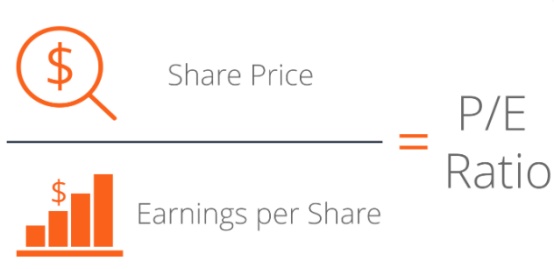
- A P/E of 15-18 is considered reasonable;
- Above 20 starts to look expensive;
- Above 25 is a red flag.
Right now, the S&P 500’s P/E is between 28-30, firmly in the "expensive zone."
Another stable valuation metric—CAPE (Cyclically Adjusted P/E)—uses 10-year average earnings to assess market valuation. Historically, when CAPE exceeds 30, subsequent years see poor stock returns or even declines.
This metric is now at the 97th percentile, meaning only 3% of historical periods were more expensive than now.
Add to that the Fear & Greed Index hitting "extreme greed," with everyone rushing in and the options market bullish… These are all signs of overheating.
So, is a crash imminent? I don’t think so. But at the very least, we need to be more cautious than before.
What should ordinary investors do now?
If you’re torn about whether to sell or if the good news is already priced in, here’s my honest advice:
1. Review your portfolio
Check your holdings:
Which are truly long-term growth companies?
Which are just "story stocks" that sound good?
In a bull market, story stocks rise fast, but they also drop the hardest when the tide turns. Without fundamentals, they crash spectacularly.
2. Differentiate speculation from investment
If you’re trading short-term and have decent paper gains, don’t get greedy—taking profits is rational. Cashing out isn’t cowardice; it’s smart.
3. Let valuation guide decisions
Even the best sector or company isn’t a buy if it’s too expensive. A $5 million house rising to $7 million doesn’t mean you shouldn’t buy, but know this:
Gains may slow;
A $1 million correction is normal.
So my approach now: Preserve cash, increase cash positions, reduce short-term exposure, and control overall risk.
This isn’t me being bearish on U.S. stocks—it’s knowing this isn’t the time to "blindly rush in."
Opportunities remain, but don’t rush
I’m still bullish on U.S. stocks long-term—global capital flows, tech dividends, and the dollar’s credibility remain intact.
But I won’t chase highs now.
Instead, focus on truly promising long-term trends:
1. AI & Artificial Intelligence
No explanation needed—self-driving cars, AI doctors, AI writing, smart factories… the core theme for the next decade.
2. Advanced Manufacturing & Semiconductors
AI relies on computing power, which relies on chips. Chip oligopolies have immense pricing power.
3. Healthcare Tech
With global aging, gene therapy, cancer screening, AI doctors, and telemedicine will see sustained demand.
These sectors may dip at times, but dips are when I’d consider buying.
Final thoughts:
U.S. stocks are indeed overvalued now—don’t blindly chase rallies.
Short-term volatility or corrections are possible, but long-term opportunities remain.
Good sectors + good companies + reasonable prices = where to bet.
Investing boils down to: Protect yourself when overvalued, be bold when undervalued.
The market always offers chances—it’s about being ready. Waiting isn’t missing out; it’s respecting the market’s rhythm.
May everyone stay steady and claim their share of the pie.
$Taiwan Semiconductor(TSM.US) $Tesla(TSLA.US) $NASDAQ Composite Index(.IXIC.US) $S&P 500(.SPX.US) $Dow Jones Industrial Average(.DJI.US) $NVIDIA(NVDA.US) $Apple(AAPL.US) $AMD(AMD.US) $Circle(CRCL.US) $Broadcom(AVGO.US)
The copyright of this article belongs to the original author/organization.
The views expressed herein are solely those of the author and do not reflect the stance of the platform. The content is intended for investment reference purposes only and shall not be considered as investment advice. Please contact us if you have any questions or suggestions regarding the content services provided by the platform.
