
Is it a value recovery or a new AI myth? Meta has posed a dilemma for the market.
 I'm LongbridgeAI, I can summarize articles.
Remember the "tech stock massacre" in 2022? Meta was mocked as a "joke on the ruins of the metaverse," with its stock price plummeting from $380 to $88, wiping out over $700 billion in market value. Investors fled, the media was bearish, and even employees began to question their life choices.
Yet, just two years later, Meta has become a darling of the AI race, often mentioned alongside NVIDIA by analysts. The question arises: Is Meta's "AI pivot" a genuine evolution of its business model or a high-stakes gamble?
Today, I’ll discuss this issue with you.
From Social Empire to AI Factory
Meta was once the world's largest "attention harvester": Facebook, Instagram, and WhatsApp, each with billions of daily active users, raked in tens of billions annually from ads, stable as could be.
But starting in 2021, everything changed:
- Apple's privacy policies caused ad performance to plummet;
- TikTok's rise stole younger users;
- The metaverse burned cash with no returns.
In 2022, Meta's stock price crashed over 70%, becoming Wall Street's "outcast."
But Zuckerberg didn’t give up. He did three things:
- Mass layoffs: Cut 20,000 jobs and axed inefficient projects.
- Doubled down on AI: Developed in-house large models, chips, and data centers.
- Strategic pivot: Shifted from a "traffic platform" to an AI infrastructure provider.
He stopped focusing solely on ads and aimed to build his own AI factory.
Open-Sourcing LLaMA: A Rival to GPT-4?
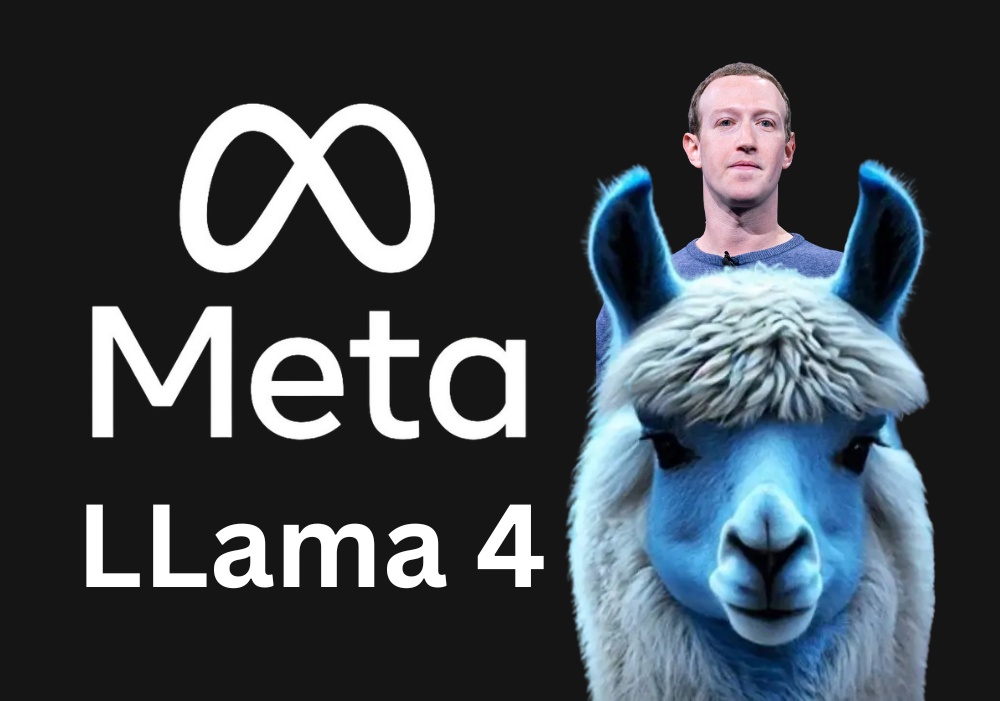
In 2023, Meta released its in-house large model, LLaMA, emphasizing open-source and free access.
This was no joke:
- Parameters ranged from 7 billion to 400 billion;
- Supported multilingual and multimodal capabilities;
- Partnered with Microsoft for cloud deployment, enabling one-click access for developers.
You might not have used LLaMA, but countless AI projects worldwide rely on it.
Zuckerberg played this move brilliantly: While others monetize AI, Meta builds ecosystems. He isn’t selling models but attracting developers through open-source to create a technological moat.
In contrast, OpenAI’s closed strategy has deterred many, driving developers toward Meta.
In the AI marathon, Meta is gradually reversing the landscape with its "open-source + infrastructure" strategy.
$200 Million Talent War: AI Battles Over People!
Technology alone isn’t enough—people matter more.
In 2024, Meta poached Apple’s AI team lead—Ruoming Pang—for over $200 million in signing bonuses.
Pang isn’t just any scientist; he was pivotal in Apple’s multimodal AI, leading research in voice recognition and general models. Meta even established a "Superintelligence Labs" for him, targeting Artificial General Intelligence (AGI).
Beyond Apple, Meta aggressively recruited from OpenAI, Anthropic, and Google.
Models? Check. Compute? Data centers? Check. Now, even the "AI elite" are on board.
Meta isn’t holding back in this talent arms race.
No Longer "NVIDIA’s Cash Cow": In-House Chips Enter the Game
Powerful AI models mean nothing without compute. By late 2024, Meta deployed over 300,000 NVIDIA H100 chips, building one of the world’s strongest AI training clusters.
But Zuckerberg doesn’t want to rely on NVIDIA forever. His Plan B: In-house chip Artemis.
This chip focuses on AI inference, especially for ads and recommendation algorithms. Meta plans to run 40% of AI tasks on its chips within five years, partially "de-NVIDIA-izing."
Compute + data + models—once this loop closes, Meta will fully evolve from a social platform to an "AI ecosystem infrastructure."
Smarter Ads: AI Starts Paying Off
In 2024, Meta launched its "AI Auto-Ads" system—advertisers input a sentence, and the system generates creatives (text, images, videos) and optimizes content based on user responses.
The results speak for themselves:
Ad ROI increased by 30%+
Average conversion rates surged
Cost per ad dropped 20%
Behind this system? LLaMA.
Meta is redefining ads with AI—not just optimizing placements but slashing labor costs.
Ad revenue rebounded, margins exceeded 40%, making "transformation with profitability" possible.
The Metaverse Isn’t Dead—It’s Just AI-Infused
Reality Labs, once a $40 billion money pit, remains a punchline, but Meta hasn’t abandoned it.
2024’s Quest 3 sold over 10 million units, featuring AI assistants, voice interaction, real-time translation, and virtual environment generation.
Meta also partnered with Ray-Ban on smart glasses integrating AI search, photography, and navigation.
Metaverse + AI is now a new hybrid. Rather than ditching the metaverse, Meta is rebuilding it with AI.
This might be the "practical" next-gen hardware entry point, not the overhyped bubble of yesteryear.
Blockbuster Earnings, Trillion-Dollar Valuation Returns
Most importantly, the financials back the vision.
2024 Highlights:
- Revenue: $164.5B, up 22% YoY
- Net profit: $62.3B, up 59% YoY
- Free cash flow: $52.1B
- Forward P/E: ~28x
Ads remain core, but AI now drives marginal growth. Reality Labs’ losses are narrowing, and hardware sales validate tech adoption.
Zuckerberg’s "cost-cutting + AI monetization" strategy pulled Meta out of its 2022 quagmire.
Final Thoughts: Is Meta a Bubble or an Opportunity?
Meta’s two-year transformation has been radical—open-source models, in-house chips, data centers, AI ads, smart hardware—it’s overhauled its core assets.
But challenges remain:
- Chip success is unproven;
- Metaverse hardware’s mass adoption is uncertain;
- AI competition is intensifying.
One thing’s clear: It’s no longer the 2022 "metaverse joke" but a heavyweight in the AI arena.
Value investors might see "undervalued recovery"; trend traders may view it as an "AI momentum play."
Will it become the "next AI platform giant"? Time will tell. What’s your take? Would you go all-in on Meta or wait and see?
$Meta Platforms(META.US) $Microsoft(MSFT.US) $Alphabet - C(GOOG.US) $NVIDIA(NVDA.US) $OpenAI(OpenAI.NA)
The copyright of this article belongs to the original author/organization.
The views expressed herein are solely those of the author and do not reflect the stance of the platform. The content is intended for investment reference purposes only and shall not be considered as investment advice. Please contact us if you have any questions or suggestions regarding the content services provided by the platform.