

JD.com 2025 Interim Report Data Interpretation


Brief Review
Among the "three strong" in the food delivery battle, JD.com was the first to release its interim results. What investors are concerned about is: How much money was burned on food delivery subsidies, and how much growth was achieved in the main e-commerce business?
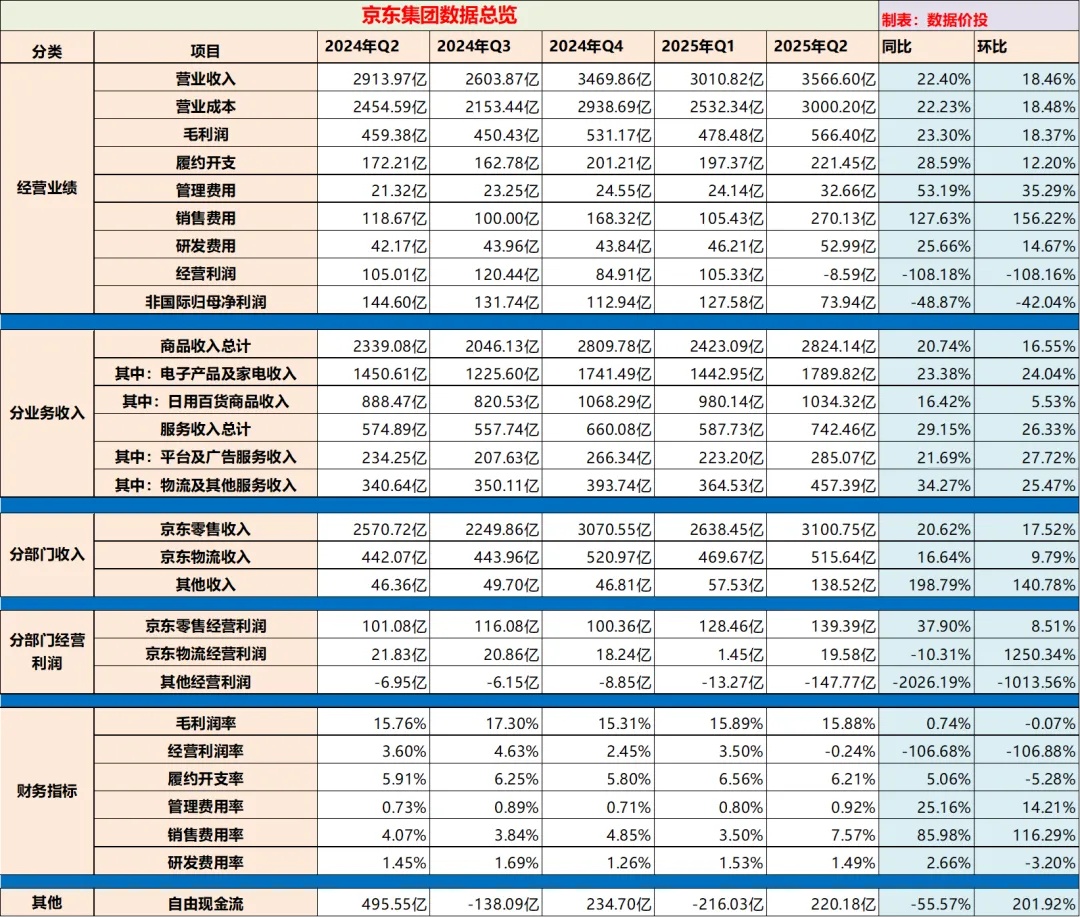
1) Tactically speaking, at least the results are better than expected: JD.com achieved higher revenue growth with less profit loss than expected.
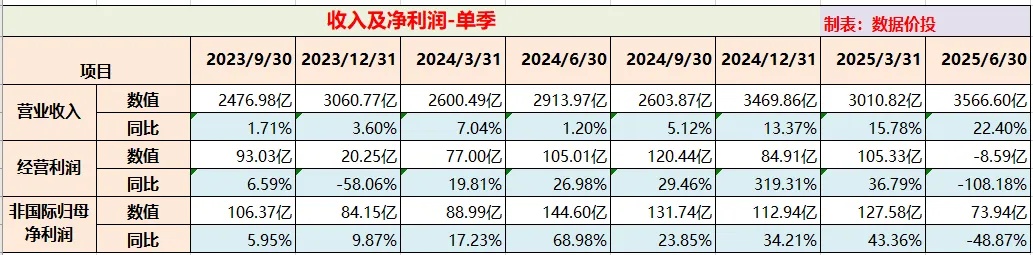
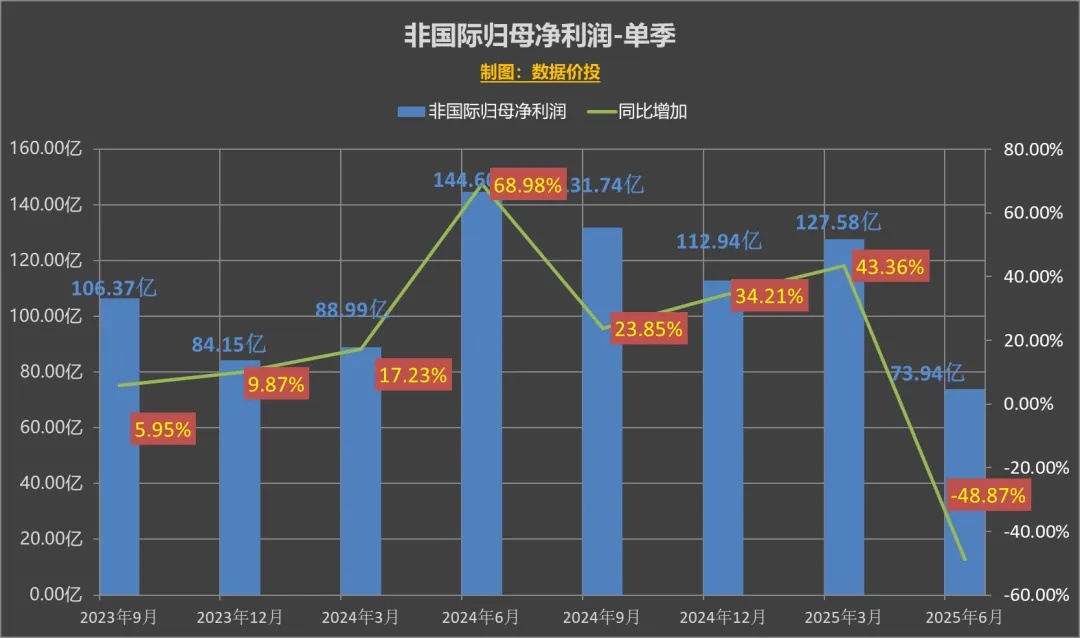
Q2's non-international net profit attributable to shareholders was 7.394 billion, a year-on-year decrease of 48.87%, lower than brokerage expectations; while revenue was 356.66 billion, a year-on-year increase of 22.40%, significantly exceeding expectations, returning to a high growth rate of over 20%.
But is it worth it to exchange subsidies for growth?
Liu Qiangdong once said: Among the consumers who come to JD.com to buy food delivery, 40% will cross-buy JD.com's e-commerce products, "The money we lose on food delivery is more cost-effective than buying traffic from Douyin and Tencent."
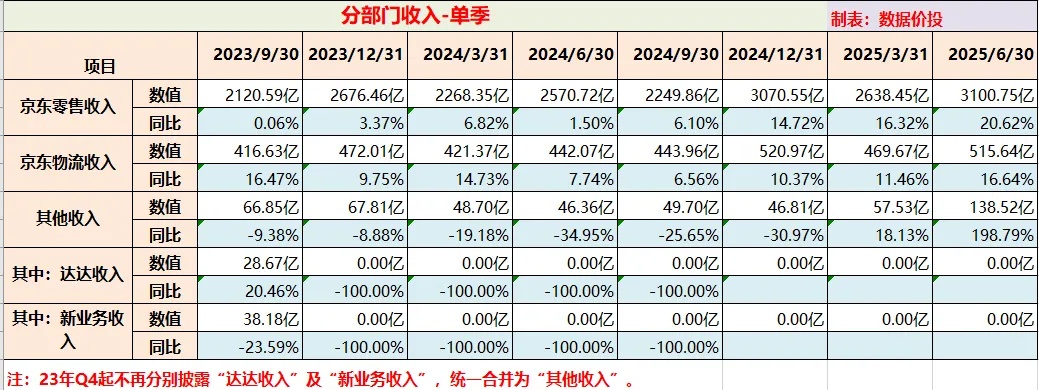
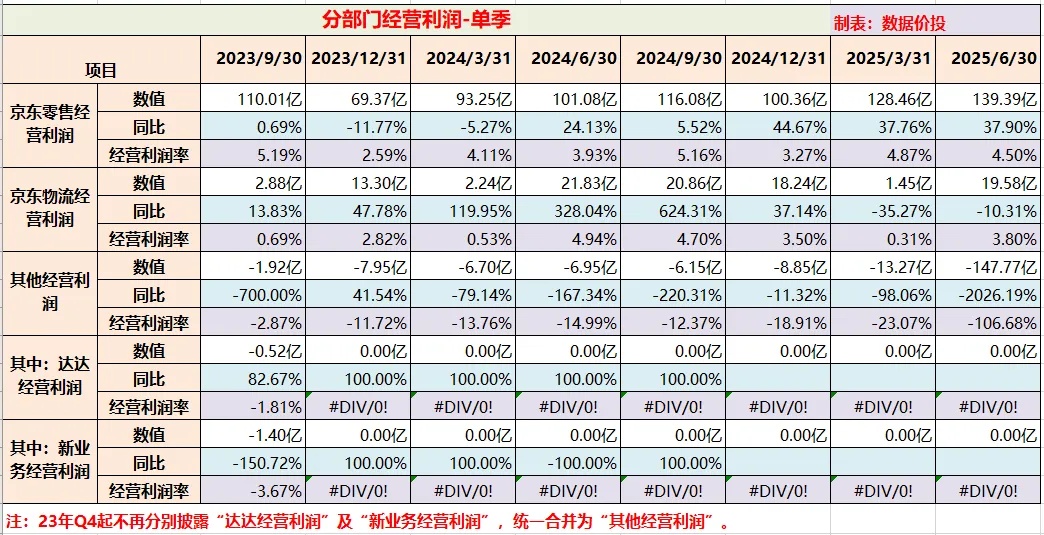
In fact, the new business segment where food delivery is located lost 14.777 billion in Q2, resulting in a 20.62% increase in JD.com's retail revenue, an increase of 53 billion compared to the same period last year.
However, the growth in JD.com's retail revenue in Q2 was already promoted by state subsidies and the 618 event, making it difficult to say how much food delivery specifically contributed to its growth.
If we have to compare, JD.com's retail revenue growth rate was 16.32% in Q1, and after burning over 10 billion in Q2, it only increased to 20.62%; solely from the Q2 figures, it is difficult to support Liu's conclusion that food delivery will bring 40% strong cross-sales.
2) Strategically speaking, when Alibaba also entered the game and Meituan strongly counterattacked, forming a situation of three strong competing in food delivery, JD.com almost lost.
Solely from the data of one quarter in Q2, it is also difficult to say whether the subsidies on food delivery are worth it.
But when JD.com started the food delivery battle, it actually started a blind collision game, betting that the opponent would not be able to hold on and would give way; but ultimately it put itself in a dilemma.
April 11, JD.com launched "100 billion subsidies" for food delivery.
April 30, Ele.me started "over 100 billion" subsidies; Taobao Flash Sale joined the battle.
July 2, Taobao Flash Sale announced an investment of 50 billion in subsidies for users and merchants.
July 5, Taobao Flash Sale and Meituan released a large number of big food delivery coupon vouchers.
July 7, JD.com launched the "Double Hundred Plan", investing 10 billion in subsidies for merchants.
From the above timeline, it can be seen that all three parties have invested a lot of resources in subsidies, and JD.com is hard to say to have an advantage in terms of cash reserves or operational experience;
In the "competition" process, continuous subsidy investment is needed, and when the competition ends, JD.com is unlikely to be the one that benefits the most.
3) Essentially: shareholders treat guests to milk tea.
Where does the money JD.com uses for food delivery subsidies come from?
Let's look at JD.com's repurchase amount:
By the time the interim report was released in 2024, JD.com's total repurchase amount was about 3.3 billion USD;
In the same period in 2025, the total repurchase amount was about 1.5 billion USD;
Since the release of the Q1 report in 2025, JD.com has completely stopped repurchasing, and compared to the same period last year, the repurchase amount decreased by about 1.8 billion USD, which is almost equal to the expenditure on food delivery subsidies;
So, solely from the figures, it can be seen as JD.com using the cash previously used for shareholder returns on food delivery subsidies.
If cross-sales can really be brought in the future, thereby making the main business continue to grow, then this expenditure is worth it, but can it really?
At the same time, it should also be noted:
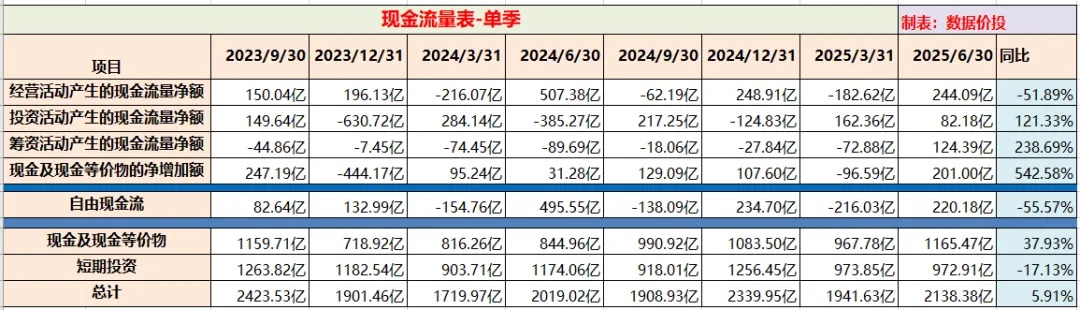
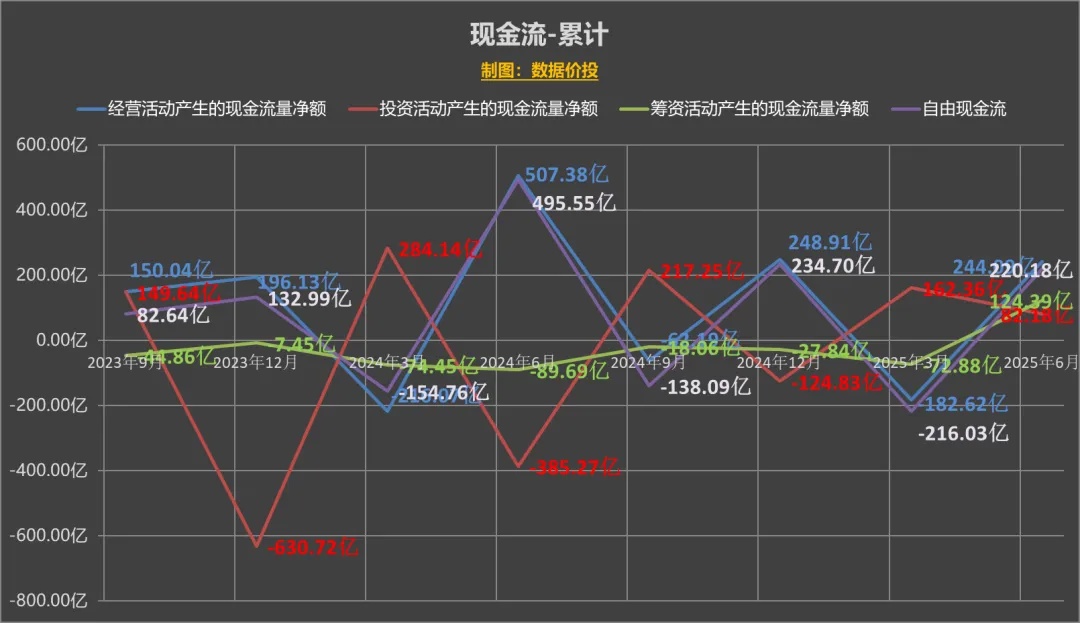
JD.com's net operating cash flow in Q2 was 24.409 billion, a year-on-year decrease of 51.89%;
Free cash flow was 22.018 billion, a year-on-year decrease of 55.57%;
If the food delivery battle continues, how long can it last?
I. Operating Performance
1. Operating Performance - Single Quarter
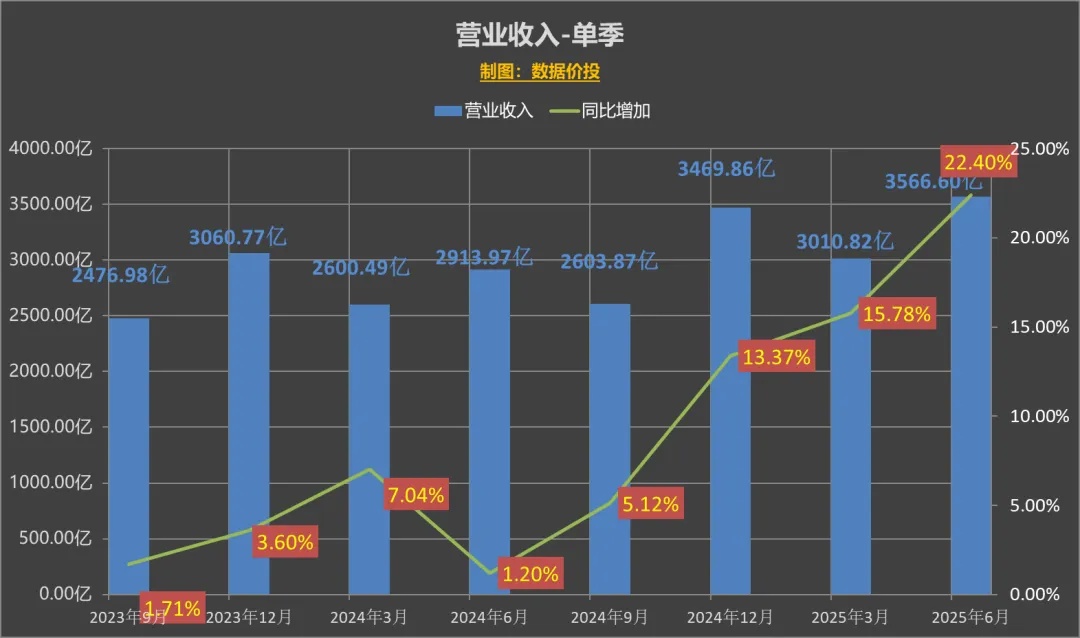
Operating Revenue
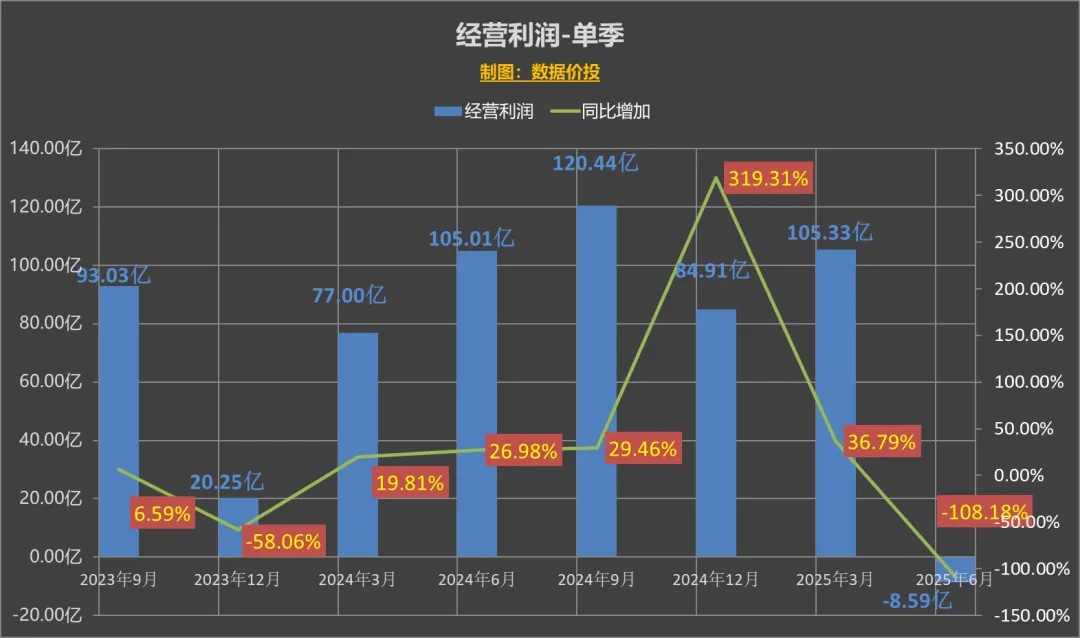
Operating Profit
Non-international Net Profit Attributable to Shareholders
II. Segment Boards
1. Segment Board Revenue
2. Segment Board Operating Profit
III. Business Segments
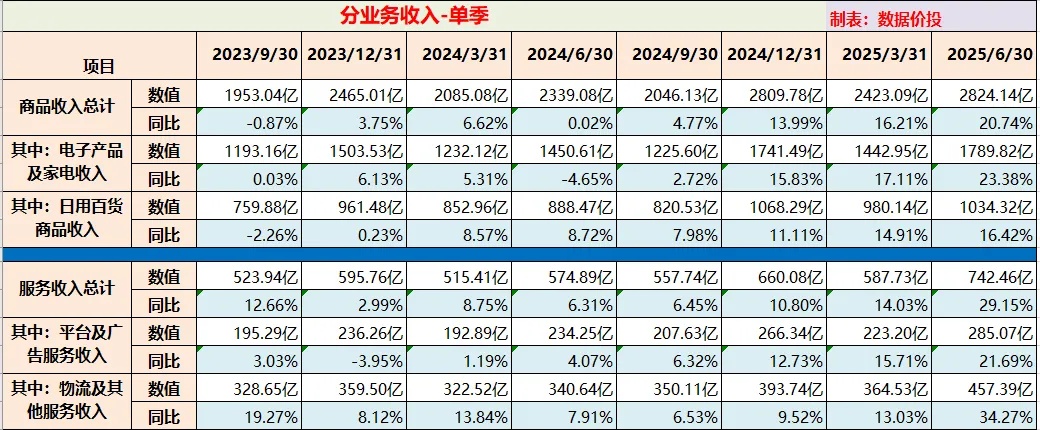
1. Business Revenue
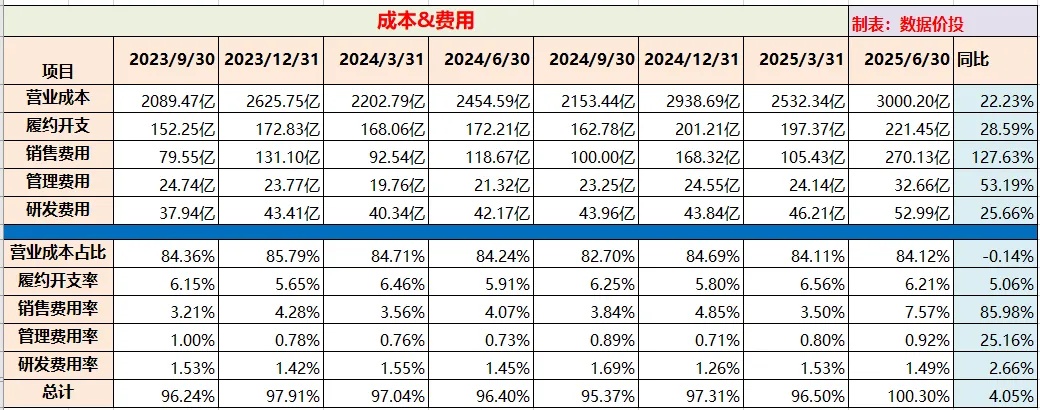
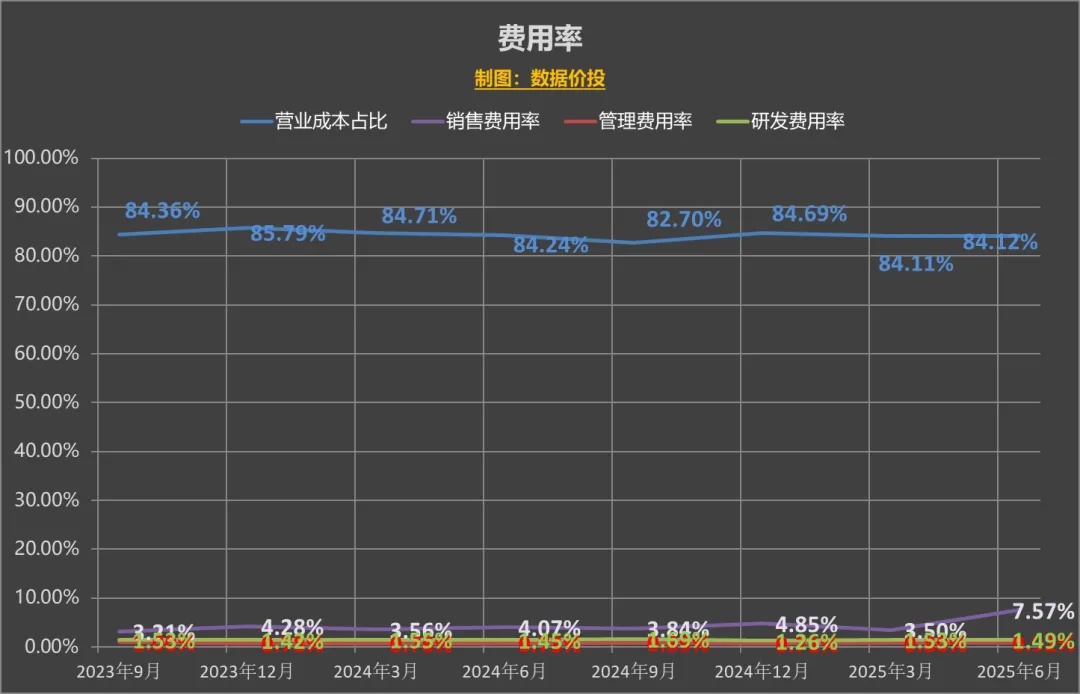
IV. Costs & Expenses
V. Cash Flow
$JD.com(JD.US) $JD-SWR(89618.HK) $Invesco Golden Dragon China(PGJ.US)
The copyright of this article belongs to the original author/organization.
The views expressed herein are solely those of the author and do not reflect the stance of the platform. The content is intended for investment reference purposes only and shall not be considered as investment advice. Please contact us if you have any questions or suggestions regarding the content services provided by the platform.
