

 Traded Value
 Trending Creators in 2025
Patience is hard, but the rewards are amazing

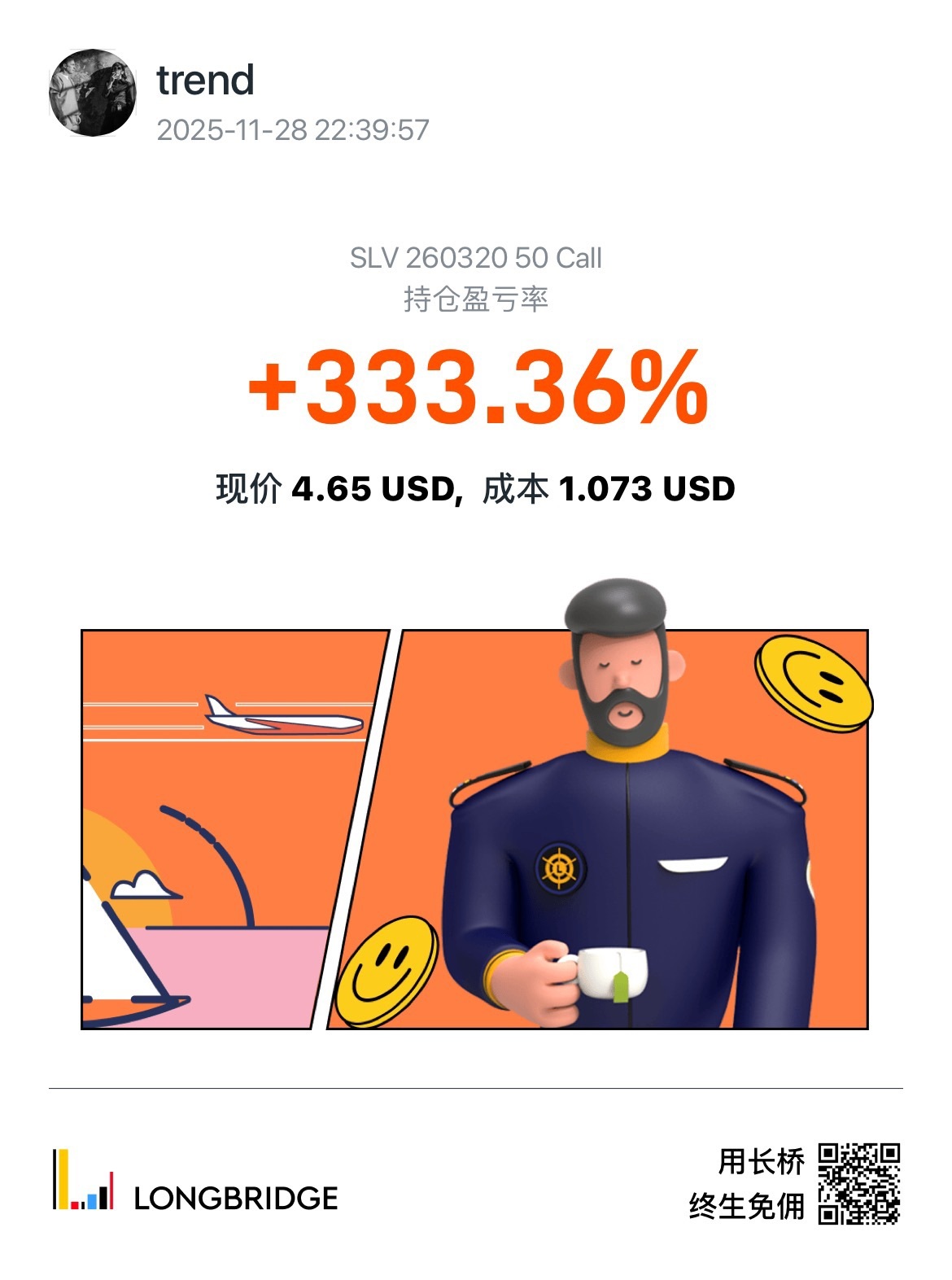
$iShares Silver Tr(SLV.US) Wait patiently for the market cap.
$Meta Platforms(META.US) $Amazon(AMZN.US) $Amazon(AMZN.US)
Li Lu's Reading Notes:
"Accompanying the growth of excellent enterprises."
Investment style is known for "extreme focus, heavy position, long-term holding," with very little frequent turnover.
"Finding value where no one cares"
"Looking for assets whose value will continue to grow over time."
Li Lu became famous not only because of his over 30% annualized compound return in the past 20+ years
Healthy balance sheet, extremely low P/E ratio
In 2000, the bubble burst, tech stocks crashed, and the Nasdaq index was halved. Funds flowed back to value stocks with performance support, Timberland's stock price surged, and Li Lu not only remained unscathed but also made a fortune.
The reason Li Lu was able to avoid these two major financial crises was not by "predicting" market ups and downs but by relying on extreme "intellectual honesty" and adhering to the "circle of competence." He strictly followed the value investment system of Graham and Buffett and resolutely avoided things he "didn't understand."
Below are the specific logic and operational details of how he avoided these two crises:
1. Avoiding the 2000 Internet Bubble: Sticking to Valuation Bottom Line, Enduring Loneliness
In 1997, when Li Lu just founded Himalaya Capital, it was the peak of the Asian financial crisis and the subsequent U.S. Internet bubble (Dot-com Bubble).
Logic: If you don't understand, don't buy (know what you know) At that time, Nasdaq tech stocks often had P/E ratios of hundreds, and many companies had no profits at all. Li Lu found that he couldn't use any traditional discounted cash flow (DCF) model to calculate the value of these companies. Although many around him became rich overnight by buying tech stocks, he admitted that he didn't understand the sustainability of these business models, so he didn't buy a single share.
Operation: Buying gold in the "garbage dump" (Timberland case) When the whole market was chasing high-tech, traditional industries were abandoned, and valuations were ridiculously low. Li Lu turned his attention to companies with real profits, strong cash flow but forgotten by the market. Classic case: In 1998, he bought the shoe brand Timberland. At that time, Timberland's stock price plummeted due to the short-term revenue decline caused by the Asian financial crisis. But Li Lu's research found that its brand was still strong in the U.S., with a healthy balance sheet and extremely low P/E ratio. Result: In 2000, the bubble burst, tech stocks crashed, and the Nasdaq index was halved. Funds flowed back to value stocks with performance support, Timberland's stock price surged, and Li Lu not only remained unscathed but also made a fortune.
Interlude: The Lesson of Short Selling Before the bubble burst, Li Lu tried to short those overvalued tech stocks. Although he was right (these stocks did fall eventually), the process was extremely painful—the bubble would rise even more crazily before bursting, causing him to face huge margin call pressure at one point. This experience led him to an important conclusion: In the future, try to only go long, not short. Because short selling has time limits, and "irrationality" often lasts longer than your account funds can support.
2. Avoiding the 2008 Subprime Crisis: Identifying Systemic Risks, Embracing Chinese Opportunities
The 2008 crisis originated from complex financial derivatives (CDS, CDO) and the real estate bubble. Li Lu once again avoided the minefield through "common sense."
Li Lu not only did not sell due to panic but also advised Buffett to greedily buy BYD at this time. He took advantage of the panic sentiment of the crisis to acquire high-quality assets at extremely low prices.
Margin of Safety: When he bought Timberland in 2000 and BYD in 2008, he acted when prices were extremely low and the downside was very limited. First, consider "how not to lose money," and making money is a natural result.
The copyright of this article belongs to the original author/organization.
The views expressed herein are solely those of the author and do not reflect the stance of the platform. The content is intended for investment reference purposes only and shall not be considered as investment advice. Please contact us if you have any questions or suggestions regarding the content services provided by the platform.
