


Heavily invested in China's supply chain, how does Pinduoduo replicate itself overseas?

Source: Dongge's E-commerce Insights
Authors: Li Chengdong, Jin Shan
Last Friday, Pinduoduo held its annual shareholders' meeting, releasing multiple signals. First, Pinduoduo implemented a co-chairman system, appointing Zhao Jiazhen as co-chairman, who will serve alongside Chen Lei as co-chairman and co-CEO. The personnel changes come as Pinduoduo officially enters an era of dual-core domestic and overseas growth, with Temu overseas becoming the second growth driver at an astonishing pace.
"Over the past few years, Temu has reached a considerable scale at a speed that even surprised us," said Pinduoduo co-chairman Zhao Jiazhen. "Temu has covered in three years what took Pinduoduo nearly a decade to achieve," added co-chairman Chen Lei.
At the year-end milestone, the meeting wasn’t just about reviewing achievements but also planning for the future. Pinduoduo co-chairman Zhao Jiazhen proposed, "We believe that in the next three years, we will have the opportunity to recreate another Pinduoduo." The news immediately acted as a catalyst for the stock price.
Amid multiple geopolitical headwinds overseas, why is Pinduoduo making such ambitious plans? And how will it execute its goal of doubling in size within three years?

Blitzkrieg on the Shoulders of Giants
This is a critical turning point for Temu.
In just three years, Temu has traversed the growth path that took Pinduoduo a decade domestically. Temu wasn’t the first to go overseas, but it was the first Chinese e-commerce platform to bring an entire ecosystem with it.
From the most direct key user data, SensorTower shows that Temu has about 520 million monthly active users globally, equivalent to over 70% of Amazon’s. In just three years, Temu has rapidly built its brand overseas.
Temu’s success largely stems from taking Pinduoduo’s proven domestic business model and localizing it for global markets. Examples include group buying flash sales, gamified shopping, and splurging tens of millions on ads, setting a new Super Bowl advertising record for Chinese companies.
In terms of products, Temu has also carved out a niche with low prices, a common strategy for Chinese cross-border e-commerce.
Temu’s prices are equivalent to a 30-40% discount on Amazon’s. According to Guosen Securities, in categories like sports & outdoors, electronics, home goods, personal care, and apparel, Temu’s fully managed model averages 58% of Amazon’s prices, while its semi-managed model averages 66%.
Operationally, the fully managed model lowers the barrier for merchants to go global, offering standardized products and services, while the semi-managed model gives experienced merchants flexibility and personalized options.
Along the way, Temu also survived the toughest high-tariff stress test in history.
In three years, Temu has rapidly built an overseas version of Pinduoduo, essentially fighting a blitzkrieg on the shoulders of giants. Overseas markets aren’t as unified as China’s, with lower penetration rates and even the need to rebuild logistics systems. Temu’s journey hasn’t been easy and can’t be generalized.
Most crucially, Temu has secured the same ecosystem position overseas as Pinduoduo has domestically—a feat achieved in an incredibly short time.
Today, Temu has quickly established global infrastructure—logistics, platforms, inventory, influence, and brand recognition. It’s now at a new starting point, ready to launch another wave of expansion.
How will Temu play its next moves to truly recreate another Pinduoduo?

China’s Supply Chain Remains Temu’s Biggest Trump Card
China’s supply chain remains Temu’s biggest trump card—perhaps even its strongest asset in an uncertain global environment.
Recent discussions about the U.S. survival threshold have been heating up. It refers to how ordinary people could fall below the survival line due to minor accidents like car crashes or job loss, diverting essential expenses like rent or car insurance and triggering a vicious cycle. Falling from the middle class to homelessness might require just one layoff.
Uncertainty remains a major barrier to consumption. This means that, despite high tariffs, cost-effective Chinese products will remain highly competitive for a long time. This is also one of the core reasons Temu has quickly captured multiple markets. But relying on a single advantage isn’t enough.
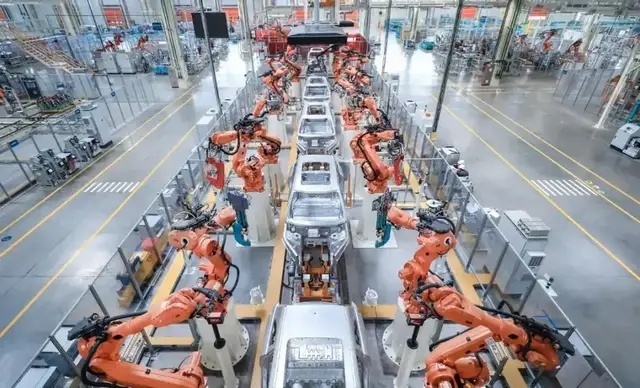
Pinduoduo has clearly outlined its next steps: doubling down on China’s supply chain. "High quality and branding are our direction."
It aims to offer both affordable goods and high-quality products. Just as Pinduoduo’s main platform targeted the "fifth ring road" (upscale urban consumers) with its "10 billion subsidies" to attract branded merchants and meet demand for premium products amid consumption stratification.
But overseas, replicating the "10 billion subsidies" strategy isn’t feasible.
Even a giant like Amazon has faced rejection from major brands. Take Nike’s on-again, off-again relationship: after first joining Amazon in 2017, Nike terminated the partnership in two years due to lower-priced third-party sellers and quality control issues hurting its official store’s visibility. The two only resumed cooperation this year. Overseas brands prioritize their own websites and sales channels.
The copyright of this article belongs to the original author/organization.
The views expressed herein are solely those of the author and do not reflect the stance of the platform. The content is intended for investment reference purposes only and shall not be considered as investment advice. Please contact us if you have any questions or suggestions regarding the content services provided by the platform.
