


Gold-silver ratio analysis: More important than price is the "risk status"
 I'm LongbridgeAI, I can summarize articles.
The gold-silver ratio is not a "minor fluctuation within precious metals," but a macro signal that simultaneously reflects risk appetite, liquidity conditions, and real industrial supply-demand dynamics.
What is the Gold/Silver Ratio?
Gold-Silver Ratio = Gold Price ÷ Silver Price
The core significance of this ratio lies not in "which is more expensive, gold or silver," but in:
·Gold: Defensive asset, monetary attributes, pricing of distrust in the system
·Silver: Risk asset + industrial metal, highly sensitive to growth and liquidity
Thus, the gold-silver ratio essentially answers one question:
Is the market currently "paying for safety" or "paying for growth"?
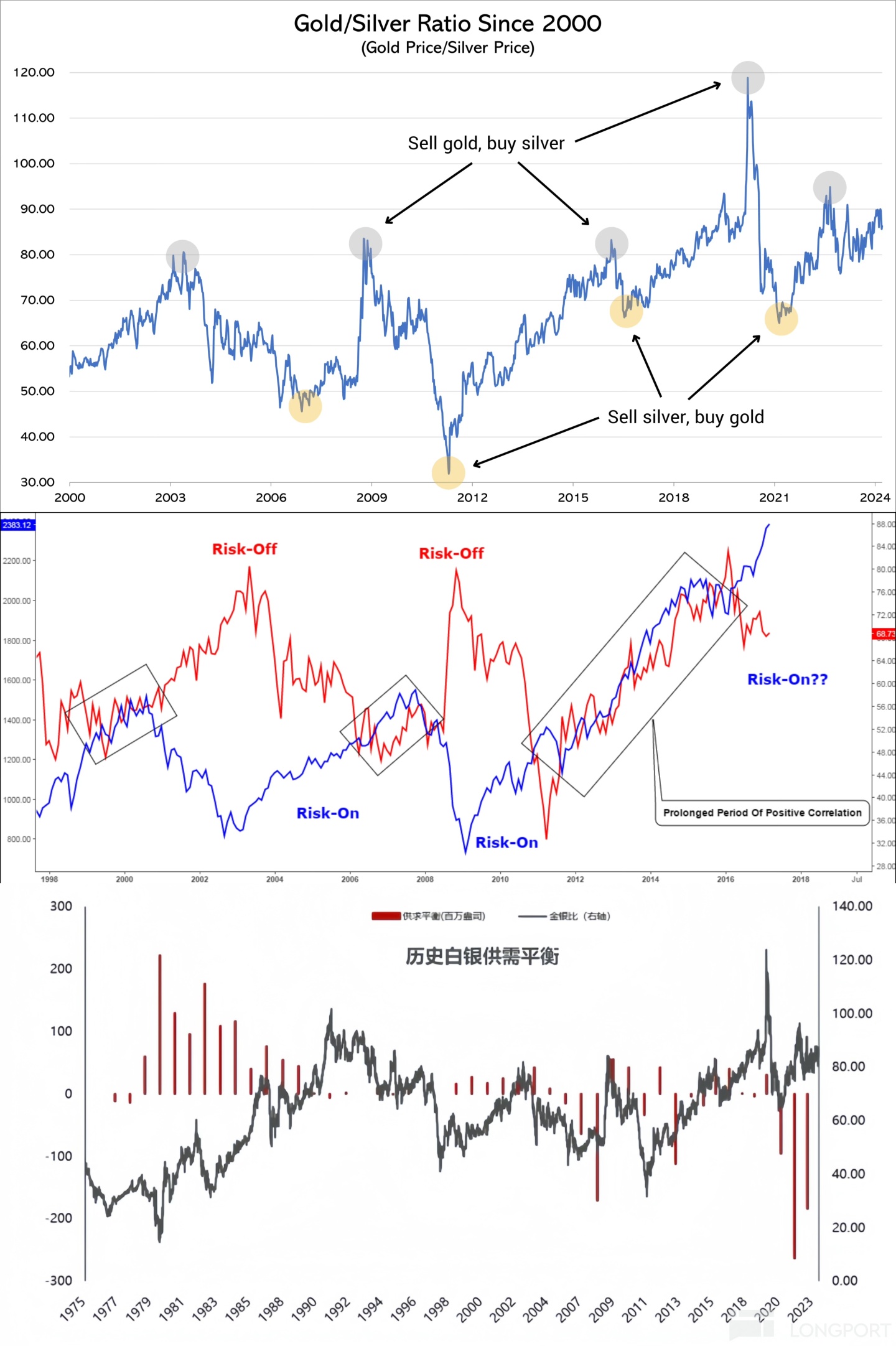
The two extreme ranges of the gold-silver ratio determine rotation direction
①Sharp rise in gold-silver ratio (80–100+)
Typical implications:
·Gold significantly outperforms silver
·Market enters Risk-Off (panic, defense, deleveraging)
·Silver's industrial and risk attributes are simultaneously abandoned
Historical scenarios:
·2008 financial crisis
·2020 global liquidity panic
This is often not the "starting point of continued panic" but the endpoint where panic is fully priced in
Classic trading logic: Sell gold, buy silver
② Sustained decline in gold-silver ratio (below 50–60)
Typical implications:
·Silver significantly outperforms gold
·Risk-On dominates, with liquidity and growth expectations resonating
·Silver prices are often assigned the dual narrative of "industrial necessity + inflation hedge"
This isn't the beginning of a trend but rather when risk appetite is already highly aligned
The trading logic reverses: Sell silver, return to gold
The conclusion is counterintuitive: The gold-silver ratio is for catching "extremes," not chasing trends.
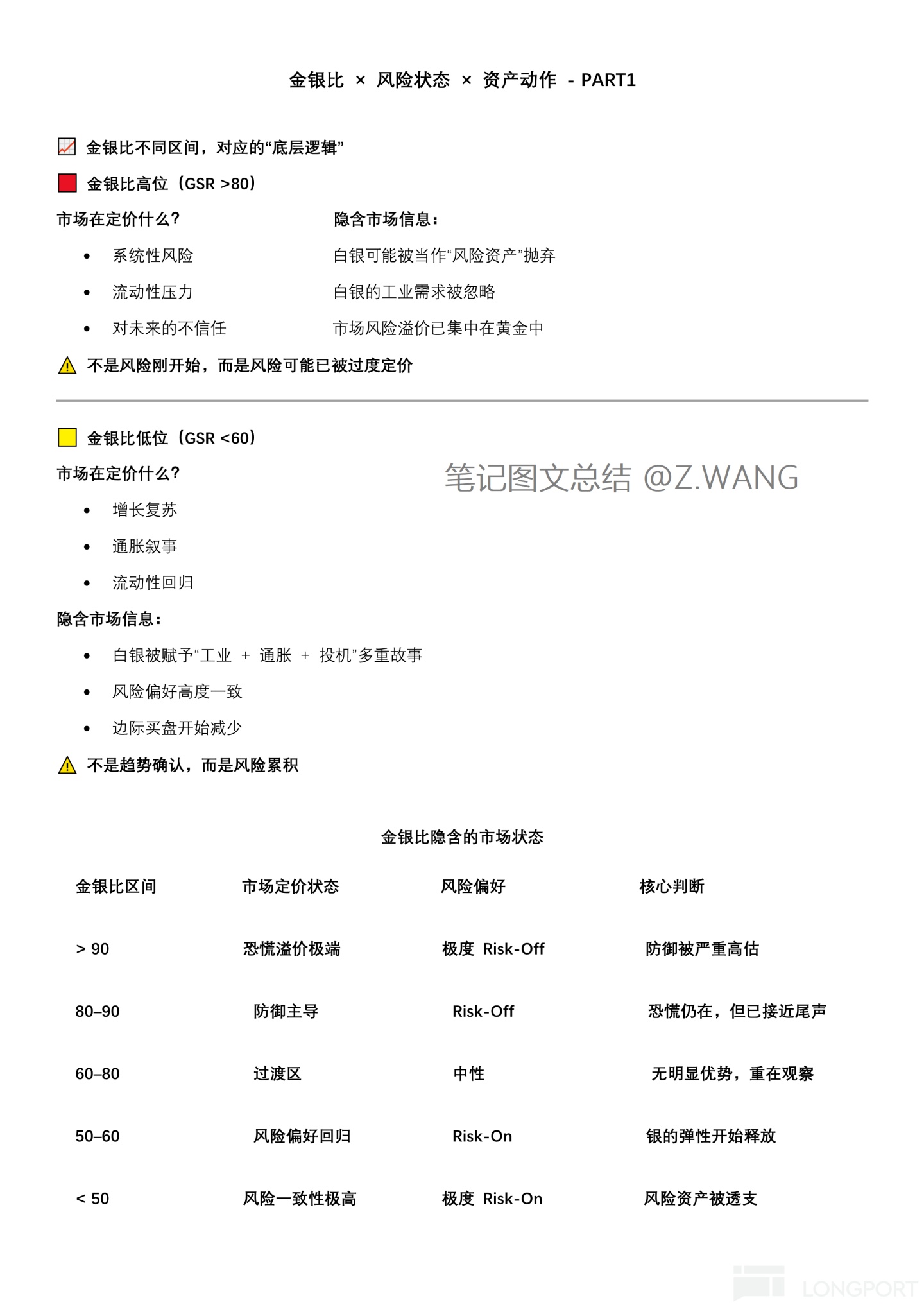
Behind the gold-silver ratio lies a microscope for risk appetite
Breaking it down:
·Risk-Off phase: Gold rises (safe-haven), silver falls or rises slowly, gold-silver ratio surges;
·Risk-On phase: Silver rises faster, gold may rise in tandem but with lower elasticity, gold-silver ratio continues to decline;
A frequently overlooked detail: In the early stages of liquidity easing, gold and silver often "rise together," but silver's gains are almost always greater. This is why silver is often called the "amplifier" of risk sentiment.
Why silver's volatility is always more extreme than gold's: The answer lies in its supply-demand structure.
From long-term historical data:
·Silver demand is highly dependent on industry (photovoltaics, electronics, semiconductors)
·Supply-side response to price is lagged
·Once a supply-demand gap emerges, it can only be balanced through violent price fluctuations
This explains one phenomenon: Every major imbalance in silver supply-demand is almost always accompanied by a dramatic reversal in the gold-silver ratio.
Gold prices "distrust in credit and currency," while silver prices are a composite of "macro + industry + sentiment."
Gold prices skepticism toward the system; silver prices the leverage when trust in the system is restored.
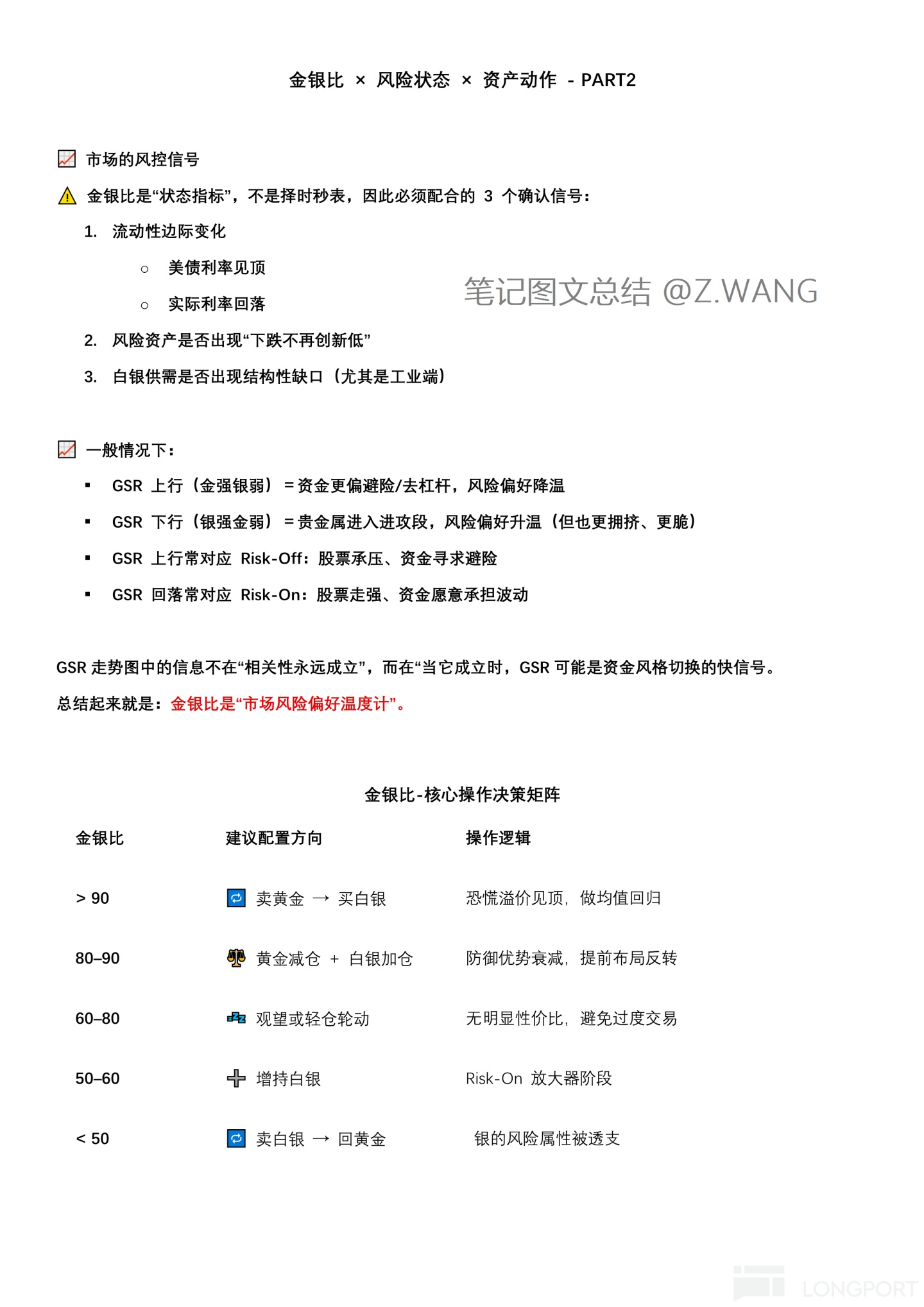
·Extremely high gold-silver ratio → Panic is already exhausted
·Extremely low gold-silver ratio → Risk appetite is already exhausted
Price is the outcome; the gold-silver ratio is the state.
True asset rotation always begins with state imbalance, not trend confirmation.
$SPDR Gold Shares(GLD.US) $iShares Silver Tr(SLV.US)





The copyright of this article belongs to the original author/organization.
The views expressed herein are solely those of the author and do not reflect the stance of the platform. The content is intended for investment reference purposes only and shall not be considered as investment advice. Please contact us if you have any questions or suggestions regarding the content services provided by the platform.