
D
Mar 13 at 09:44 AM
Food-delivery war spreads to Brazil; DiDi also suffers.
 I'm LongbridgeAI, I can summarize articles.
'Food Delivery Wars' Replayed in Brazil: Will Didi Spend at Any Cost?
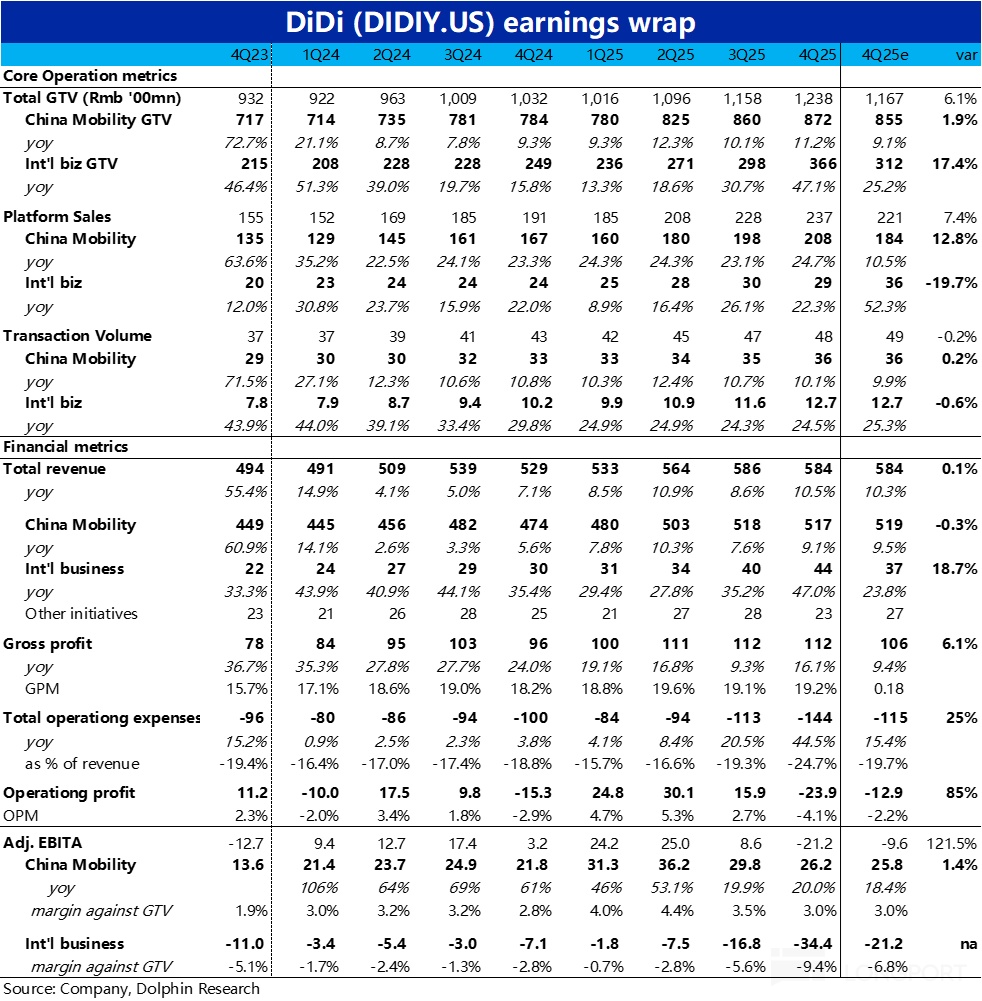
The ride-hailing leader $DiDi(DIDIY.US) posted its FY2025 Q4 results pre-market on Mar 13. Domestic ops remain solid, with steady volume growth and a gradual margin uptick — not dazzling, but no major flaws. The issue lies overseas: Brazil food delivery investment kept ramping, and while the market was primed, the actual single-quarter loss of RMB 3.4bn vastly exceeded expectations.
In detail: Here are the key takeaways.
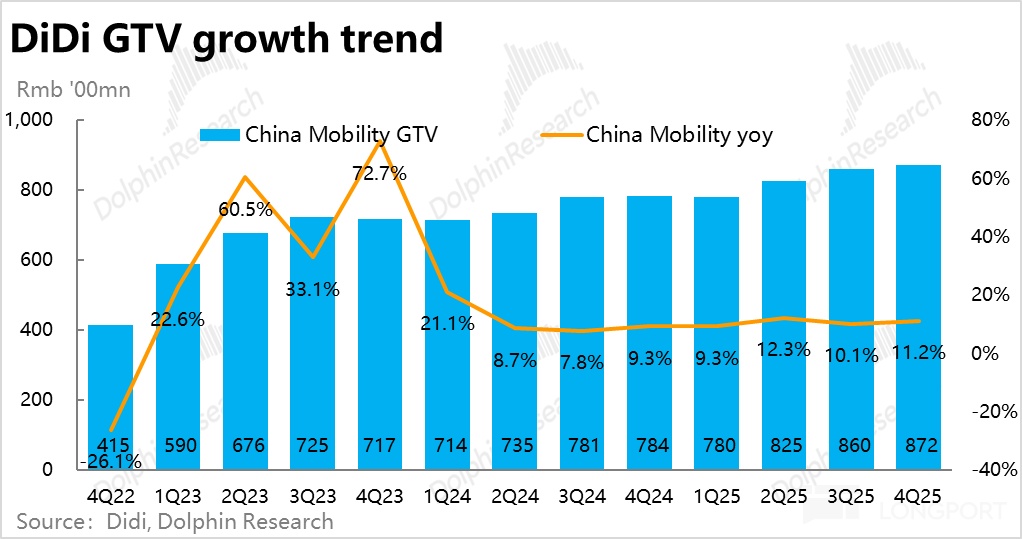
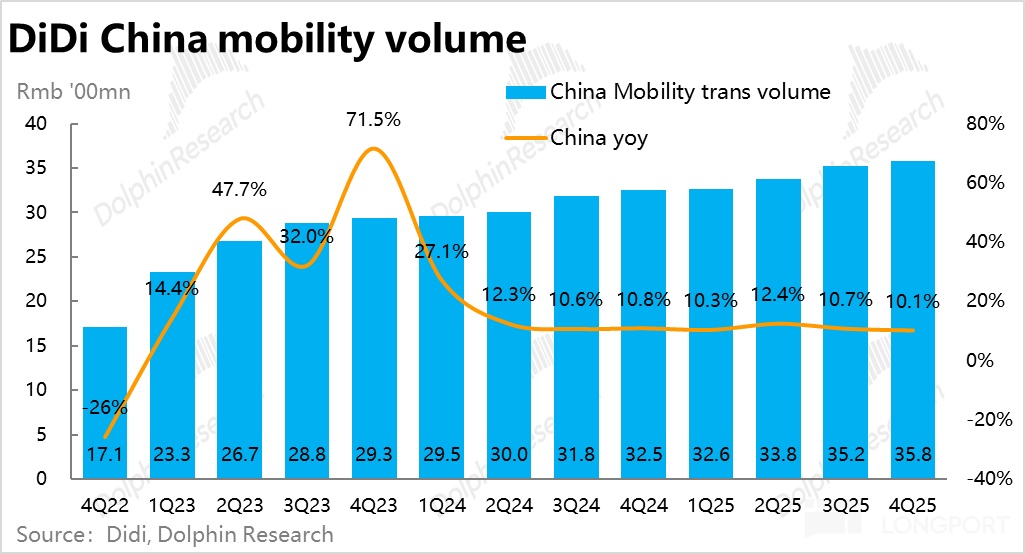
1) Stable domestic ride-hailing growth: This quarter, Didi's domestic GTV reached RMB 87.2bn, with YoY growth ticking up to 11.2%, slightly above Bloomberg consensus. However, domestic ride orders rose 10.1% YoY, a shade below GTV growth and slightly softer QoQ. This suggests a modest ASP lift (~+1%) drove the GTV uptick, keeping the overall tone steady.
2) Domestic net take-rate continued to climb: On a GTV basis, domestic ride revenue (GTV net of taxes and passenger subsidies) rose ~9% YoY, also slightly accelerating but still trailing GTV — implying passenger subsidies were higher YoY. By contrast, domestic platform sales (GTV net of taxes and driver payouts) rose 24.7% YoY, meaningfully outpacing GTV with a widening gap. As a result, Didi's domestic net monetization kept improving, reaching 33.9% vs. 30% in Q3.
3) Domestic margin uptrend intact, but the pace slowed: With monetization still trending higher, domestic ride Adj. EBITA was RMB 2.62bn, up 20% YoY — solid, at 3% of GTV. While margins continued to slip QoQ, they still improved 20bps YoY. Thus, vs. the first two quarters of FY25, the pace of margin expansion moderated, though the uptrend remains. Management noted heavier holiday promotions (e.g., National Day) and increased offline equipment spend at hubs such as airports.
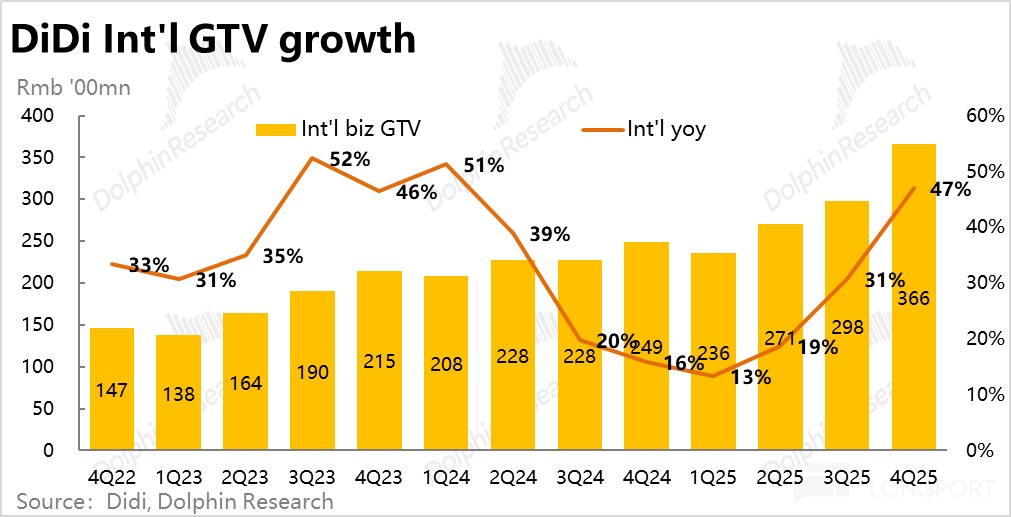
4) Brazil food delivery turbocharged overseas GTV: Overseas GTV growth accelerated to 47% YoY, and ex-FX, growth was 38%, up 9ppt vs. Q3. However, overseas orders grew 25% YoY, only slightly faster vs. Q3. The wide gap between GTV and orders stems from food delivery's still-small order base (by estimates, just ~3% of overseas GTV in FY25), but a much higher ticket size (3–5x ride-hailing), which lifts GTV far more than orders.
5) Food delivery is making noise, not money: Despite faster overseas GTV growth, platform sales rose only 22% YoY, slowing vs. Q3. Heavy subsidies have clearly boosted Brazil food delivery GTV, but strip out subsidies and the platform keeps little to no profit — even negative. In short, Didi's Brazil food delivery is in the scale-up phase where bigger volume means bigger losses.
6) Overseas deep in the red: The market expected wider overseas losses, but the actual single-quarter loss of over RMB 3.4bn far exceeded the ~RMB 2.1bn consensus. Didi's determination/ambition in Brazil food delivery appears stronger than anticipated. Additionally, year-end accruals pushed innovation losses to RMB 1.29bn, slightly above last year, driving group Adj. EBITA back into a loss of over RMB 2.1bn — the worst single-quarter since 2022.
7) Marketing spend surged — profits got subsidized away: GPM was 19.2%, up 10bps QoQ, not dragged by Brazil food delivery. This is because Intl ops are booked on a net basis (after driver payouts), and overseas subsidies hit sales & marketing, not COGS, so GP holds up.
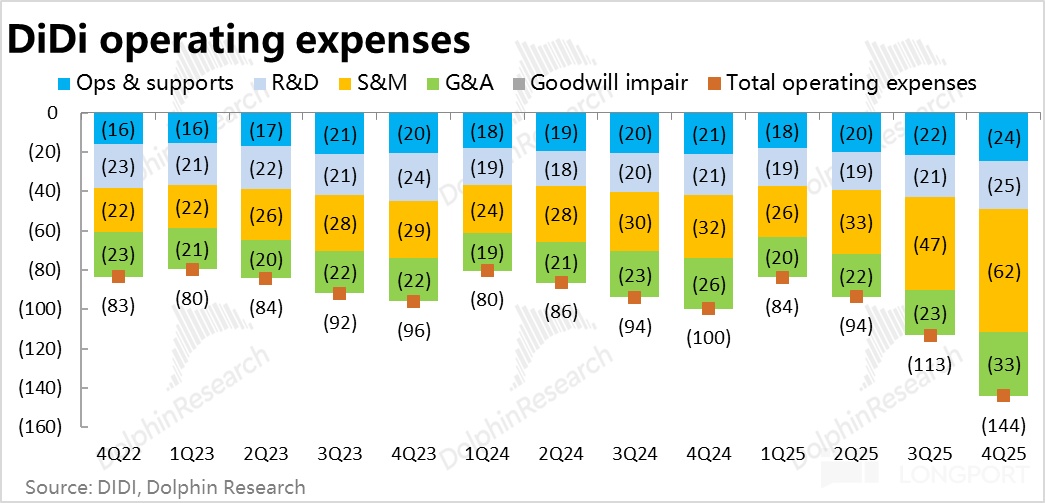
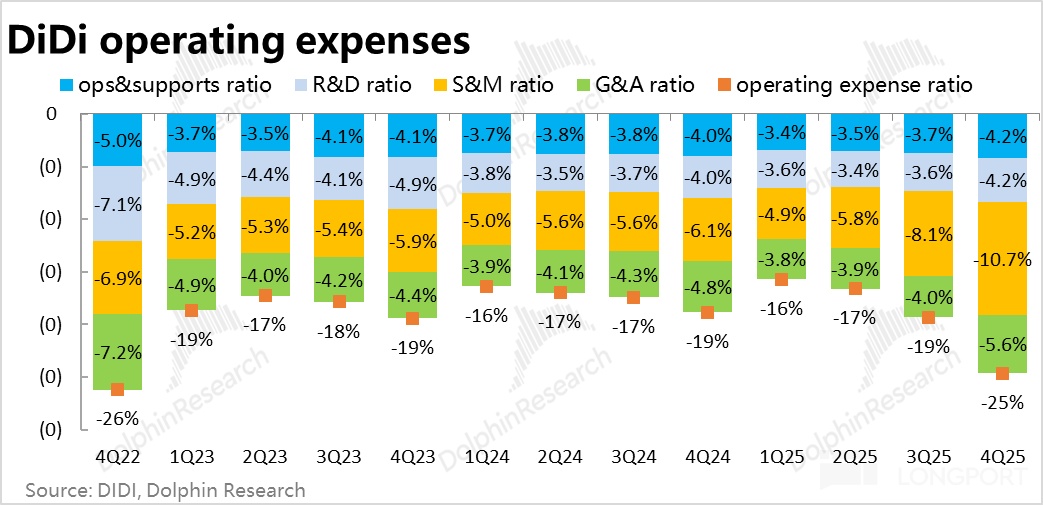
On opex, the four operating expense lines totaled RMB 14.4bn, +45% YoY, with sales expense at RMB 6.2bn, sharply higher vs. Q3's elevated RMB 4.7bn. The net increase in marketing aligns with the net increase in overseas losses, underscoring subsidies as the primary driver. G&A rose from RMB 2.6bn to RMB 3.3bn, likely reflecting Brazil expansion (headcount, offices, travel, etc.).
8) Shareholder returns: As disclosed, from late Nov 2025 to end-Feb 2026 (amid a sharp share price pullback), the company repurchased $340mn, or 68mn ADS, equal to ~1.8% of total ADS, annualized ~7.2%. This provided some support, though buybacks may ease if the stock rebounds.
Dolphin Research View:
1) Overall, this quarter can be summed up as: steady domestic ops, and aggressive overseas investment driving heavy losses. The key signal is Didi's resolve to win Brazil food delivery may be stronger than expected. While a group loss of over RMB 2.0bn is unquestionably poor, the stock is already down ~40% from the peak, suggesting the downside risk is largely priced.
Given the domestic business is mature with a stable competitive setup and unlikely to change materially in the near term (before Robotaxi disruption arrives), we won't dwell on it. We'll focus on overseas issues this quarter.
2) The sharp widening of overseas losses is the core issue, mainly due to Brazil food delivery relaunch and escalating investment as scale grows. We take the opportunity to discuss:
a) Brazil food delivery is highly concentrated: Before Didi's 99 Food and Meituan's Keeta re-entered the fray, the market was dominated by local leader iFood (~70% share), with Rappi at single digits. Reports suggest iFood built high entry barriers through broad exclusive merchant agreements, previously fending off Uber Eats and Didi's 99 Food.
b) Didi's 'super-platform' ambitions in Brazil: Spurred by Keeta's catalyst, Didi restarted Brazil food delivery in Apr 2025. Now its ambitions may be broader. Unlike China, where Didi is largely centered on mobility and super-platform attempts have not meaningfully succeeded, Latin America offers a better shot to realize the 'rides + food' flywheels à la Uber.
In ride-hailing, Didi's market share (by users) in key LatAm countries is roughly on par with Uber, making it a clear Top 2 with a mature ecosystem. Specifically in Brazil, Didi has 1.5mn+ drivers, ~700k moto couriers, and 50mn+ users. Thus, while food delivery share lags, on an overall basis (rides + food), Didi's users are comparable to iFood and it even has more couriers (700k vs. 480k).
In other words, the two are similar in scale, not a mismatch. With cross-traffic between rides and food, Didi has a shot at challenging iFood, as Uber did.
c) Merchant coverage is the key gap: The main differences lie in covered cities (<20 vs. 1,500+) and merchant count (45k vs. 460k). In 2023, regulators curbed iFood's use of exclusivity (no exclusive deals with chains of 30+ stores; exclusive allowed below 30, with GMV from exclusives capped at 25%). Even so, the barrier hasn't fully come down yet.
d) Investment plan: Per media, Didi plans to expand to 100 cities by mid-2026 (vs. <20 at the start of the year). To that end, Didi announced up to BRL 8bn investment in 99 Food (~RMB 10bn). While reports suggest Meituan's Keeta may be scaling back due to iFood's tight merchant lock-in (rumor only), Didi will likely maintain high investment.
3) Valuation: as overseas losses have swelled to almost offset domestic profits, a pure SOTP ignoring overseas/new business losses is no longer objective. We switch the base case to valuing the group on FY2026 consolidated profit. Domestic mobility likely stays on a steady growth path, with 2026 revenue up high-single digits YoY and Adj. EBITA up 15–20% to ~RMB 15bn.
The swing factor is how much overseas + new businesses lose in 2026. Given the larger-than-expected Q4 overseas loss, even assuming sequential narrowing in 2026, we conservatively expect ~RMB 7.5bn overseas loss (pre-earnings: RMB 6.0bn), and ~RMB 1.5bn loss from other innovation. That implies group 2026 Adj. EBITA of ~RMB 6bn, equating to ~22x on the pre-earnings market cap.
Under a pessimistic case where overseas + new business losses persist for long, the current price still has ~30% downside to a ~15x Adj. EBITA multiple. Under a neutral case, if overseas + new losses show a clear narrowing trend, the market may revert to valuing domestic profits: FY2026 Adj. EBITA of RMB 15bn minus ~RMB 2bn SBC (non-operating income far exceeds taxes, so no extra tax adjustment), on 15x implies ~$28bn market cap, ~45% upside vs. current.
Therefore, as long as actual new business losses don't exceed the conservative case above, ~30% downside vs. ~45% upside offers a fair risk/reward for long-term investors after a large pullback. Moreover, Dolphin generally doesn't penalize companies whose core business is stable while near-term losses spike due to heavy investment in new bets.
After all, new-business investment can be dialed back; in the worst case, fall back to a value-stock narrative with profits but limited growth.
Key charts and notes:
I. Growth: domestic steady; overseas pushing hard into food delivery
1) Domestic growth broadly steady: Core metrics — domestic GTV was RMB 87.2bn, YoY growth accelerated to 11.2%, slightly above Bloomberg consensus. By price/volume, domestic ride orders (including rideshare, hitch, chauffeur) rose 10.1% YoY, a touch below GTV and slightly easing. This implies GTV acceleration was ASP-driven, and domestic growth remains steady.
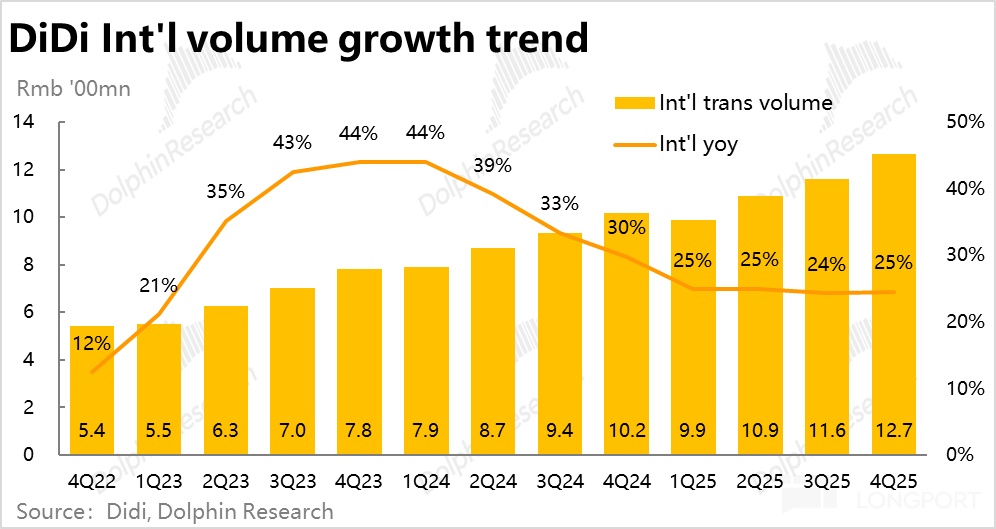
2) Brazil food delivery keeps accelerating overseas growth: As Brazil food delivery expands, overseas GTV growth accelerated to 47% YoY. Even ex-FX, growth was 38%, up 9ppt vs. Q3. Meanwhile, overseas orders grew 25% YoY, only slightly faster vs. Q3. The gap reflects food delivery's limited order share (GS estimates ~3% of overseas orders in 2025), and much higher ticket vs. rides (Didi ride ASP in Brazil ~$4 vs. iFood ~$11; Didi food ASP likely higher), thus driving GTV multiple times more than orders.
II. Domestic net take-rate rising; overseas has volume but little profit
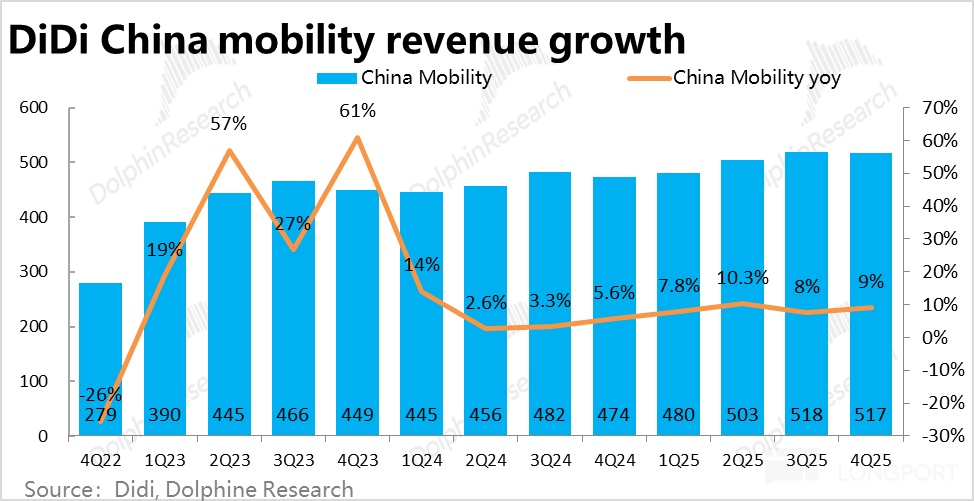
1) Domestic platform retention keeps improving: Revenue-wise, domestic ride revenue (GTV net of taxes and passenger subsidies) was RMB 51.7bn, +~9% YoY, tracking GTV and slightly faster. Revenue still trailed GTV, but the gap narrowed — implying passenger subsidies rose YoY, with slightly less intensity QoQ. Conversely, domestic platform sales (GTV net of taxes and driver payouts, i.e., platform-retained earnings) rose 24.7% YoY, again slightly faster, well ahead of GTV with the gap widening. This clearly shows net monetization remains on an uptrend.
Per platform sales/GTV, domestic platform monetization reached 23.9%, up QoQ. This points to continued margin improvement domestically.
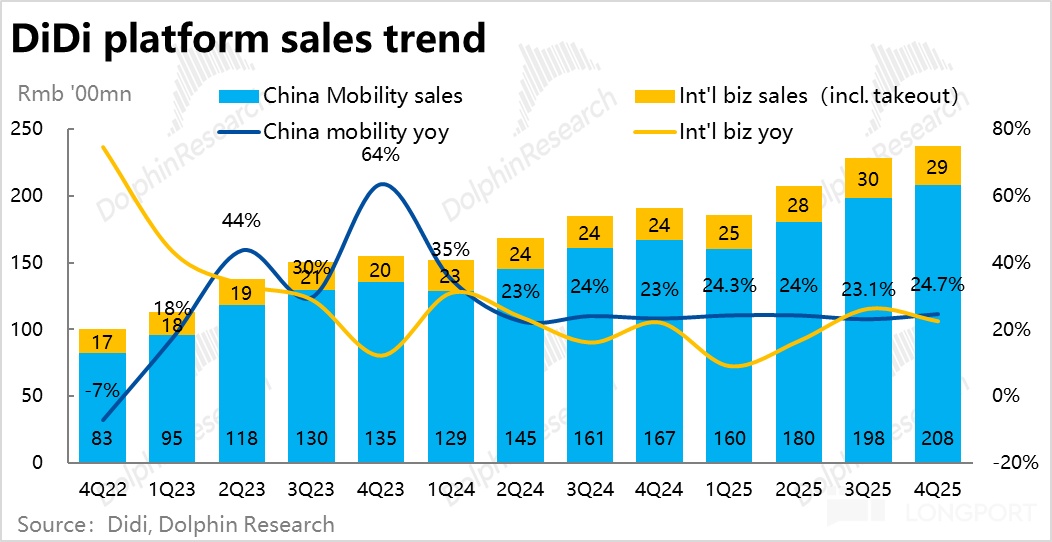
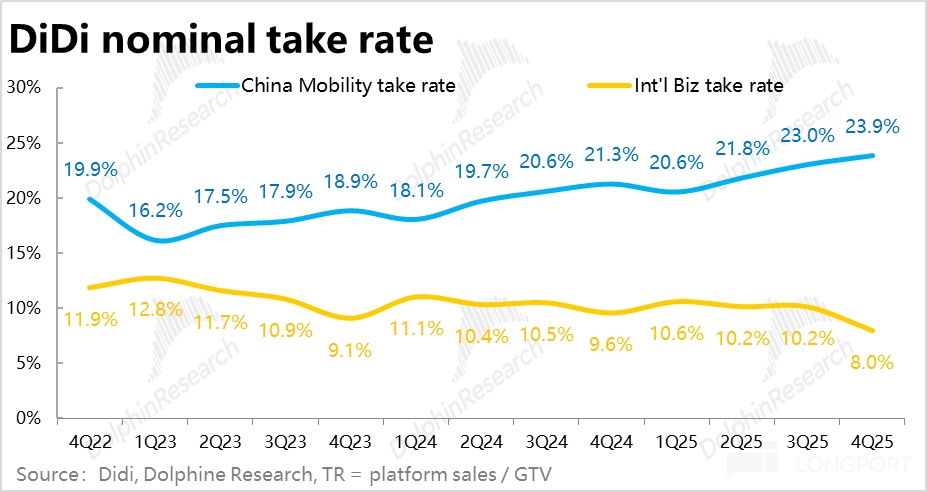
2) Overseas: more volume, not more profit: Despite faster overseas GTV, platform sales (platform-retained earnings) rose just 22% YoY, slowing vs. Q3. The divergence shows heavy subsidies materially boosted Brazil food delivery GTV, but the incremental volume was fully eroded by subsidies, leaving little to no platform profit. Based on platform sales/GTV, overseas monetization held at ~8%, down over 200bps QoQ, highlighting that Brazil food delivery is in the 'bigger scale, bigger loss' phase and presaging hefty overseas losses.
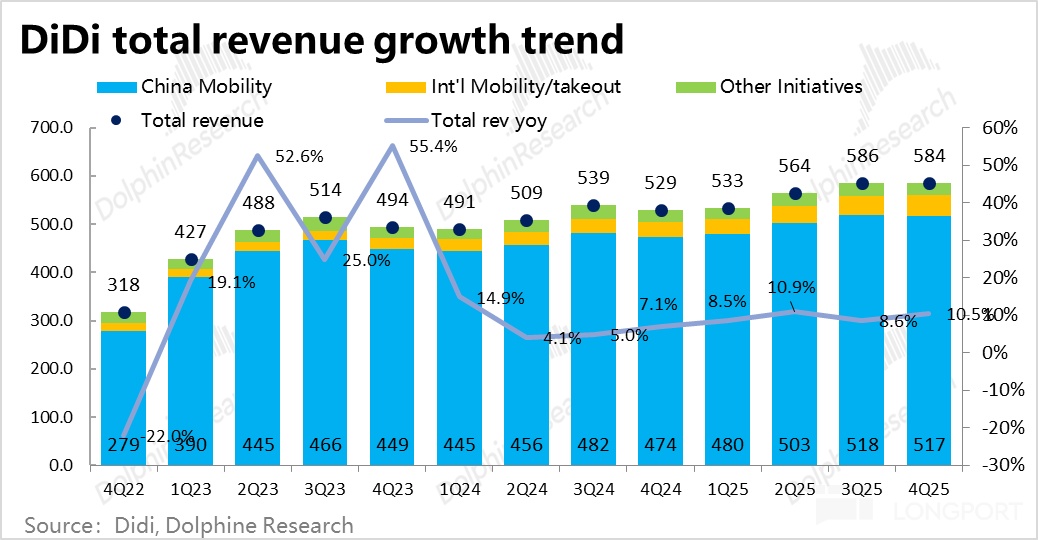
Combining domestic, overseas and innovation, group revenue was ~RMB 58.4bn, +10.5% YoY, accelerating on overseas, broadly in line with the Street.
III. Overseas losses ballooned
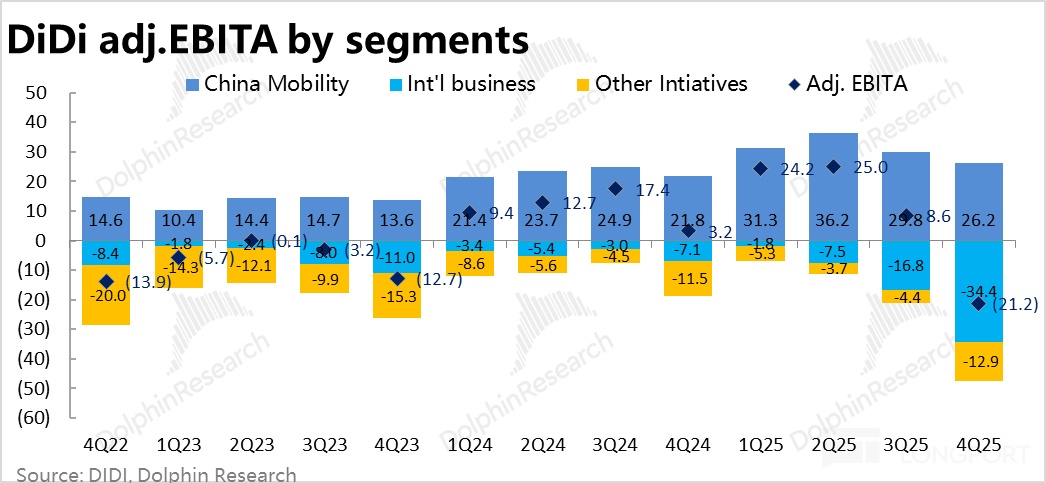
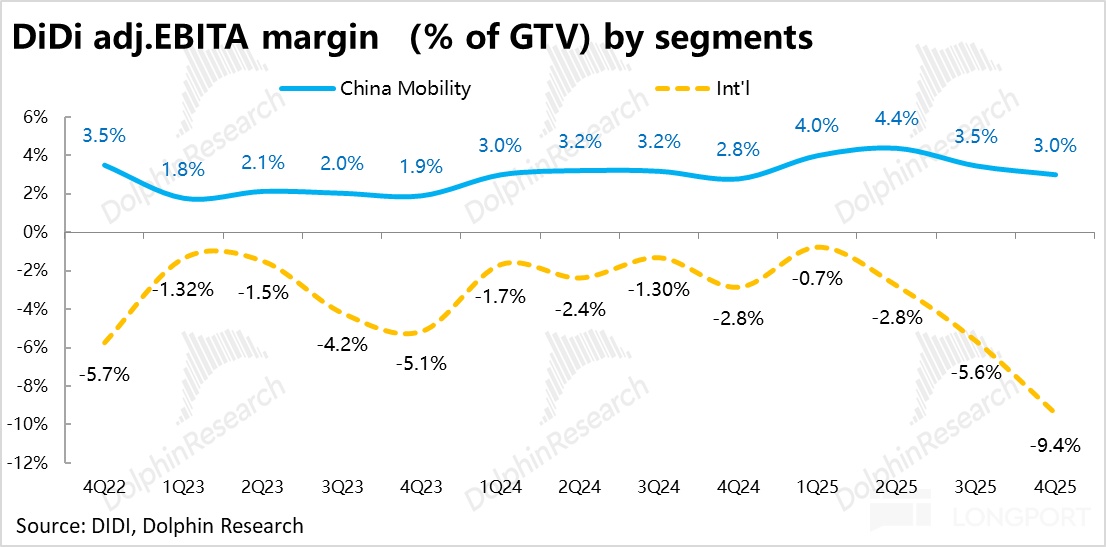
As discussed, domestic margins are steadily improving, while overseas losses are widening materially. Specifically, domestic Adj. EBITA was RMB 2.62bn, +20% YoY, at 3% of GTV. Though down sequentially, it improved 20bps YoY, and vs. the highs in the first two quarters of FY25, profit release has eased, but the margin uptrend remains intact.
For overseas, the market expected wider losses due to Brazil food delivery ramp, but the actual single-quarter loss of over RMB 3.4bn far exceeded the ~RMB 2.1bn consensus. This suggests Didi's resolve/ambition in Brazil food delivery is stronger than previously thought. With year-end accruals, innovation losses reached RMB 1.29bn (vs. RMB 1.15bn YoY).
Group Adj. EBITA swung back to a loss of over RMB 2.1bn — the worst single-quarter since 2022.
IV. Marketing spend surged; profits were subsidized away
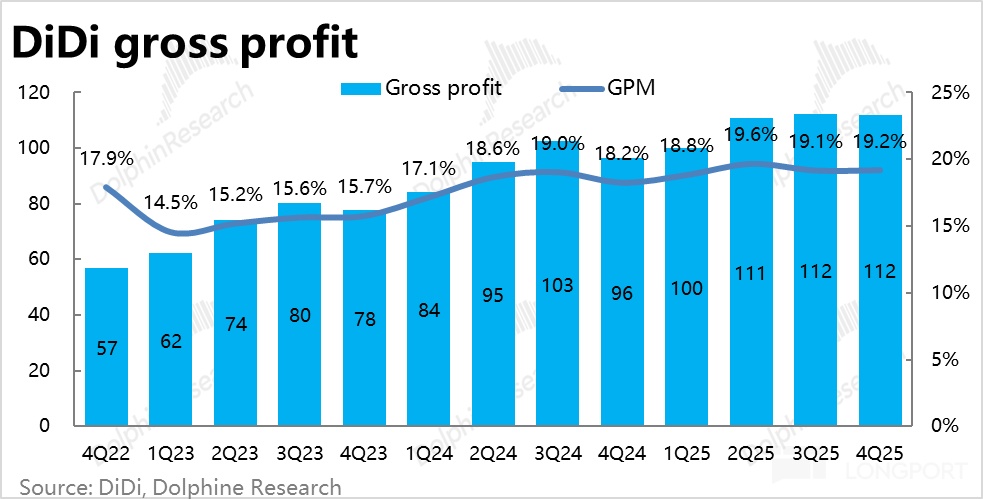
From a cost/expense lens, GPM was 19.2%, up 10bps QoQ, unaffected by Brazil food delivery. This is because Intl ops are booked net (after driver payouts), and overseas subsidies sit in marketing, not GP.
On opex, the four operating expenses totaled RMB 14.4bn, +45% YoY, ~RMB 3.0bn above Street. The key driver was sales expense at RMB 6.2bn, sharply higher vs. RMB 3.2bn last year and vs. the already elevated RMB 4.7bn in Q3. The net increase in marketing broadly matches the net increase in overseas losses, pointing to subsidies as the main culprit.
G&A rose from RMB 2.6bn to RMB 3.3bn, likely tied to Brazil food delivery expansion (headcount, offices, travel & hospitality). R&D and ops support were also up over 15% YoY, but within a reasonable band.
<End of text>
Dolphin Research past analyses on [Didi]
Earnings reviews
Nov 28, 2025: Food Delivery Wars Didn’t Hit, Why Did Didi Kneel?
Aug 28, 2025: Without Food Delivery, Didi Was Doing Fine?
Mar 19, 2025: Didi: Home Turf Is Ripe Yet Requires Vigilance; Overseas Story Unfolds Slowly?
Risk disclosure & disclaimer: Dolphin Research Disclaimer and General Disclosure




The copyright of this article belongs to the original author/organization.
The views expressed herein are solely those of the author and do not reflect the stance of the platform. The content is intended for investment reference purposes only and shall not be considered as investment advice. Please contact us if you have any questions or suggestions regarding the content services provided by the platform.