

 Top 10 Influencers in 2025
 Markel
Why is battery swapping suitable for Southeast Asia?

Why is battery swapping suitable for Southeast Asia?
- 0:00-8:00 Nighttime off-peak electricity: Residential electricity consumption is very low <500kVA, the battery swap station uses the remaining 1500kVA to fully charge the battery storage. At this time, the 8 supercharging piles cannot be used because there are no cars.
- 19:00-22:00 Daytime peak: Residential electricity consumption is 1500kVA, the battery swap station does not draw power from the grid. Instead, it uses the stored batteries to swap for vehicles. Even battery swap stations with many batteries, such as the Nio third-generation station with 21 batteries, can discharge power back to the grid in reverse, helping the community shave peak demand.
- Usual times: The battery swap station dynamically adjusts charging power based on residential electricity consumption. When residents use more power, the station charges slower; when residents use less, the station replenishes power.
The fourth-generation station has an important upgrade: V2G capability.
- Reverse power supply: It not only uses off-peak electricity for energy storage but can also discharge power from the batteries back to the grid during the evening peak to help the community withstand pressure.
- Real-world data: In January 2026, Jiangsu used 14 fourth-generation stations to participate in grid dispatch, with a single station's maximum discharge power of about 256kW.
The advantage of battery swapping in Southeast Asia stems from the fragility and high cost of the local power grid. The previously analyzed peak shaving and valley filling, as well as V2G, will change from bonus points to must-haves in Southeast Asia.
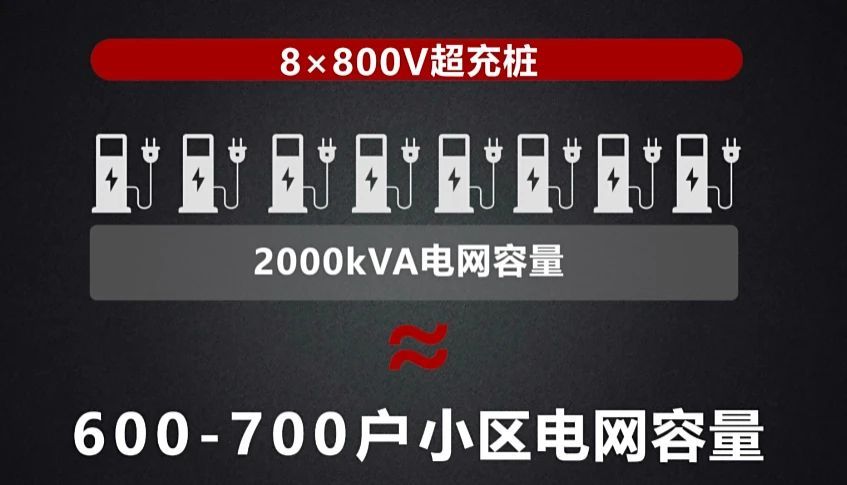
Specifically, battery swapping is more suitable for Southeast Asia than supercharging for four undeniable reasons:
The grid is too weak; supercharging stations simply can't be built.
- Reality: In Southeast Asia, except for Singapore, most cities have limited grid capacity. A transformer in an ordinary commercial area might only have 500-1000kVA.
- Supercharging dilemma: A single 600kW supercharging pile requires about 800kVA of transformer capacity, equivalent to draining the entire street's power. To build a supercharging station, huge investment is required first—tens to over a million RMB to expand the grid—and then waiting months for approval.
- Battery swap advantage: Utilizing peak shaving and valley filling, battery swap stations can charge slowly at night (power only needs 30-50kW) and directly swap batteries during the day. The peak demand on the grid is even lower than that of an air conditioner, completely eliminating the need for grid expansion.
Frequent power shortages make battery swap stations community power banks.
- Reality: In places like Vietnam, the Philippines, and Indonesia, power outages or voltage instability are the norm.
- Supercharging dilemma: Once voltage fluctuates, supercharging piles go into protective shutdown. During a power outage, they are completely inoperable.
- Battery swap advantage: The battery swap station itself is an energy storage station. Normally filled with batteries, it can disconnect from the grid when the grid is unstable and operate independently on the station's batteries for several hours. During a power outage, it can even provide emergency power to the community and shops in reverse (a variant of V2G), transforming from an electricity burden into power insurance.
Land scarcity makes battery swap stations land-efficient.
- Reality: In cities like Hong Kong, Singapore, Bangkok, Jakarta, and Manila, the cost of a single parking/charging space is extremely high.
- Supercharging dilemma: A car charging for 30-60 minutes requires multiple spaces for rotation. To serve 100 cars, supercharging needs 10-20 spaces (including queuing areas).
- Battery swap advantage: A battery swap station (about 60 square meters, the size of two parking spaces) plus 2-3 backup spaces can serve 200-300 vehicles per day. Land cost is 1/5 to 1/10 that of supercharging.
Hot climate causes batteries to commit slow suicide.
- Reality: Southeast Asia has an average annual temperature of 30°C+, and car interiors can reach 60°C under the sun.
- Supercharging dilemma: High-power fast charging under high temperatures severely accelerates battery aging. Users face the dilemma of fast charging damaging the battery versus slow charging being too time-consuming.
- Battery swap advantage: Batteries are charged in the constant temperature and humidity environment of the swap station, extending lifespan by over 30%. Users don't need to worry about battery degradation at all; each swap provides a healthy battery. This Battery-as-a-Service model offers a huge advantage in used car resale value.
Real Southeast Asia implementation case:
- Project: Nio Singapore Shell cooperation (2024-2025), deploying battery swap stations in Southeast Asia.
- Site selection: Not large supercharging stations, but gas stations, convenience stores, and community commercial centers. These places generally have insufficient grid capacity.
- Model: Each swap station is equipped with 6-8 batteries, charging slowly for energy storage at night and discharging/swapping during daytime peaks.
- Result: The construction cycle was shortened from 6 months (for grid expansion) to 2 months, with costs reduced by 40%.
Conclusion:
In places with stable grids, expensive land, and a need for speed, supercharging and battery swapping each have their advantages. But in Southeast Asia, with its weak grid, frequent power shortages, high land prices, and hot weather, battery swapping is a more realistic and economical solution than supercharging or flash charging.
The copyright of this article belongs to the original author/organization.
The views expressed herein are solely those of the author and do not reflect the stance of the platform. The content is intended for investment reference purposes only and shall not be considered as investment advice. Please contact us if you have any questions or suggestions regarding the content services provided by the platform.
