


Strict Discipline vs. Vague Correctness
 I'm LongbridgeAI, I can summarize articles.
For example, the first purchase price was 100 yuan, and your planned average-down price is 90 yuan. Since you don't usually watch the market closely, you placed a conditional order at 90 yuan. The stock price hovered around 90 yuan (e.g., between 90-93 yuan) but just wouldn't dip below 90. Today, you had some free time and checked during the trading session; the price was 91 yuan. Buy or not?
If strictly following discipline: still don't buy, until it's ≤90 yuan;
If aiming for fuzzy correctness: just buy it, there's no essential difference between 90 and 91.
Here's my take on this issue, in stages. If you haven't yet developed a complete trading strategy, strict execution is key. Only through deliberate practice can you form a complete strategy. Executing strictly today and acting on gut feeling tomorrow makes it impossible to verify in a closed loop.
But if you already have a complete trading strategy (especially for value investors), fuzzy correctness is fine.
Be strict in the big picture, such as adhering to left-side trading; be fuzzy correct on the details. For long-term holding, deviations within ±2% or even ±5% of the planned purchase price can be ignored.
Recently, I made this mistake with both index ETFs and individual stocks.
First, with ETFs. Strictly following the valuation temperature-position management rule, you should only average down when the market valuation is below 50 degrees. The US market briefly dipped to 52 degrees at the end of March.
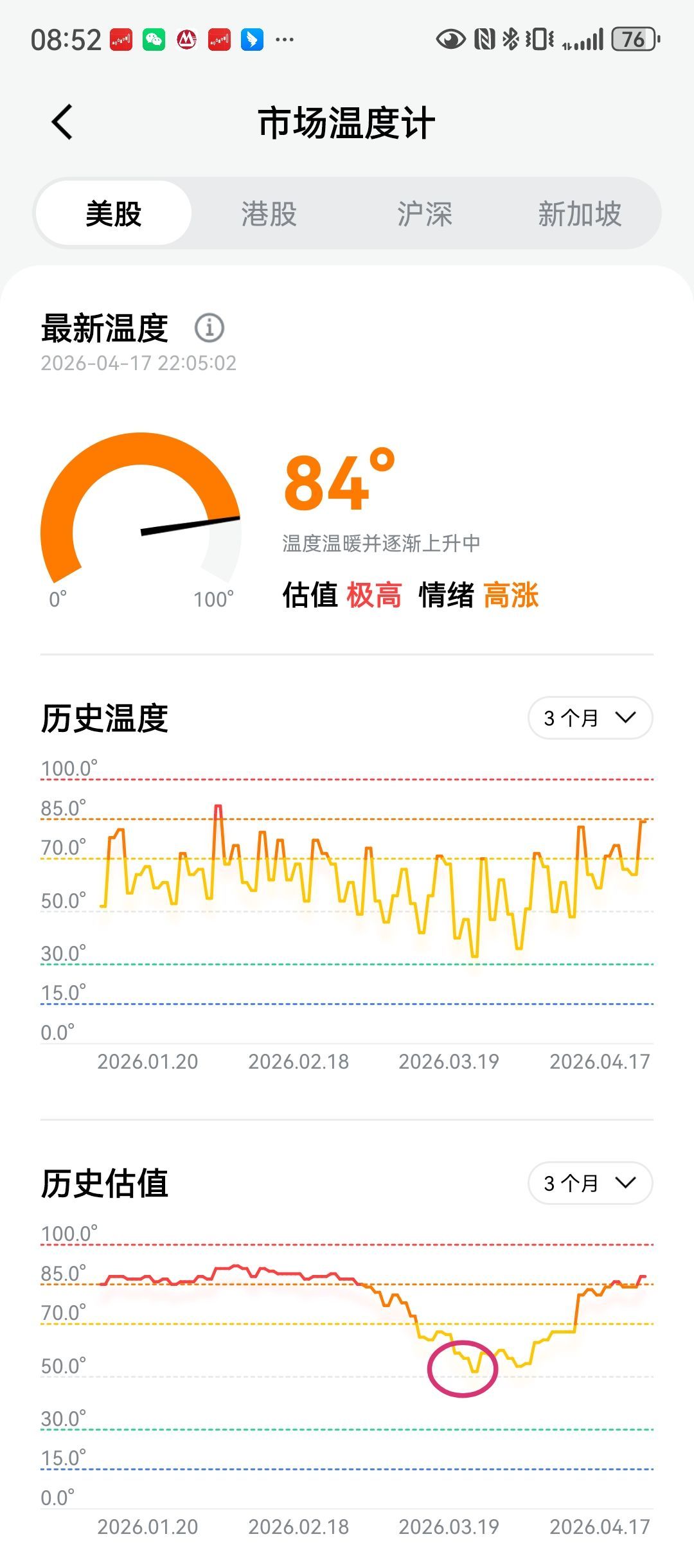
The ammunition was ready, just waiting to strike when it fell below 50 degrees.
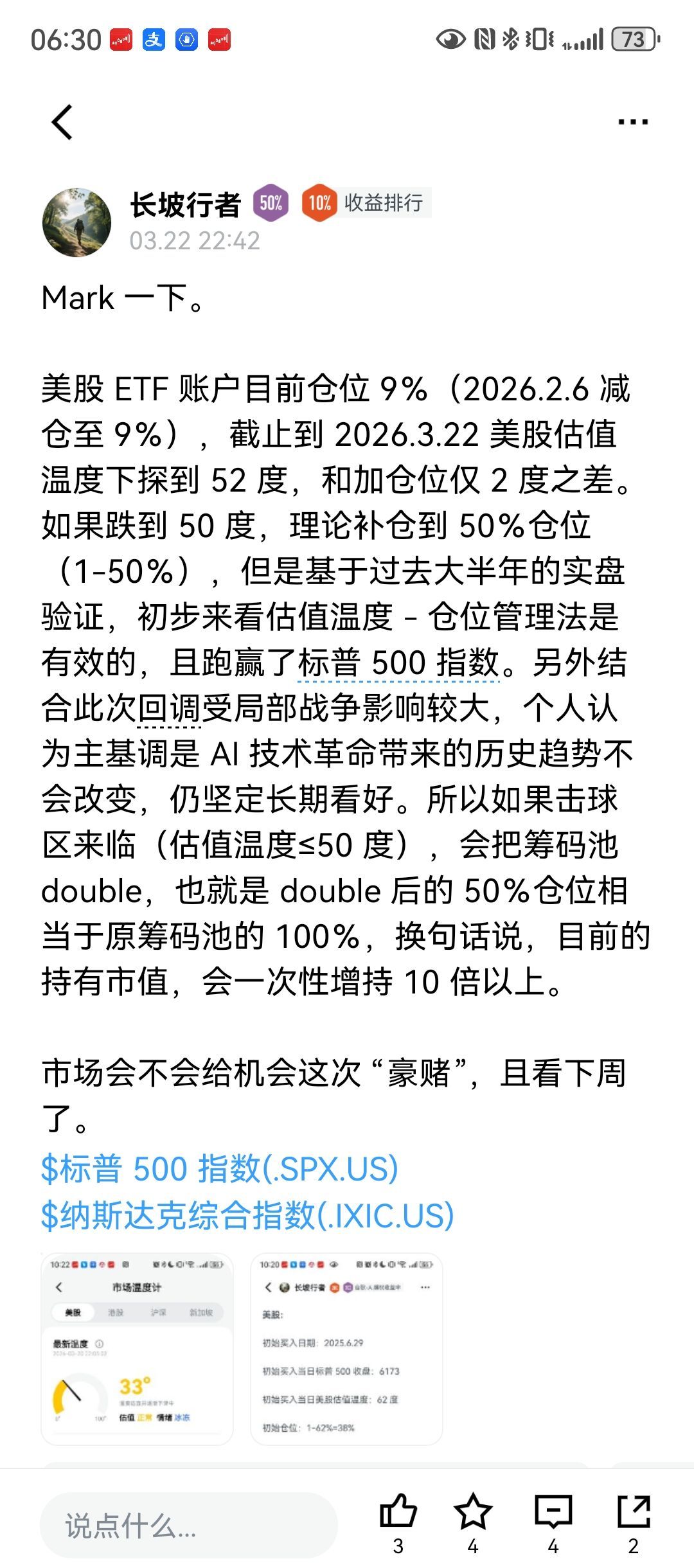
But the market didn't follow my script; it didn't continue falling after 52 degrees. Looking back, the deliberate adherence seems unnecessary. Even at 52 degrees, I could have first bought a 48% position. After all, it fell from 91 degrees, and such buying opportunities might be fleeting (though this is hindsight). Moreover, the target was the S&P 500 ETF, which itself has sufficient risk resistance.
The other was Pop Mart. I averaged down all the way from 180 to 150. After averaging down at 150, my planned next average-down price was 140. Worried about congestion at round numbers, I specifically placed an order at 140.1. The market played a joke on me again, dipping exactly to 140.1 before rebounding. The order didn't fill.
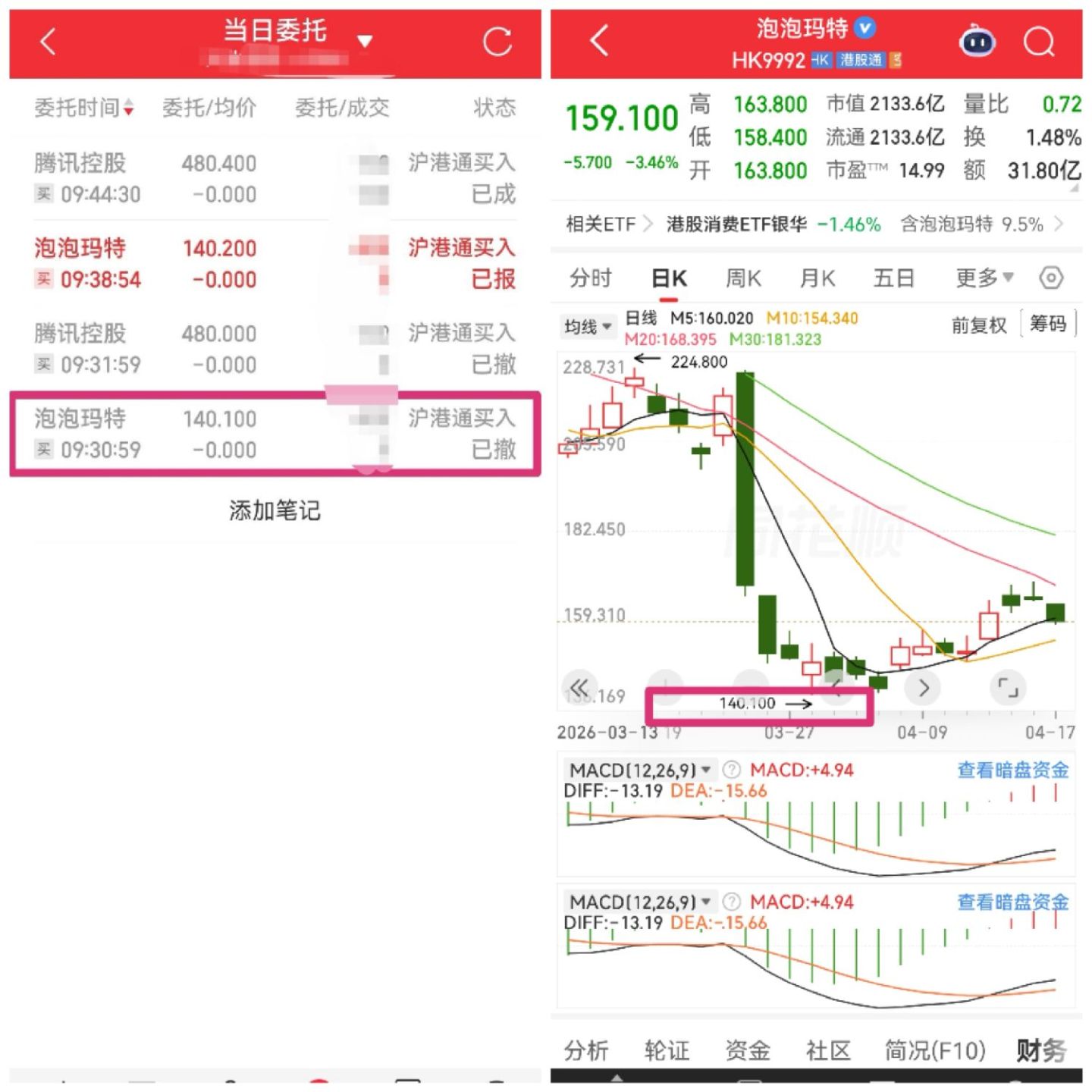
Again, wishful thinking got the better of me. I kept thinking market panic was still there. I re-placed the order at 140.2 and went back to work (I remember if I had bought directly then, the price shouldn't have exceeded 142). Looking back, it was a very immature performance. When the market offers an unprecedented, massive promotion, there's really no need to be greedy for a little extra.
It's also good. Only by missing out can you learn a lesson.
The market cannot be predicted, only utilized. The mentality of seeking petty advantages must be avoided, or you deserve to miss out on the gains.
Patience in waiting + decisiveness in action. Li Lu says this is one of the important qualities of a successful investor. It is indeed somewhat counter-intuitive; patience and decisiveness can sometimes be opposites, but upon careful thought, it's true.
$S&P 500(.SPX.US)
$POP MART(09992.HK)



The copyright of this article belongs to the original author/organization.
The views expressed herein are solely those of the author and do not reflect the stance of the platform. The content is intended for investment reference purposes only and shall not be considered as investment advice. Please contact us if you have any questions or suggestions regarding the content services provided by the platform.