

 Posts
Posts Likes Received
XtalPi × Pharmacelera: VAST integrated with exaScreen, strengthening the virtual screening ecosystem

I. Key Events
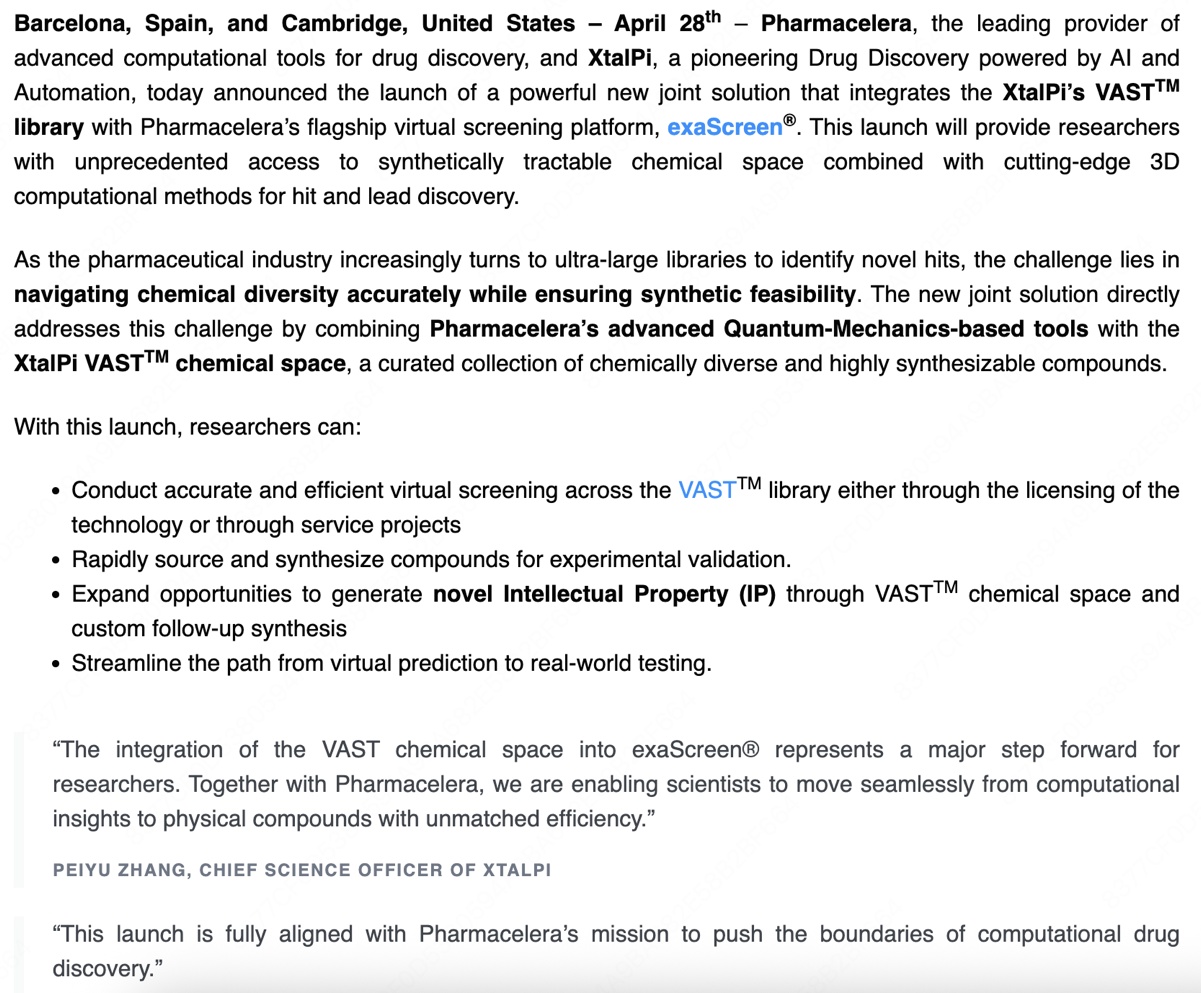
• On April 28th, Pharmacelera's official website listed XtalPi VAST as one of the integrated databases supported by exaScreen®;
• VAST: A virtual, automated, swift, and tailored chemical space library developed by XtalPi. It contains approximately 4.7 billion diverse compounds, emphasizing high synthesis success rate (85%+), short delivery cycle (2-3 weeks), and customizability, based on XtalPi's automated synthesis platform and a large number of building blocks;
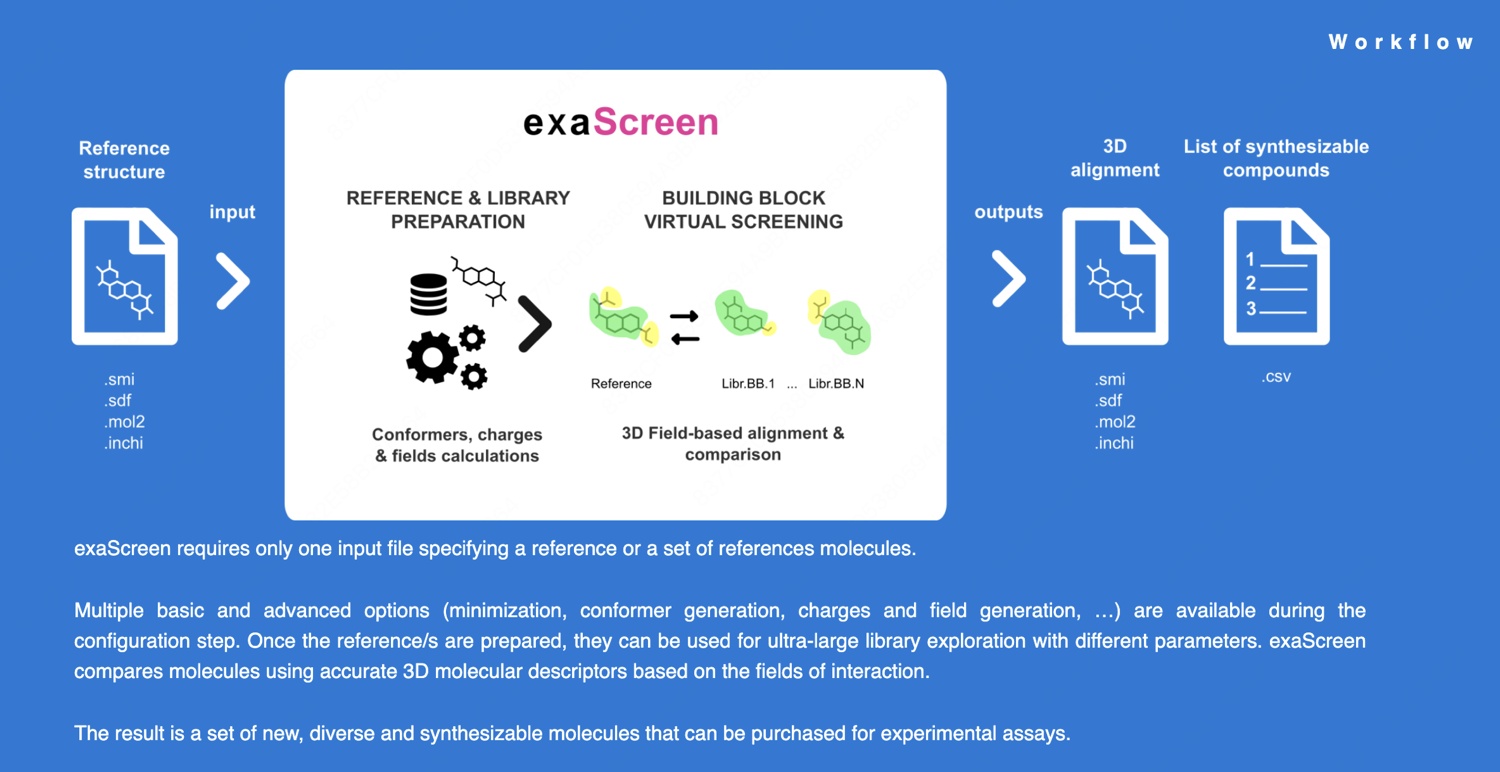
• exaScreen®: Pharmacelera's flagship 3D virtual screening software, integrating AI + quantum mechanics (QM) technology, capable of efficiently processing billions to tens of billions of compounds on a single workstation. It provides high-precision ligand/field-based screening with low disk usage and high speed;
• Integration Goal: Users can directly perform precise 3D ultra-large-scale virtual screening on VAST's highly synthesizable and novel chemical space within exaScreen®, accelerating the DMTA cycle (Design-Make-Test-Analyze) from hit discovery to lead optimization, aiming to improve drug discovery efficiency and reduce late-stage synthesis failure risks.
II. Company Background
• Pharmacelera is a deep tech startup based in Barcelona, Spain (headquartered at Parc Científic de Barcelona), focusing on quantum mechanics (QM) + AI-driven virtual screening software (exaScreen®);
• Its funding scale is relatively small (accumulated around a few million euros, with the latest round being €6M). The team consists of AI engineers and drug hunters, not a large pharmaceutical company.
III. Synergistic Benefits for the XtalPi Ecosystem
• Increasing VAST's visibility: Previously, VAST was mainly used by XtalPi itself or a few partners. Now, through this European software, it can be seen by more international pharmaceutical companies, CROs, and biotechs. More users mean more opportunities for XtalPi to provide synthesis services, custom libraries, and project work in the future;
• Forming a closed-loop advantage: Screening (exaScreen®) + Design (XtalPi AI) + Rapid Synthesis (XtalPi robotics) are now more seamlessly connected. The entire cycle for scientists, from "virtually selecting molecules" to "obtaining physical samples for experiments" (called DMTA), becomes faster and more efficient;
• A small step in internationalization: XtalPi's collaborations with major pharmaceutical companies like Pfizer and Eli Lilly are "heavyweight revenue-generating," while this one is "technology ecosystem-building." It helps XtalPi gain more exposure and accumulate users within the European tech community, paving the way for future collaborations;
• Limited short-term revenue, long-term benefits: This collaboration itself does not involve multi-million dollar milestone payments, but it can indirectly drive revenue for XtalPi's synthesis services, library sales, and platform usage. It's a strategy of "small profits but quick returns" or "planting seeds for future harvest."
Note: The collaboration won't bring immediate revenue in the short term, but it broadens XtalPi's potential customer base, serving as a solid supplement for the long-term construction of the "AI + Screening + Automated Synthesis" ecosystem.
$XTALPI(02228.HK)
The copyright of this article belongs to the original author/organization.
The views expressed herein are solely those of the author and do not reflect the stance of the platform. The content is intended for investment reference purposes only and shall not be considered as investment advice. Please contact us if you have any questions or suggestions regarding the content services provided by the platform.
