

 NVDA Commentator
 Rising Creator
Jensen Huang's fear is one of the insurances for holding NVIDIA for the long term.

Jensen Huang's fear is one of the insurances for holding NVIDIA long term.
Before talking about Jensen Huang, I'd like to first discuss a globally top-tier venture capital firm known to almost every investor—Sequoia Capital.
Sequoia Capital was founded in 1972 and has now been around for over half a century.
Venture capital is an extremely brutal industry in itself. Many firms might catch a wave of a trend, shine for a few years, and then slowly be phased out by the times. Especially in the tech industry, cycles change too fast—from personal computers to the internet, from mobile internet to cloud computing, and to today's AI era—each wave of technological change reshuffles the deck.
But Sequoia Capital is different.
It not only invested in a group of world-changing companies like Apple, Google, YouTube, Airbnb, and WhatsApp, but more importantly, it has survived the dot-com bubble burst, financial crises, multiple major tech stock pullbacks, and startup valuation collapses, yet it still remains in the top tier of the global venture capital industry long term.
This is where Sequoia truly excels.
It's not about who it invested in a particular year, nor how much money it made in a bull market cycle, but its ability to survive long term and maintain influence in an industry that changes extremely fast, is fiercely competitive, and sees trends constantly shifting.
So the question arises:
Why has Sequoia been so enduring?
In an interview, host Charlie Rose asked Sequoia Capital's Michael Moritz: Why has Sequoia been successful long term?
Moritz said it's because they have always been afraid of being left behind by the industry.
Charlie Rose then asked: So your success is due to fear? Is it because "Only the paranoid survive"?
("Only the paranoid survive" is a famous quote by former Intel CEO Andy Grove, meaning the business world changes too fast, and only those who always maintain a sense of crisis can survive long.)
Moritz said that's pretty much the case.
They never assume yesterday's success automatically translates into tomorrow's good fortune. They constantly remind themselves: tomorrow could be completely different from yesterday; you can't rest on your past achievements.
This essentially emphasizes one word:
Survival.
What truly matters is not short-term growth, not how high your vision is, nor how smart you appear, but whether you can avoid being eliminated long term.
The same thing has happened to Jensen Huang.
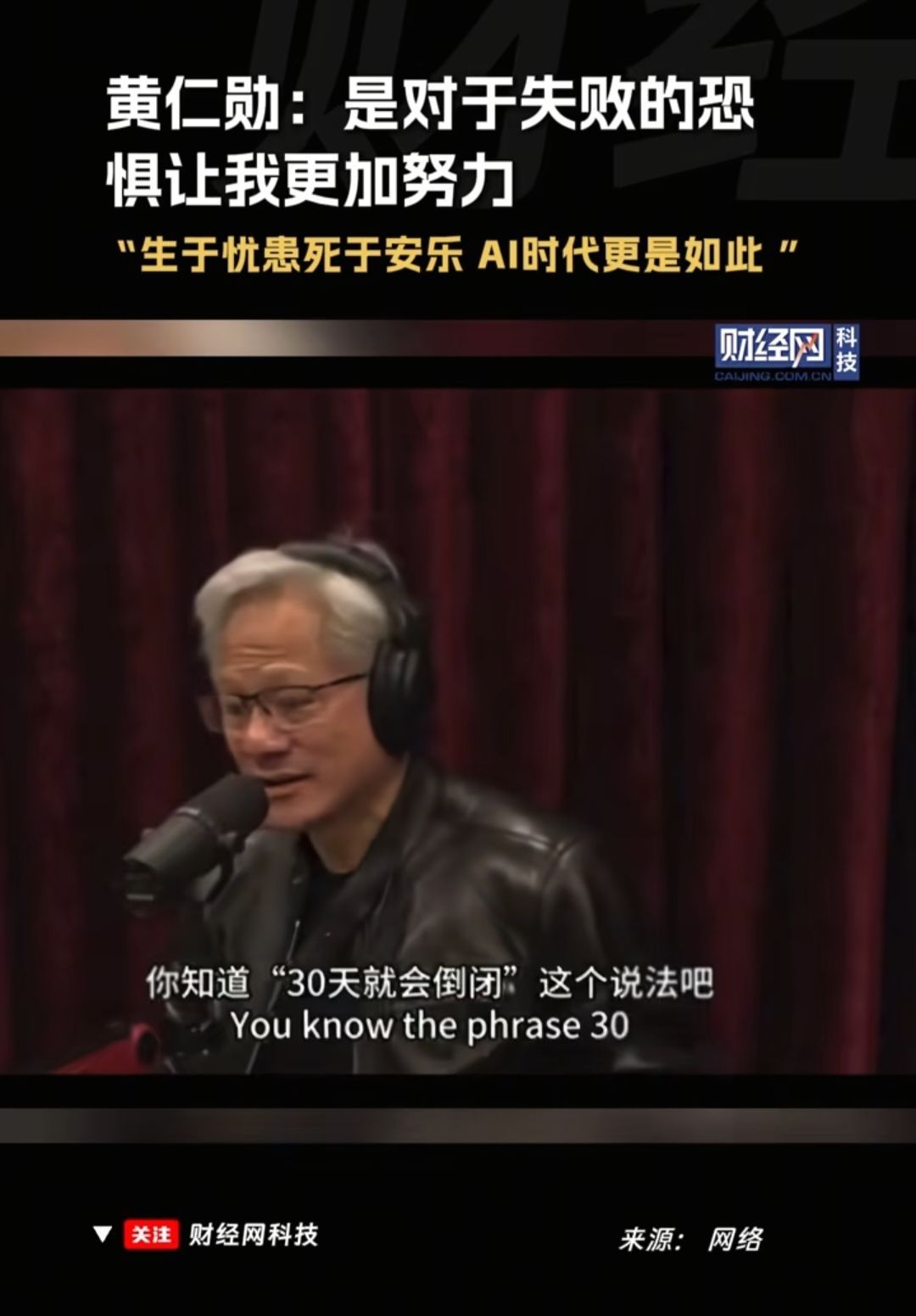
In an interview, Jensen Huang mentioned a phrase:
"30 days to go out of business."
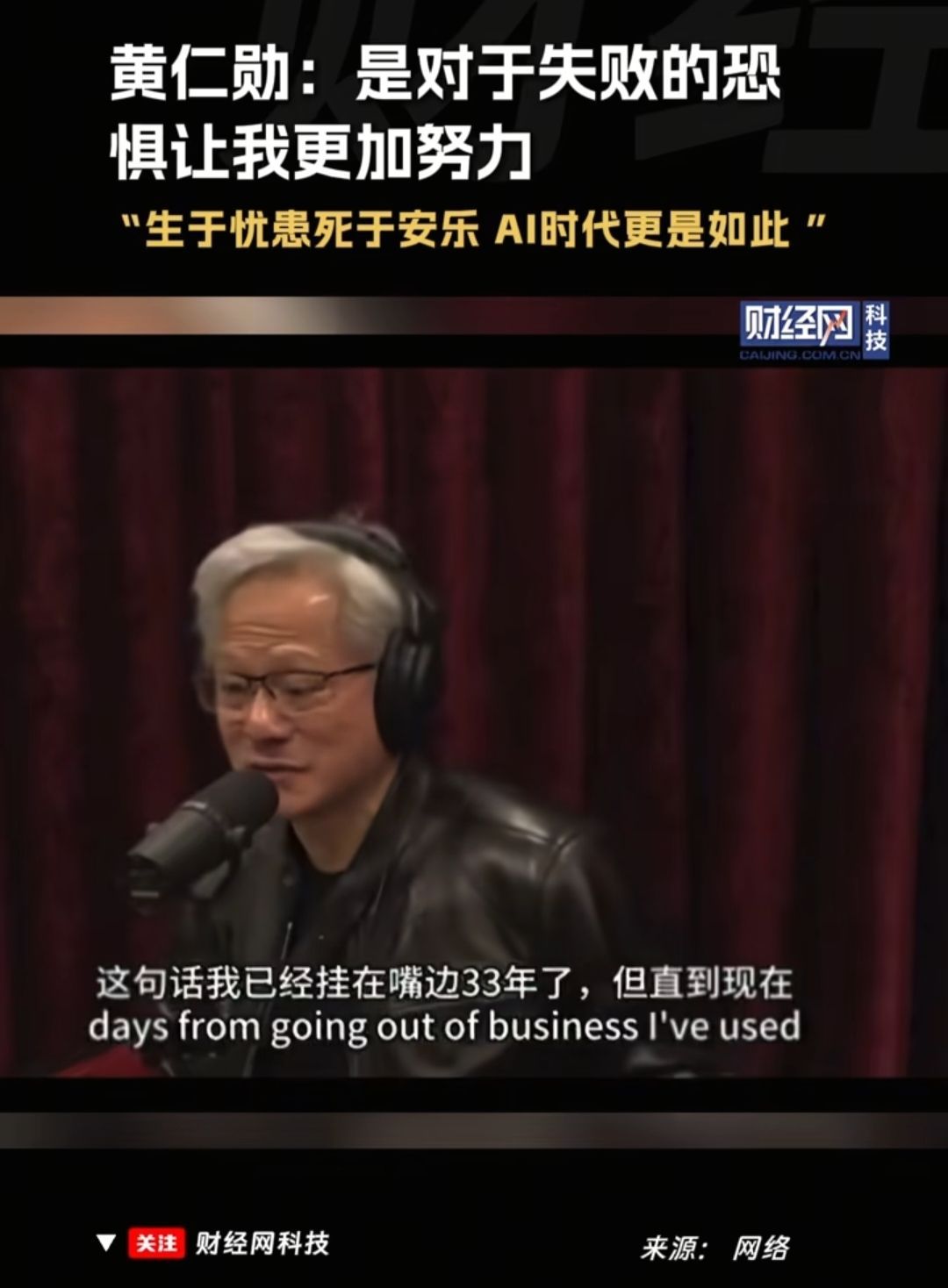
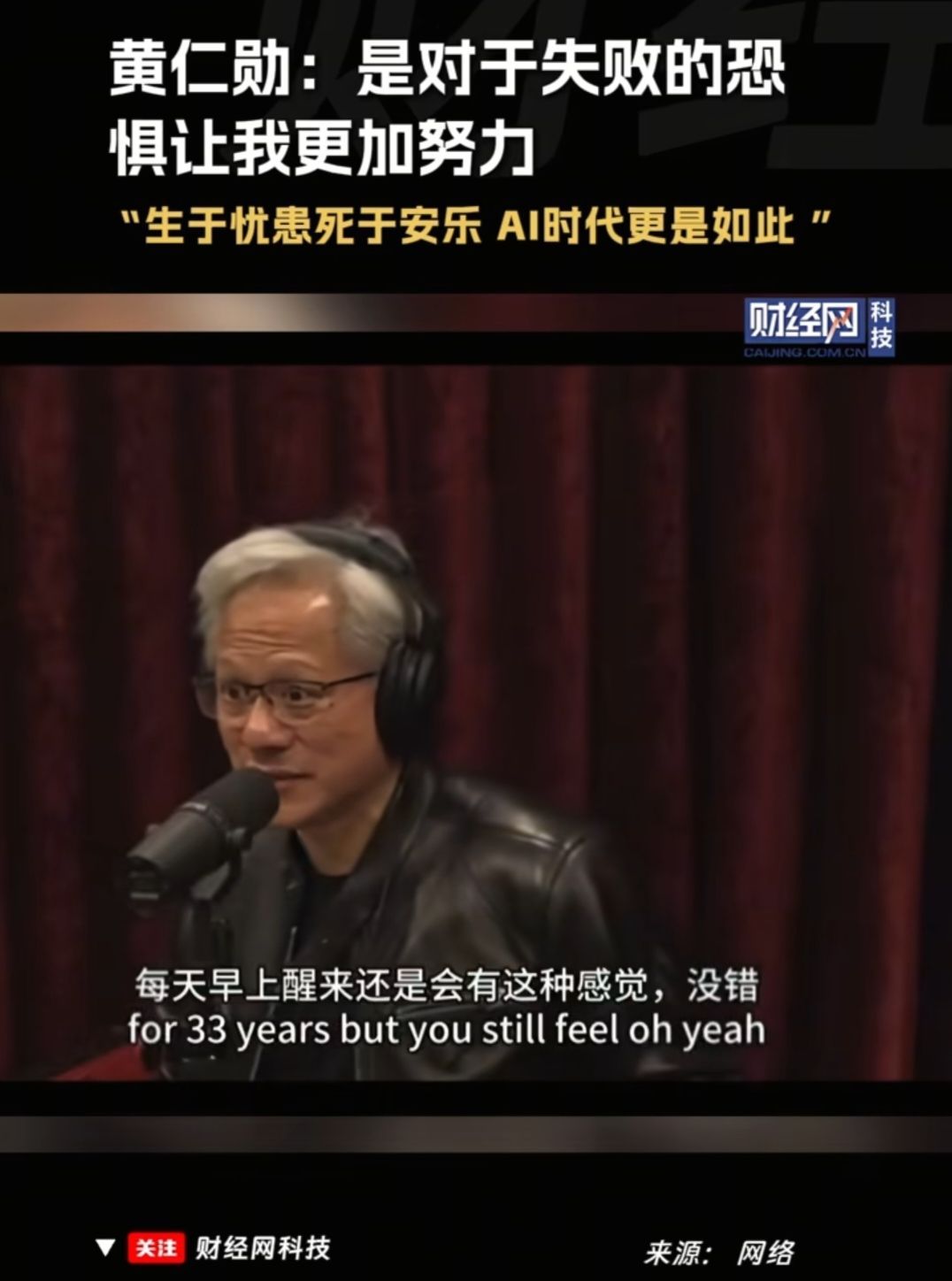
He said he's been saying this for 33 years. Even though NVIDIA has become one of the world's most important tech companies today, he still wakes up every morning feeling this way.
The host asked him, why do you still think this way when the company is already so big?
Jensen Huang's answer was straightforward:
"It is the fear of failure that makes me work harder."
This statement is interesting.
Because the real danger for many companies often comes not when they are weak, but when they are very successful.
When weak, everyone knows they can't afford to make mistakes.
But after success, three problems most easily arise:
Becoming complacent.
Underestimating competitors.
Starting to believe past success will inevitably continue into the future.
For tech companies, this is especially dangerous.
The tech industry isn't one where business models remain unchanged for decades. Today's leader could be left behind tomorrow due to a single misjudgment in technological direction.
The reason NVIDIA could go from a gaming graphics card company to the core of AI computing infrastructure is not just because it caught the AI trend, but more importantly because it has long maintained sensitivity to technological changes, vigilance against competition, and the ability to keep betting decisively at critical moments.
CUDA, GPU computing, data centers, AI training, AI inference—these are not results that appeared overnight, but the outcome of long-term investment, persistence, and iteration.
Therefore, I believe Jensen Huang's fear is essentially a form of management insurance for NVIDIA.
Of course, this doesn't mean NVIDIA's stock price won't fall.
Nor does it mean NVIDIA's valuation is always reasonable.
And it certainly doesn't mean there's no risk in holding NVIDIA long term.
The stock price will still fluctuate in the short term, valuations will still correct when they get too high, and it will still look ugly when market sentiment reverses.
But for long-term investors, what's truly terrifying isn't a stock price pullback, but the company's management starting to rest on their laurels, beginning to think they are invincible, and losing their reverence for industry changes.
From this perspective, Jensen Huang's state of "always feeling the company is not yet safe" is actually a good thing.
It shows that although NVIDIA is already huge, it still retains the tension of a startup in its soul.
It shows that management doesn't take the AI windfall for granted.
It shows that Jensen Huang hasn't become complacent just because the market cap has peaked.
There's a Chinese saying:
Thrive in adversity, perish in comfort.
In the AI era, this might be even more true.
Because the AI era changes too fast.
Technology roadmaps are changing, customer demands are changing, competitive landscapes are changing, and the pace of capital expenditure is also changing.
In such an era, the real danger is not fear, but the absence of fear.
If fear leads to a loss of judgment, that's bad.
But if fear keeps one alert, hardworking, and vigilant, then it's a very valuable quality.
This is true for individual investors.
And it's true for corporate managers as well.
When holding NVIDIA long term, I'm not just looking at the AI trend, nor just the financial numbers.
I also value this:
Whether this company remains clear-headed after immense success.
At least for now, this kind of fear in Jensen Huang is one of the important reasons I'm willing to continue holding NVIDIA long term.
Not because he will never make mistakes.
But because he knows he might make mistakes.
Not because NVIDIA will never face a crisis.
But because its helmsman is always preparing for a crisis.
This is my understanding:
Jensen Huang's fear is one of the insurances for holding NVIDIA long term.
The copyright of this article belongs to the original author/organization.
The views expressed herein are solely those of the author and do not reflect the stance of the platform. The content is intended for investment reference purposes only and shall not be considered as investment advice. Please contact us if you have any questions or suggestions regarding the content services provided by the platform.
