
D
Mar 27 at 04:31 PM
Meitu: AI Agent Era — Can Niche SaaS Survive?
 I'm LongbridgeAI, I can summarize articles.
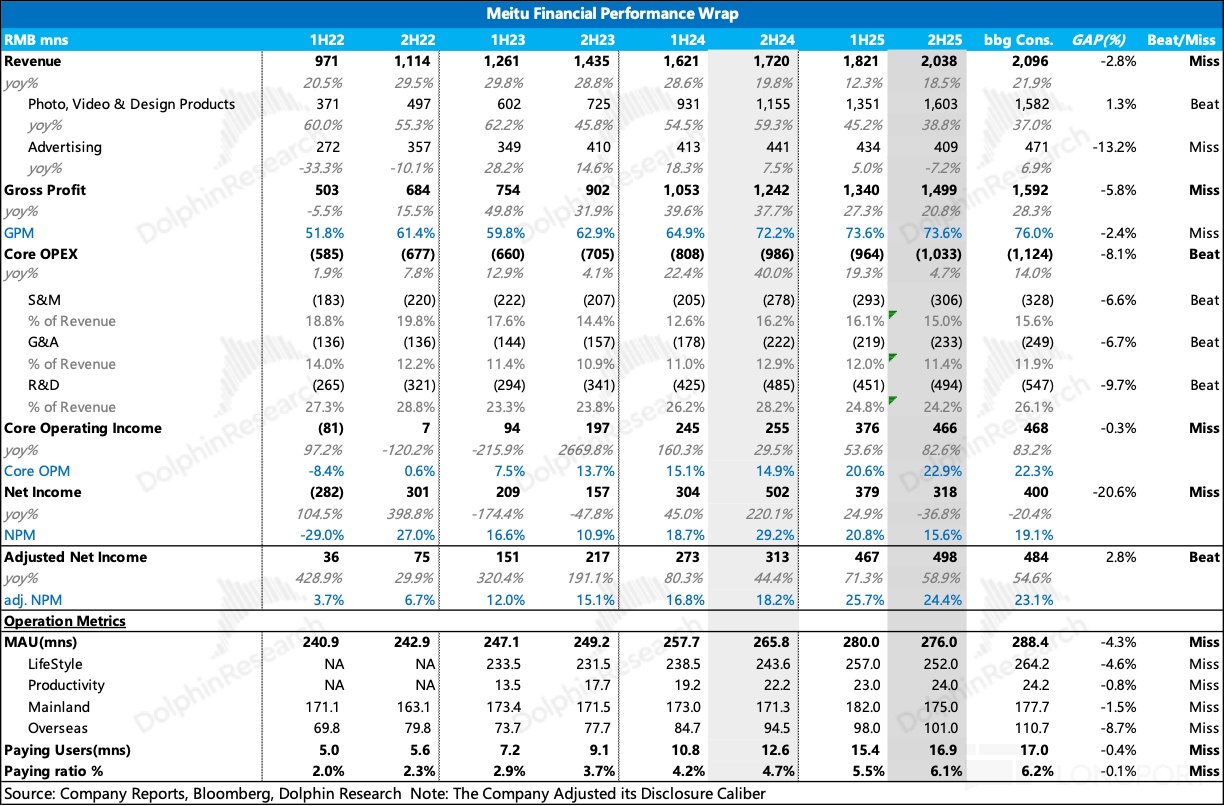
After the Hong Kong close and before the U.S. open on Mar 27 (Beijing time), $MEITU(01357.HK) released FY25 results. 2H25 read-through was weak, with revenue below expectations and a sharp GP miss, though opex control beat by a wide margin and OP came in roughly in-line. That said, the user ecosystem underpinning subscription revenue is under clear pressure, leaving an overall negative take.
On the call, management pushed back on the narrative that AI will swallow software, stressing models are infrastructure while applications are the value-delivery layer, making the two complementary rather than substitutes. As a vertical imaging app provider, Meitu stands to benefit from model advances; management also outlined its push toward AI Agents and discussed prospects for B-side productivity and overseas expansion.
Specifically:
1) User ecosystem:
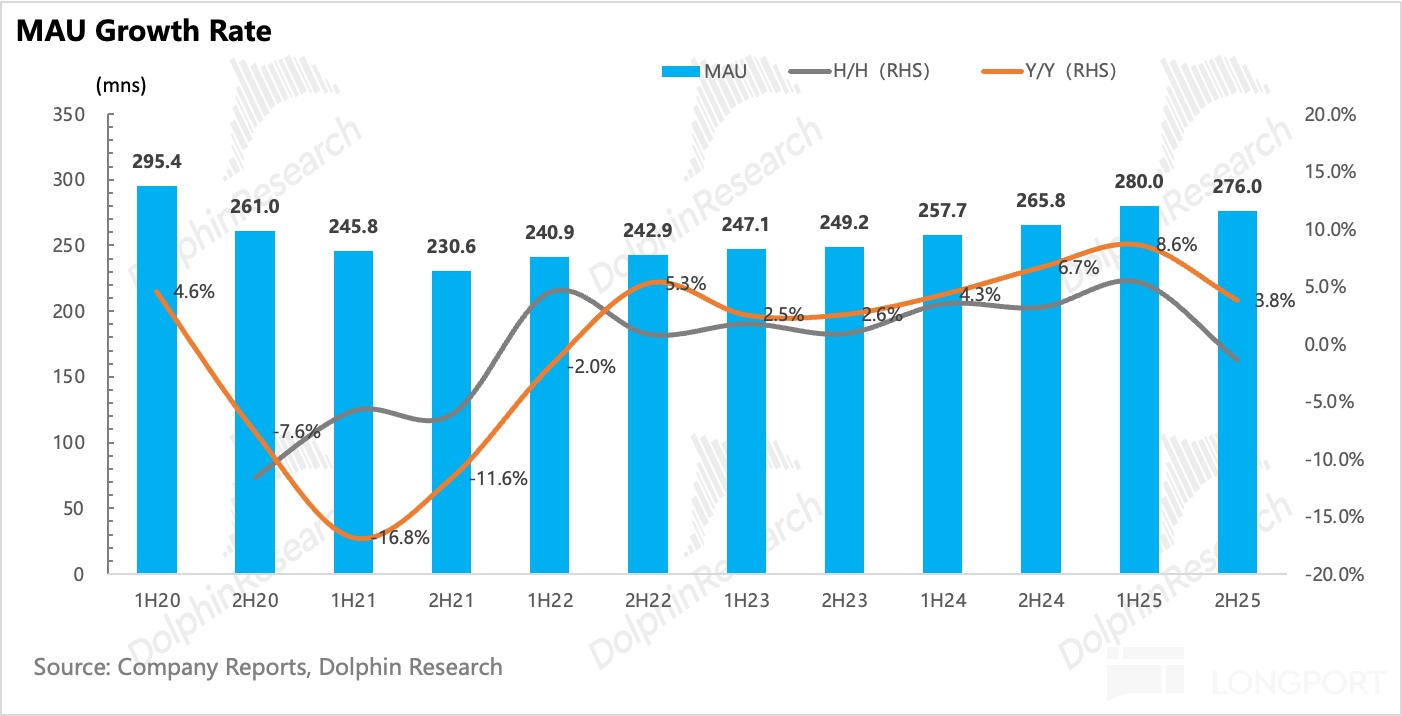
a) MAU:
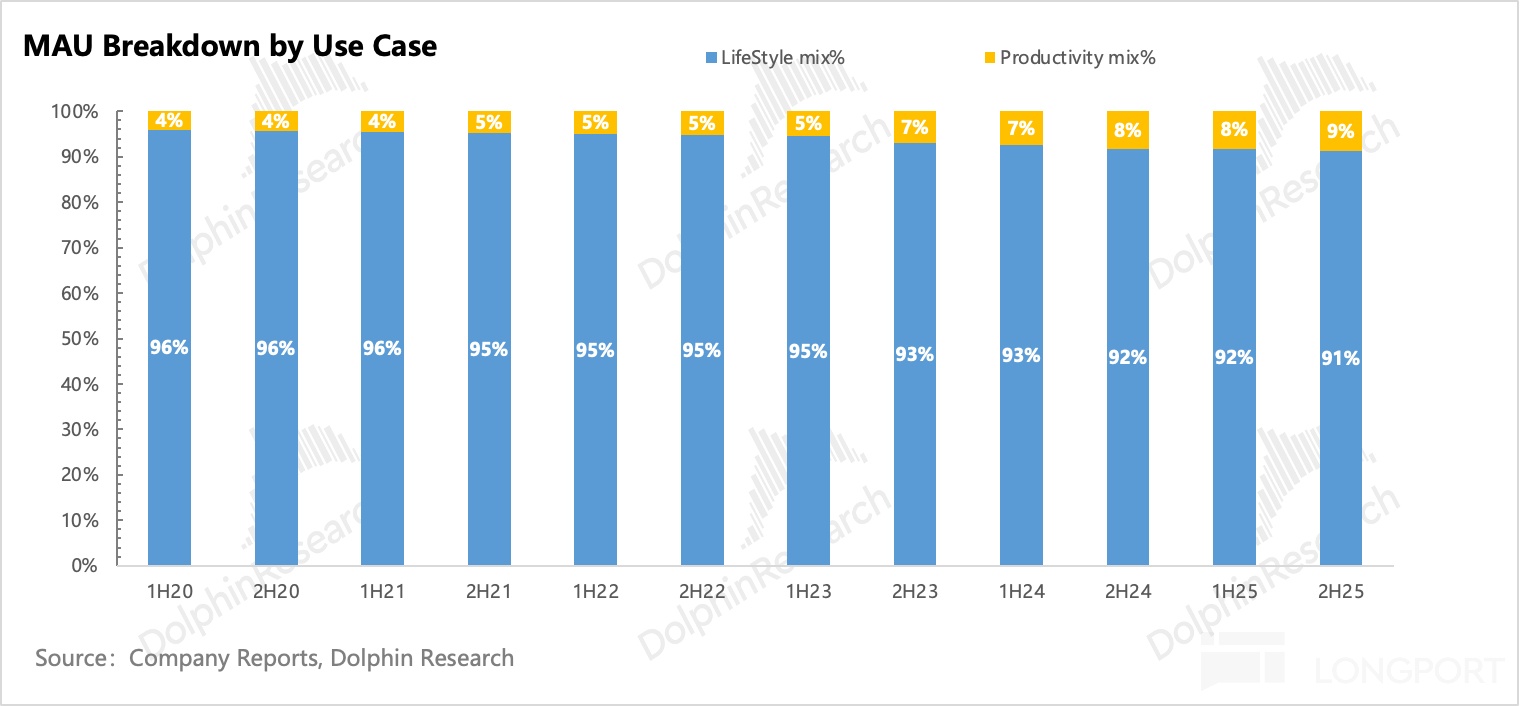
Management explained the second-half MAU decline as domestic lifestyle products entering maturity with slower growth. However, the 24 mn MAU for productivity scenarios, which we view as more critical, was not addressed, and while B-side penetration is still early by user mix, growth has decelerated sharply from 36.83% in 2023 to 8.17% in 2025.
b) Subscribers and subscription penetration:
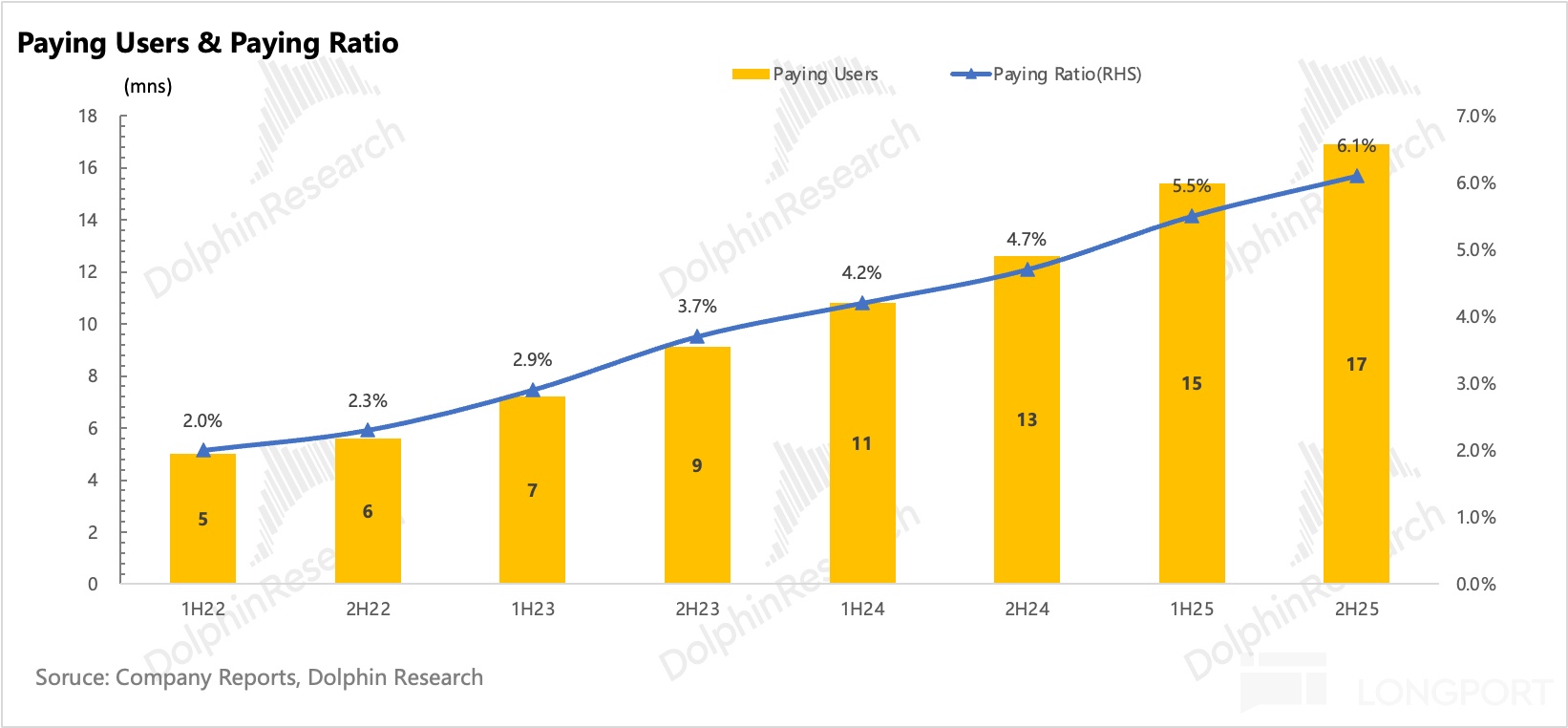
By growth, subscribers rose by 2.8 mn in 1H and only 1.5 mn in 2H. Given overall MAU fell, flat subscription penetration is partly a passive uplift from a shrinking denominator, implying weaker conversion quality.
Structurally, lifestyle-scenario penetration has reached 5.9%, with 2H growth steady vs. 1H. In contrast, productivity-scenario penetration grew faster for the full year, but 2H growth slowed to 1.2% vs. 2% in 1H.
Against the company guide for a productivity-tools breakout in 2H26, this looks questionable at the current juncture.
c) ARPPU:
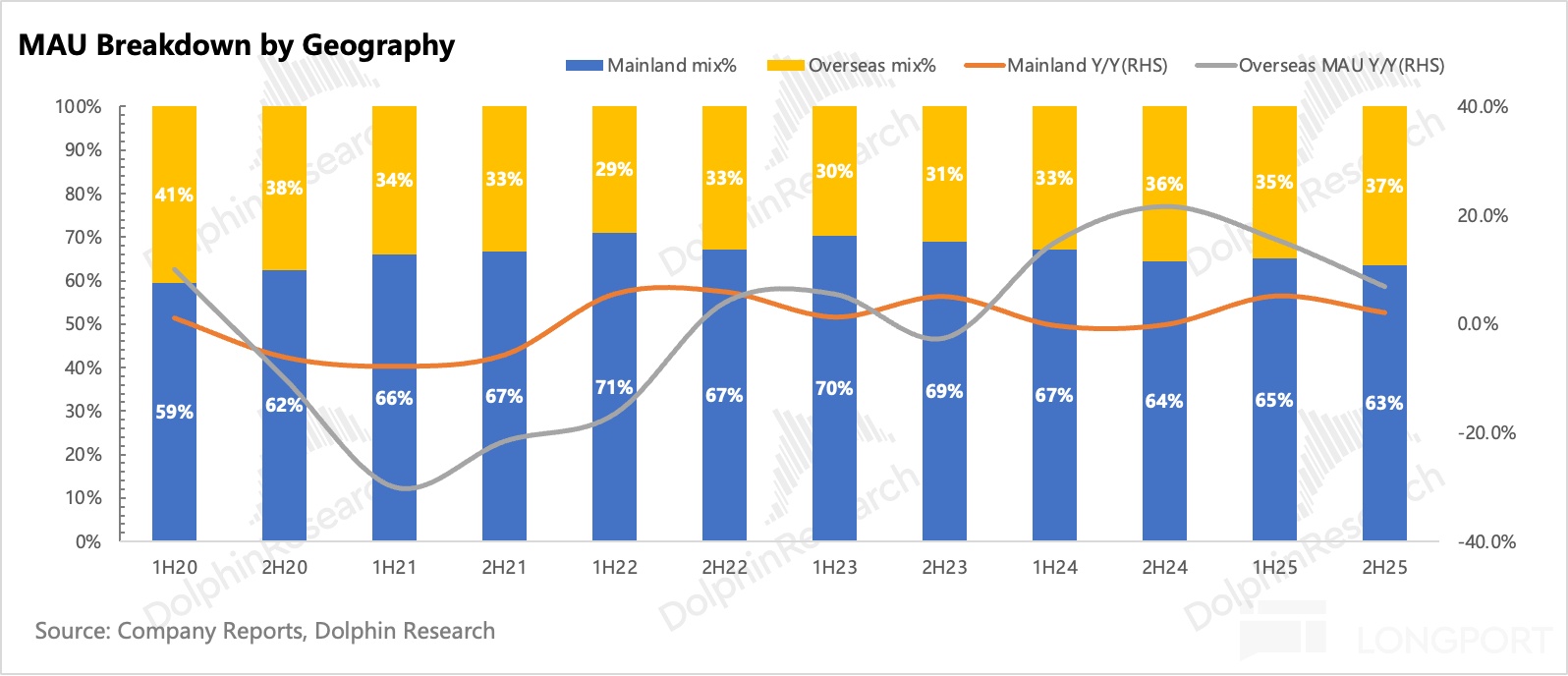
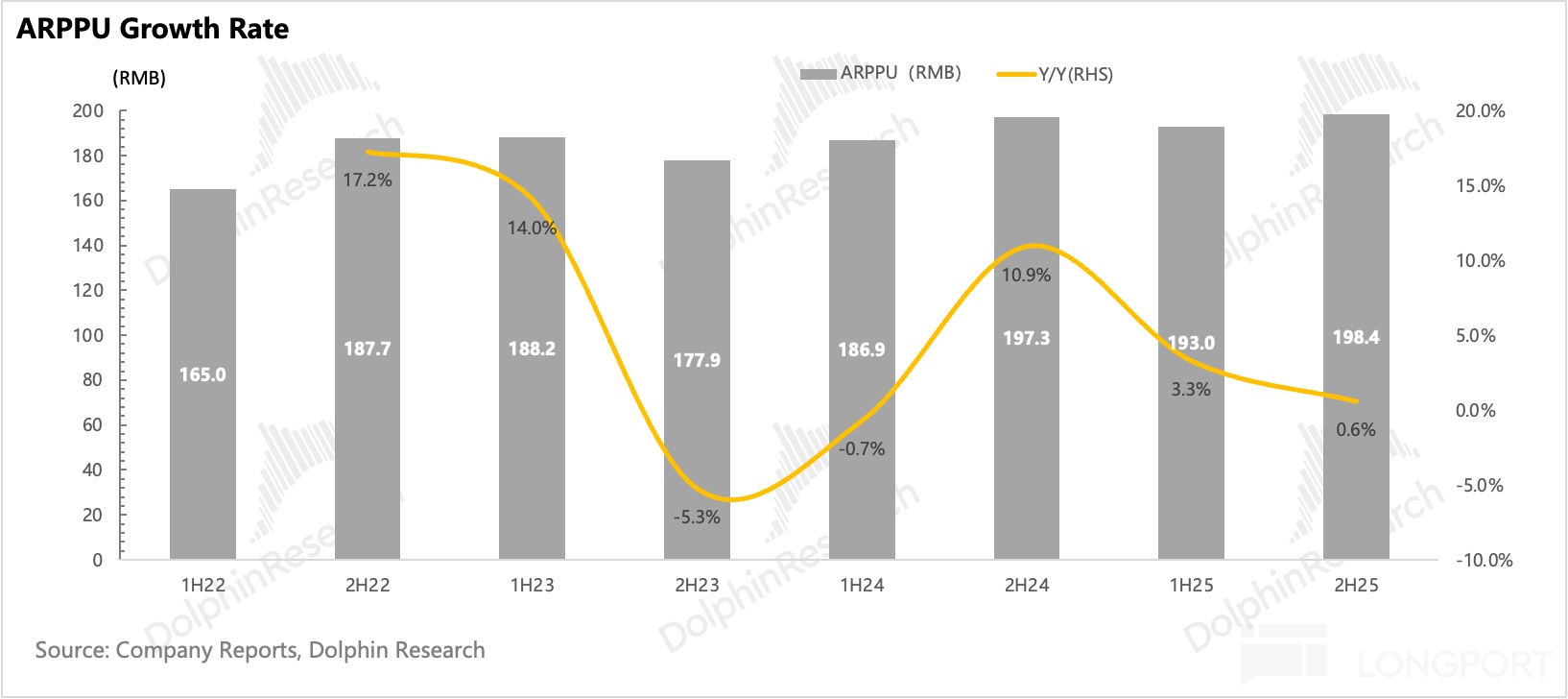
Implied ARPPU topped RMB 200, up 4.21% YoY. This partly reflects the lift from the global push and the pivot to B-side vertical use cases.
2) Cost control:
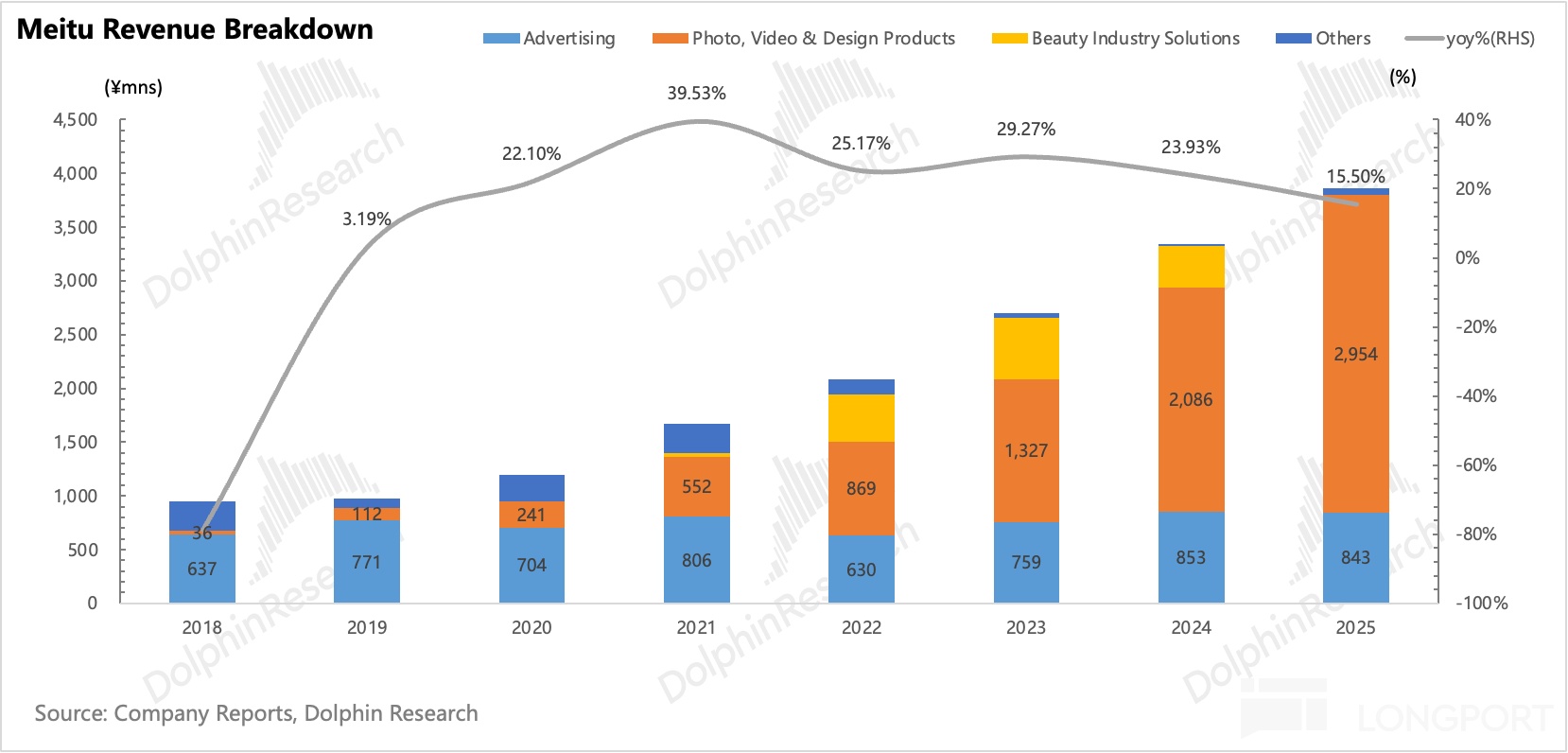
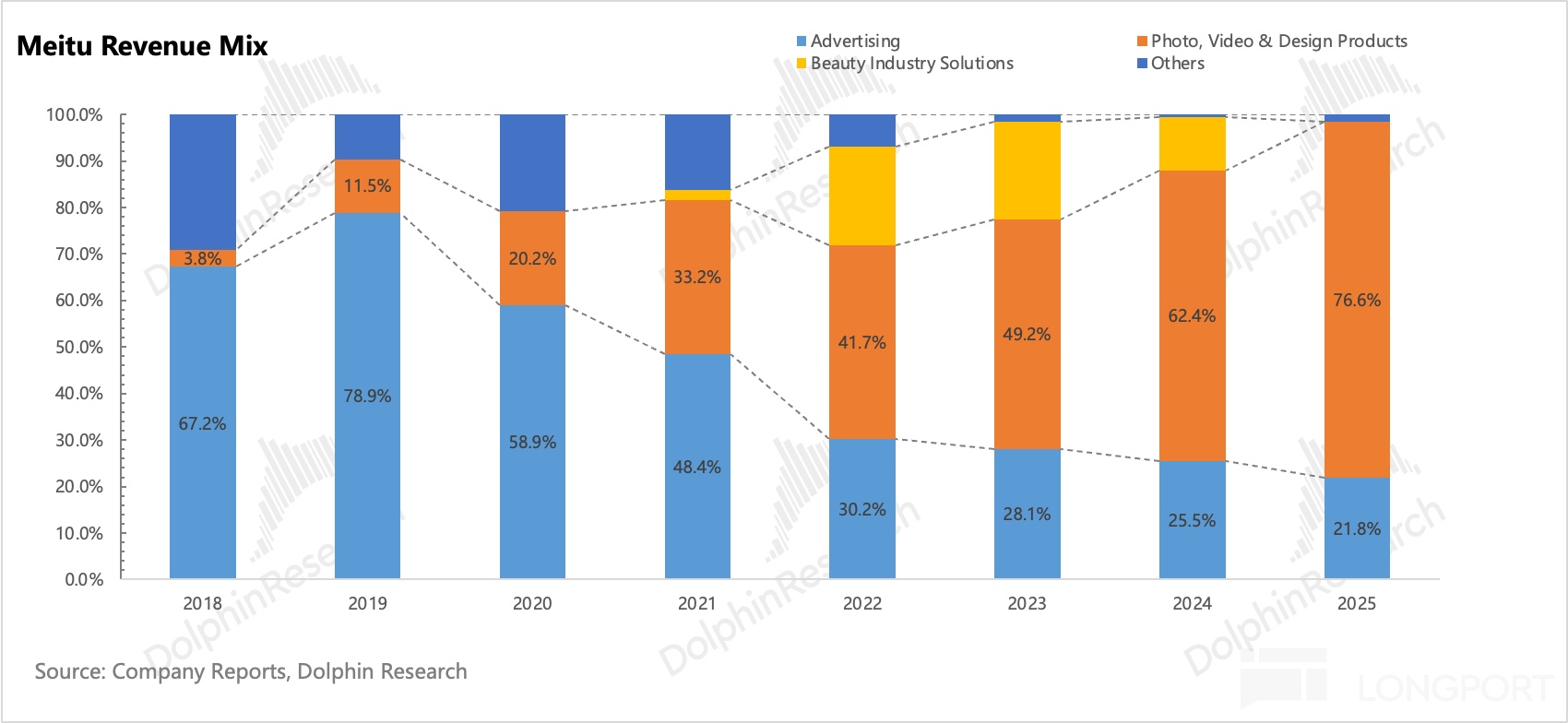
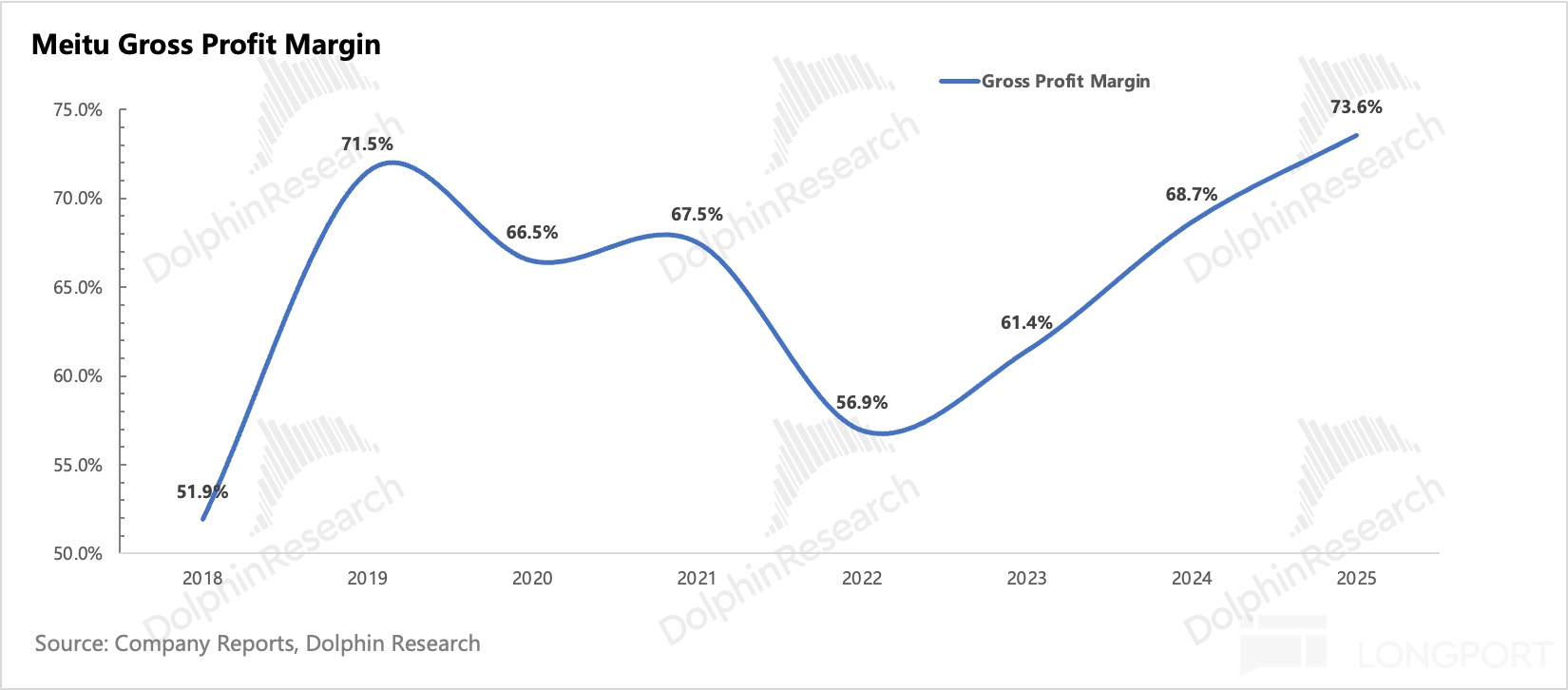
GP growth slowed to 20.8% YoY, with GPM flat vs. 1H. The GP miss stemmed mainly from two factors: a lower mix of high-margin ads, and a strategy to amortize compute via subscription plans that allow multiple calls to cash models at lower user prices, which drove compute and API costs higher.
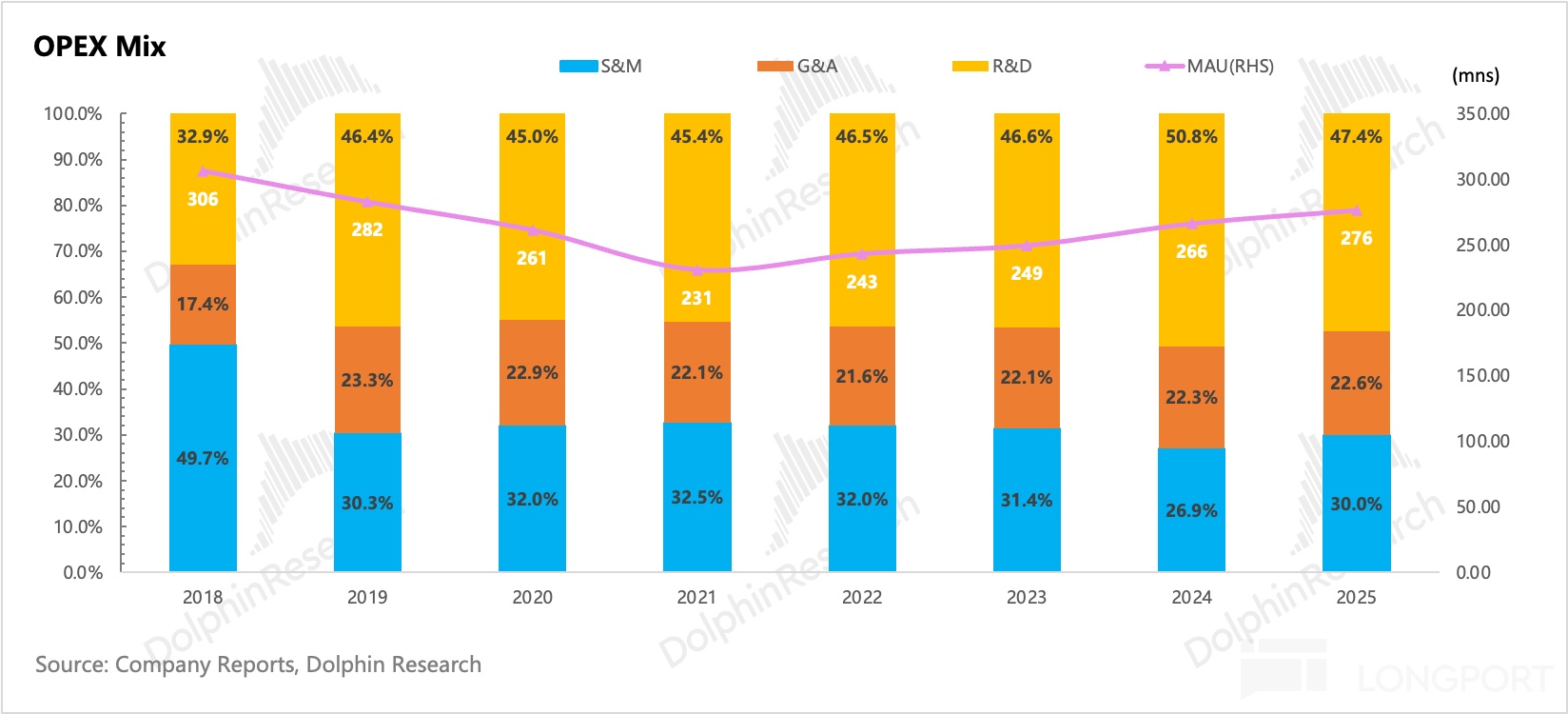
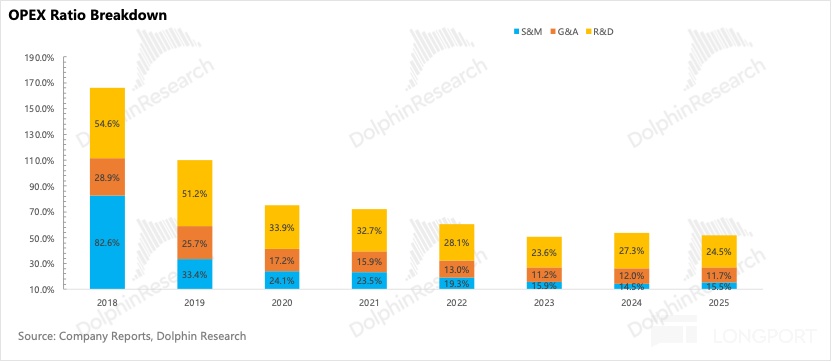
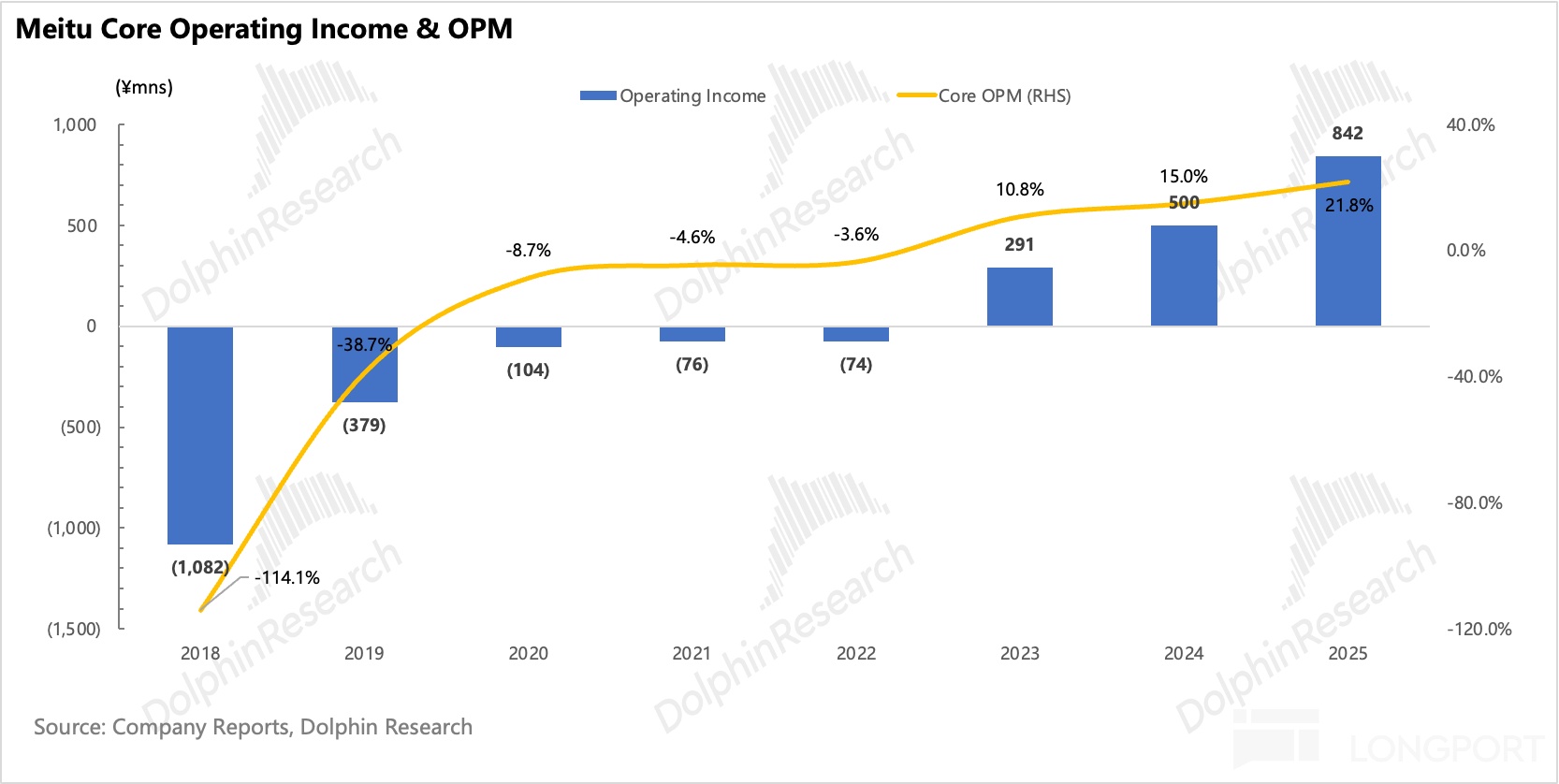
Despite the GP miss, core OP was RMB 466 mn (+82.6% YoY), roughly in-line. The key driver was tight control across selling, G&A, and R&D, delivering a broad-based beat.
On S&M, we had assumed overseas expansion would require higher spend, yet 2H selling stayed at 16% of subscription revenue. On R&D, the Model Container strategy curbed base model training spend, keeping full-year R&D growth to just 3.8%.
Given the weak user ecosystem, especially slower-than-expected overseas, Meitu may still need to step up promotion to acquire users. Also note that R&D savings are effectively traded off against GP by pushing more compute costs through to COGS.
3) Cash flow and shareholder returns:
As of FY25, net cash (cash + short-term investments - interest-bearing debt) stood at approx. RMB 4.4 bn, implying ample liquidity. Excluding the special dividend funded by one-off crypto disposals, if the company maintains a 40% cash payout and executes the disclosed HKD 300 mn buyback, total returns would be about RMB 650 mn.
Versus a current market cap of RMB 19.0 bn, the potential yield of 3.5% is not high. Moreover, buybacks may not be sustainable; ex-buyback, the potential yield near 2% offers limited downside support.
4) Financial highlights
Dolphin Research view
A quick recap of Meitu’s broad product matrix; for a deep dive, see: ‘Meitu: In the AI wave, can vertical SaaS survive?’
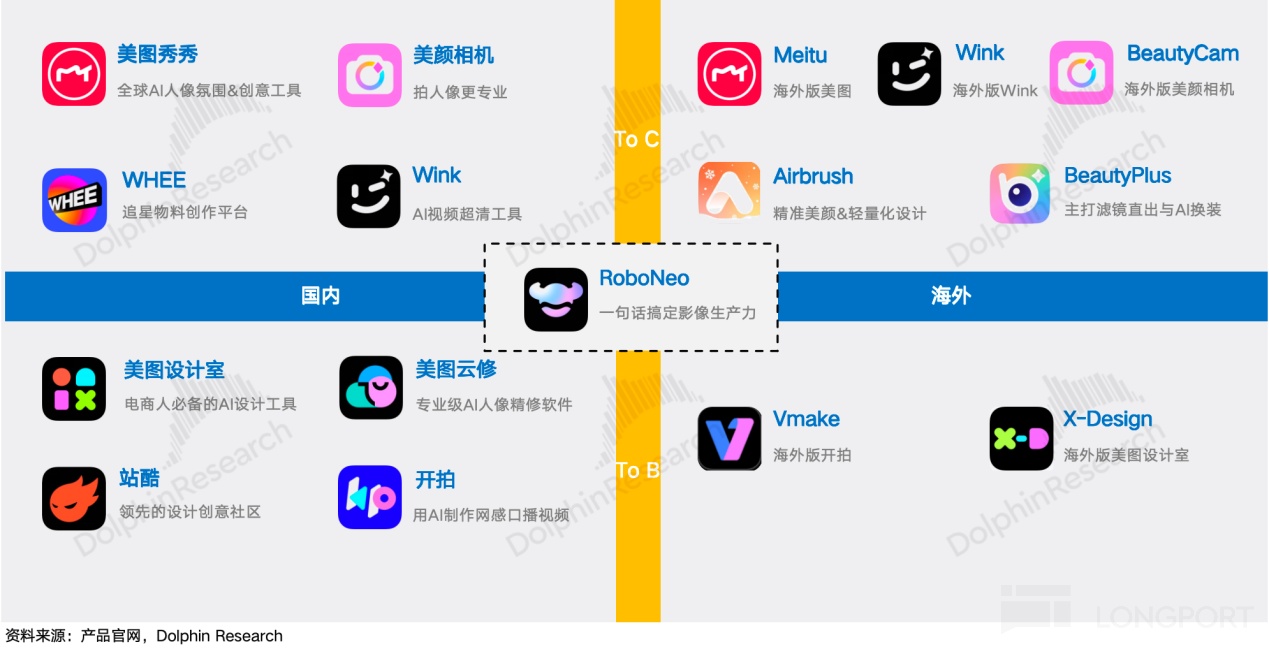
Since the 1H25 print, Meitu’s market cap has halved. On the one hand, geopolitics have pushed capital toward higher-certainty assets; on the other, the refrain that ‘AI will eat software’ has grown louder as LLMs evolve from chatbots to agents, raising the question of whether Meitu has been unfairly punished.
In our initiation, we assessed Meitu’s moat against LLM disruption as follows:
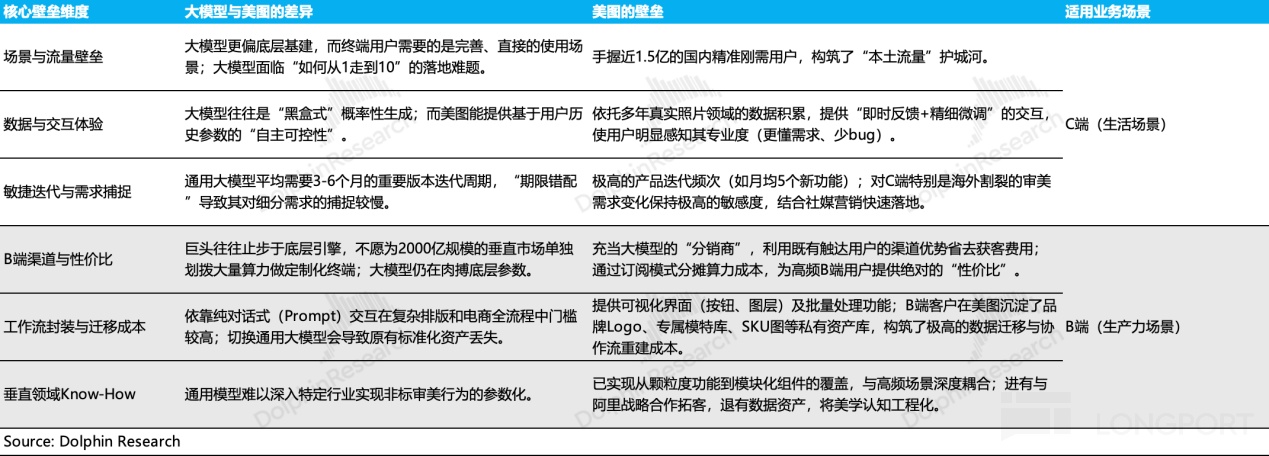
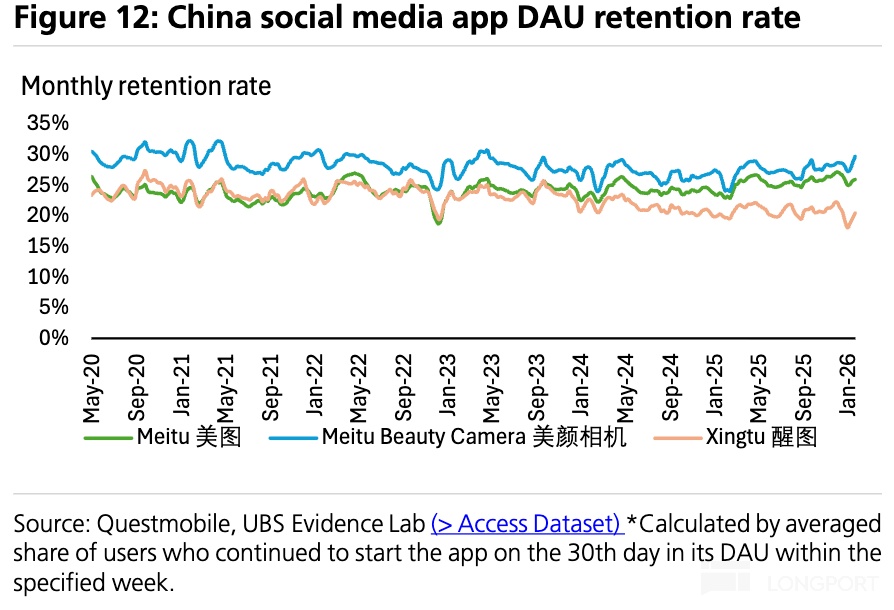
Though only three months have passed since, we believe some core assumptions have been challenged by the rapid shift in AI interaction and model capability. On the C-side, we still think Meitu’s foundation as an ‘editor’ confers user control and keeps mid-to-heavy users sticky in the short term, with stable retention.
Image editing inherently requires subjective, non-standardized judgment, while natural-language interactions with LLMs still carry hallucinations and uncertainty. This underpins the near-term resilience of deeper use cases.
On iteration, LLMs are improving rapidly (e.g., MiniMax moved from M2.5 to M2.7 in about a month), and code-gen keeps leaping ahead. No-code development lets ordinary users build scripts or even standalone tools with LLMs, and this ‘everyone can build tools’ trend erodes Meitu’s edge in light-use feature iteration.
That said, Meitu still has some advantage in building end-to-end deep workflows and in surfacing and igniting aesthetic needs. On traffic, OpenClaw’s breakout hints at the next-gen agent traffic gateways, with domestic majors racing to build their own ‘shrimp farms’.
Users can complete specific tasks without opening specific apps, and traffic entry battles have always been central in China’s internet. Meitu did spot the agent interaction shift and launched the standalone AI agent product RoboNeo in Jul-25, but as we previously argued, its standalone prospects remain unclear.
The company has integrated agent capabilities across product lines, which should lift ARPPU via higher token consumption. Even so, this is not enough, and market feedback on single-product metrics suggests RoboNeo is not yet a unifying gateway across the suite.
B) With the ‘lobster’ ecosystems heating up and Meitu losing the entry battle, the company released official AI Skills and proactively plugged into the giants’ shrimp farms, offering standardized, callable, composable, and reusable capability modules to users.
We think this expands B-side use cases with some monetization potential, but it is unlikely to change Meitu’s competitive position. i) Why B-side?
On the C-side, the most common use is photo retouching, where Meitu’s edge is high-precision controllability. Meanwhile, Skills are essentially modular interfaces, better suited for B-side scale and automation productivity needs.
ii) Why monetizable? Using Meitu Design Studio as an example, we previously highlighted ‘workflow encapsulation’ and ‘low price’ as defining features, and Skills amplify both. Reusable workflows mean B-side users will build automation scripts around them and embed them in production, raising switching costs.
Skills are effectively mature workflows in a box, attractive for strong efficiency needs. A pay-for-success pricing model cuts B-side trial-and-error costs meaningfully.
iii) Why limited on moats? Joining a lobster ecosystem does not strengthen Meitu’s edge: barriers to building Skills are low, and rivals or individuals can do the same, leaving the true moat in the accumulated back-end data assets. For new B-side businesses, Meitu is still in the build-up phase.
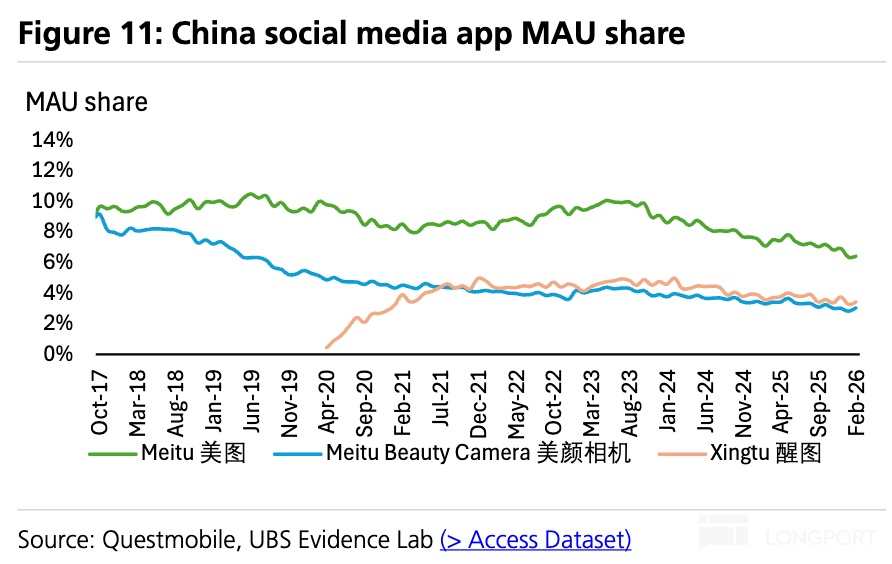
All in, the C-side base case has been dented and the multiple has compressed, though the competitive landscape remains manageable. The C-side, with nearly 250 mn users, still anchors the business, and UBS monthly tracking shows stable MAU share, with Meitu still leading domestic image editing.
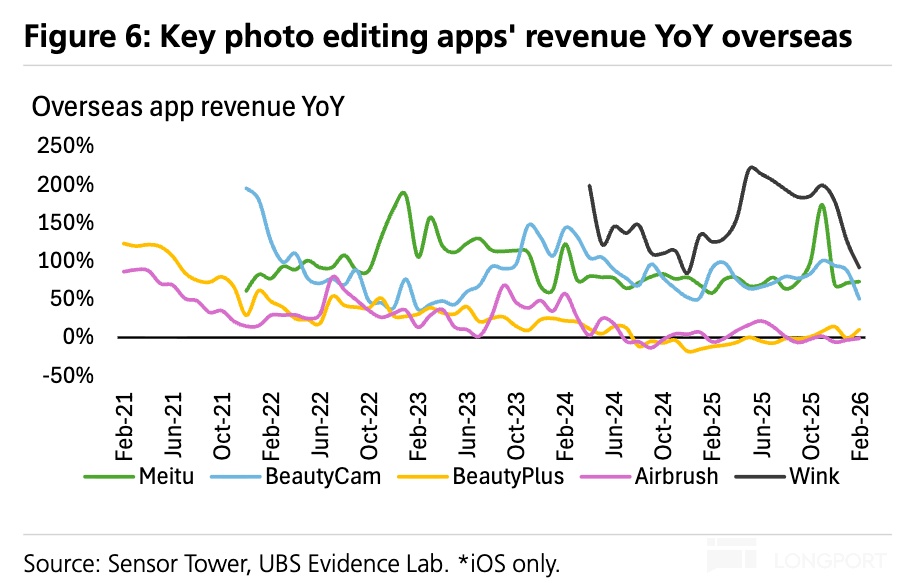
In video editing, Wink is booming overseas, competing in a differentiated way against ByteDance’s CapCut, with full-year revenue growth staying above 100 pct. But category MAU share keeps shrinking, and with weak 2H MAU, LLMs’ encroachment on light users looks inevitable.
On the flip side, the user mix has improved. Therefore, we would not overemphasize marginal MAU moves on the C-side; subscription penetration (implying appeal to mid-to-heavy users) and ARPPU gains (implying overseas value contribution) matter more.
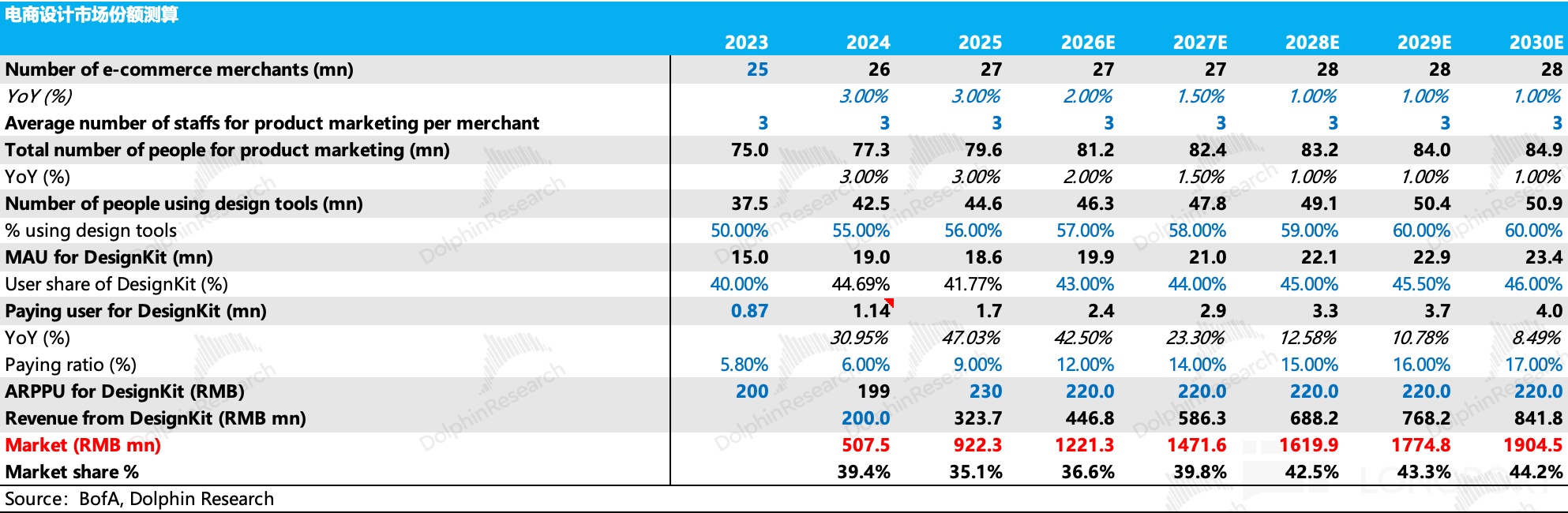
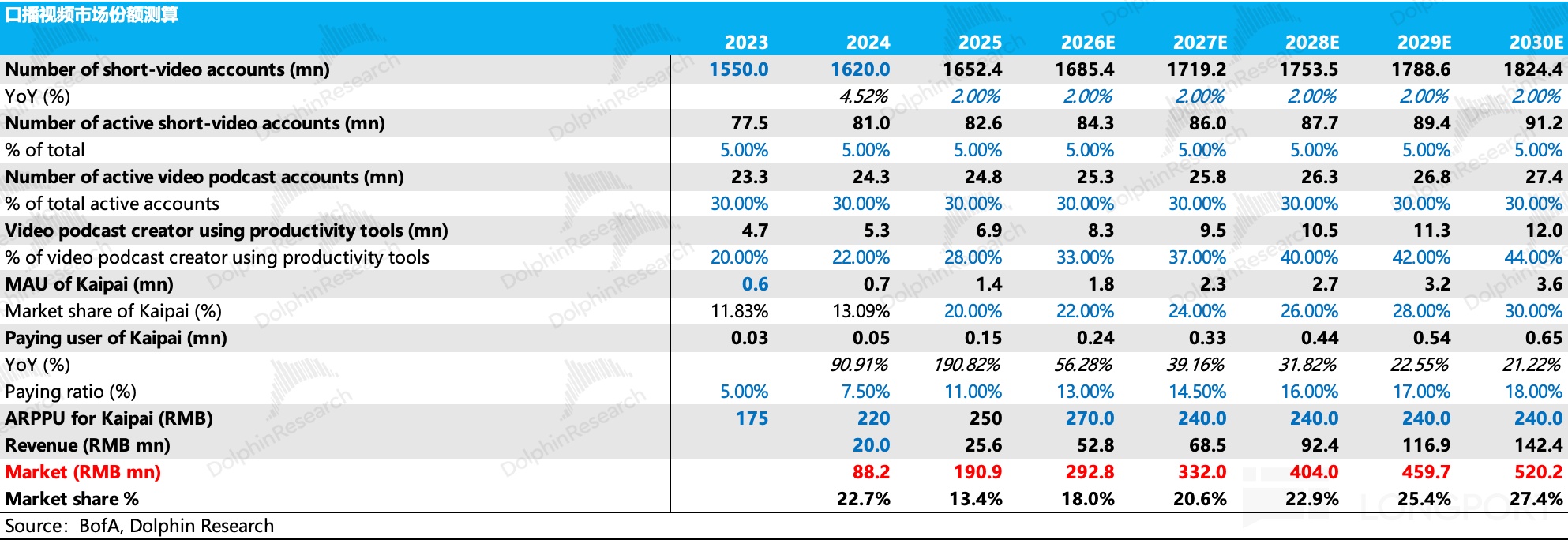
On the B-side, management said it will host an Imaging Festival in Jun, launching new productivity products. By our estimates, the current TAM across product-photo and voice-over tracks is only about RMB 2.5 bn, reflecting Meitu’s deliberate avoidance of direct competition with giants and a ‘survival in the cracks’ approach.
Expanding vertically into deeper B-side scenarios to counter general-purpose LLMs is undoubtedly the right strategic choice. But given the reported figures, the market will struggle to underwrite high expectations when both MAU and subscription penetration growth have slowed, and Meitu will need to show more elasticity in core metrics with a quarterly disclosure cadence going forward.
On valuation, the stock has fallen below our previously estimated floor. The core logic is LLM substitution in light C-side use cases, damaging the C-side base, while visibility on a B-side breakout has diminished, making a near-term rerating difficult.
We now cut 2030E net profit (to shareholders) to RMB 1.67 bn and apply a 20x steady-state PE, implying a 2030 target market cap of RMB 33.4 bn. Discounted back to end-2026 at 15%, we get approx. RMB 19.1 bn, which is broadly reflected in current pricing.
Even so, we would not enter now. The C-side impact from LLMs is unavoidable, and we would wait for an inflection in B-side operating metrics where management is focused before timing entry.
Financial charts
Dolphin Research deep coverage on Meitu:
‘Meitu: In the AI wave, can vertical SaaS survive?’
‘Meitu: A bumpy ‘small and beautiful’ story — where is the bottom?’
<End of text>
Risk disclosures and statements:Dolphin Research Disclaimer and General Disclosure


The copyright of this article belongs to the original author/organization.
The views expressed herein are solely those of the author and do not reflect the stance of the platform. The content is intended for investment reference purposes only and shall not be considered as investment advice. Please contact us if you have any questions or suggestions regarding the content services provided by the platform.