


Leaps Call Sister Piece: Are There Variants Too? Just Cost Reduction and Efficiency Improvement
 I'm LongbridgeAI, I can summarize articles.
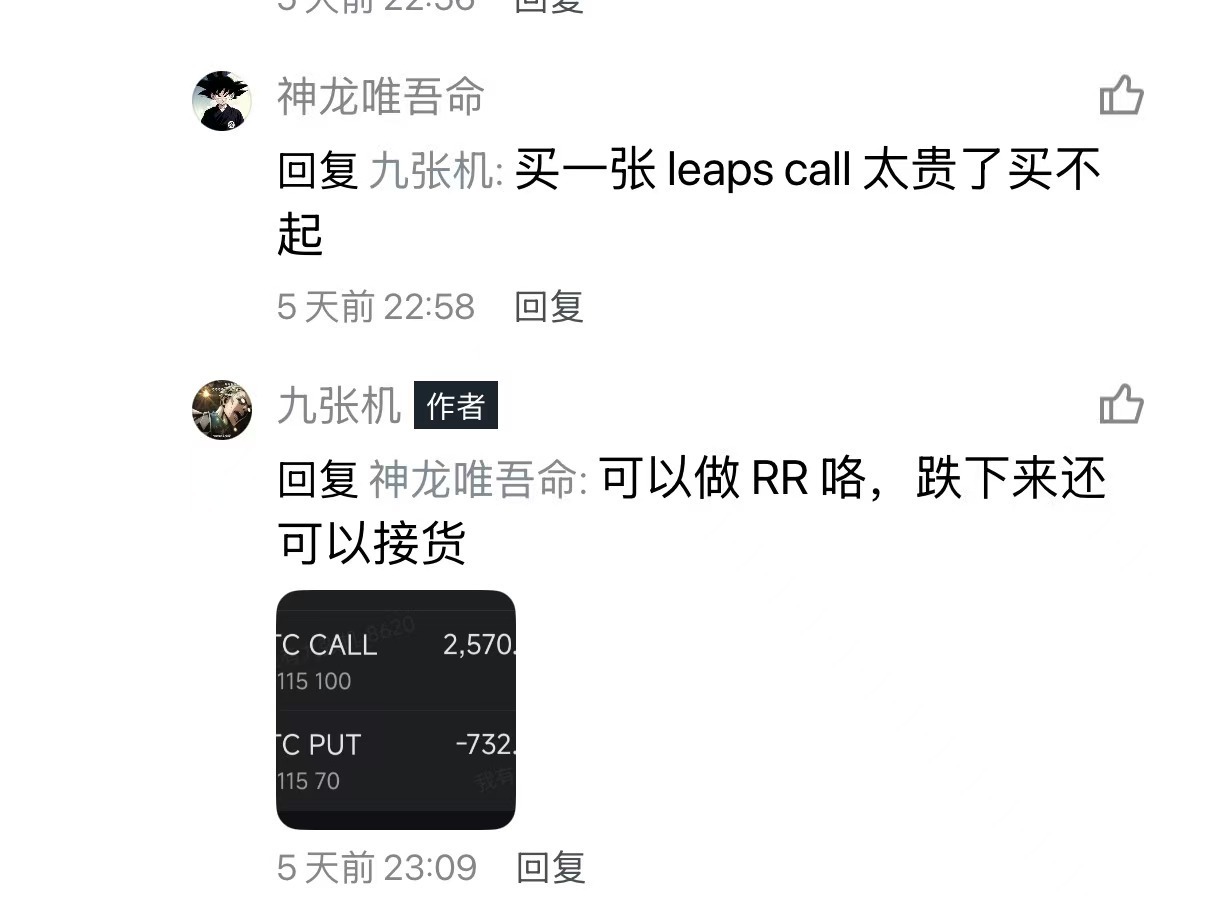
By the way, answering this @Shenlong Wei Wuming bro's request. For tutorials on Leaps Calls, check out my previous two posts.
Let's start with a story first
From July 13 to July 17, everyone likely experienced an unexpected sharp decline last week. If at that time in the options market, you chased Put arbitrage regardless of cost, while volatility expanded, the implied volatility (IV) of options also started to rise. This gave put options relatively high premiums, creating opportunities for institutions—they actively took the other side, selling more put options to retail investors to harvest option premiums.
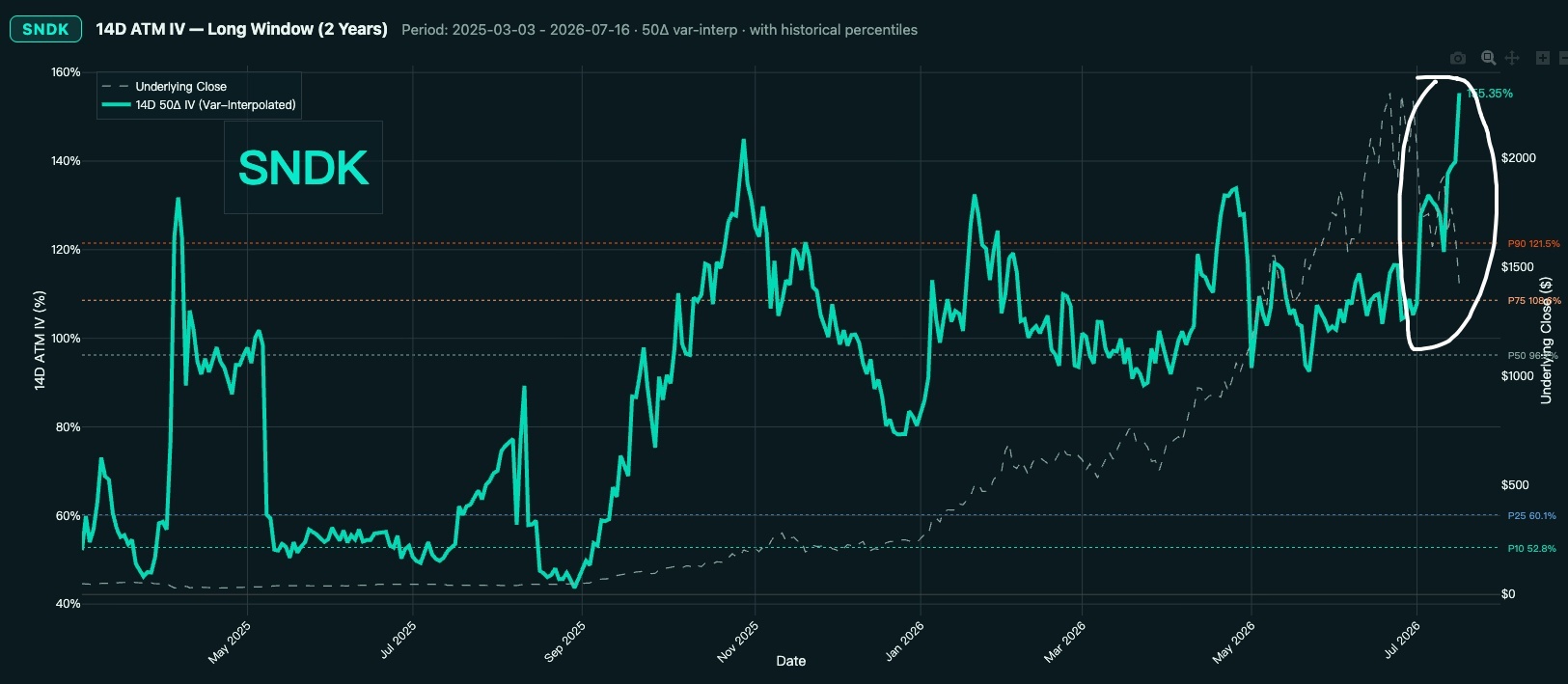
The classic example is $Sandisk(SNDK.US). After May this year, the stock price rose, and volatility ranged sideways. With the recent sharp pullback, the option's implied volatility (IV) actually surged. Compared to the previous phase of rising prices + ranging IV, brothers who bought Puts this time enjoyed both the one-way return from the price drop and the IV premium.
As they say, after the 狂欢 comes the reversal, and after panic comes the dawn. I also noticed that institutions made large purchases through dark pools last Friday. $Roundhill Memory ETF(DRAM.US) (Storage ETF)
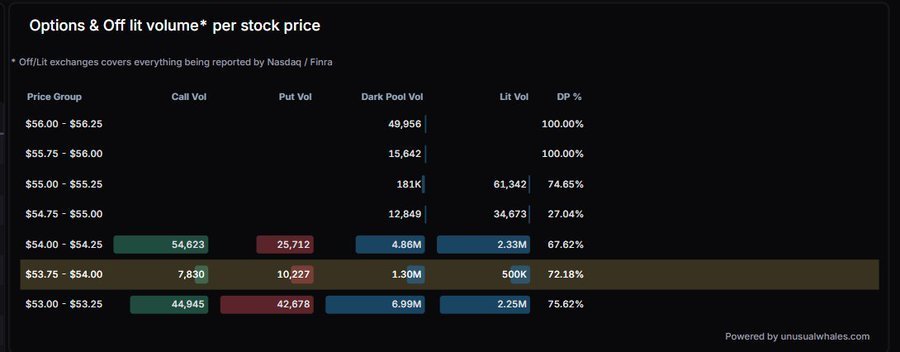
Mainly in the $53-$54 lower range, dark pool trading dominated 67%-74%. Initially, I didn't pay much attention to this anomaly, but seeing that there was no further deep decline in the semiconductor chain after Friday's close and today, I suddenly became interested.
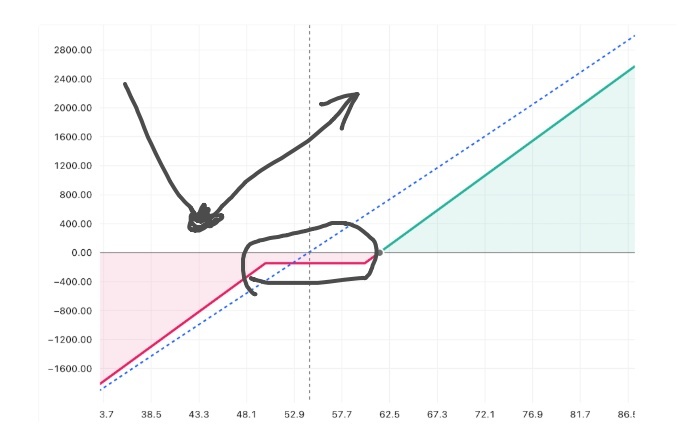
Additionally, I noticed two option pairing trades: selling 180-day $50 puts and simultaneously buying 180-day $60 calls. Their profit/loss chart should look like this:
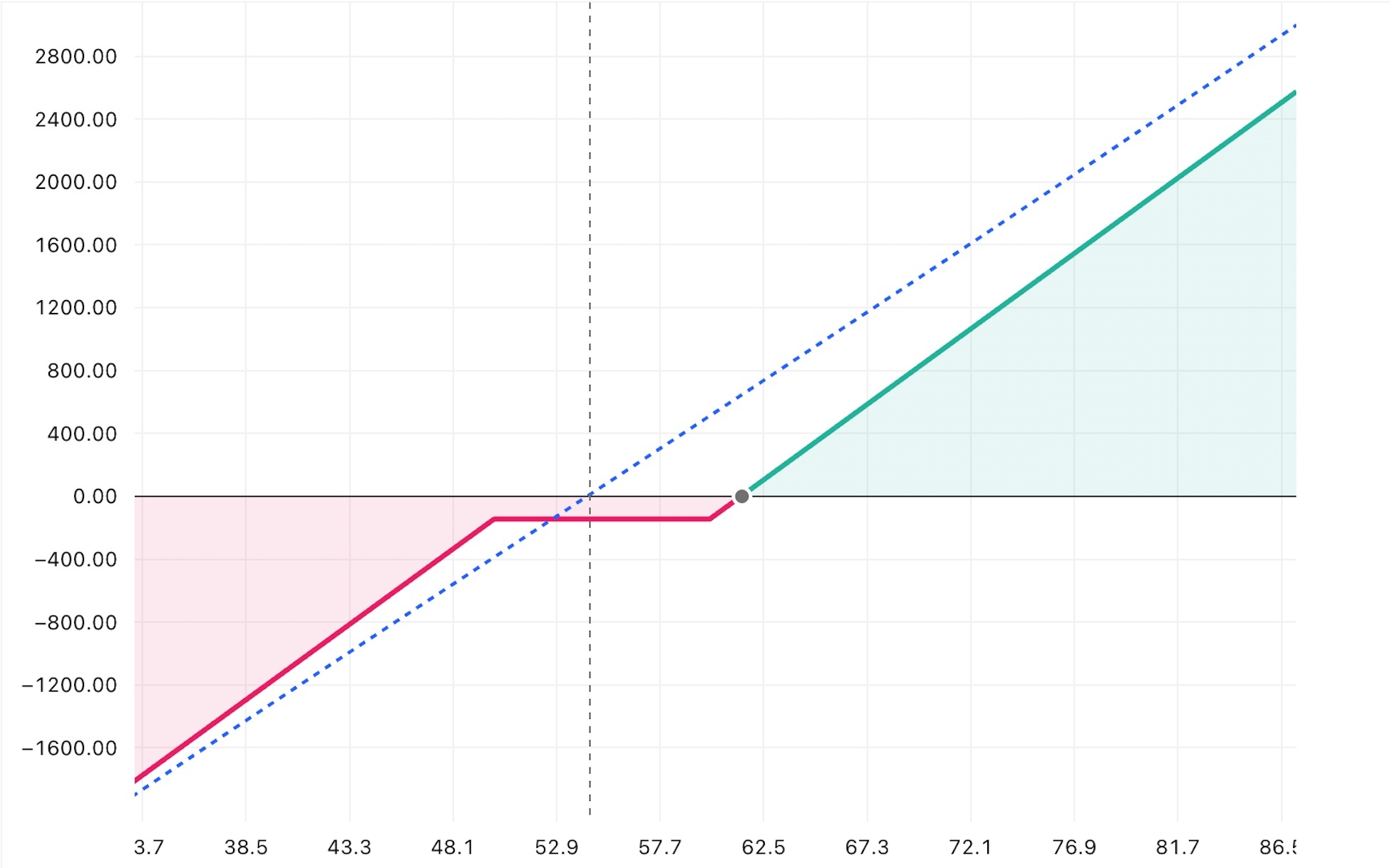
It looks like it needs to go up to be profitable, implying a long position. Correct, this is the RR combination, intended for going long.
What is the RR Combination?
Option textbooks will tell us that looking at it separately from the exercise perspective, institutions selling 180-day $50 puts believe it won't fall too much below 50, or perhaps slightly lower (46-49).
At the same time, they opened positions in the 60 calls above. This strategy of selling Puts + buying Calls is called Risk Reversal, known as Risk Reversal in English, so within the options circle, it's commonly referred to as the RR combination.

So why is it called Risk Reversal? Because it is often deployed when the market is about to turn, representing a relatively aggressive long strategy in terms of intent.
In the extreme panic of semiconductors, where the IV of put options accelerates its surge, institutions can sell puts at relatively "expensive" premiums to partially offset the cost of the other leg, the 60 Call. If the storage sector truly bottoms out in this round, honestly, the institution's opening cost is only $145 per group.
So clever! Buying the Call costs 1170+ (received premium - 1025) = 145.
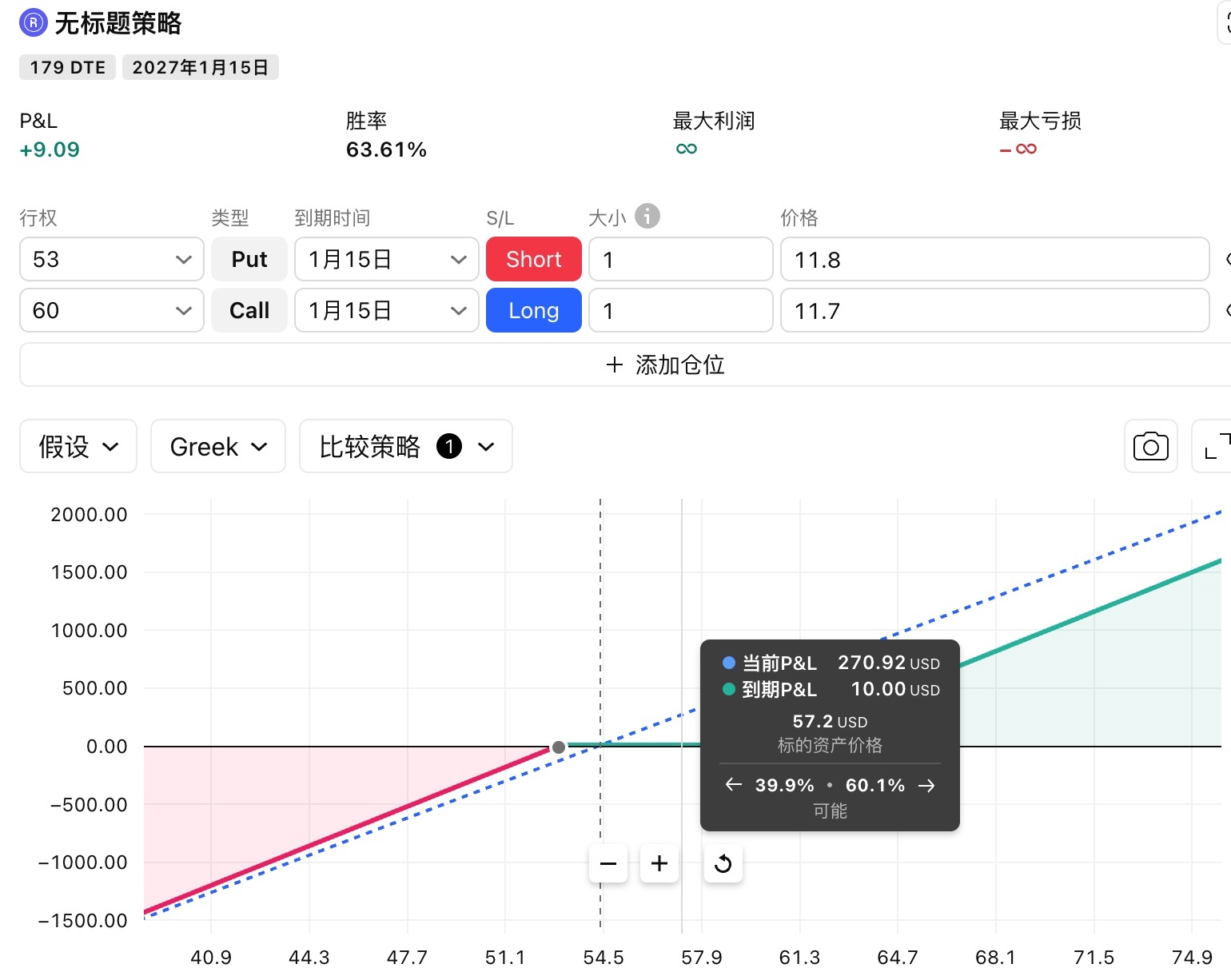
If adjusted slightly, you can even open a position with zero cost! Like this, opening the position would even give you a $10 rebate.
Back to the topic
In my daily Leaps Call trading, I inevitably encounter single contracts costing over $4,000-$5,000, given my limited capital. At this point, I can utilize the concept of RR and the convenience brought by option combinations in trading rules to further reduce my own costs.
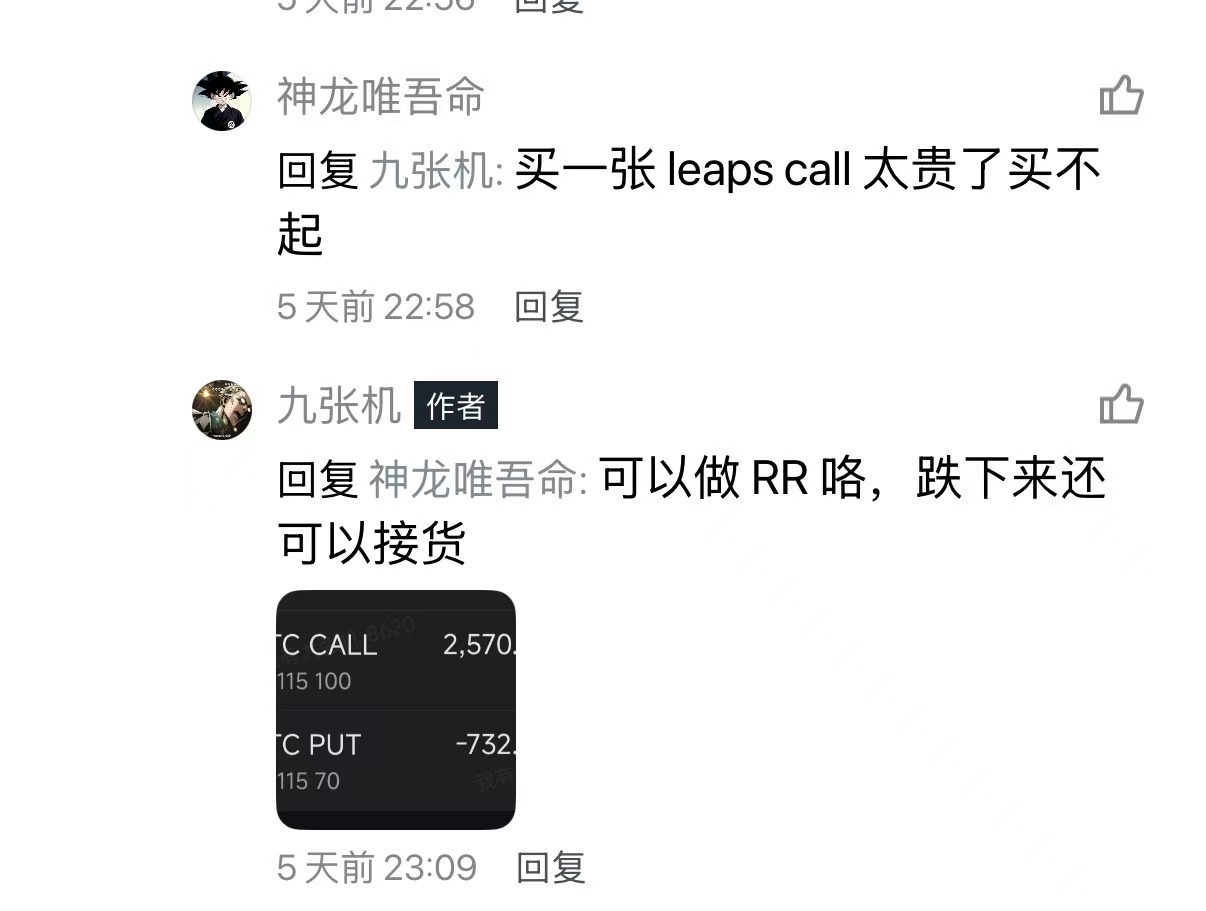
Buying far-dated Calls, main intent: Long.
Selling deep out-of-the-money Puts to collect a premium, offsetting the cost. Secondary.
Here are some Q&A supplements to avoid misunderstanding. I'll add typical questions with replies below.
Q: Is RR suitable for near-month or short-term trades? My hands are itching.
A: I personally prefer not to do it. My main intent is always to buy Leaps Calls. If you play within the month, what happens if it drops sharply and doesn't recover? Even if it falls to the level where you sold the Put and gets exercised, taking delivery at a low price. But what about the Call leg? It suffers a huge loss, violating the main intent.
Q: How do you define selling the Put at a deep strike level below?
A: It's whatever level you decide you're willing to take delivery if the price falls there.
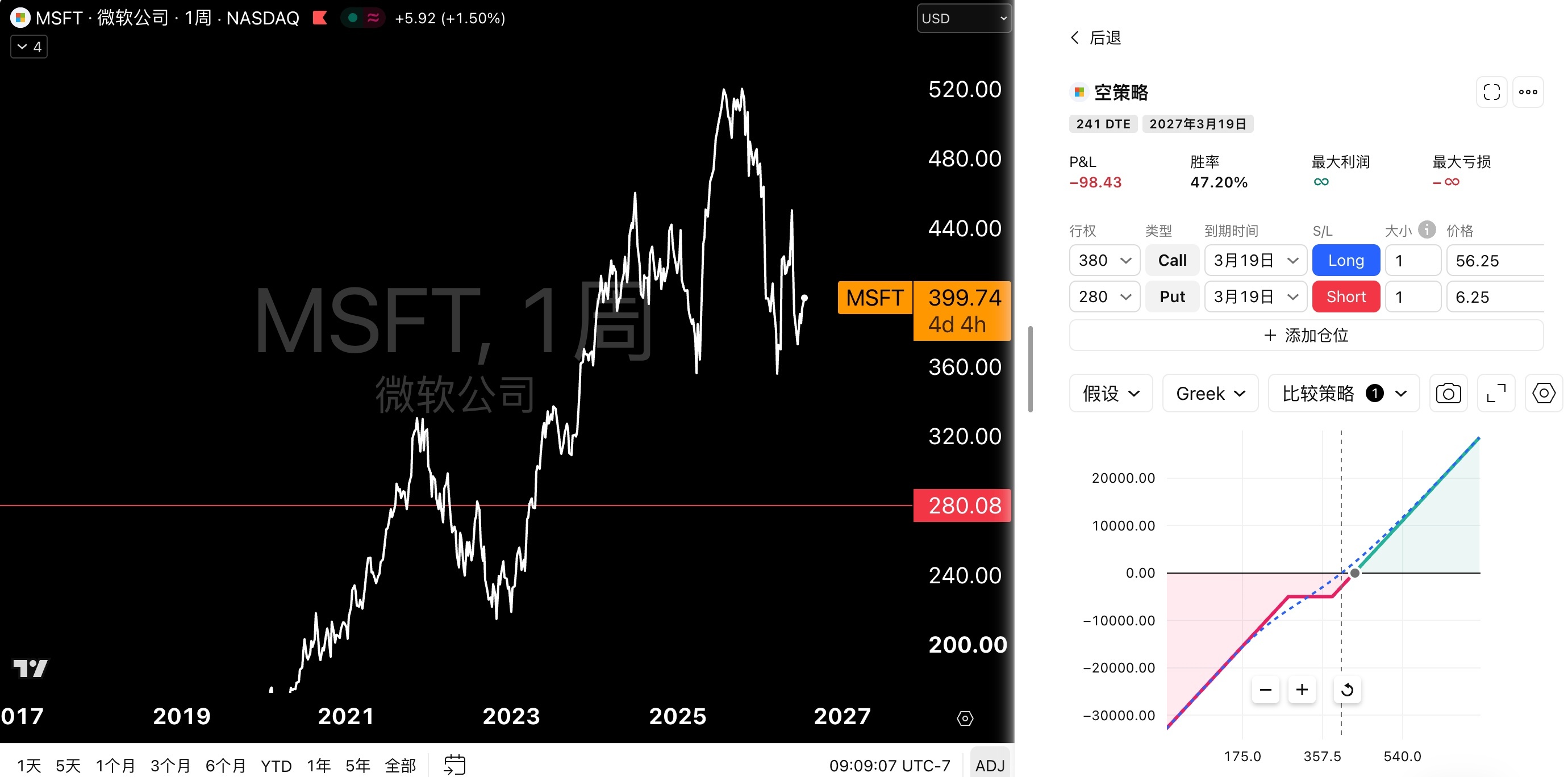
For example, using $Microsoft(MSFT.US) below for demonstration purposes, not as operational advice. Limit it to your lowest acceptable delivery level, e.g., 280 here. To offset more of the Call 380 cost, raise the strike level for selling the Put higher, e.g., 300, 310.
Q: How else can you choose the lowest strike level for the sell Put leg?
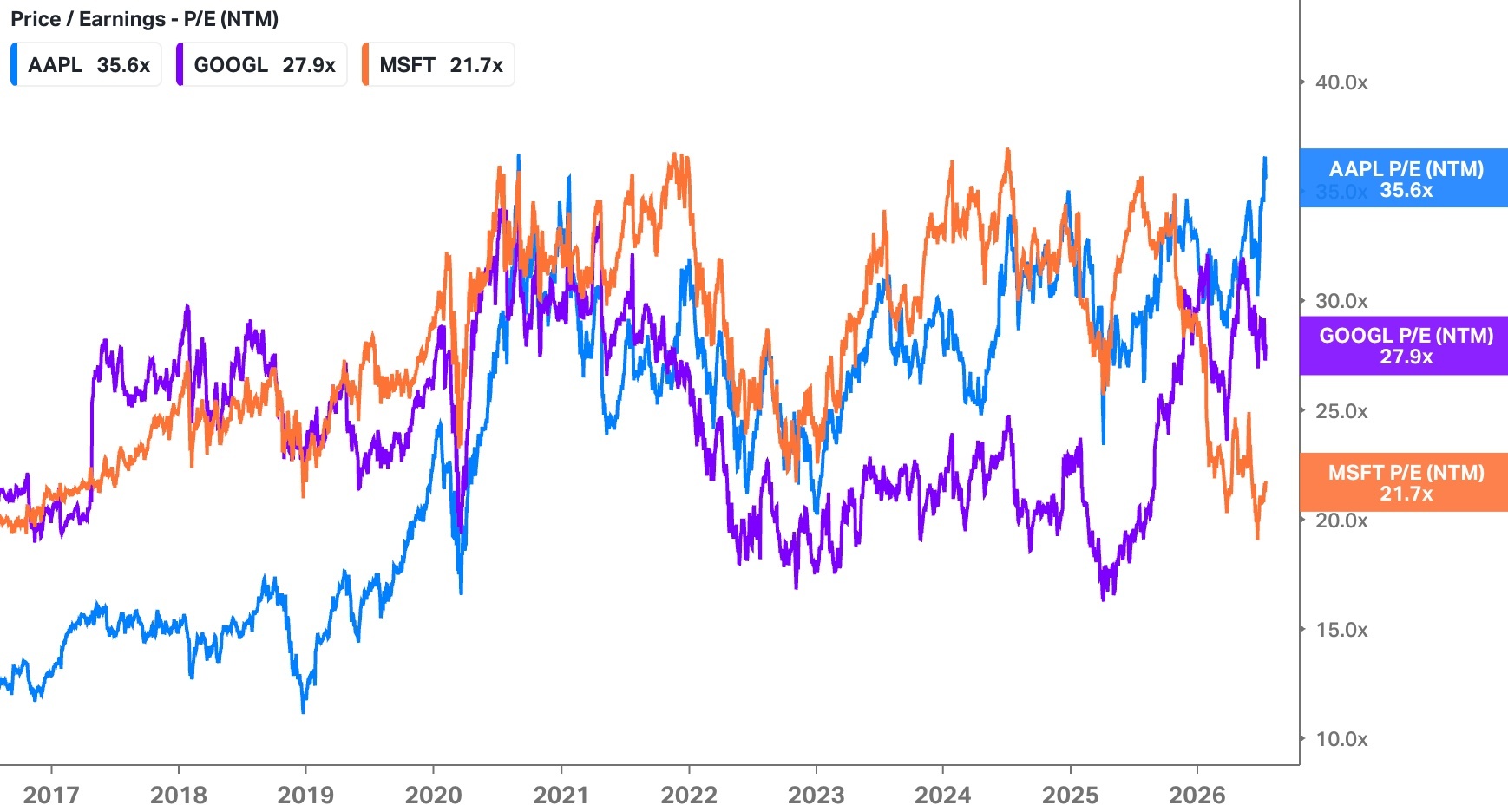
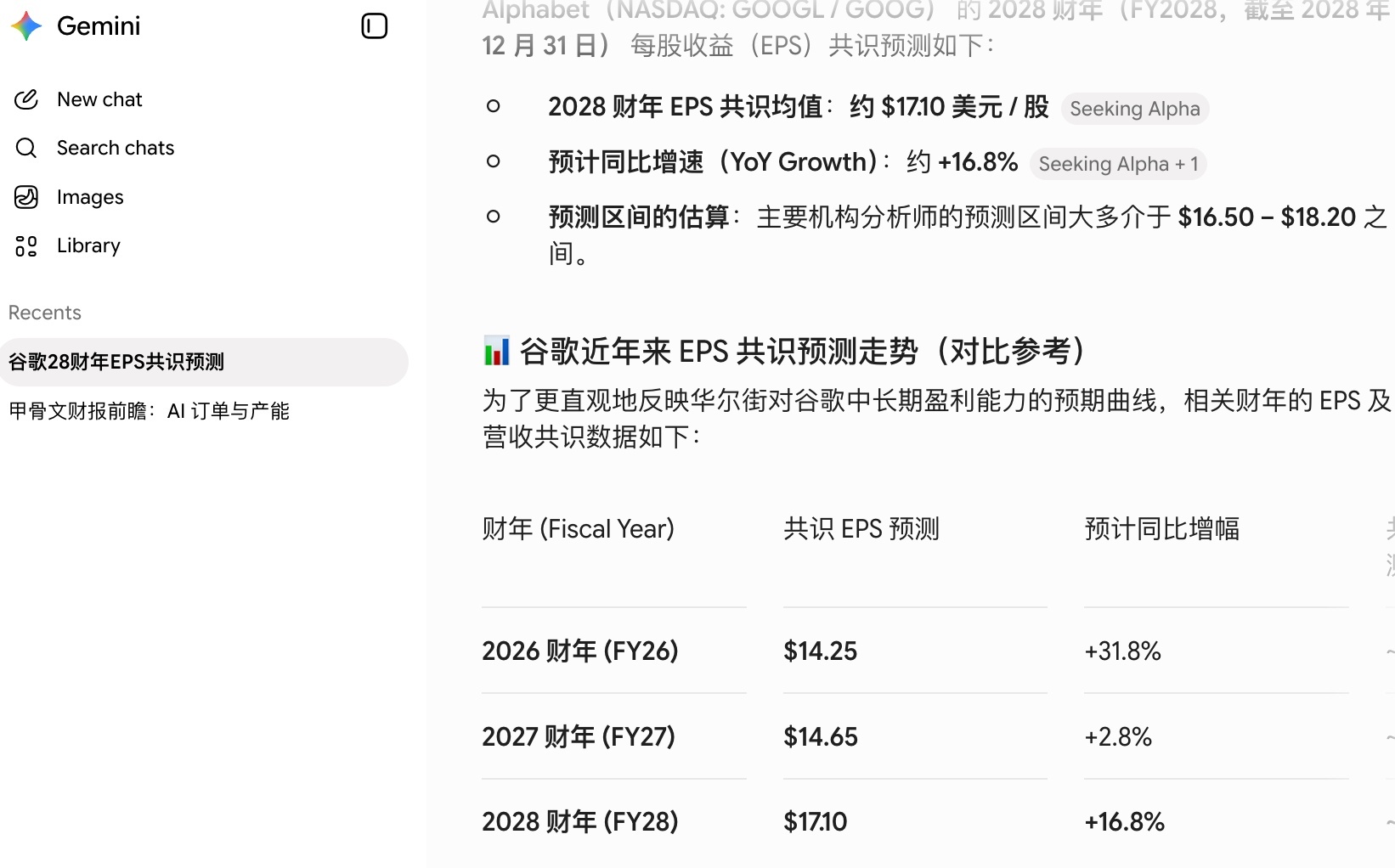
We mentioned the PE method in the previous post. For instance, $Alphabet(GOOGL.US) has historically traded around a 25x PE, ranging from 18x to 32x, with a pessimistic estimate of 15x. Citing the FY28 EPS guidance of around $17 (midpoint), assuming FY28 can still reach such a level, calculating 17 * (18x ~ 32x) gives 306~544. The expectation should lean towards the conservative lower bound of 306. This thought process is for reference only.
Q: Besides the PE method, is there anything else?
A: I see too many analyst research reports estimating demand 5 years out, 10 years out to xx, which I don't really believe; treat them as ads. Although AI demand is strong and indeed expands the visibility cycle for orders in the semiconductor chain, in reality, coverage by secondary buyers or Wall Street is lacking, with weaker investment research capabilities. They follow quarter by quarter, and the excellent ones can track for half a year. No matter how beautifully written the report is, it's better to find supply chain contacts and people with relationships for due diligence.
Therefore, in the options market, the levels where institutions deploy Put hedges concentratedly around six months to expiration are quite referential. Those are the defense lines in a Bear scenario.
Q: Is the Bear scenario suitable for small/mid-cap stocks?
A: Not really. Institutional coverage is sparse, and for those underwritten by just a few firms, there's a lot of noise. When doing Leaps Calls, my starting point is always investing in top-tier global companies, hence suggesting large-cap weighted indices and Dow Jones blue chips. In short, Leaps Calls are: good company + PE leaning towards the lower bound + right timing + utilizing certain trading rules to go long.
Q: Who is the Leap Call variant using the RR concept suitable for?
- People bullish on the future.
- Those with good market sense, willing to wait patiently, ambush stocks when they bottom out. If the prediction is wrong, look at the P/L chart to know; it reverses.
- Since there's a sell Put leg, it suits those willing to take delivery, treating it as value investing.
To me, Leaps Calls, written up to here, can basically conclude the topic. Actually, most people get confused when introducing the time factor into options. If the contract's time (expiration date) is fixed via Leaps Calls (far-dated options), actual trading feels consistent with stock market intuition.
Moreover, no single strategy can be executed mechanically. In a one-way market, you can roll positions (explained in Part 1). If worried about a pullback after rolling to highs, lock in profits by selling one leg to create a spread (Part 2). If not enough money to buy Leaps Calls, sell a Put at a low level to reduce costs and meet opening conditions. These are all flexible.
I'm not very good at being formal like textbooks, explaining the five Greek letters of options from start to finish. I feel that engaging with options inevitably requires choosing two things: strike price and expiration date, then practicing.
I think Leaps Calls can serve as an enlightenment to some extent. As I said before, investor education is about screening. In a capital market obsessed with quick wins, screening out candidates suitable for long-term running, telling them about margin systems and pitfalls I've encountered, they will grow themselves. Hope this helps, thank you all for your support.
Market opens soon, 2027.07.20

ProShares Ultra Dow30 ETF
USDDM

Short Dow30 Pro
USDOG

Pro UltrPro Shrt Dow30
USSDOW

SPDR Djia
USDIA

Dow Jones Industrial Average
US.DJI

Sandisk
USSNDK

Roundhill Memory ETF
USDRAM

Microsoft
USMSFT

Alphabet
USGOOGL

Alphabet - C
USGOOG

Alphabet Inc Pref Shares GOOGN 6.25 05/15/2029
USGOOGN

S&P 500
US.SPX

NASDAQ Composite Index
US.IXIC

Arm
USARM

AMD
USAMD

Tesla
USTSLA

Intel
USINTC

Broadcom
USAVGO

Proshares UltraPro Short QQQ ETF
USSQQQ

Proshares UltraPro QQQ
USTQQQ

Direxion Semicon Bull 3X
USSOXL

Direxion Semicon Bear 3X
USSOXS

VanEck Semiconductor ETF
USSMH

Berkshire Hathaway B
USBRK.B

Johnson & Johnson
USJNJ

Coca Cola
USKO

Unitedhealth
USUNH

Alibaba
USBABA

Krne Csi China Internet
USKWEB

Micron Tech
USMU

SK Hynix
USSKHY

SKHY 2X Short ETF
USSKDD

Taiwan Semiconductor
USTSM

Nebius
USNBIS

IREN
USIREN
The copyright of this article belongs to the original author/organization.
The views expressed herein are solely those of the author and do not reflect the stance of the platform. The content is intended for investment reference purposes only and shall not be considered as investment advice. Please contact us if you have any questions or suggestions regarding the content services provided by the platform.