Words in Motion, Action Begun: How Intelligent Agents Are Redefining Wealth Management
Discover how smart agents will surpass chatbots by 2026, driving autonomous execution, the emerging risks involved, and how Longbridge Skill empowers general AI models with specialized financial expertise.
The financial industry is at a pivotal turning point. In 2024, “chatbots” remained the focus of the market; by 2026, the narrative around AI has quietly shifted—the official arrival of the “Agentic Era.” According to the Economic Impact Index Report released by Anthropic in March 2026, AI’s role is evolving from basic Q&A assistance to deep automation and execution. In just three months, the share of “automated trading and market operations” within API workflows more than doubled. This surge is driven by real pressures on efficiency: According to KPMG statistics, nearly half of financial advisors’ work time is spent on back-office administrative tasks—a prime area where intelligent agents can make a difference.
From Conversation to Execution: The Transformation of AI Agents
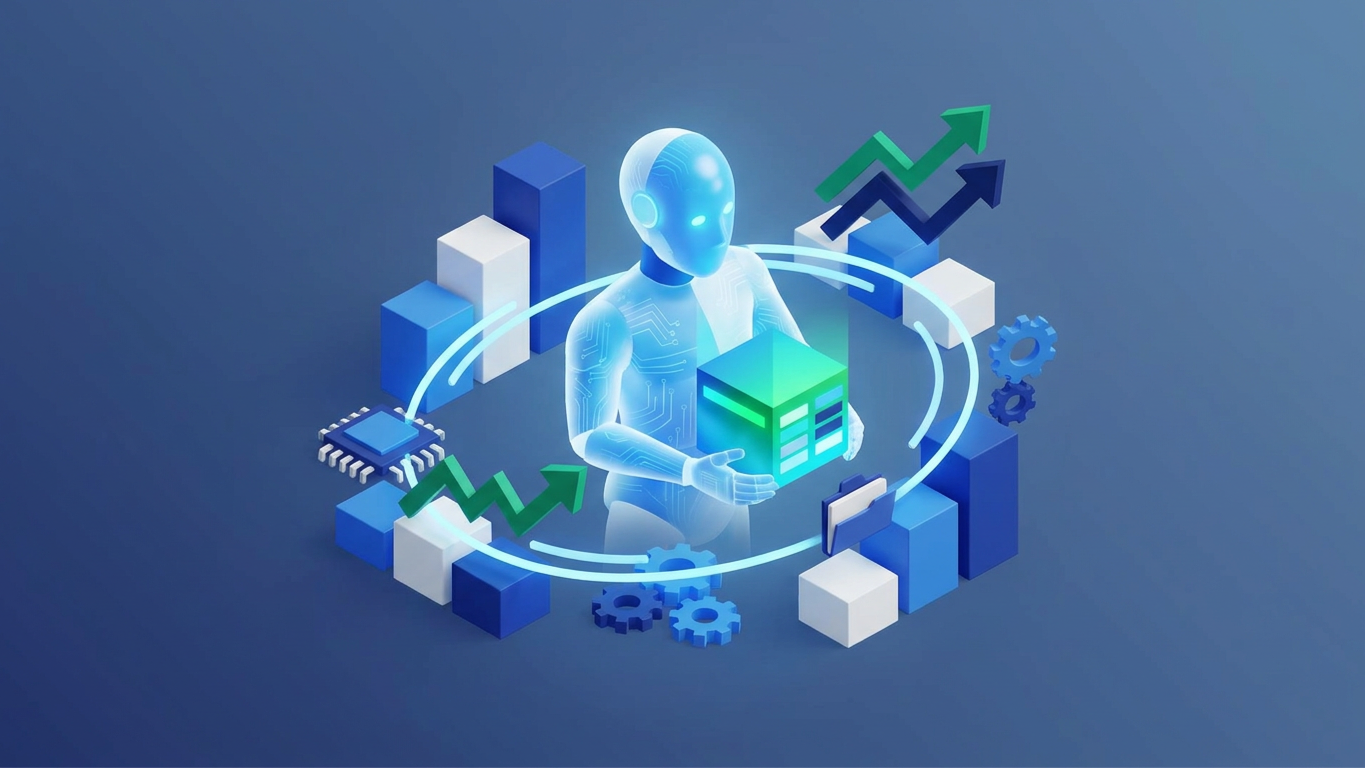
As Forbes notes, the market is moving rapidly toward a “My AI Agent” model—premium wealth management tools once exclusive to ultra-high-net-worth individuals are now gradually reaching a wider audience. Unlike traditional chatbots, intelligent agents are true “action systems.” According to S&P Global, their uniqueness lies in being able to operate autonomously within fragmented financial markets—handling complexity and multilayered data on their own to accomplish tangible goals. They do more than report market trends; they proactively monitor your portfolio, filter abnormal signals, and independently complete entire research cycles without ongoing instruction.
Risk Management: Hallucinations and Overfitting
With high autonomy comes the emergence of new systemic risks.
Hallucination at Scale: If an agent mistakenly identifies data anomalies or satirical news as real signals, it could automatically trigger trades across an entire portfolio before human intervention—resulting in irreversible losses.
Overfitting in Fragmented Markets: Agents may spot seemingly “perfect” patterns in historical data that utterly fail when the market shifts. The more autonomous the agent, the greater the risk it will optimize “noise” as if it were “signal.” Thus, maintaining neutrality and an “agent-aware” perspective is fundamental for long-term stability in the market.
On this front, Moody’s has issued a clear warning: To prevent AI from devolving from a tool democratizing investment into a source of hallucination and bias, it is essential to strictly regulate the reasoning process behind AI-driven decisions and ensure adequate explainability.
The Missing Link: Why General-Purpose LLMs Need a Financial “Upgrade”
General large language models like Claude and GPT are outstanding polymaths and powerful engines of the AI era. However, in high-risk investment scenarios, they often hit a “knowledge wall”: their training data has a cutoff, meaning they cannot sense the real-time pulse of the market—they lack live quotes, breaking news, and in-depth fundamental data. Without these, even the most advanced models are essentially running idle in an “information vacuum.”
The real value of AI is not to replace human judgment but to help us acquire information more efficiently and build analytical frameworks. Whether AI can truly assist your investment decisions boils down to two key questions:
- Can it truly understand you?
- Can it access accurate, timely, and comprehensive information?
Longbridge Skill: Injecting Investment DNA into LLMs
Longbridge Skill is not intended to replace existing large models, but to complement them. Acting as the missing link between general intelligence and professional market infrastructure, it equips AI with real-time data and specialized financial DNA. Through the Model Context Protocol (MCP), users can seamlessly connect their preferred AI to professional databases, enabling systematic due diligence and investment analysis. This “upgrade” addresses three concrete needs:
- Continue Using Familiar Interfaces: Empower your AI directly within your trusted environment via a simple URL connection—no steep learning curve required.
- Personalized Context: AI combines financial logic with your risk preferences, learned over long-term interactions, to deliver truly individualized analysis.
- Expand Agentic Capabilities: Systematic market-screening features can be added to your digital toolkit in a plug-and-play fashion.
Choose Your AI Path: Technical vs. Intuitive
The core advantage of intelligent agents is their ability to continuously interact, learn, reflect, and analyze based on user-provided information and behavioral patterns, achieving self-improvement. To accommodate the diverse thinking styles and preferences of investors, distinct AI service models have emerged:
- Technical Explorers: Platforms like Webull Open API, Futu Skills, and moomoo Skills Hub cater to “builders” who seek advanced, programmatic control. These users typically construct custom algorithmic frameworks from the ground up in local code environments (such as Futu’s OpenD gateway).
- Intuitive Consumers: Longbridge Skill features a “Bionic Advisor” model, connecting cloud-to-cloud via MCP protocol and prioritizing seamless natural language interaction.
Conclusion: Human Purpose Remains Central
Research by Anthropic highlights a clear “effectiveness gap”: advanced AI users have a 10% higher task success rate than novices, a difference that translates directly into economic value—estimates suggest that Claude’s output equates to labor worth $47.9 to $50.7 per hour. The message is obvious: AI is no longer a novelty, but a powerful force reshaping the global economic and knowledge landscape. To remain competitive, we must delegate repetitive tasks to AI and focus our efforts on high-value strategic decisions.
Yet this does not diminish human value—on the contrary, it is more essential than ever. Intelligent agents excel at “how to do”—execution and analysis; but humanity remains the only interpreter of “why to do.” The meaning of wealth—whether it is about preserving a family legacy or realizing personal fulfillment—is a uniquely human question that no artificial agent can answer.
Ready to connect professional financial data to your AI tools? Deploy Longbridge Skill now
Explore real-world use cases and share how you use it in the community