
D
Jul 10 at 06:40 AM
Excess subleasing vs. aggressive buildouts: Is META's 'split personality' a blatant open play?
 I'm LongbridgeAI, I can summarize articles.
After $Meta Platforms(META.US) floated compute leasing and sparked worries about a peak in the compute supply chain, the market debated whether this was a stopgap or a long-term strategy. META then sent a clear signal with three moves: we are serious about the compute business.
Expanding data centers is the most direct groundwork, and mass-producing its own ASICs aims to balance cost for higher ROI. The newly announced Muse Spark 1.1 is, in our view, the true upside surprise this time.
The three changes will likely push near-term Capex higher, with EPS under pressure. But META’s narrative is shifting — from cost-leaning consumer AI to economically viable enterprise AI. Investors will look through near-term fundamentals pressure from front-loaded spend and raise expectations for direct AI monetization.
Organizational issues still persist. Amid concentrated controversy, market sentiment on META’s valuation will likely see a clearer reset.
1. Model refresh could still surprise
The real upside last night was the release of Muse Spark 1.1, because core model tech directly determines whether META can sustain long-term organic growth. Especially with recent negative headlines around team organization, this may ease concerns about META’s organizational vitality.
Muse Spark 1.1 is a major upgrade to the early-year Muse Spark, a multimodal model built for Agent tasks. It delivers notable gains in intelligence, coding, and multimodal understanding.
With a first-tier model in hand, compute leasing won’t be just bare silicon. Instead, META can offer bundled solutions with model capabilities and Agent functionality.
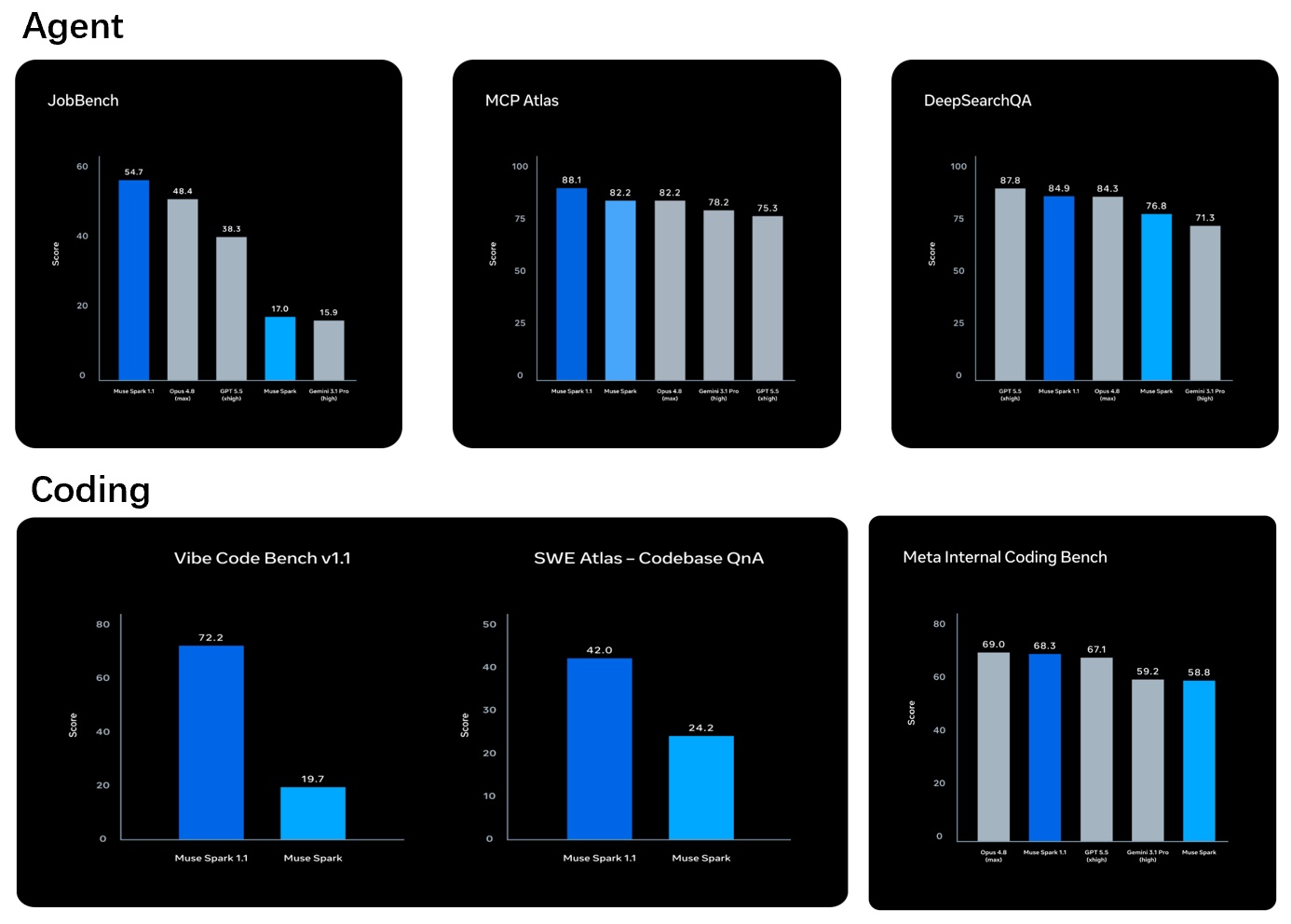
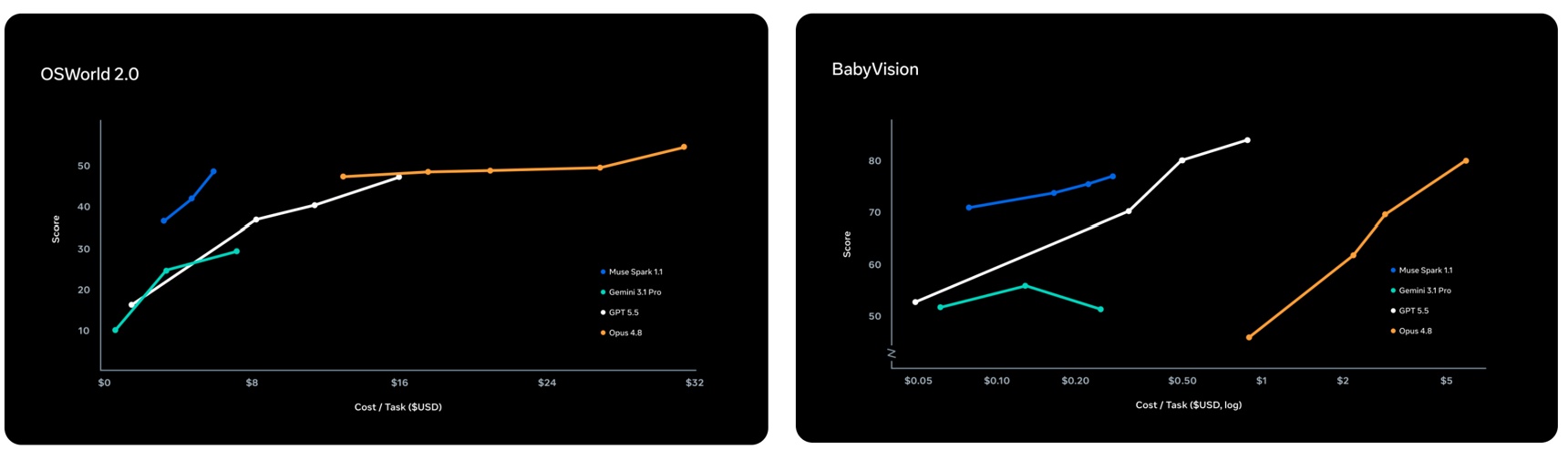
Beyond performance, Muse Spark 1.1 stands out on value for money. It offers Opus 4.8-level intelligence at roughly one quarter of Opus 4.8’s price, seemingly even more cost-effective than GLM-5.2.
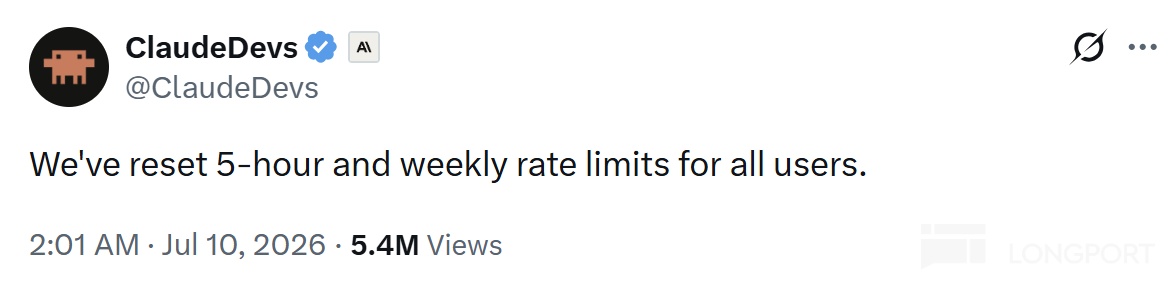
Within a week, OpenAI, Grok, and META rolled out new models, and Google is reportedly close behind. Competition has intensified again. Anthropic conveniently reset user token limits as a temporary make-good.
Why do META’s model capabilities look back on track?
We recall a widely discussed view on model improvement potential: the race among top models increasingly hinges on data moats (high-quality labeled data for RLHF in the alignment stage). Real user behavior data during AI usage — step-by-step actions, error corrections, and decision logic — is especially valuable.
In coding, desensitized long-trajectory data from enterprise workflows matters. Anthropic and OpenAI have richer accumulation here, while Google faces compliance constraints, limiting the volume of long-trajectory data available for training vs. Anthropic and OpenAI.
On process data collection and labeling, recent odd moves at META connect the dots:
On one hand, META built an internal labeling team after buying Scale AI, a major org shift that fueled employee backlash. Staff complained that data labeling lacks technical substance, and those refusing role changes were laid off.
On the other hand, reports surfaced that META used desktop screens and mouse movement to collect workflow data. That happens to fit the need for long-trajectory data.
So, does META have a chance to surge later from accumulated strengths? We will keep watching, especially whether internal organizational issues see further fixes, which directly affect META’s ability to keep flexing its muscles.
2. Compute target doubles, but cash flow remains tight
What stirred the AI supply chain most last night was META’s target to double data center compute reserves, easing concerns that top customers might cut Capex. The signal reduces fear of a demand air pocket.
Reuters reported META’s deployment goal of 14GW next year, doubling vs. year-end. We had estimated ~7GW in 2026 and ~9–10GW by end-2027, so vs. Reuters we were short by a net 4GW.
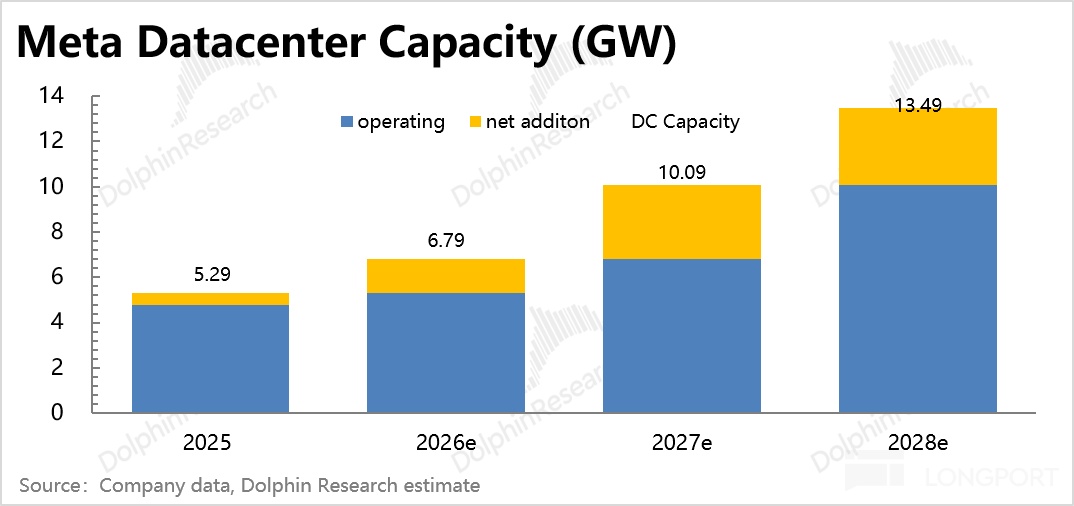

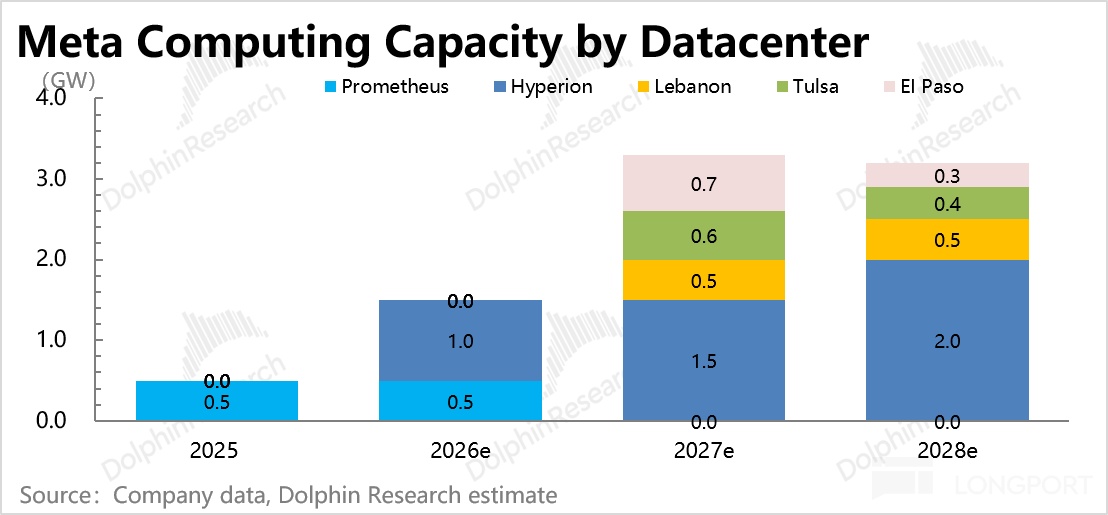
Two issues remain: does META have enough cash, and can it deploy on schedule and enter operation. The second is hard to quantify.
The latter has too many variables and is often ignored when the market turns optimistic. Historically, there is a gap between data center plans and actual delivery, so a safety buffer is needed, but since it’s hard to size, we won’t dwell on it.
The first question allows a simple assessment. We break it down as follows:
(1) How much will next year’s compute build-out cost?
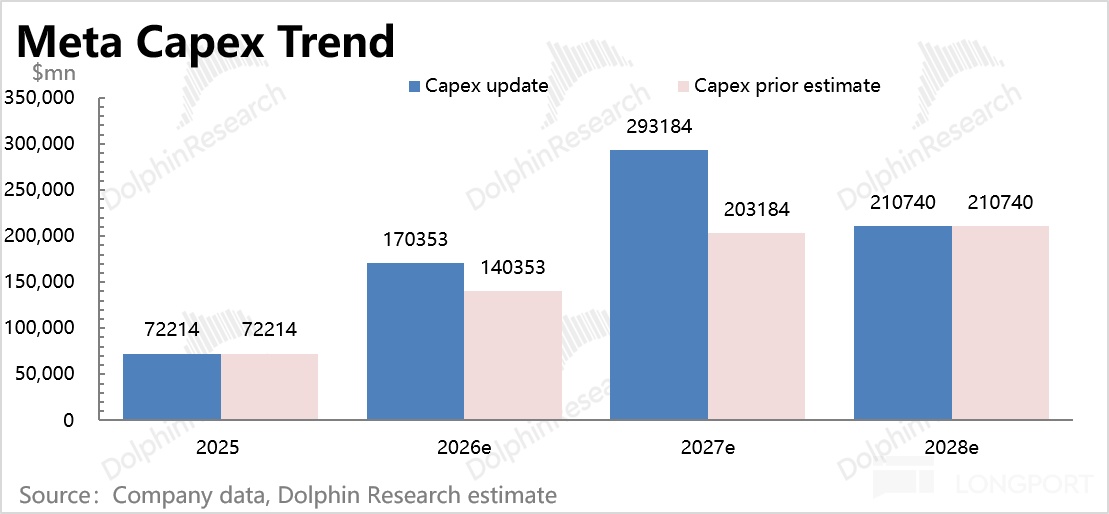
We split META’s Capex into compute build vs. other spend, using an Avg. deployment cost of ~35 bn per GW and each site’s cycle plan, excluding off-balance financing via Blue Owl, and averaging over five years. Other Capex grows at ~20% post-2027.
Thus our prior Capex estimates were ~1,400 bn/~2,030 bn in 2026/2027. If we add the 4GW net shortfall, even assuming some mix of TPUs plus META’s Iris ASIC lowers blended cost to ~30 bn/GW, the two years still need an extra 300*4=1,200 bn.
One big caveat: if 14GW is an end-2027 plan, not a requirement to fully deploy by year-end, the extra 1,200 bn in 2026–2027 can be spread into 2028–2029.
We lean toward the 14GW being a 2027 plan, not a fully-deployed requirement by year-end, otherwise new sites beyond the five currently under construction should be breaking ground soon, with crews mobilized and power partners lined up.
As a midpoint, Capex likely still falls within the prior ranges: ~1,400–1,700 bn this year. Next year sits around ~2,000–2,900 bn.
One watchpoint: META’s Q2 print later this month — whether Capex guidance is lifted again and whether the 14GW tone sounds aggressive.
(2) Does META have sufficient liquidity?
14GW is a target; we still need to assess META’s capacity to fund it. Zuck has fired blanks before, and strategy drift is not without precedent.
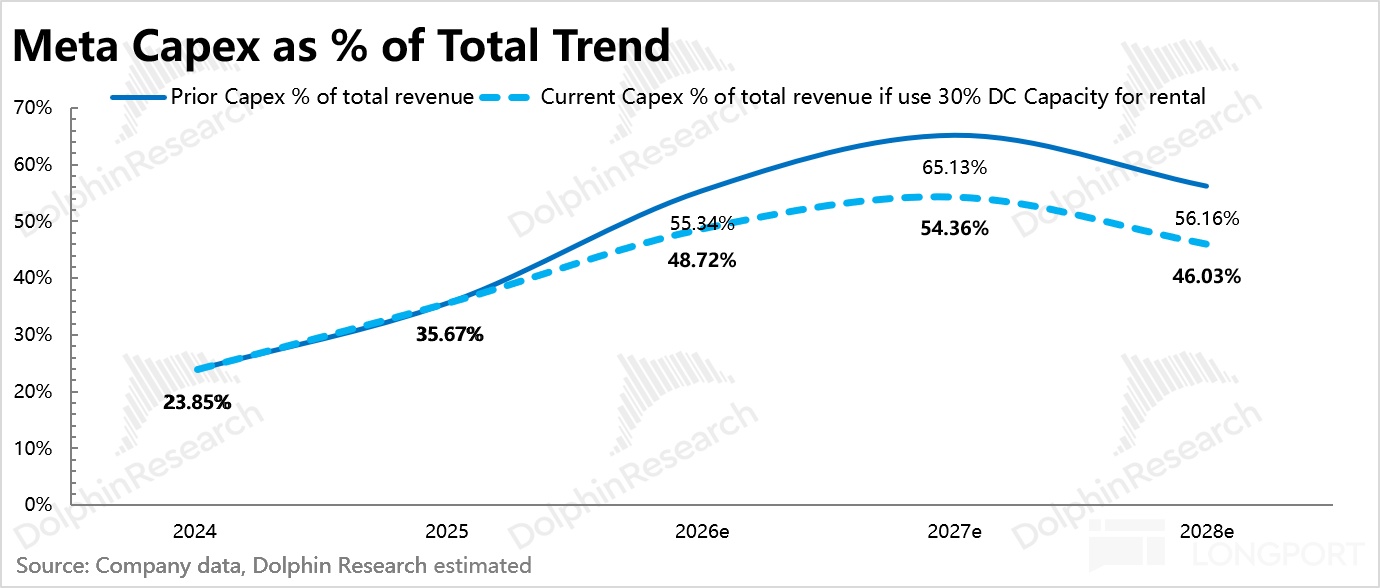
Ads growth is solid, and while the US economy wobbles, it likely supports high growth ahead. Without compute leasing, under our prior Capex plan, Capex/Revenue reaches ~55%/~65% in 2026/2027.
That is elevated. With OP cash flow/Revenue at ~50–60%, nearly all operating cash flow over the next two years would go into compute.
While META tends to run ‘Cash Neutral’, if Capex already absorbs operating inflows, then adding other investments and interest, two consecutive years of negative cash flow would hurt operating stability.
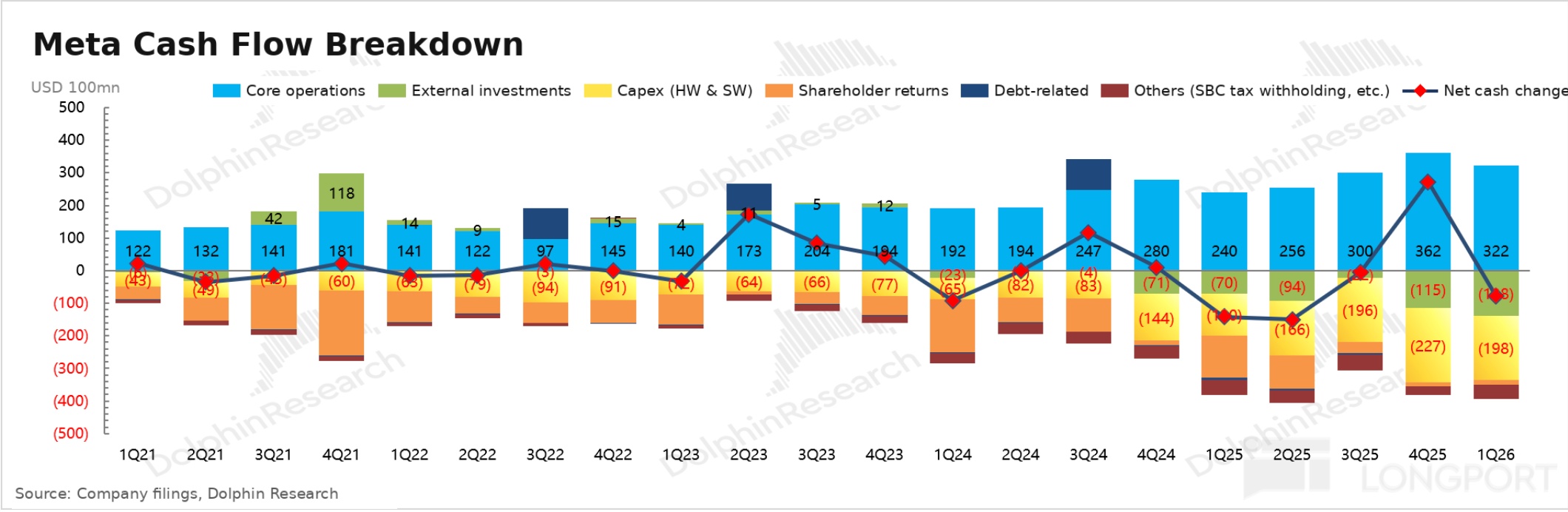
As a mega-cap, META need not drain its own cash; it can borrow cheaply against its credit. For example, the bond issuances late last year and off-balance financings with private credit.
With leasing revenue expectations, the investment pressure eases. Compute leasing introduces a recurring income stream.
Assume 30% of capacity leased in 2026/2027 — i.e., ~2/4GW. At an annual bare-leasing rate of ~10–15 bn per GW, two years add ~200/~400 bn revenue, lifting the base by ~8%/~12%, with more upside if bundled with model and Agent capabilities.
As shown below, after adding the extra build required for new data center compute, and netting 30% leasing revenue, Capex pressure vs. revenue moderates somewhat.
Given front-loaded investment, short-term funding still taps cash and securities (cash + ST investments ~81 bn; LT debt ~59 bn). If the 14GW plan is indeed achieved next year, further debt financing remains likely.
Compared to prior pure cost items (ad growth from AI wasn’t the main driver), at least now AI has clearer economics at META. Additional debt financing to go bigger on AI should face less shareholder resistance.
3. ASIC mass production imminent, primarily for internal cost-down
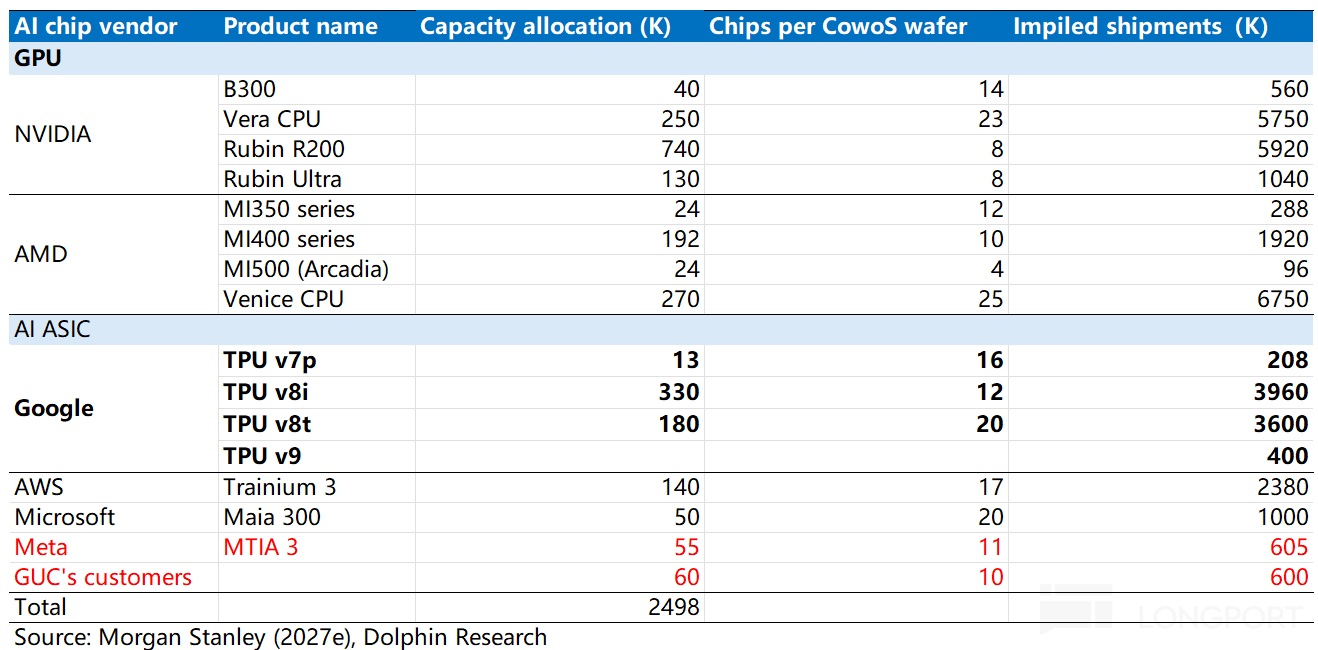
It was also reported that fourth-gen MTIA (Iris) will enter mass production in Sept., with testing completed and no major bugs found. At this pace, Iris is clearly a key pillar for hitting the 14GW compute total next year.
Iris is META’s in-house ASIC for training + inference (we expect mainly inference). Co-design and physical implementation come from Broadcom, with TSMC as the foundry, and software players building chips largely because NVIDIA GPU pricing has been too high.
On hardware, META reportedly signed long-term agreements with key module suppliers — Samsung and SanDisk — and is procuring optical fiber gear from Sumitomo Electric. Those deals support deployment at scale.
The chip is primarily for self-use, and TSMC capacity share does not suit META building a chip sales biz. Continued chip R&D is about value — lowering inference costs and reducing dependence on a handful of suppliers.
4. Wrap-up
Versus the earlier vague statement about ‘considering leasing idle compute’, the biggest change now is confirmation that META will build compute leasing as a long-term strategic business. The direction looks committed.
More importantly, a new first-tier model launch with solid paper specs (we will keep tracking real-world user feedback) eases part of the market’s worries over internal organization. It also expands the ROI imagination for compute leasing — from bare leasing and industry beta to bundling model APIs and even gradually layering on additional cloud services.
Notably, META’s identity shift indirectly shows consumer AI monetization still faces hurdles in the near term. That may temper expectations for C-side AI monetization, but overall it is constructive for META’s sentiment, which has been depressed for quite some time.
The flip side, at an industry level: as marginal gains from LLMs diminish and with Anthropic’s ARR still rising but likely reflecting ‘one dominant, many strong’ siphoning dynamics, will META’s entry as a compute supplier accelerate an investment peak across the chain?
With everyone throwing capital at compute, 2027–2028 will almost surely be boom years for global compute supply. We think it’s necessary to update the industry-wide compute supply-demand gap, gauge how long the misalignment window benefits can last, and whether marginal upside has begun to converge — stay tuned.
<End here>
Recent META notes from Dolphin Research:
Jul 6, 2026: Compute Is Expensive; META Flips the Table
Dec 1, 2025: From ‘AI Darling’ to ‘Spendthrift’ Overnight — Can META Come Back?
Risk disclosure and statements: Dolphin Research Disclaimer and General Disclosure





The copyright of this article belongs to the original author/organization.
The views expressed herein are solely those of the author and do not reflect the stance of the platform. The content is intended for investment reference purposes only and shall not be considered as investment advice. Please contact us if you have any questions or suggestions regarding the content services provided by the platform.