
ADR Custody Fee Rules
This article provides a detailed introduction to American Depositary Receipts (ADRs) and the custody fees associated with them.
1. Introduction to ADRs
An ADR is a negotiable certificate issued by a US commercial bank that allows foreign securities to be traded in the US. You can trade an ADR on the US stock market. Each ADR represents a certain number of shares of a non-US company. These shares are held by a US bank, which then issues the ADRs representing the shares. The conversion ratio between the company's shares and the ADR is not always 1:1. For example, five shares of the company might be represented by a single ADR.
2. How custody fees are charged
The Depository Trust Company (DTC) began charging custody fees to brokers or clearing firms in 2008. These brokers or clearing firms then pass the fee on to investors holding ADRs. This is known as the ADR custody fee.
3. ADR custody fee
The custody fee for ADRs averages between 1 to 5 cents per share. The exact amount charged and the timing of the charge can vary for different ADRs. For specific information, please refer to the prospectus of each ADR or query online using the EDGAR company search tool.
4. Identifying ADR stocks
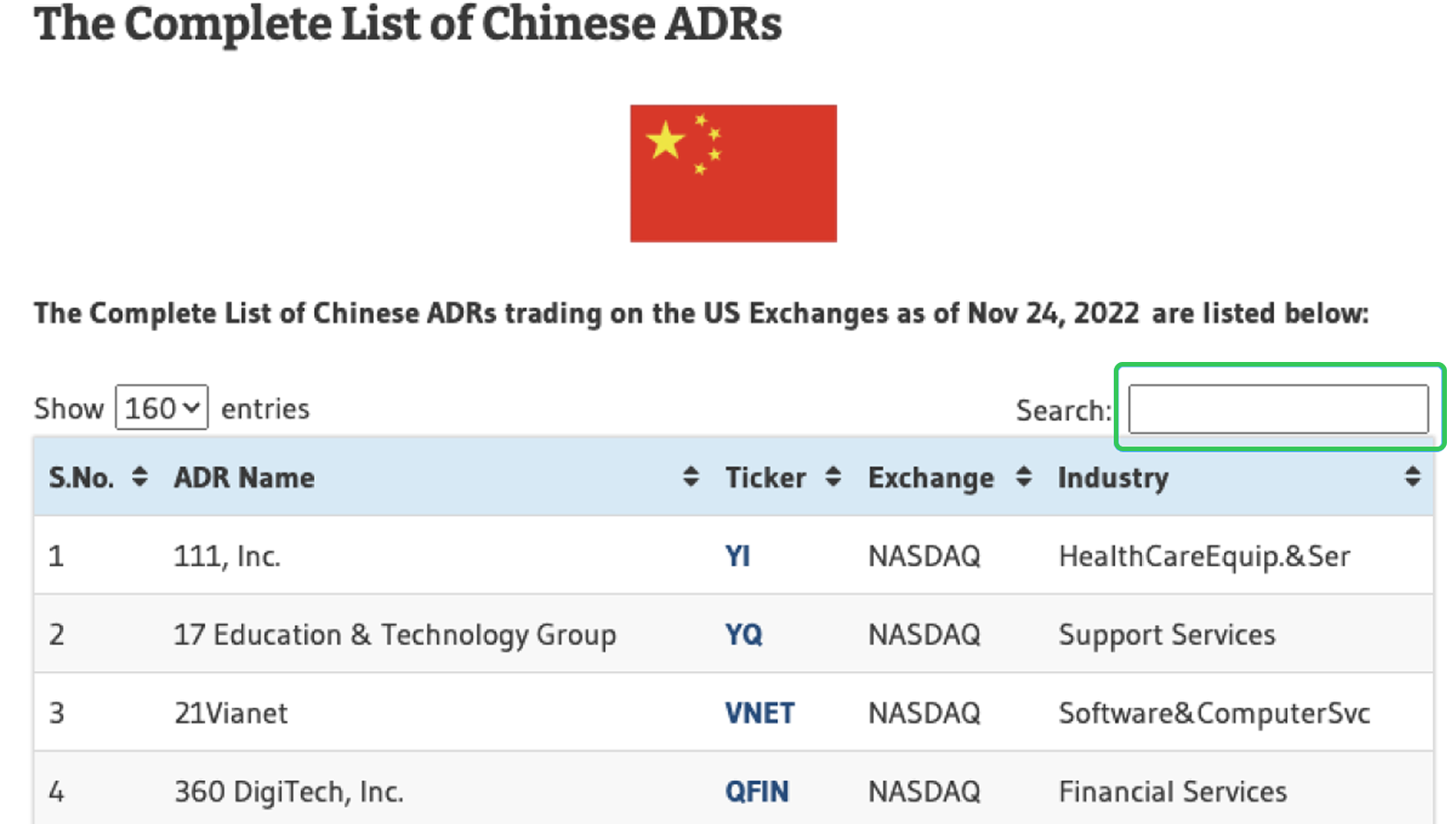
Generally, non-US companies with shares trading on US secondary markets may be subject to ADR custody fees. You can click here to confirm whether a particular stock is an ADR, as shown below:
5. ADR fee deduction
Go to the Longbridge App > Portfolio > More > Fund Details to check ADR custody fee records.
Key takeaways:
- Nature of ADRs: ADRs are negotiable certificates representing shares of a non-US company, issued and custodied by a US bank (the ratio of company shares to ADRs is not fixed at 1:1, for example, one ADR may represent five shares).
- Source of fees: The DTC charges brokers ADR custody fees, which are then passed on to investors holding ADRs.
- Fee standard: The custody fee typically ranges from 1–5 cents per share, though the exact amount and deduction time may differ among ADRs.
- Check method:
- Confirm whether a stock is an ADR via the search tool provided by Longbridge.
- Path for checking fee records in the Longbridge App: Longbridge App > Portfolio > More > Fund Details.
Disclosures
This article is for reference only and does not constitute any investment advice.
Office hours of HK Hotline and Whatsapp: 9:00 - 18:00 * (GMT+8) on trading days
Office hours of Global Hotline: Trading days 24 hours; Non-trading days 9:00 - 18:00 * (GMT+8)
Outside of the above service hours, if you have any questions, please contact our online customer service.
Office hours of online customer service:
© 2026 Longbridge
* Offers are subject to terms and conditions

A licensed corporation recognized by the SFC (CE No. BPX066). Holder of License Types 1 (Dealing in Securities), 2 (Dealing in Futures Contracts), 4 (Advising on Securities) and 9 (Asset Management). Also a registered HKEX participant and HKSCC participant.

Registered with the Monetary Authority of Singapore (MAS), Long Bridge Securities Pte. Ltd. is a Capital Markets Services Licence holder and Exempt Financial Adviser (Licence No. CMS101211).

A broker dealer registered with the Securities and Exchange Commission (SEC)(CRD: 314519/SEC: 8-70711), a member of the Financial Industry Regulatory Authority (FINRA) and Securities Investor Protection Corporation (SIPC).

New Zealand registered Financial Service Provider (FSP number: FS600050) and a member of the Financial Dispute Resolution Scheme, a New Zealand independent dispute resolution service provider.
The content and materials published here on this website is for general information only and should not be regarded or deemed to be an offer, invitation, or solicitation, recommendation or advice to buy, sell, subscribe or dispose of any investment products or financial services. It does not take into account the specific personal circumstances, investment objectives, financial situation or particular needs of a person and may be subject to change without notice.
Please consult your financial or other professional advisers if you are unsure about the information contained herein. Investments involve risks. Be aware that investments may increase or decrease in value and that past performance is no guarantee of future returns, you may not get back the amount originally invested. You should not make any investment decision based on this content alone.