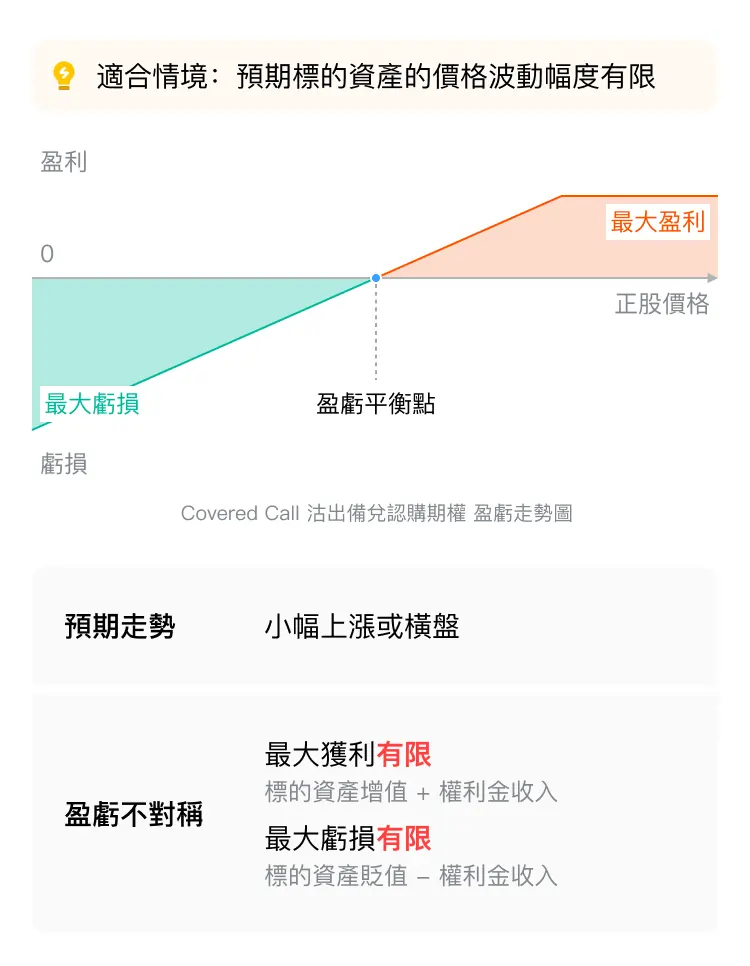
Covered call is an options strategy where you hold a long position in the underlying asset and sell a call option on it. This strategy helps offset downside risk while generating income from the premium.
Underlying price | Source |
Rise |
|
Fall | Offsetting stock decline with premium |
Let's imagine a made-up company called TECH.
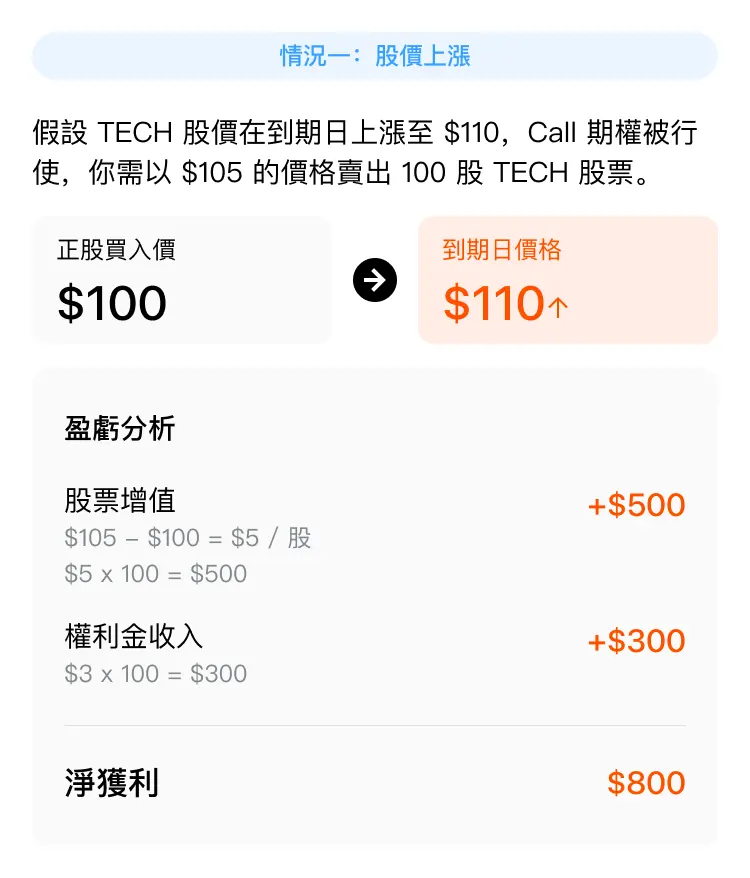
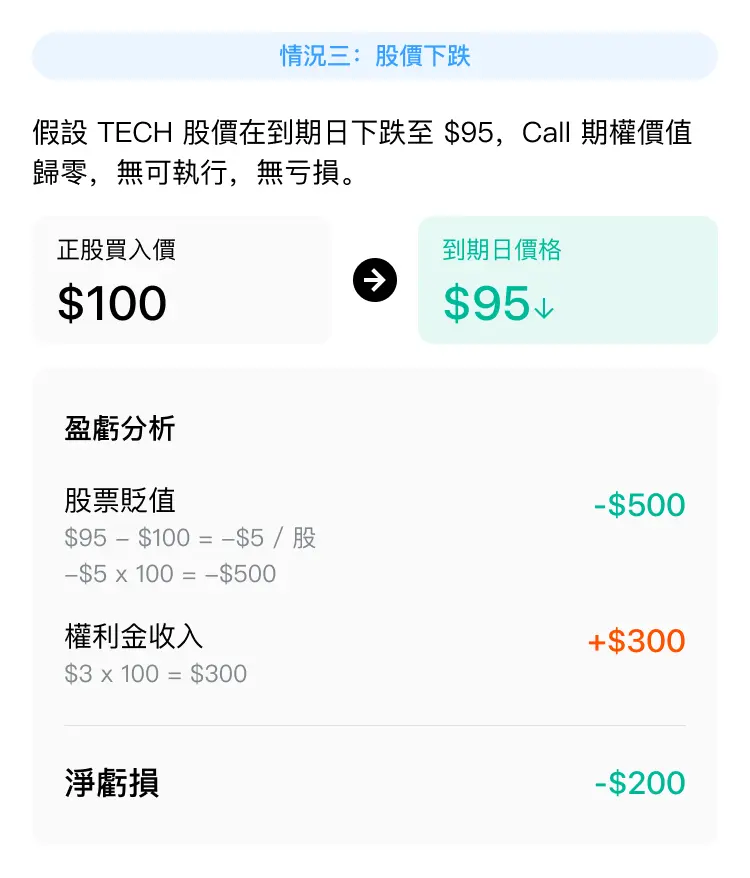
Right now, TECH's stock price is $100 per share. You think the stock price won't move much in the near future, so you decide to use a Covered Call strategy.
You buy or already own 100 shares of TECH stock, and then you sell a Call option with a strike price of $105, collecting a premium of $3.
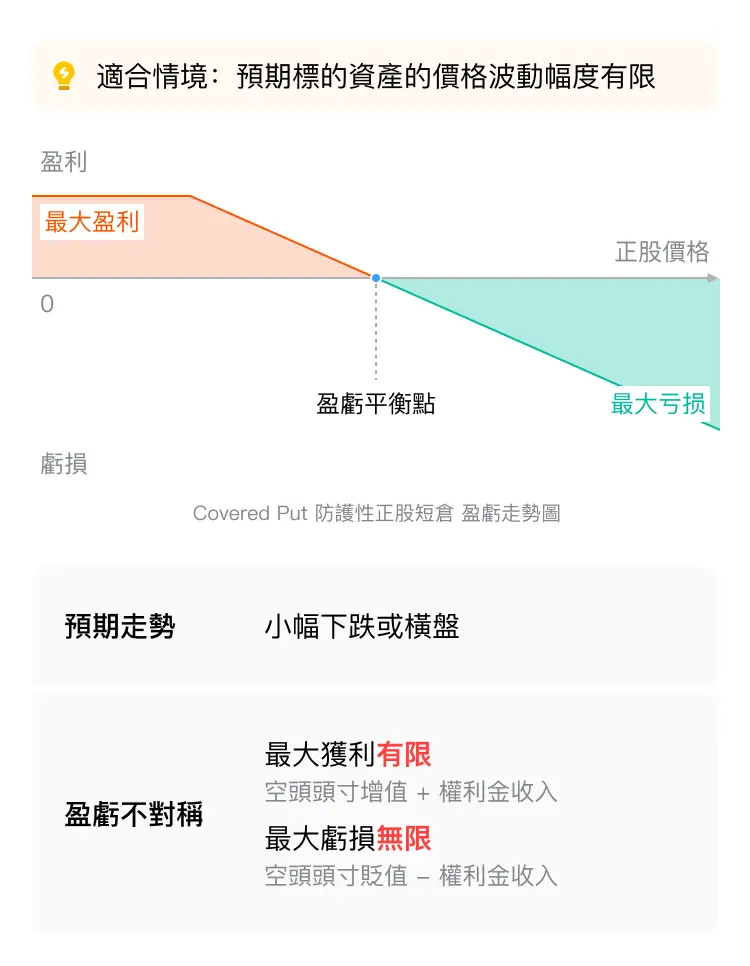
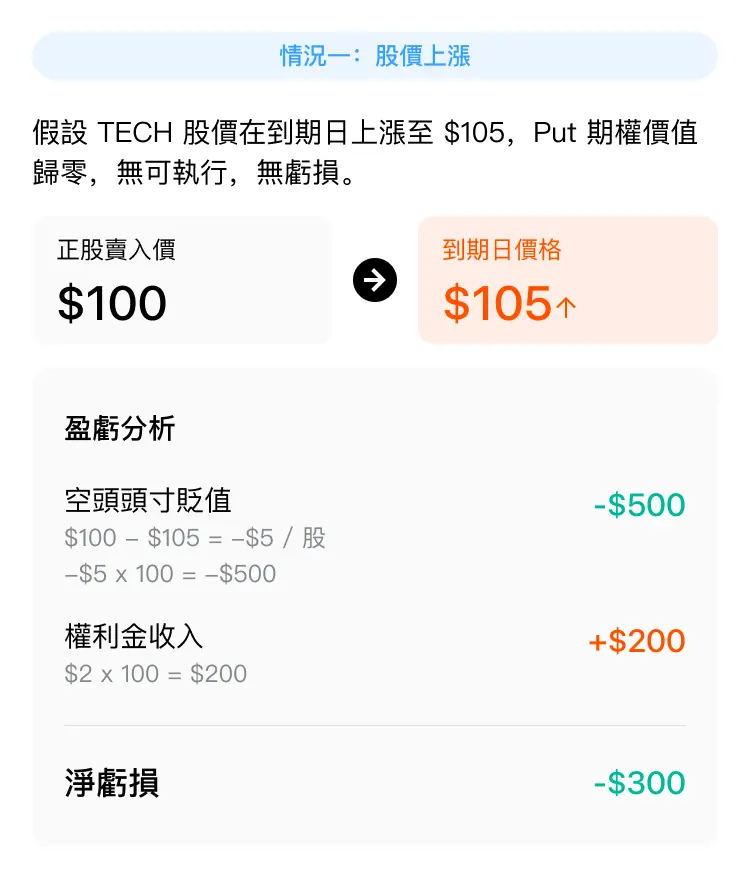
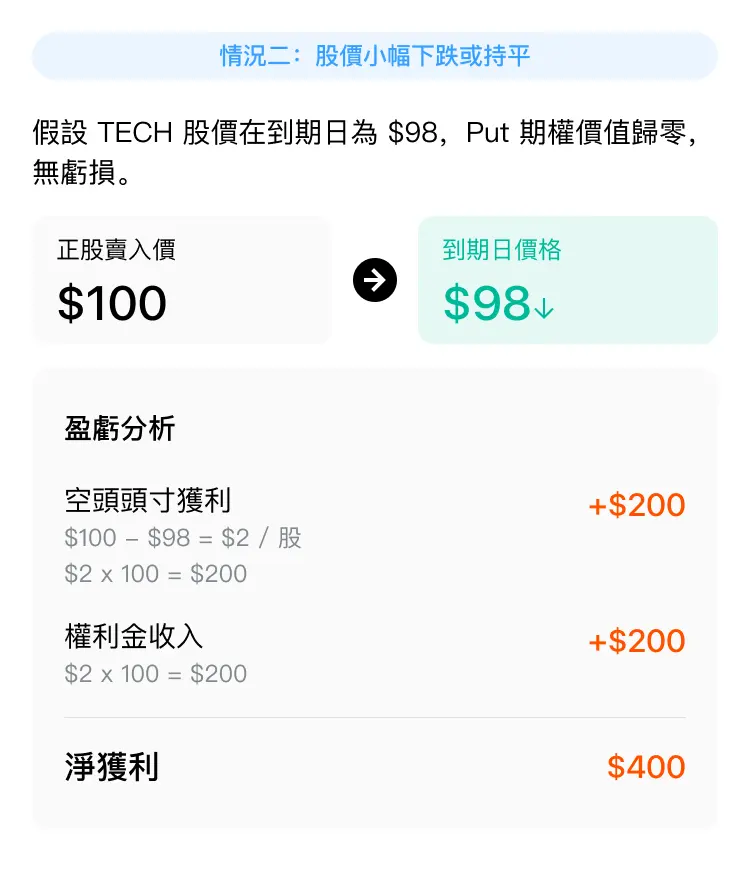
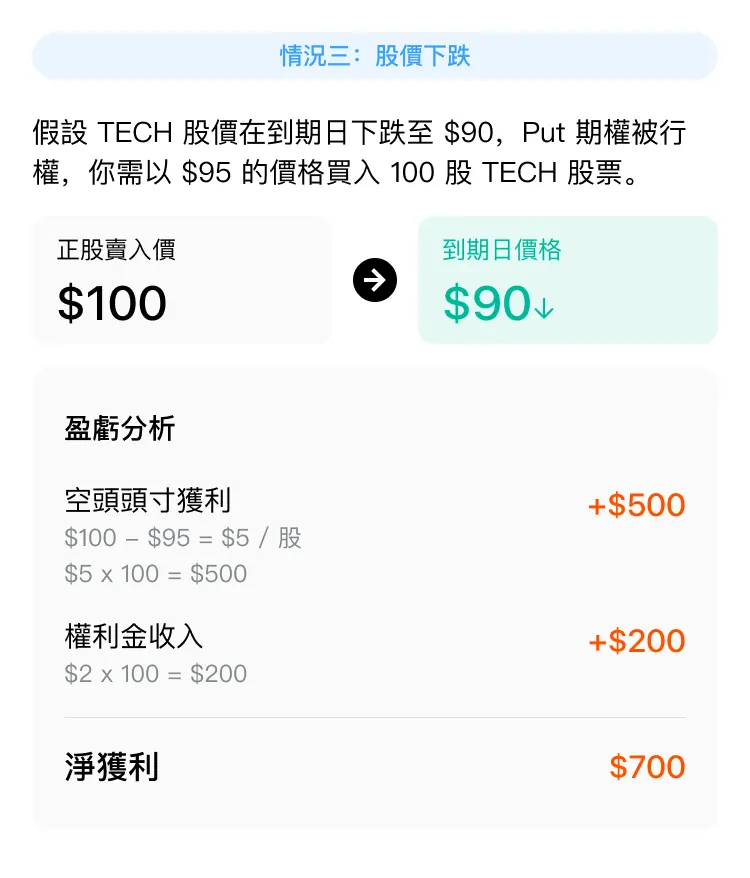
Covered put is an options strategy where you short the underlying asset and sell a put option on it. This strategy helps offset upside risk while generating income from the premium.
Underlying price | Source |
Rise | Offsetting stock rise with premium from selling puts |
Fall | Short position value increase |
Let's imagine a made-up company called TECH.
Right now, TECH's stock price is $100 per share. You think the stock price won't move much in the near future, so you decide to use a Covered Put strategy.
You short or already hold 100 shares of TECH stock, and then you sell a Put option with a strike price of $95, receiving a premium of $2 for each share (totaling $200).
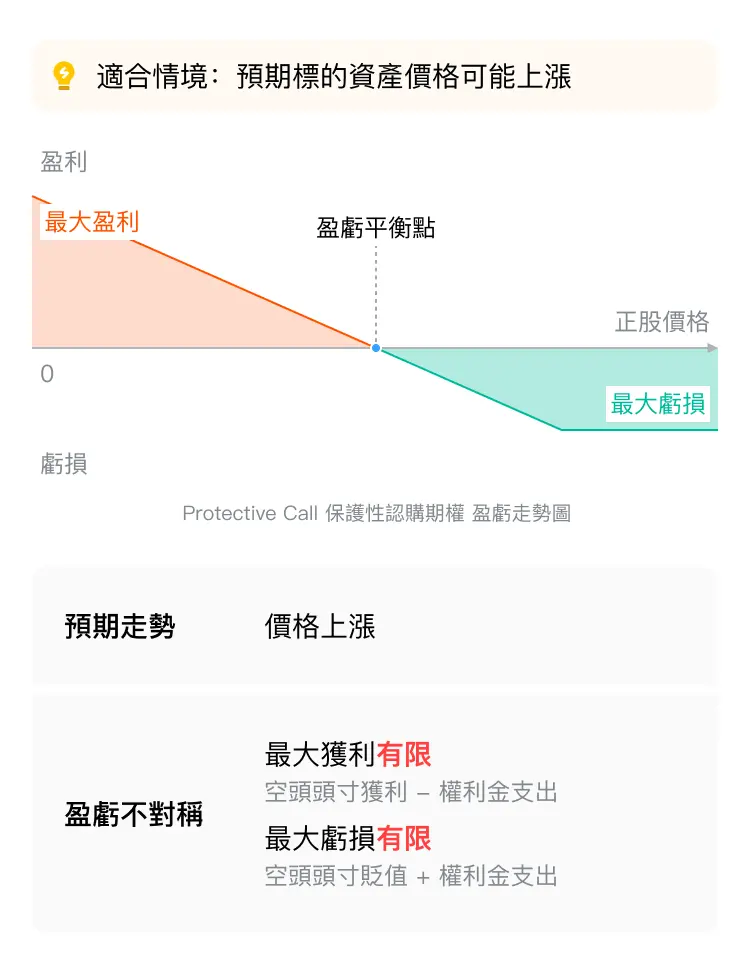
Protective call is an options strategy where you short the underlying asset and buy a call option on it. This strategy helps limit potential losses if the asset's price unexpectedly rises.
Underlying price | Source |
Rise | Offsetting stock rise with call value increase |
Fall | Short position value increase |
Let's imagine a made-up company called TECH.
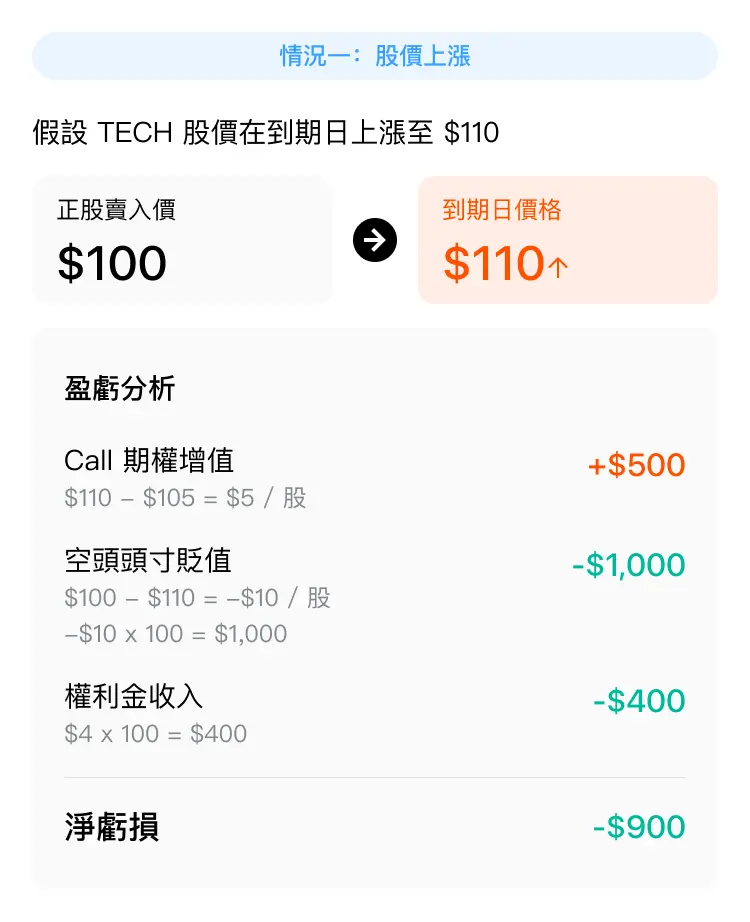
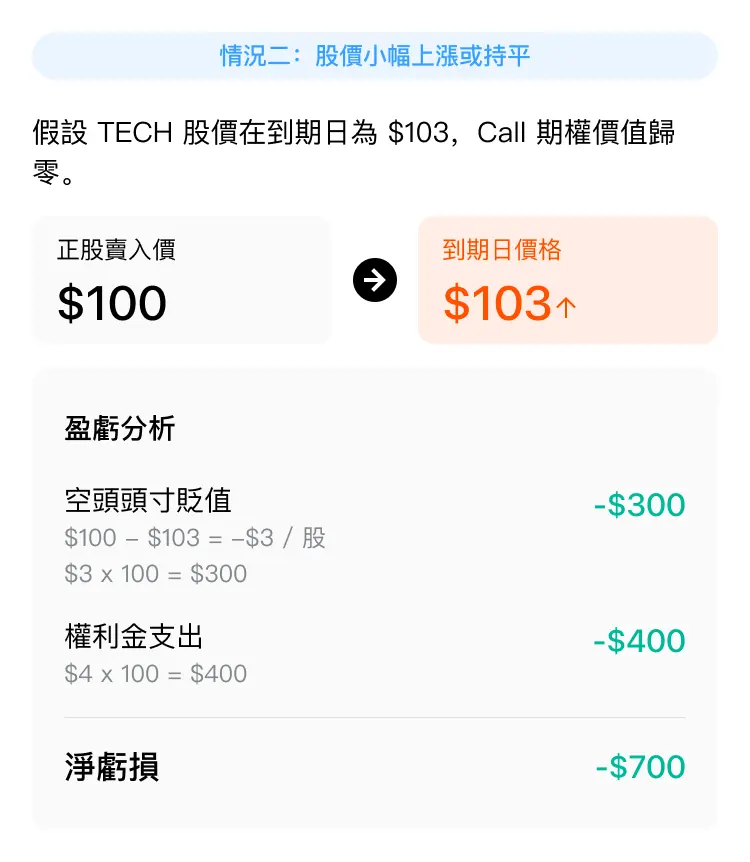
Right now, TECH's stock price is $100 per share. You think the stock price will move upward in the near future, so you decide to use a Protective Call strategy.
You short or already hold 100 shares of TECH stock, and then you buy a Call option with a strike price of $105, paying a premium of $4 for each share (totaling $400).
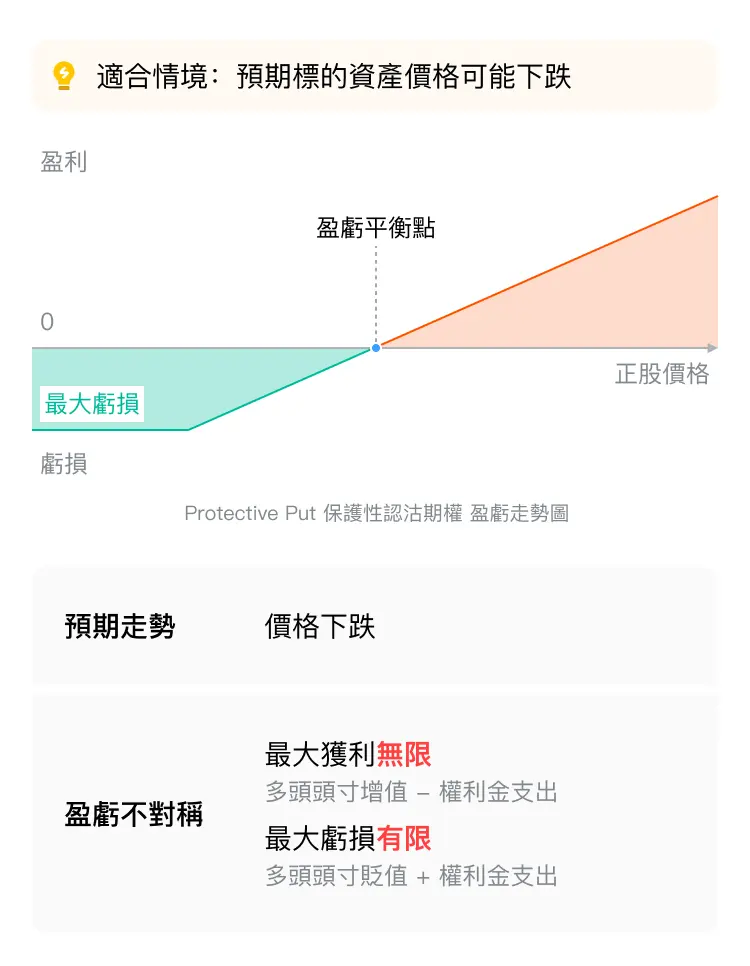
Protective put is an options strategy where you hold a long position in the underlying asset and buy a put option on it. This strategy helps hedge against potential losses if the asset’s price falls.
Underlying price | Source |
Rise | Long position value increase |
Fall | Offsetting stock decline with put value increase |
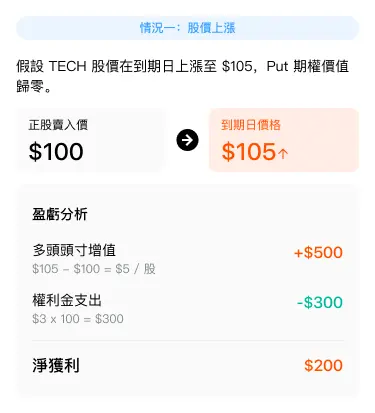
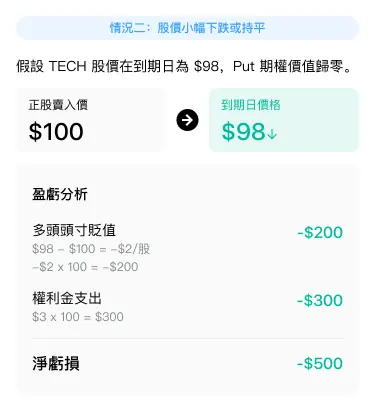
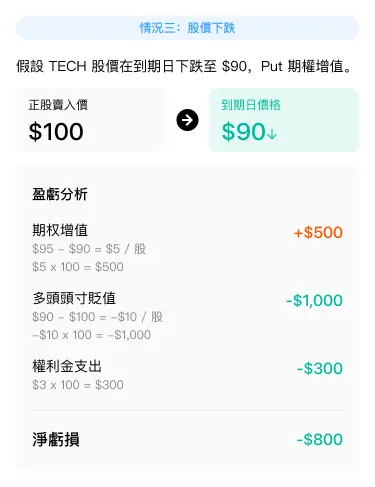
Let's imagine a made-up company called TECH.
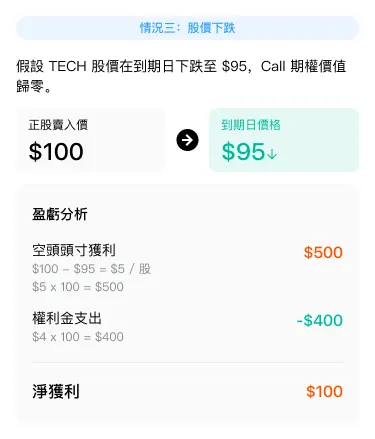
Right now, TECH's stock price is $100 per share. You think the stock price will move downward in the near future, so you decide to use a Protective Put strategy.
You buy or already own 100 shares of TECH stock, and then you buy a Put option with a strike price of $95, paying a premium of $3 for each share (totaling $300).
Office hours of HK Hotline and Whatsapp: 9:00 - 18:00 * (GMT+8) on trading days
Office hours of Global Hotline: Trading days 24 hours; Non-trading days 9:00 - 18:00 * (GMT+8)
Outside of the above service hours, if you have any questions, please contact our online customer service.
Office hours of online customer service:
© 2026 Longbridge
* Offers are subject to terms and conditions
A licensed corporation recognized by the SFC (CE No. BPX066). Holder of License Types 1 (Dealing in Securities), 2 (Dealing in Futures Contracts), 4 (Advising on Securities) and 9 (Asset Management). Also a registered HKEX participant and HKSCC participant.
Registered with the Monetary Authority of Singapore (MAS), Long Bridge Securities Pte. Ltd. is a Capital Markets Services Licence holder and Exempt Financial Adviser (Licence No. CMS101211).

A broker dealer registered with the Securities and Exchange Commission (SEC)(CRD: 314519/SEC: 8-70711), a member of the Financial Industry Regulatory Authority (FINRA) and Securities Investor Protection Corporation (SIPC).
New Zealand registered Financial Service Provider (FSP number: FS600050) and a member of the Financial Dispute Resolution Scheme, a New Zealand independent dispute resolution service provider.
The content and materials published here on this website is for general information only and should not be regarded or deemed to be an offer, invitation, or solicitation, recommendation or advice to buy, sell, subscribe or dispose of any investment products or financial services. It does not take into account the specific personal circumstances, investment objectives, financial situation or particular needs of a person and may be subject to change without notice.
Please consult your financial or other professional advisers if you are unsure about the information contained herein. Investments involve risks. Be aware that investments may increase or decrease in value and that past performance is no guarantee of future returns, you may not get back the amount originally invested. You should not make any investment decision based on this content alone.