
Vertical spread
1. Bull Call Spread
- Overview
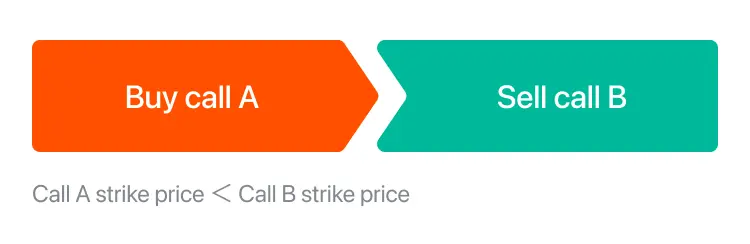
Bull call spread is an options strategy where you buy Call A at a lower strike and sell Call B at a higher strike. Both options are on the same underlying asset and have the same expiration date. This strategy offers limited profit potential while also capping potential losses.
- Features
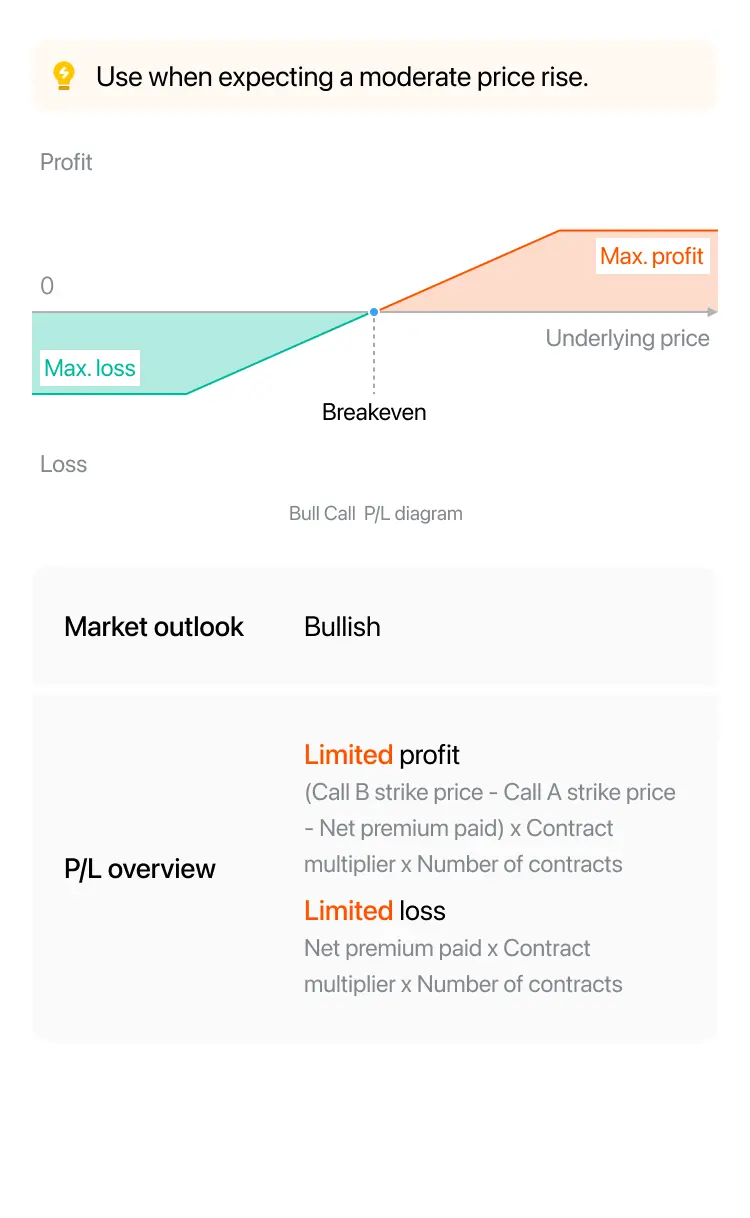
- Components
- Profit source
"Buying Call A" realizes the bullish expectation and earns the profit from the underlying stock's price increase; "Selling Call B" reduces the cost of "Buying Call A."
- Case study
Let's imagine a made-up company called TECH.
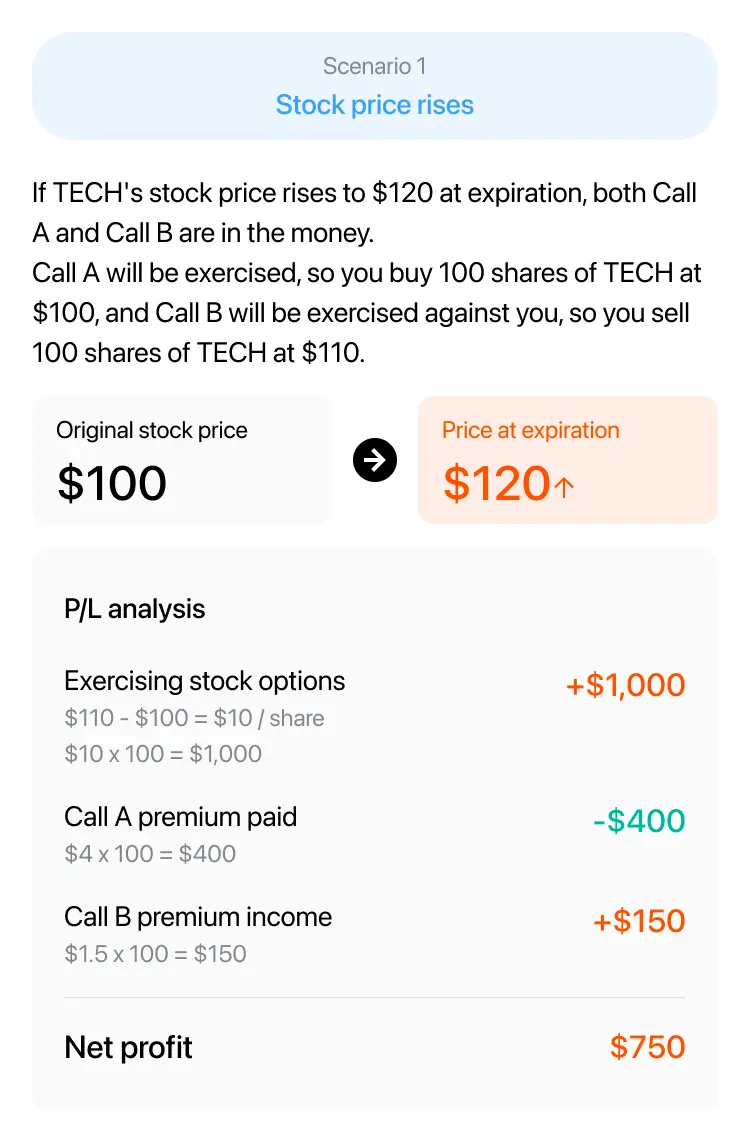
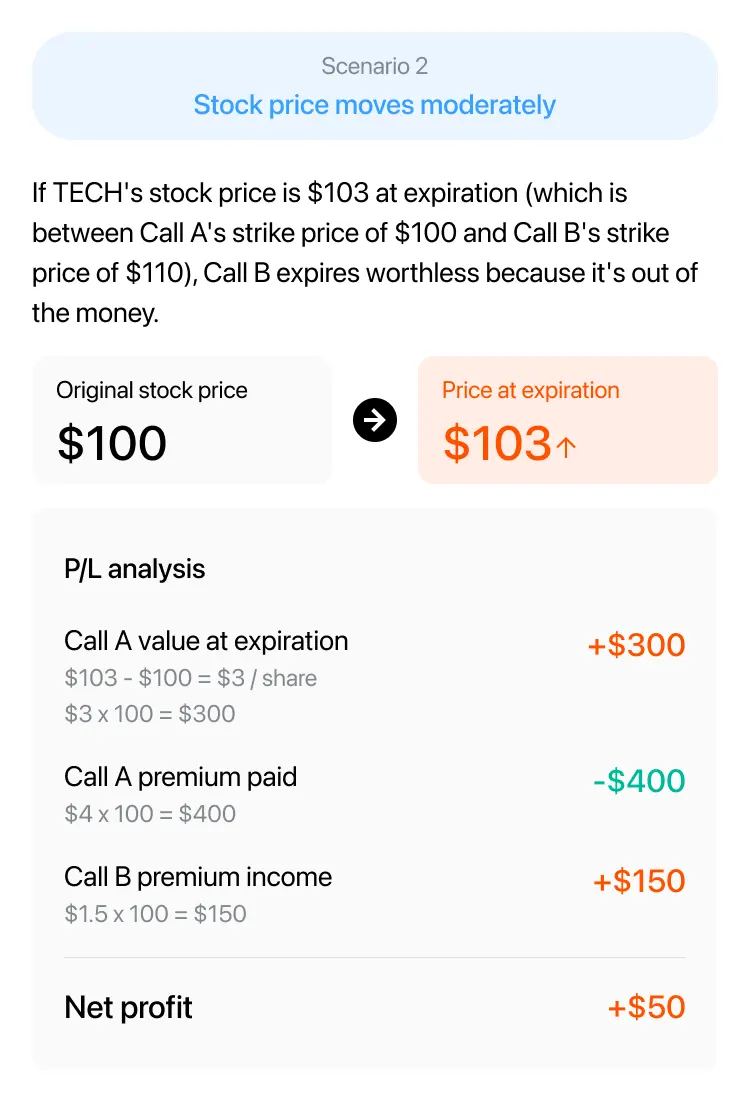
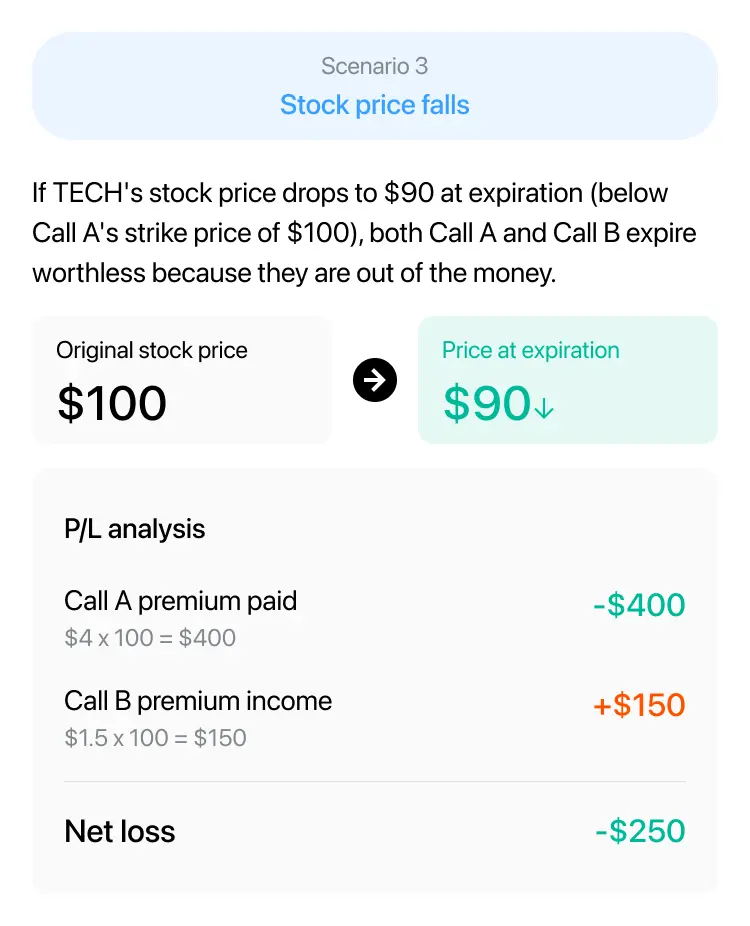
Right now, TECH's stock price is $100 per share. You think the stock price will show a moderate upward trend in the near future, but not a huge jump. So, you decide to build a Bull Call Spread strategy.
You buy one Call option with a lower strike price (Call A) of $100, paying a premium of $4, and at the same time, you sell one Call option with a higher strike price (Call B) of $110, receiving a premium of $1.5.
 |  |  |
2. Bull Put Spread
- Overview
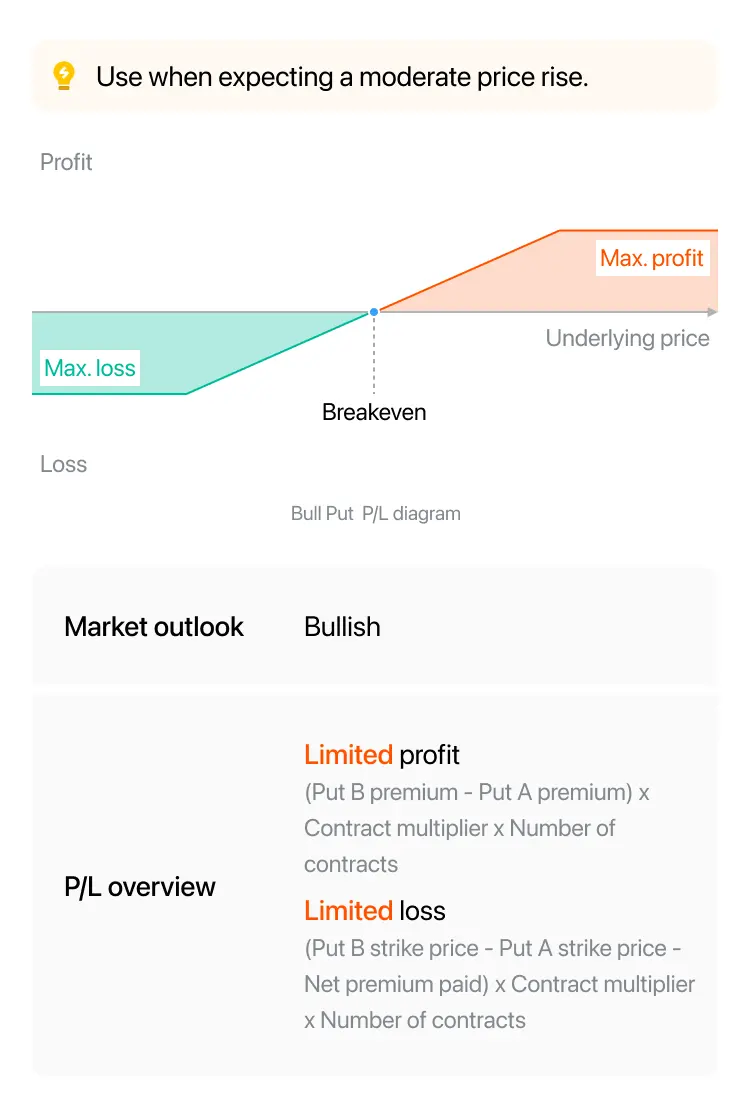
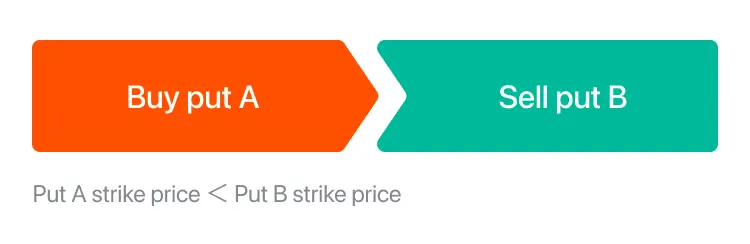
Bull put spread is an options strategy where you buy Put A at a lower strike and sell Put B at a higher strike. Both options are on the same underlying asset and have the same expiration date. This strategy generates income upfront and has both a defined maximum profit and a defined maximum risk.
- Features
- Components
- Profit source
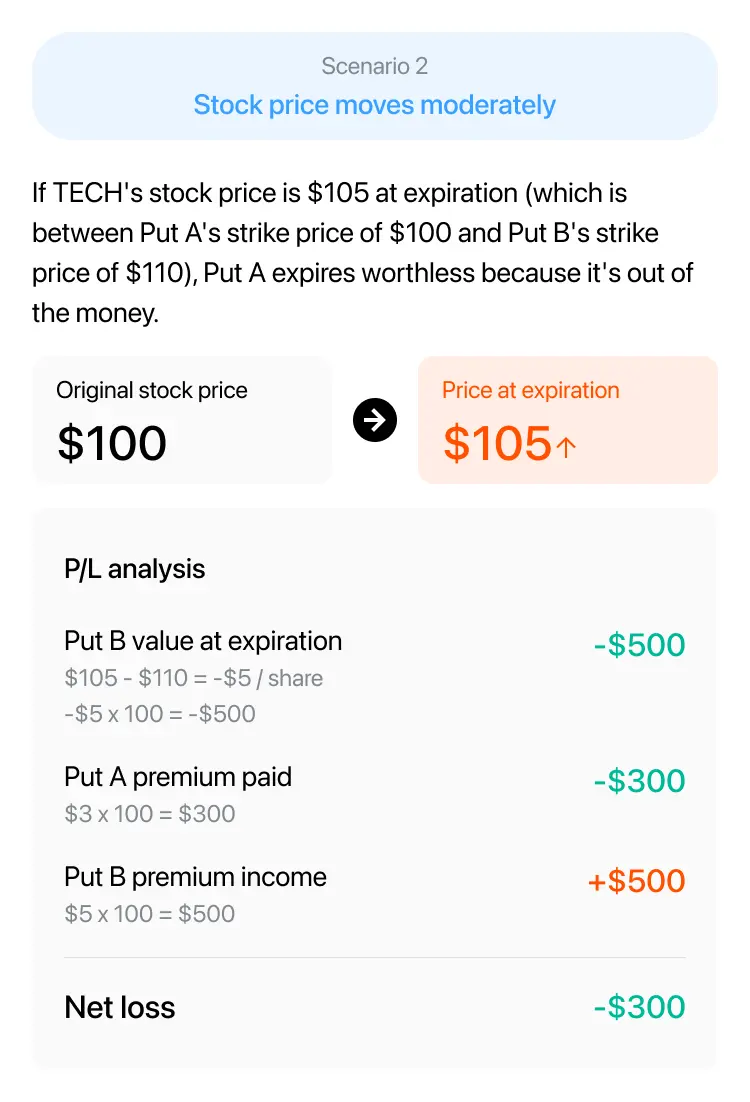
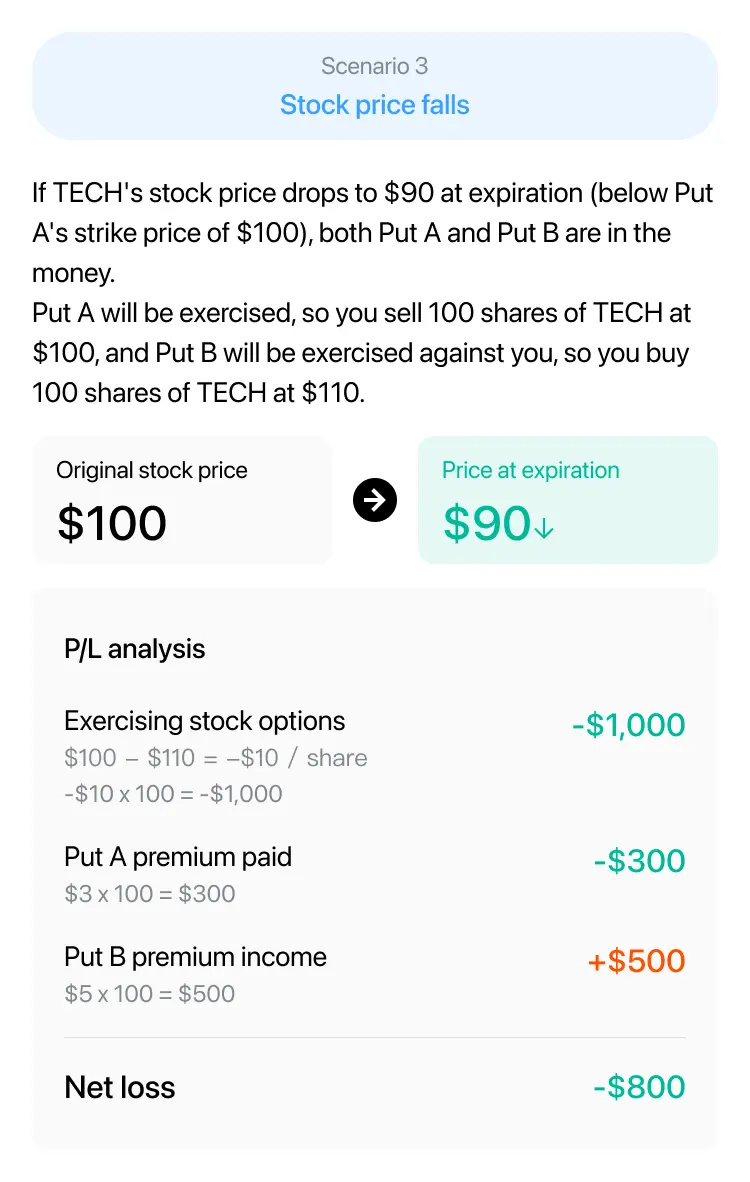
Selling Put B collects the premium, while buying Put A limits potential losses, resulting in a profit when the stock price rises.
- Case study
Let's imagine a made-up company called TECH.
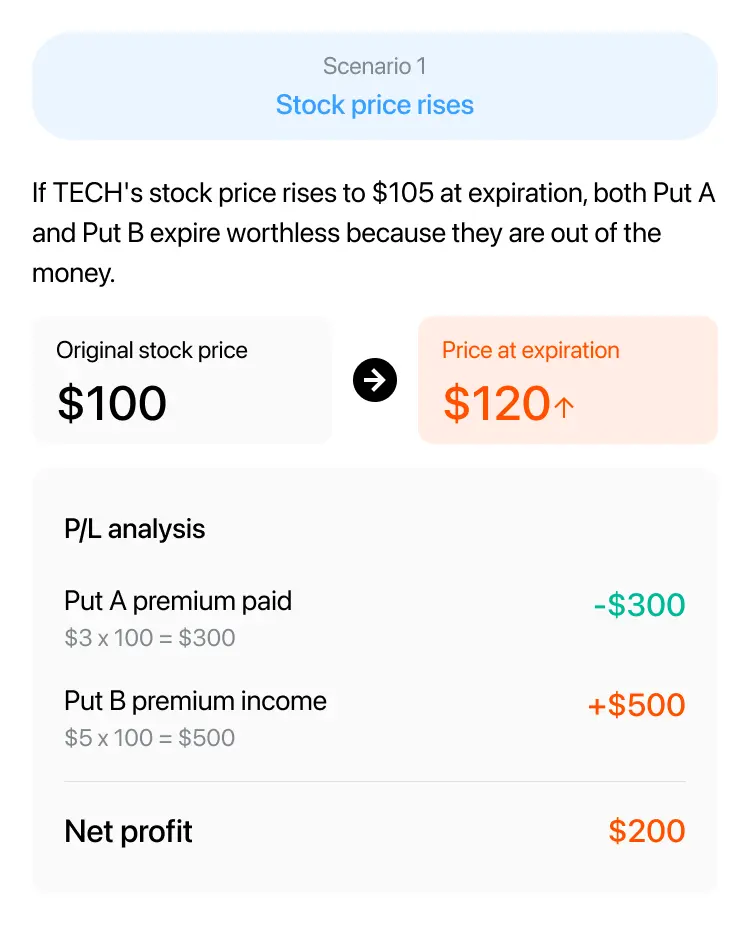
Right now, TECH's stock price is $100 per share. You think the stock price will show a moderate upward trend in the near future, but not a huge jump. So, you decide to build a Bull Put Spread strategy.
You buy one Put option with a lower strike price (Put A) of $100, paying a premium of $3, and at the same time, you sell one Put option with a higher strike price (Put B) of $110, receiving a premium of $5.
 |  |  |
3. Bear Call Spread
- Overview
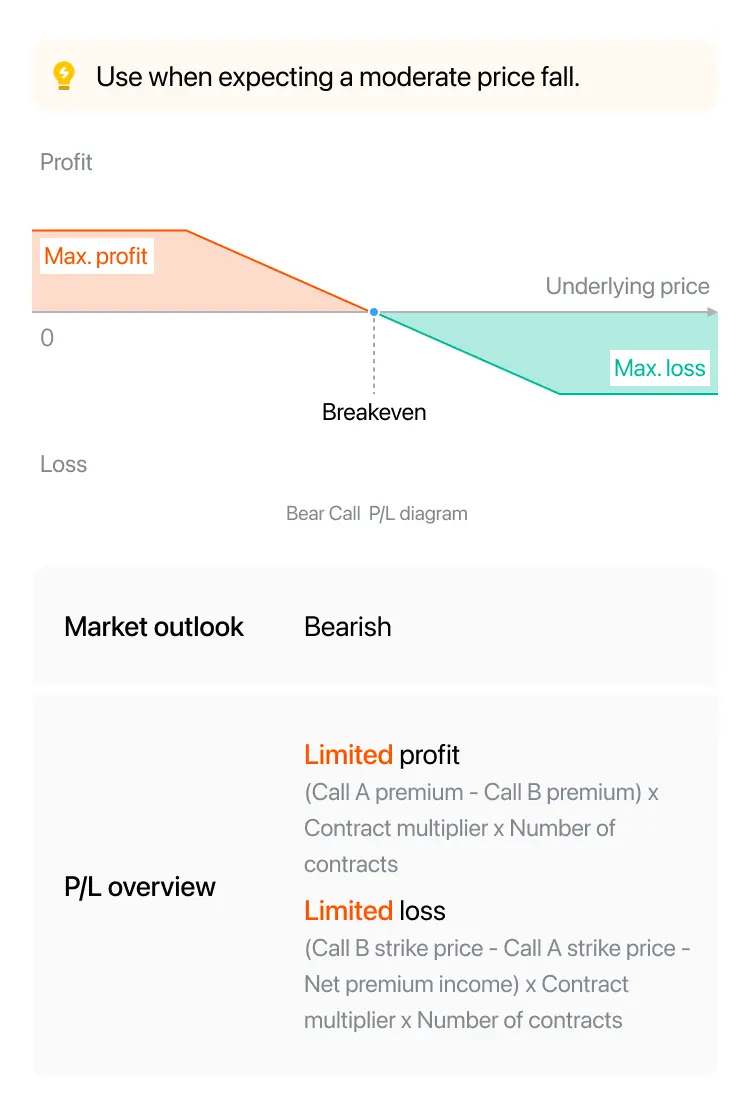
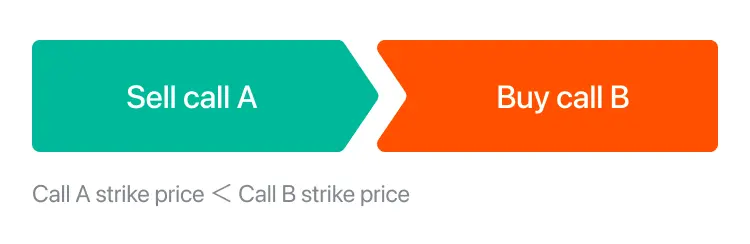
Bear call spread is an options strategy where you sell Call A at a lower strike and buy Call B at a higher strike. Both options are on the same underlying asset and have the same expiration date. This strategy offers limited profit potential while also capping potential losses.
- Features
- Components
- Profit source
Selling Call A collects the premium, while buying Call B limits potential losses, resulting in a profit when the stock price falls.
- Case study
Let's imagine a made-up company called TECH.
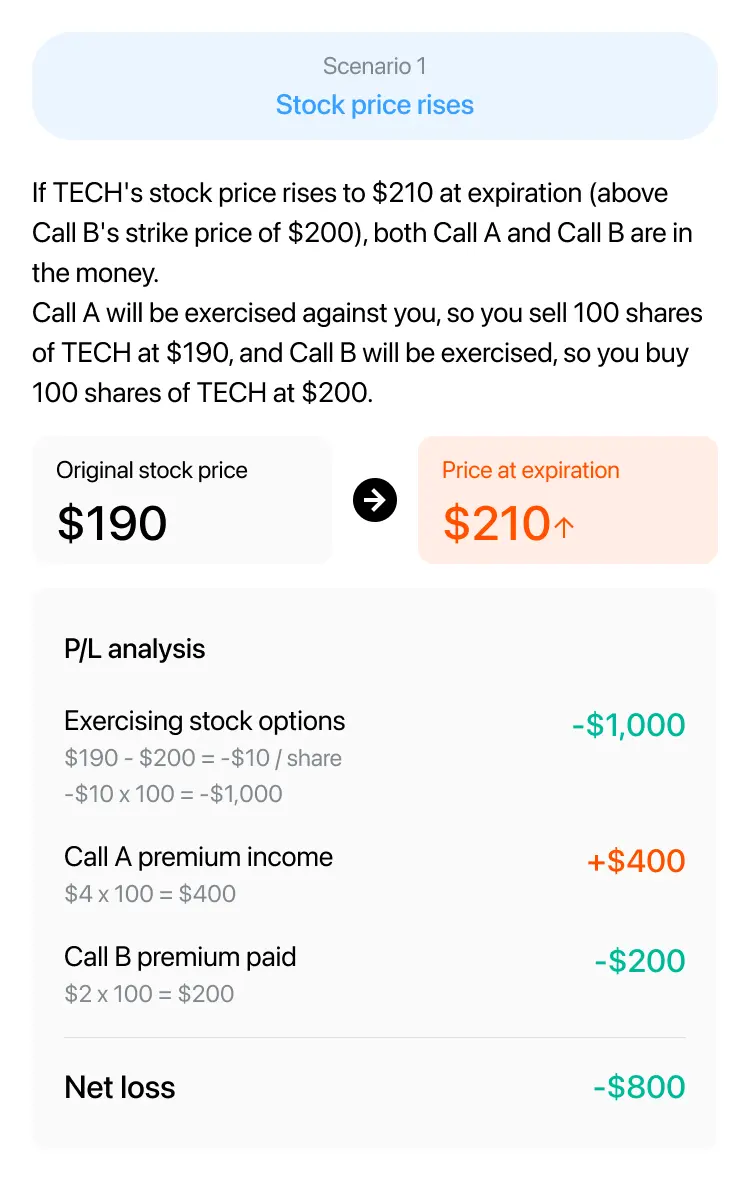
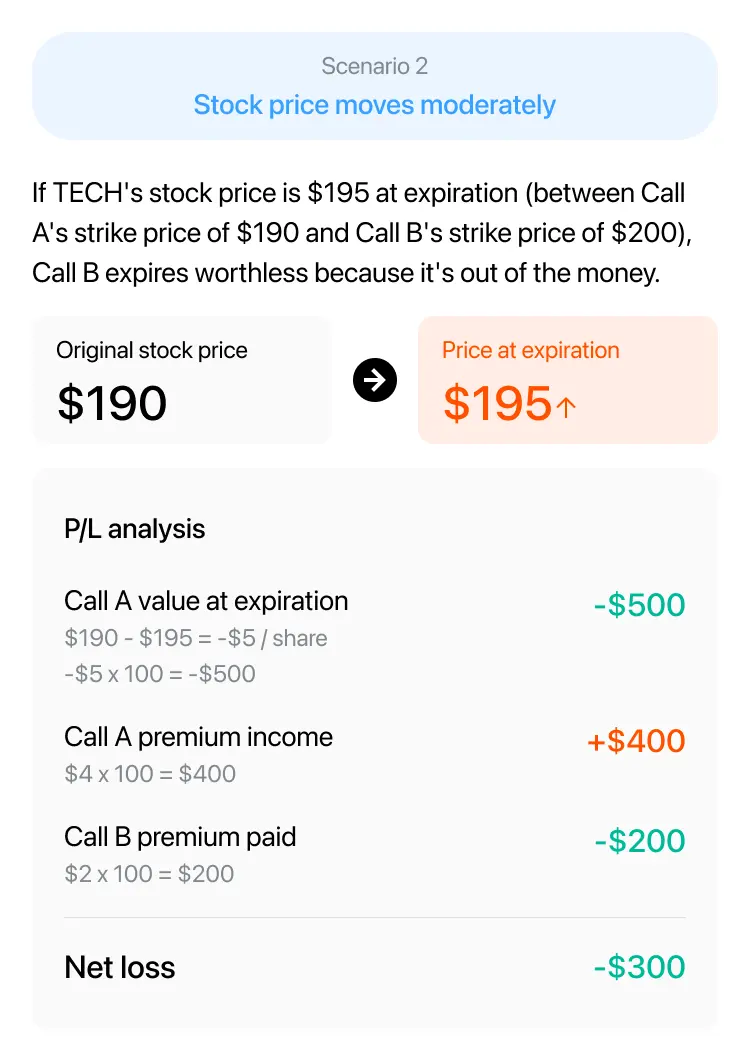
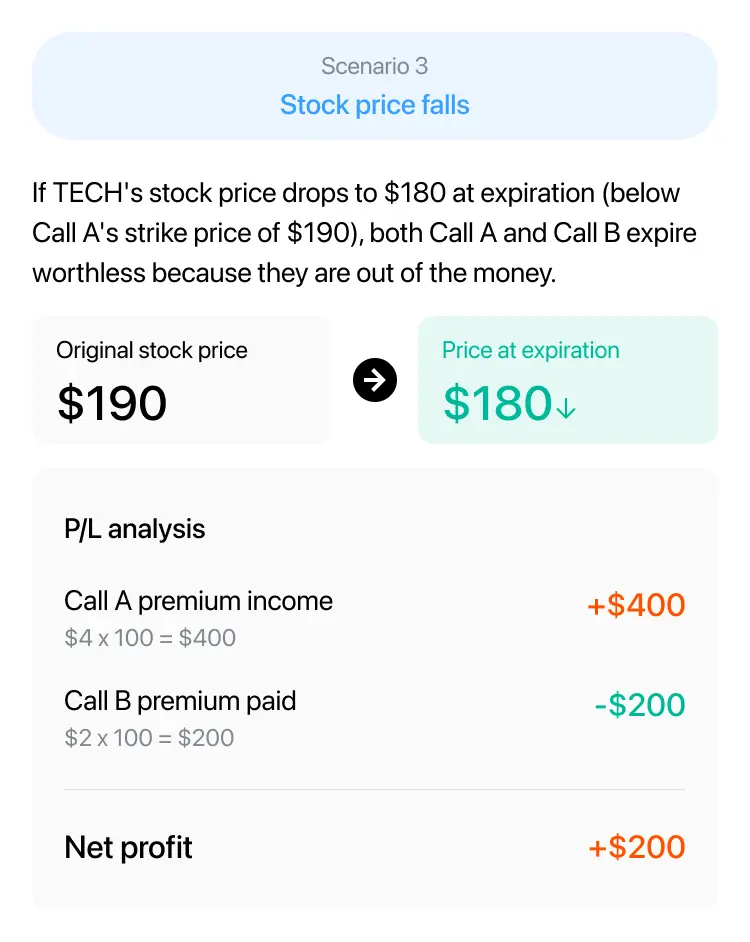
Right now, TECH's stock price is $190 per share. You think the stock price will show a moderate downward trend in the near future, but not a huge drop. So, you decide to build a Bear Call Spread strategy.
You sell a Call option (Call A) with a $190 strike, getting a $4 premium, and simultaneously buy a Call option (Call B) with a $200 strike, paying a $2 premium.
 |  |  |
4. Bear Put Spread
- Overview
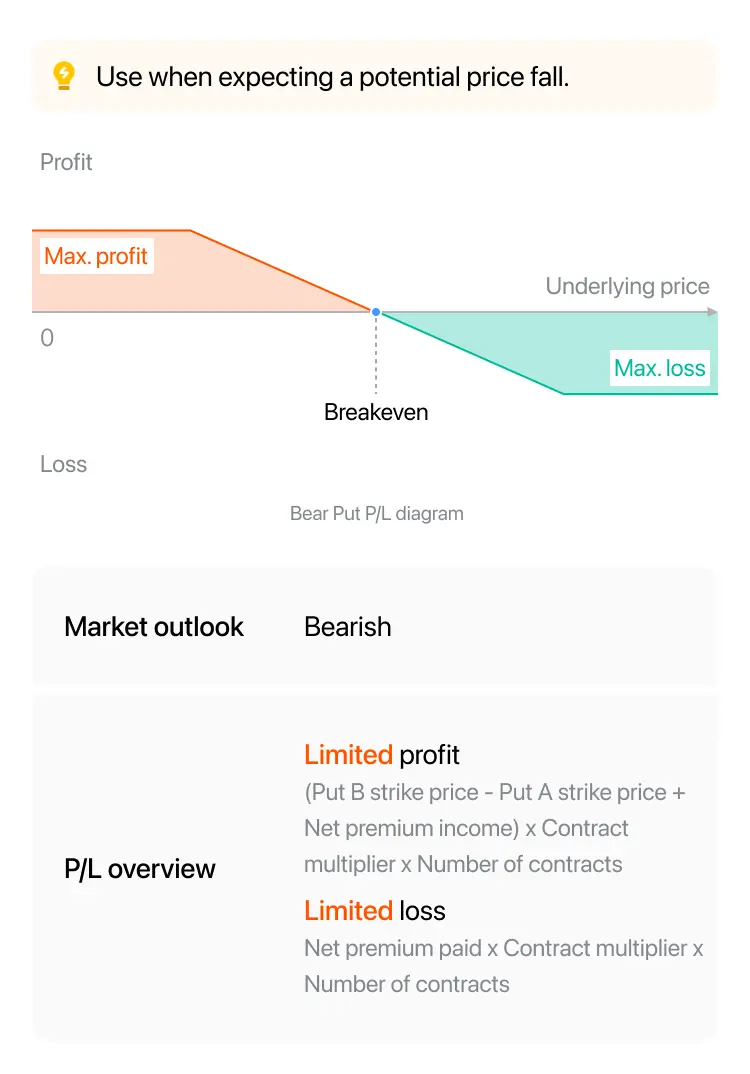
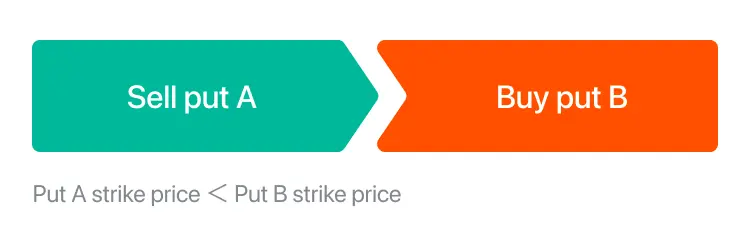
Bear put spread is an options strategy where you sell Put A at a lower strike and buy Put B at a higher strike. Both options are on the same underlying asset and have the same expiration date. This strategy offers limited profit potential while also capping potential losses.
- Features
- Components
- Profit source
Buying Put B provides protection and generates profits when the stock price falls, while selling Put A collects the premium to offset the cost of buying Put B.
- Case study
Let's imagine a made-up company called TECH.
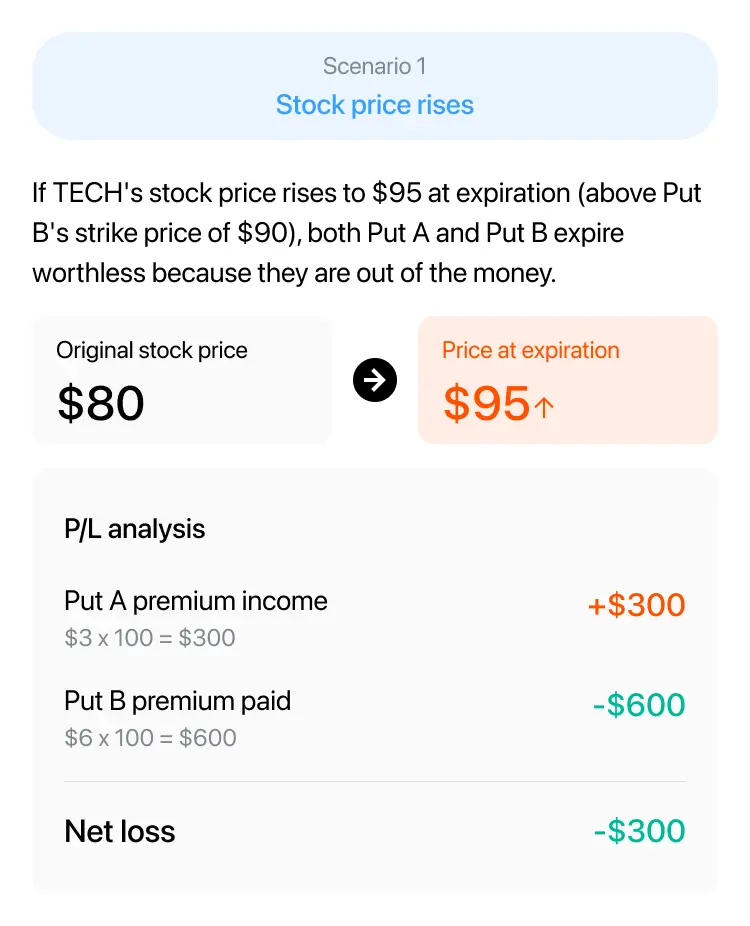
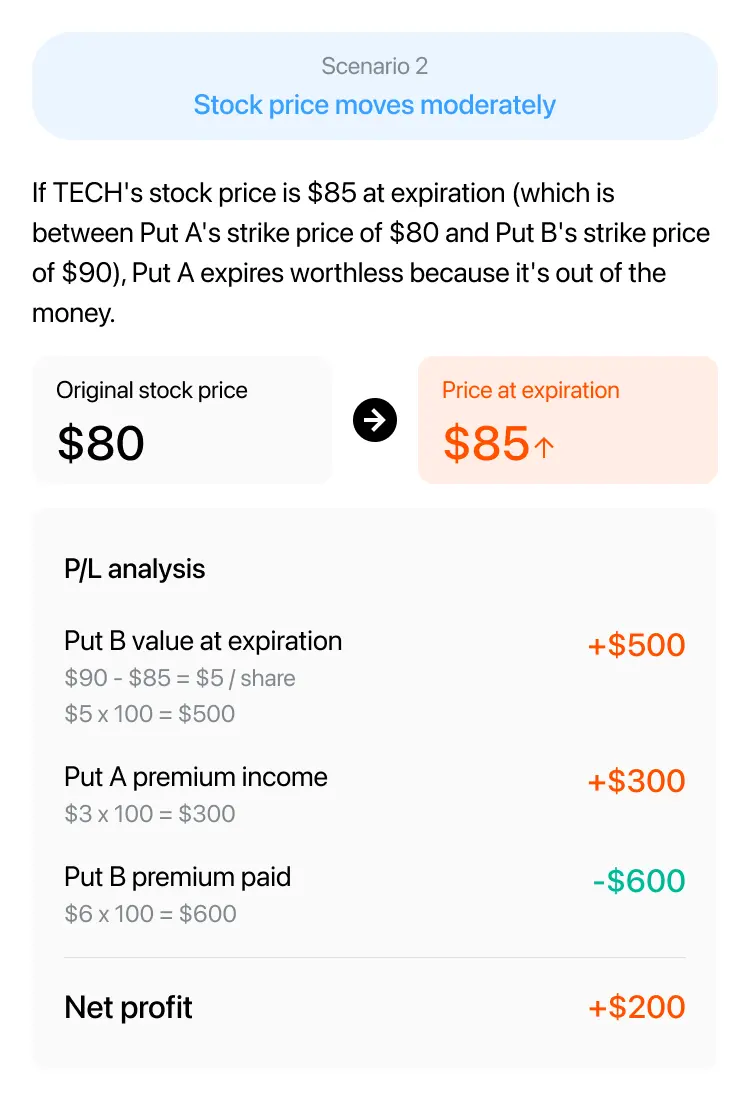
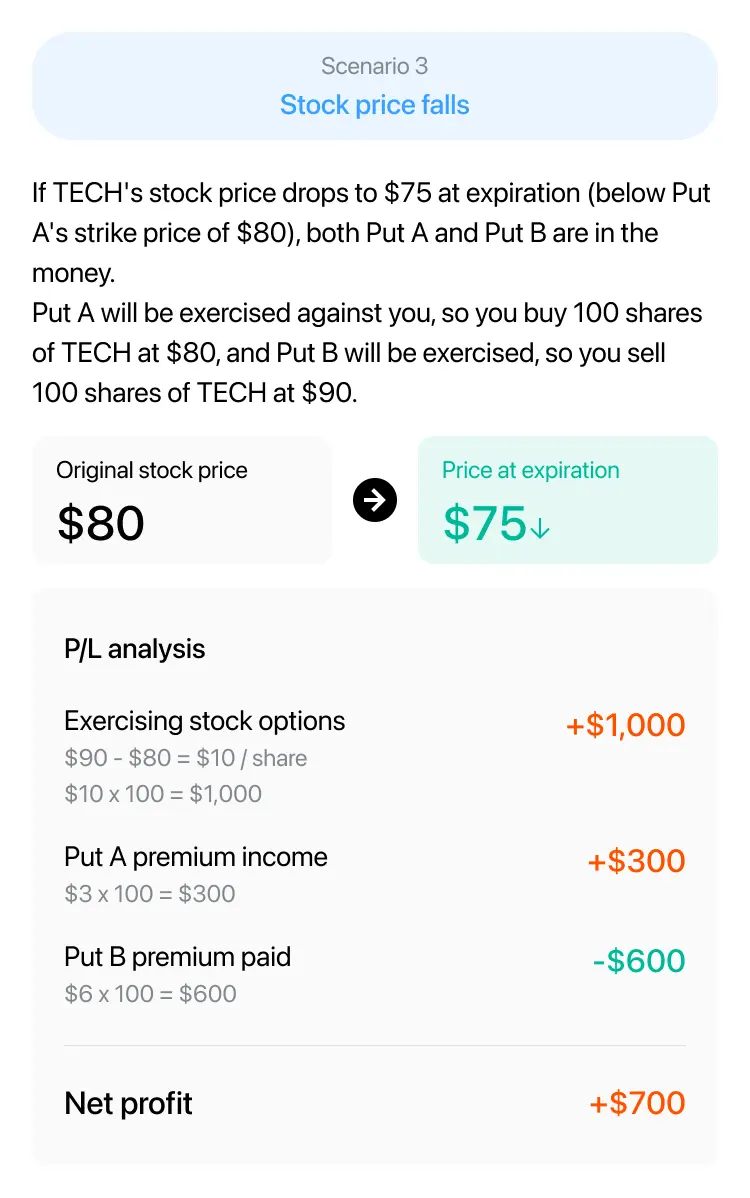
Right now, TECH's stock price is $80 per share. You think the stock price will show a moderate downward trend in the near future. So, you decide to build a Bear Put Spread strategy.
You sell a Put option (Put A) with an $80 strike, getting a $3 premium, and simultaneously buy a Put option (Put B) with a $90 strike, paying a $6 premium.
 |  |  |
Was this helpful?